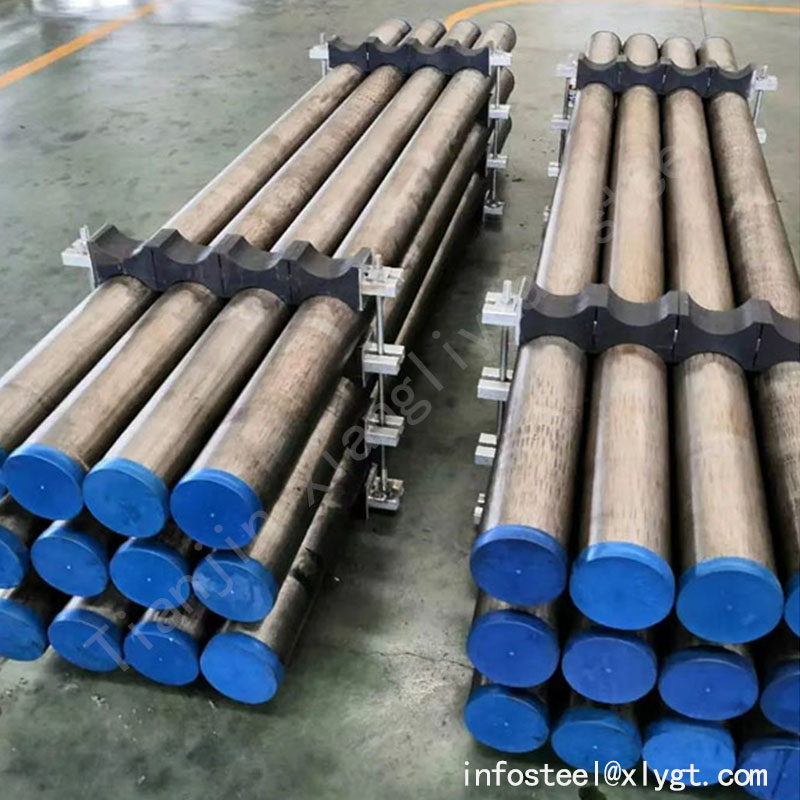
In the engineering of high-performance hydraulic cylinders, the synergy between the chrome plated piston rod (the moving output component) and the honed tube (the barrel/casing) dictates the overall efficiency, cycle life, and seal integrity of the entire hydraulic assembly. Selecting the wrong material grade or surface specification can lead to premature failure due to buckling, surface fatigue, corrosion, or catastrophic seal leakage, especially in high-pressure environments exceeding 280 bar (4,000 PSI). At Tianjin Xiangliyuan Steel (Tianjin xiangliyuan steel) , we specialize in the metallurgical engineering and global supply of these critical components. We ensure that our clients receive ISO-certified materials that meet ASTM A519, DIN 2391, and EN 10305 standards. Strategically located in Tianjin, China—with immediate proximity to one of the world’s busiest ports—we offer logistics advantages that inland suppliers cannot match.
1. Core Distinctions: Mechanical Function & Stress Analysis
While both the piston rod and the honed tube operate within the same hydraulic assembly, their mechanical stressors are fundamentally different.
The honed tube acts as the pressure vessel. It must withstand substantial radial hoop stress generated by the hydraulic fluid without deforming or cracking. The internal diameter (ID) surface finish is critical because it directly contacts the piston seals; any imperfection will cause fluid bypass and efficiency loss.
Conversely, the chrome plated piston rod is subject to axial tension, compression, and—most critically—buckling risks. The slenderness ratio (length divided by diameter) is the primary design parameter for rods. For 70-80% of standard industrial cylinders, the yield strength of the rod material is the limiting factor preventing permanent deformation under load. For high-cycle applications such as mobile machinery, injection molding machines, and mining presses, fatigue strength becomes the non-negotiable parameter.
Understanding these distinct functional roles is the first step toward intelligent material selection.
2. Metallurgical Specifications: Base Material Grades
At Tianjin Xiangliyuan Steel, our inventory focuses on three dominant material grades that represent the global standard for hydraulic components: CK45 (1.1191 / AISI 1045), 42CrMo4 (1.7225 / AISI 4140), and ST52.3 (1.0580 / E355). Each grade offers specific advantages depending on the application.
Chrome Plated Piston Rods: For standard-duty hydraulic cylinders operating under 210 bar, CK45 provides an excellent balance of machinability, weldability, and cost-effectiveness. However, for heavy-duty systems exceeding 250 bar (3,600 PSI) or those subject to shock loading, 42CrMo4 (quenched and tempered) is the premium choice due to its superior hardenability, higher tensile strength (minimum 980 MPa), and enhanced resistance to impact fatigue.
Honed Tubes (Cylinder Barrels): ST52.3 (or E355) is the industry workhorse for honed tubes. Its combination of consistent machinability, excellent weldability (required for mounting flanges and end caps), and dimensional stability after the skiving and roller burnishing (SRB) process makes it ideal. For ultra-high-pressure applications, 42CrMo4 honed tubes are also available, though they command a higher price point.
Below is a comparative analysis based on actual mill test certificates (MTCs) routinely provided by Tianjin Xiangliyuan Steel:
| Material Grade | Primary Application | Yield Strength (Min MPa) | Tensile Strength (MPa) | Hardness (Condition) | Weldability |
|---|---|---|---|---|---|
| CK45 | Standard piston rods / light tubes | ≥355 | 610–800 | 22–28 HRC (Normalized) | Good |
| 42CrMo4 | High-pressure / shock load rods | ≥650 (Q+T) | ≥980 | 28–32 HRC (Base) | Fair (Preheat required) |
| ST52.3 (E355) | Honed tubes (cylinder barrels) | ≥355 | 490–630 | As rolled (~180 HB) | Excellent |
3. The Chrome Plated Piston Rod: Surface Engineering & Corrosion Resistance
The term “chrome plated” is frequently oversimplified by buyers. For a piston rod to function reliably in environments ranging from marine hydraulics (saltwater exposure) to mining (abrasive dust), the chrome layer thickness, hardness, and porosity are vital specifications.
A standard industrial hard chrome layer is typically a minimum of 20 microns (μm) . However, for export-grade components destined for corrosive climates or requiring extended warranty periods, a double chrome layer or nickel-chrome (Ni-Cr) plating is necessary. The nickel underlayer provides sacrificial corrosion protection—if the outer chrome is scratched, the nickel corrodes preferentially, preserving the steel substrate.
Through our supply chain, Tianjin Xiangliyuan Steel offers rods achieving 1000 HV (approximately 70 HRC) on the chrome surface. This extreme hardness, combined with a low friction coefficient (Ra ≤ 0.2 μm), preserves polyurethane rod seals and extends service life. We also supply induction hardened chrome rods, where the base steel beneath the chrome is hardened to 58–62 HRC to a depth of 1.5–2 mm, preventing surface brinelling under high impact loads.
4. Honed Tubes: SRB vs. Cold Drawn Processes
The internal surface of the honed tube interacts directly with the piston and its sealing elements. For seamless precision tubes, the Skived and Roller Burnishing (SRB) process has become the industry gold standard.
Unlike simple honing (which uses abrasive stones to create a cross-hatch pattern), SRB first skives (shaves) the ID to remove any decarburized layer or surface defects, then roller burnishes the surface at high pressure. This process achieves a mirror-like finish (Ra 0.1 μm to 0.4 μm) while simultaneously work-hardening the ID surface. Work hardening increases wear resistance, reduces friction, and eliminates micro-leakage paths that compromise volumetric efficiency.
Tianjin Xiangliyuan Steel supplies SRB tubes with strict adherence to ISO H8 or H9 tolerances. This ensures consistent piston clearance across the entire stroke length, reducing the risk of metal-to-metal contact and scoring. Cold-drawn honed tubes remain available for less demanding applications, but SRB is the recommended specification for any cylinder expected to exceed 1 million cycles.
5. The Logistics Advantage: Why Tianjin Matters
Global procurement managers searching for terms like “hydraulic cylinder manufacturer China,” “steel bar supplier near port,” or “FOB Tianjin steel tube” must consider supply chain fluidity as a critical factor. Tianjin Xiangliyuan Steel is strategically headquartered in Tianjin, China, less than 20 kilometers from one of the world’s largest and most efficient comprehensive ports (Tianjin Port).
This geographic advantage translates directly into tangible benefits for our international clients:
-
Lower Freight On Board (FOB) costs: Reduced inland trucking fees compared to suppliers located in Shandong, Jiangsu, or further inland.
-
Faster shipping schedules: Cargo can be loaded and cleared 7–10 days faster than competitors who face overland delays.
-
Flexible consolidation: We efficiently handle Less than Container Load (LCL) shipments for prototype or low-volume orders.
-
Real-time export documentation: Our proximity to port authorities ensures rapid customs clearance.
Whether you require chrome plated bars for telescopic cylinders or honed tubes for tie-rod cylinders, our location guarantees faster delivery to North American, European, and Southeast Asian markets.
6. Comparative Selection Guide: Rod vs. Tube Requirements
To assist engineers during the specification phase, we have created a side-by-side comparison of functional requirements for each component:
| Parameter | Chrome Plated Piston Rod | Honed Tube (Cylinder Barrel) |
|---|---|---|
| Primary Load Type | Buckling / Tensile fatigue | Hoop stress (internal pressure) |
| Critical Surface | Outer Diameter (OD) | Inner Diameter (ID) |
| Surface Finish (Ra) | ≤ 0.2 μm (mirror polished) | ≤ 0.4 μm (SRB finish) |
| Typical Hardness (Base) | 22–32 HRC (depending on Q+T) | ~180–220 HB (soft core for toughness) |
| Most Common Failure Mode | Pitting / seal cutting due to corrosion | Scoring / microwelding with piston |
| Preferred Standard Tolerance | f7 (ISO 286) | H8 or H9 (ISO 286) |
7. Quality Assurance & Standards Compliance
Authority in the steel tube industry is not claimed—it is demonstrated through verifiable standards compliance. Every shipment from Tianjin Xiangliyuan Steel complies with:
-
ASTM A519: Seamless carbon and alloy steel mechanical tubing.
-
DIN 2391: Precision steel tubes for hydraulic applications.
-
EN 10305: Steel tubes for precision applications.
-
ISO 9227: Neutral salt spray testing for chrome plating corrosion resistance.
We employ eddy current testing (ECT) and ultrasonic flaw detection (UT) for all honed tubes and chrome plated bars destined for high-cycle applications such as mobile cranes, forklift masts, agricultural implements, and injection molding machines. Our nickel-chrome plated rods are specifically engineered to withstand 500–1000 hours of NSS testing, rivaling stainless steel performance at a fraction of the cost.
All shipments are accompanied by mill test reports (MTRs) and, upon request, third-party inspection reports from SGS or Bureau Veritas.
8. Common Failure Modes & How to Avoid Them
Experienced engineers know that most hydraulic cylinder failures originate from material or surface quality issues, not design flaws. Here are the most common failure modes and how Tianjin Xiangliyuan Steel addresses them:
Piston Rod Failure – Chrome Pitting/Flaking:
-
Cause: Insufficient chrome thickness or poor adhesion.
-
Solution: We specify minimum 20 μm chrome, with nickel underlayer for corrosive environments. All plating is tested via cross-hatch adhesion tests (ISO 2409).
Piston Rod Failure – Buckling:
-
Cause: Material yield strength inadequate for applied load.
-
Solution: We recommend upgrading from CK45 to 42CrMo4 for any application exceeding 250 bar working pressure or subject to shock loads.
Honed Tube Failure – ID Scoring:
-
Cause: Poor ID surface finish (Ra > 0.8 μm) or insufficient hardness.
-
Solution: We supply only SRB-finished tubes with Ra ≤ 0.4 μm and provide hardness testing reports.
Honed Tube Failure – Ovality/Out-of-Round:
-
Cause: Poor manufacturing tolerances or inadequate stress relieving.
-
Solution: Our tubes meet H8 tolerance with ovality ≤ 50% of diameter tolerance.
9. Value-Added Services from Tianjin Xiangliyuan Steel
Beyond supplying raw materials, we offer comprehensive value-added services (VAS) that reduce your secondary processing costs:
-
Precision cutting: Lengths up to 12 meters with ±1 mm tolerance.
-
Chamfering and deburring: Both ends prepared for immediate assembly.
-
End machining: Threading, grooving, and drilling to your drawings.
-
Chrome plating coordination: We manage the entire plating process with certified subcontractors.
-
Anti-rust packaging: VCI paper, oil coating, and seaworthy wooden cases for export.
-
Direct mill consolidation: Combine multiple grades in one shipment to optimize container utilization.
We understand the pain points of international procurement: inconsistent straightness, poor packaging causing surface damage, and delayed documentation. Therefore, we guarantee straightness ≤ 0.3 mm per 1000 mm for all piston rods and use anti-corrosion packaging that survives ocean transit to Europe, North America, and Southeast Asia.
10. Frequently Asked Questions (Technical)
Q: What is the standard straightness tolerance for chrome plated piston rods?
A: For diameters above 20 mm, the industry standard is 0.3 mm per 1000 mm. At Tianjin Xiangliyuan Steel, we stock f7 tolerance rods meeting this specification strictly to avoid uneven seal wear and premature leakage.
Q: Can I source induction hardened chrome bars for heavy-duty excavator cylinders?
A: Yes. We supply induction hardened bars with surface hardness of 58–62 HRC and a hardened depth of 1.5–2.0 mm, specifically designed for harsh debris environments and high-impact applications.
Q: Do you offer hollow chrome plated piston rods?
A: Yes. Hollow chrome plated bars are available for lightweight telescopic cylinders. They offer an excellent strength-to-weight ratio and can reduce overall cylinder mass by 30–40% compared to solid rods.
Q: What is the typical lead time for honed tubes and chrome rods?
A: For standard sizes (CK45 and ST52.3), lead time is 15–20 days from receipt of deposit. For 42CrMo4 or non-standard dimensions, lead time is 25–30 days. Thanks to our port proximity, shipping adds only 2–3 days to the vessel schedule.
Q: Do you provide third-party inspection?
A: Yes. We routinely work with SGS, Bureau Veritas, and TÜV. All inspection costs and arrangements can be billed directly or included in our quotation.
Make the Informed Choice
Selecting between a chrome plated piston rod and a honed tube is not an either/or decision—it is a complementary selection that defines the reliability and longevity of your hydraulic cylinder assembly. The rod must resist buckling, corrosion, and surface fatigue. The tube must contain pressure without deformation while providing a mirror-like surface for seal compatibility.
Tianjin Xiangliyuan Steel (Tianjin xiangliyuan steel) bridges the gap between high-quality metallurgy and cost-effective international logistics. Our location in Tianjin—minutes from one of the world’s largest ports—ensures that your materials ship faster and at lower cost than from inland Chinese suppliers. Our technical team speaks the language of ASTM, DIN, and ISO, and we are ready to help you select the exact grade, finish, and tolerance required for your application.
Do not leave the structural integrity of your hydraulic systems to chance. Partner with a supplier that offers verified quality, technical authority, and logistical excellence.
Contact Us Today for a Technical Consultation or Quotation:
Company Name: Tianjin Xiangliyuan Steel (Tianjin xiangliyuan steel)
Email: infosteel@xlygt.com
Website: https://www.xlysteel.com/
Location: Tianjin, China – Direct access to Tianjin Port for rapid global shipping.
All technical specifications provided in this article are based on ISO, ASTM, and DIN standards and represent the current industry best practices for hydraulic cylinder material selection. For specific application engineering, please consult our technical sales team.