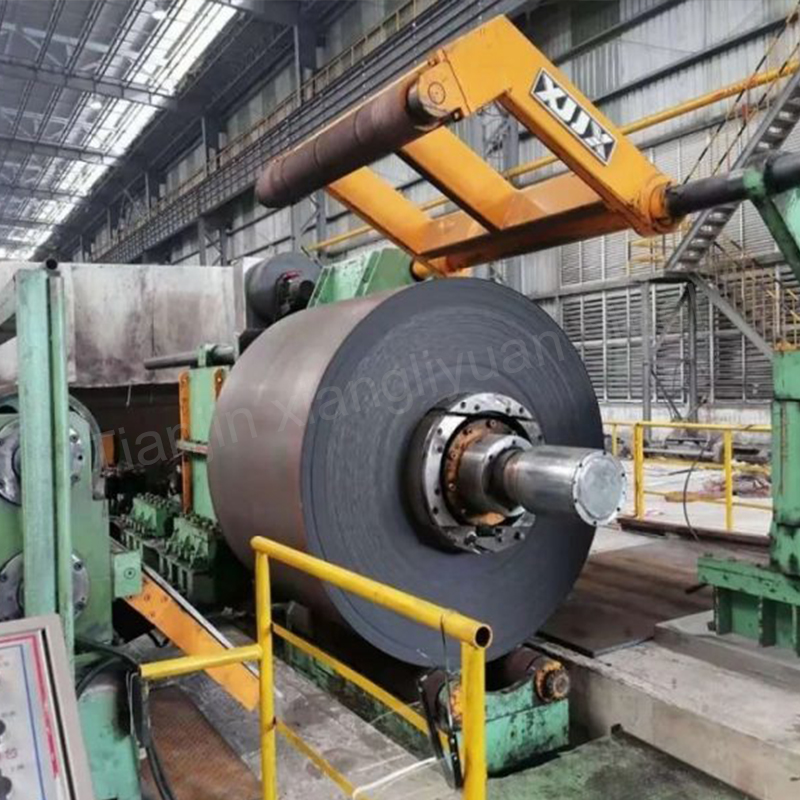
Precision Processing as the Foundation of Quality
In the modern steel supply chain, the difference between a premium product and a reject often comes down to three critical parameters: width tolerance, edge quality, and flatness control. For fabricators, roll formers, stampers, and tube mills, these factors determine whether material feeds reliably through production lines, meets end-use specifications, and delivers consistent performance in service.
At Tianjin xiangliyuan steel, we understand that steel coil processing is not merely about cutting metal to size—it is about delivering material that performs precisely as expected in your downstream operations. With our strategic location adjacent to Tianjin Port, one of Northern China’s premier steel logistics hubs, we offer the dual advantages of world-class processing precision and efficient, cost-effective global shipping . Our commitment to quality has made us a trusted partner for clients across North America, Europe, Southeast Asia, and the Middle East.
This article provides a comprehensive technical overview of steel coil slitting and cut-to-length processing, covering the critical quality parameters that matter most to industrial buyers, engineers, and quality professionals.
Understanding Steel Coil Slitting: Process Fundamentals
What Is Steel Coil Slitting?
Slitting is a rotary shearing process that converts wide master coils into multiple narrower strips of specified widths. The process involves passing a steel coil through a set of rotating circular knives that cut longitudinally along the strip’s length . The result is multiple narrower coils that can be used directly in roll forming, stamping, tube manufacturing, or further processing.
The process may appear straightforward, but achieving consistent quality across an entire coil requires precise control of numerous variables. The selection of appropriate tooling, knife clearance settings, tension control, and recoiling practice all significantly impact the final product’s dimensional accuracy and edge condition .
Key Equipment Considerations
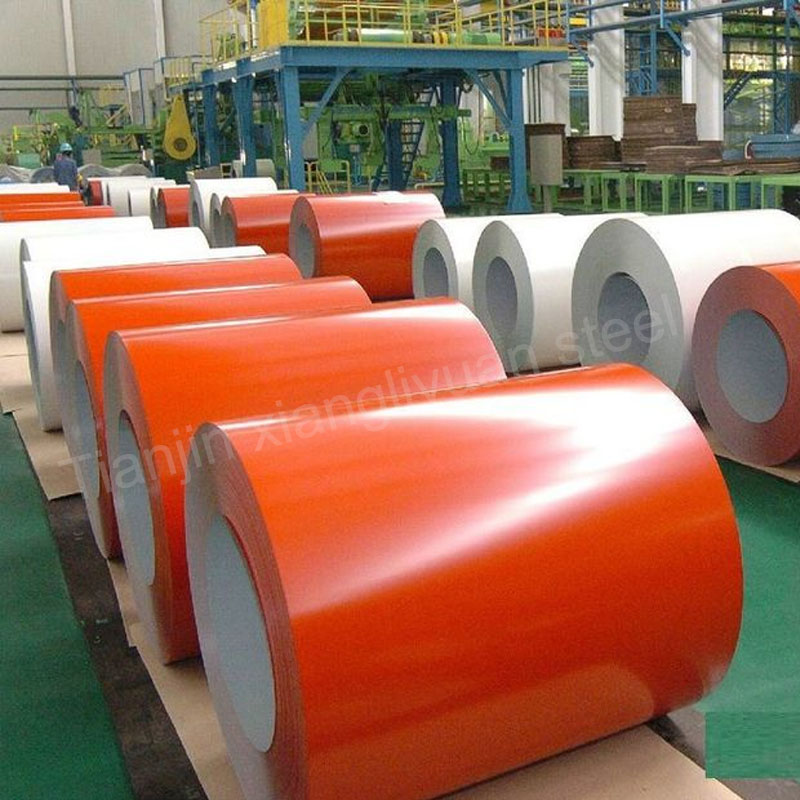
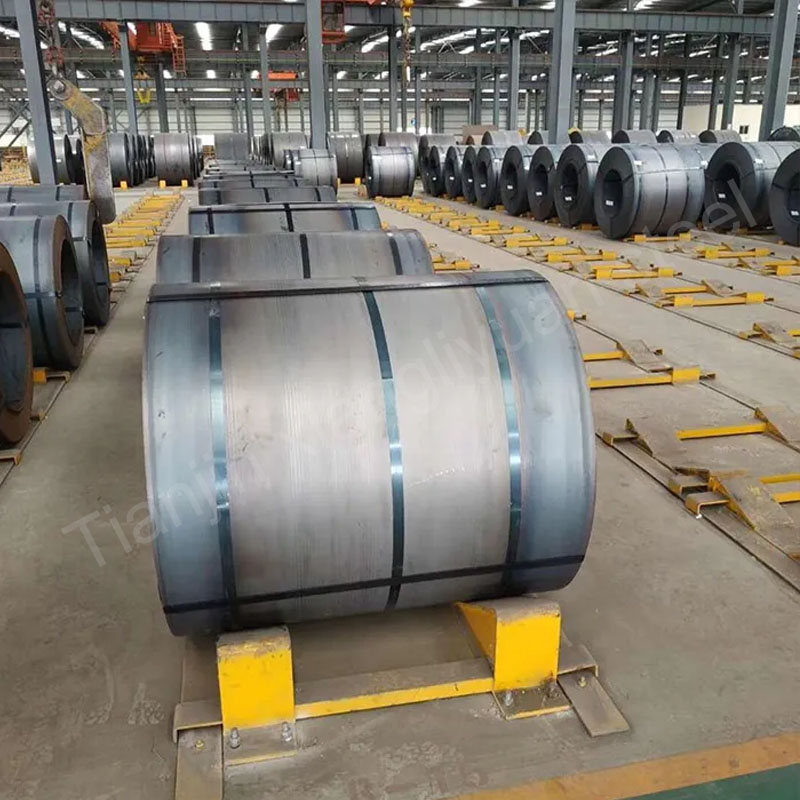
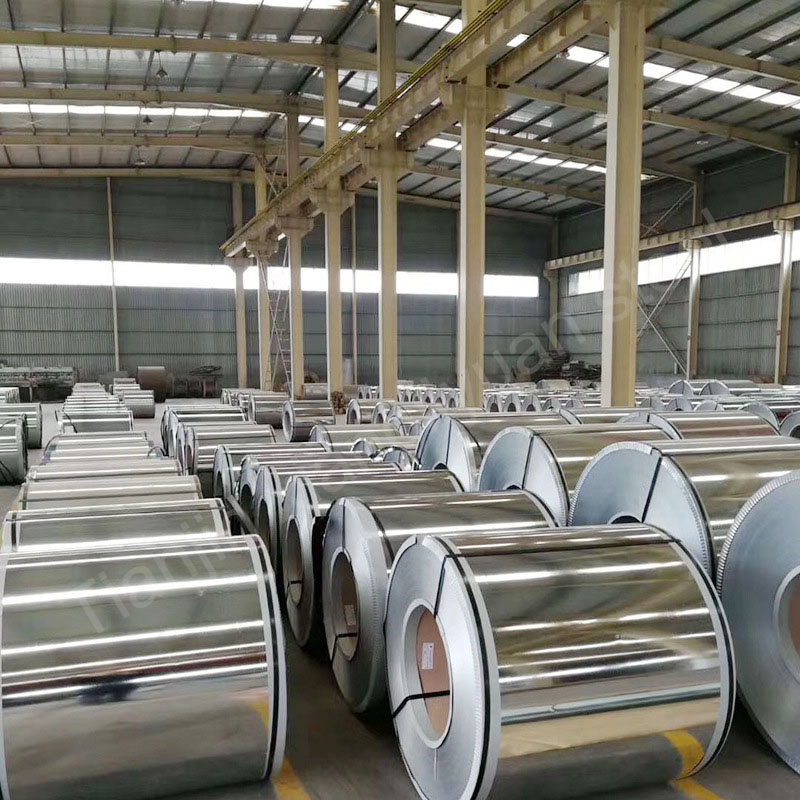
Modern slitting lines typically process coil weights ranging from 10 to 30 tons, with width capacities up to 2,000mm and thickness ranges from 0.3mm to 12.7mm or more . The equipment configuration must match the material specifications and downstream requirements of each order. Tianjin xiangliyuan steel operates state-of-the-art slitting and cut-to-length lines capable of handling diverse material grades, including hot-rolled carbon steel, cold-rolled steel, galvanized steel (GI), Galvalume (GL), PPGI, and high-strength low-alloy (HSLA) steels.
Width Tolerance: The Dimension That Defines Fit
Defining Width Tolerance Requirements
Width tolerance refers to the acceptable deviation from the nominal width specified on the purchase order. This parameter is critical because many downstream operations—particularly roll forming, stamping, and tube welding—depend on consistent strip width for proper die engagement and seam quality.
Industry standards such as ASTM A568/A568M provide general requirements for steel sheet tolerances, while individual product specifications may impose stricter limits . Typical slitting width tolerances range from ±0.1mm to ±0.3mm, depending on strip width and thickness . For precision applications, some processors can achieve tolerances as tight as ±0.05mm for narrower strips .
Factors Affecting Width Tolerance
Several factors influence achievable width tolerance:
-
Tooling Condition: Sharp, properly set knives produce cleaner cuts with minimal variation
-
Knife Clearance: The gap between upper and lower knives must be optimized for the material thickness and grade
-
Strip Tension: Inconsistent tension during slitting can cause width variation along the strip length
-
Material Properties: Harder materials and certain coatings may present additional challenges for width control
Practical Recommendations for Buyers
When specifying width tolerances, buyers should consider whether the strip will undergo further processing. Material destined for roll forming typically requires tighter width control than material that will be trimmed again before final use . It is also important to specify where width is measured—typically at the edge, excluding burr—and what measurement methodology will be used for receiving inspection.
Tianjin xiangliyuan steel works collaboratively with clients to establish appropriate tolerance specifications that balance precision requirements with cost-effectiveness. Our quality team provides detailed dimensional reports with each shipment, ensuring complete traceability and verification of compliance.
Edge Quality: More Than Just a Visual Concern
Classification of Edges
Edge quality encompasses both the physical condition of the cut edge and its suitability for the intended application. ASTM A805/A805M provides a classification system for carbon steel flat wire edges that is widely referenced in the industry :
-
Number 1 Edge: Prepared edge of specified contour, for applications requiring very accurate width or electroplating compatibility
-
Number 3 Edge: Approximately square edge produced by slitting (standard slit edge)
-
Number 5 Edge: Square edge with burr eliminated by rolling or filing
-
Number 6 Edge: Square edge produced by edge rolling, with less exacting tolerances
Burr Height and Control
A burr is the raised edge material created by the shearing action during slitting. While some burr is inevitable, excessive burr can cause problems in downstream operations, including:
-
Interference with roll forming dies
-
Potential injury to operators handling the material
-
Issues with edge welding in tube and pipe manufacturing
-
Compromised coating adhesion
Industry best practice typically limits burr height to ≤5% of material thickness or ≤0.03mm, whichever is less restrictive . For applications where burr is a critical concern, such as visible edges or electroplated components, deburring or chamfering operations may be specified .
Burr Orientation
The orientation of the burr can be controlled during the slitting process and should be specified based on downstream requirements. For roll forming applications, the burr is typically oriented to the non-cosmetic side of the formed part—the side that will be hidden in a fold or not exposed to view .
Camber Control
Camber refers to the lateral deviation of a slit strip from a straight line over a specified length. Excessive camber can cause feeding problems in automatic presses and roll formers, leading to downtime and material waste. Typical camber limits are specified as a maximum deviation per unit length, such as ≤1.5mm per 2 meters .
Flatness Control in Cut-to-Length Processing
The Importance of Flatness
While slitting produces narrow coils, cut-to-length (CTL) processing produces flat sheets of specified length from master coils. Flatness is the most critical quality parameter for CTL products, as it directly affects stamping accuracy, welding quality, and overall appearance .
Poor flatness manifests as:
-
Edge wave: Wavy edges caused by uneven tension during processing
-
Center buckle: Buckling in the sheet center
-
Crossbow: Curvature across the sheet width
Leveling Technology
Modern CTL lines incorporate multi-roll levelers that remove coil set and improve flatness through controlled flexure of the strip. The leveler applies alternating bending forces to the material, plastically deforming it to achieve a flat profile. CTL lines typically achieve flatness of 1-2 I-units, with length cutting accuracy of ±0.15mm or better .
Factors Affecting Cut-to-Length Quality
-
Leveler Settings: Roll penetration and backup roll positioning must be optimized for material thickness and grade
-
Shear Performance: Blade sharpness and alignment affect cut squareness and edge condition
-
Material Handling: Proper support and transfer of finished sheets prevents damage and distortion
Tianjin xiangliyuan steel maintains rigorous flatness control standards across our CTL operations, ensuring that delivered sheets meet the demanding requirements of automotive, construction, and appliance manufacturing.
Material Grades and Processing Compatibility
Common Material Categories
Different material grades present unique processing challenges. Our facility regularly processes:
-
Commercial Steel (CS Types A, B, C): General-purpose material for moderate forming applications
-
Drawing Steel (DS): Improved formability for complex stampings
-
Structural Steel (SS): Higher strength for load-bearing applications
-
High Strength Low Alloy (HSLAS): Enhanced strength-to-weight ratio with improved atmospheric corrosion resistance
ASTM A924/A924M provides general requirements for metallic-coated steel sheet products, including the various coating types widely used in construction and manufacturing .
Coated Materials
Processing coated materials—including galvanized (GI), Galvalume (GL), and aluminum-zinc alloy coated products—requires special attention to avoid coating damage. Proper knife clearance and tension control are essential to prevent coating flaking or scratching. Our lines are configured to handle a wide range of coating types and thicknesses, with quality protocols designed to preserve coating integrity.
The Tianjin Xiangliyuan Steel Advantage
Strategic Location
Tianjin xiangliyuan steel is strategically situated in Tianjin, one of China’s most important industrial and logistics centers. Our proximity to Tianjin Port—one of the world’s busiest and best-equipped ports—provides significant advantages for international customers:
-
Reduced Shipping Costs: Lower inland transportation expenses
-
Faster Lead Times: Efficient port access minimizes loading and customs clearance delays
-
Flexible Logistics: Multiple shipping options and carriers
-
Reliable Scheduling: Consistent port operations support predictable delivery timelines
Tianjin has long been recognized as a key steel logistics hub, with major steel producers establishing processing and distribution centers here to serve both domestic and export markets . We leverage this infrastructure to deliver superior service to our global clientele.
Quality Assurance Commitment
Our commitment to quality extends beyond simple compliance with industry standards. We implement comprehensive quality control protocols at every stage of processing:
-
Incoming Material Verification: Chemical and mechanical property validation
-
In-Process Monitoring: Continuous dimensional and edge quality checks
-
Final Inspection: Comprehensive dimensional, flatness, and surface quality verification
-
Documentation: Complete material certificates, coil lists, and dimensional reports provided with each shipment
Customer Partnership Approach
We view every order as a partnership opportunity. Our technical team works closely with clients to understand their specific applications, downstream processes, and quality requirements. This collaborative approach ensures that we deliver not just material, but solutions tailored to each customer’s unique needs.
Steel coil slitting and cut-to-length processing demand technical expertise, precision equipment, and rigorous quality control. At Tianjin xiangliyuan steel, we deliver all three—and more. Whether you require precision slit coils, cut-to-length sheets, or custom processing of hot-rolled, cold-rolled, or coated steel products, we have the capability and commitment to meet your specifications.
We invite you to experience the Tianjin xiangliyuan steel difference. Contact us today to discuss your requirements, request a quote, or schedule a facility tour.
Tianjin xiangliyuan steel
Your Trusted Partner in Precision Steel Processing
📧 Email: infosteel@xlygt.com
🌐 Website: https://www.xlysteel.com/
Conveniently located near Tianjin Port – Your Gateway to Quality Steel