The Critical Role of High Carbon Steel Wire in Modern Spring Manufacturing
In the demanding landscape of industrial spring manufacturing, high carbon steel wire stands as a fundamental material where precision metallurgy meets mechanical performance. Springs are the unsung heroes of countless applications—from automotive suspension systems and valve train components to industrial machinery, mattress supports, and precision instruments. The quality of the spring steel wire directly determines the service life, fatigue resistance, and reliability of the final product .
As a professional steel supplier based in Tianjin, China, Tianjin Xiangliyuan Steel has established itself as a trusted partner for global spring manufacturers seeking consistently high-quality high carbon spring steel wire. Our strategic location at the Port of Tianjin—one of the world’s busiest and most efficient shipping hubs—enables us to deliver products to international clients with exceptional speed and cost-effectiveness, reducing logistics lead times and inventory costs for our customers.
This comprehensive technical overview addresses the critical aspects of high carbon steel wire for spring applications, including tensile strength characteristics, the patented drawing process, and heat treatment protocols. We invite you to explore our capabilities and discuss your specific requirements at infosteel@xlygt.com or visit our website https://www.xlysteel.com/ to learn more about our full product portfolio.
Metallurgical Fundamentals of High Carbon Spring Steel Wire
Chemical Composition and Grade Selection
High carbon spring steel wire derives its mechanical properties from a carefully balanced chemical composition. The carbon content typically ranges from 0.45% to 0.85%, with common grades including 45#, 60#, 65#, 70#, SWRH72A, and SWRH72B . Each grade offers distinct tensile strength profiles suitable for specific spring applications.
For applications demanding superior sag resistance and elevated-temperature performance, silicon-enriched formulations (approximately 1% Si) have demonstrated significant advantages. Research has confirmed that silicon enhances tensile strength after annealing through solid solution hardening in lamellar ferrite, while also improving sag resistance at temperatures ranging from 150°C to 250°C . The addition of silicon also reduces lattice distortion in lamellar pearlite, contributing to superior fatigue strength—a critical factor for dynamic spring applications.
Advanced high-strength spring steel formulations may also incorporate chromium, manganese, and controlled impurity levels (P ≤ 0.015%, S ≤ 0.015%) to achieve yield strengths exceeding 2100 MPa while maintaining cold coiling workability with yield ratios between 75% and 95% .
Tensile Strength: The Primary Performance Metric
Tensile strength represents the most fundamental mechanical property for spring steel wire, directly influencing the maximum working stress a spring can withstand. The relationship between wire diameter and achievable tensile strength follows an inverse correlation—finer diameters permit higher tensile strengths due to increased cumulative strain hardening during drawing.
For Grade B high carbon spring steel wire, tensile strength ranges from approximately 1710 N/mm² at 2.00 mm diameter to 2150-2550 N/mm² at 0.20 mm diameter. Grade C offers enhanced strength, typically 220-300 N/mm² higher than Grade B at equivalent diameters, while specialized high-tensile grades for demanding applications can achieve 2690-3090 N/mm² in ultra-fine diameters .
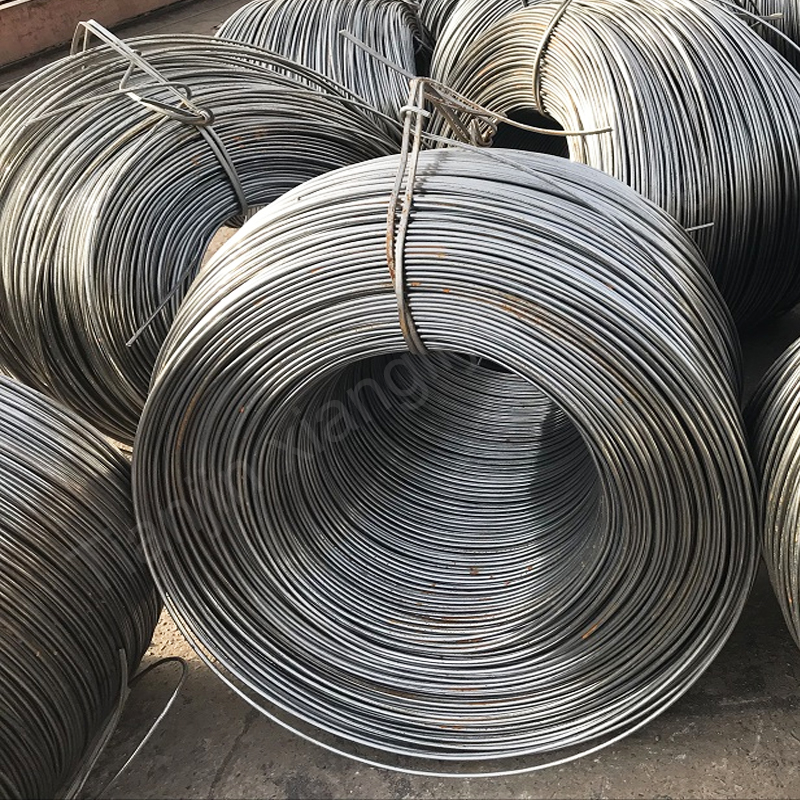
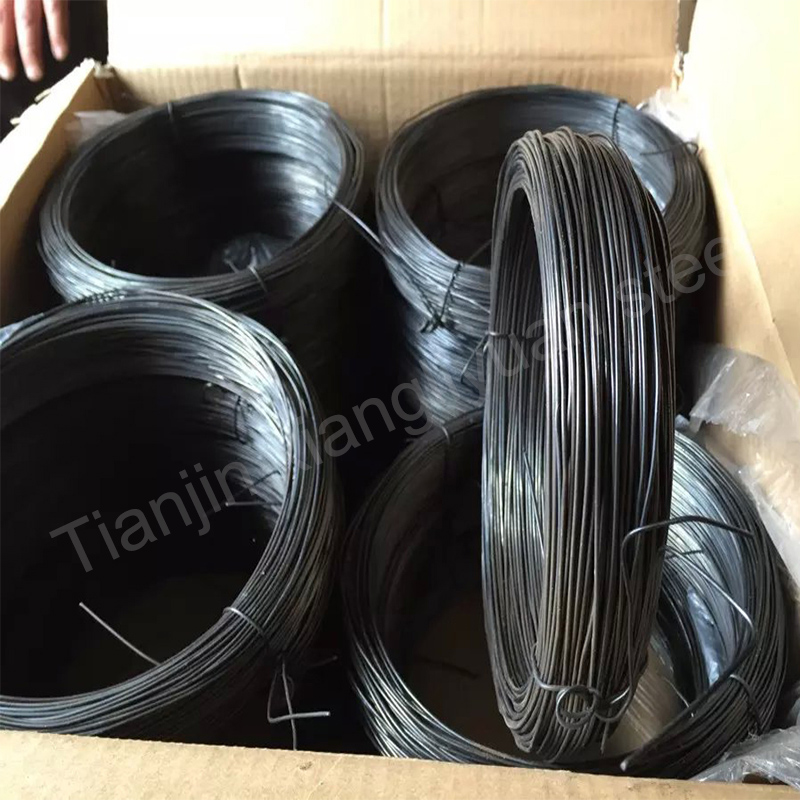
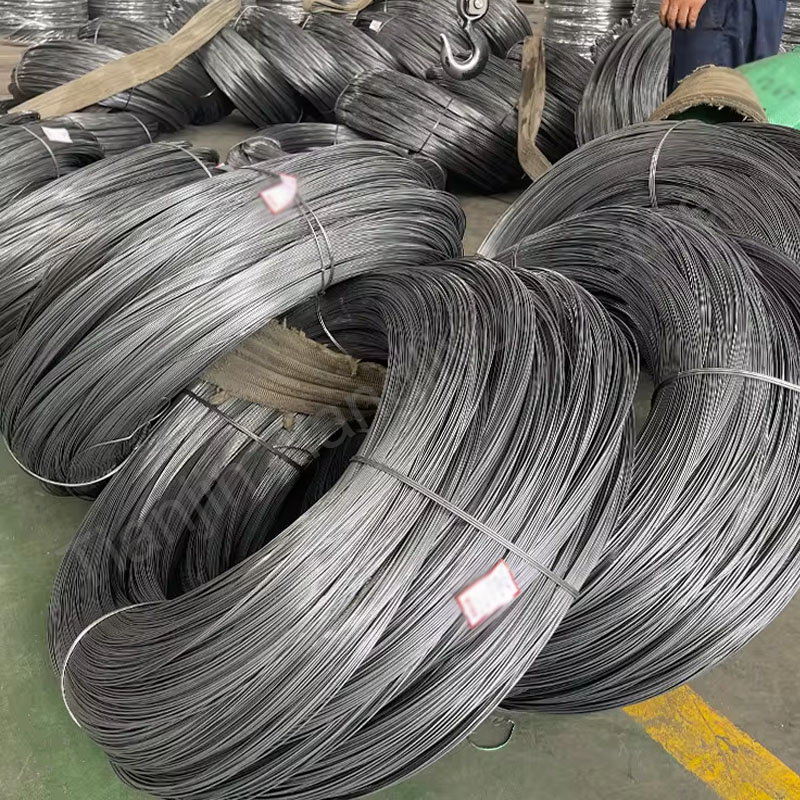
At Tianjin Xiangliyuan Steel, we produce high carbon spring steel wire across a comprehensive diameter range from 0.3 mm to 13.0 mm, meeting ASTM A713, DIN 17223, BS, and JIS standards . Our rigorous quality control ensures consistent tensile properties within each batch, enabling our customers to maintain predictable spring performance.
The Patented Drawing Process: Engineering Precision and Consistency
Wire Rod Preparation and Surface Conditioning
The journey from wire rod to finished spring wire begins with meticulous surface preparation. Raw wire rod undergoes a pickling process to remove mill scale and surface oxides, followed by phosphate coating formation. Research indicates that electrolytic phosphate film formation achieves superior surface quality and coating adhesion compared to non-electrolytic methods, with measurable improvements in surface roughness (Rz) and lubricant retention .
The phosphate coating serves dual purposes: it acts as a carrier for drawing lubricants and provides a barrier against metal-to-die contact, reducing friction and die wear during the subsequent drawing stages. Lubricant formulations typically contain approximately 70% sodium-based or calcium-based metal soaps, optimized for high-speed drawing operations .
Multi-Stage Drawing: The Patented Process
The patented drawing process transforms wire rod into finished spring wire through a carefully controlled sequence of reductions. Typical configurations employ 7 to 13 drawing stages, each with precisely engineered die geometries and reduction ratios . The cumulative reduction, expressed as the total percentage reduction in cross-sectional area, determines the final tensile strength through strain hardening (cold work).
The drawing process must balance competing objectives:
-
Maximum achievable strength through optimal work hardening
-
Ductility retention to ensure coiling formability
-
Surface quality with minimal defects that could initiate fatigue cracks
-
Dimensional consistency within specified tolerances
Advanced drawing operations may incorporate intermediate thermal treatments to relieve internal stresses and enable further reduction. Some processes integrate thermal diffusion of coating layers—for example, Ni-Cu plated wires may be drawn and simultaneously heat-treated at 200°C to 500°C to form a protective Ni-Cu alloy layer, improving corrosion resistance while enhancing drawability through superior lubrication .
Patenting: The Critical Pre-Drawing Heat Treatment
Before drawing, high carbon steel wire typically undergoes a patenting process—a continuous heat treatment that establishes the ideal pearlitic microstructure for subsequent drawing. Patenting involves austenitizing the wire at temperatures above the A₃ point, followed by controlled cooling at rates sufficient to produce fine pearlite rather than bainite or martensite .
The patenting step achieves the following:
-
Uniform fine pearlite structure with optimal interlamellar spacing
-
Reduced prior austenite grain size (typically 10 or higher on the ASTM grain size scale)
-
Carbide morphology control—fine, uniformly distributed carbides
-
Enhanced drawability through reduced deformation resistance
For certain applications where wire diameter and precision requirements permit, the patenting step may be simplified or omitted, though this typically limits the achievable final tensile strength and ductility balance .
Heat Treatment: Optimizing Microstructure for Performance
Stress-Relief Annealing
After drawing, spring steel wire exhibits significant residual stresses from cold working. These stresses must be relieved before coiling operations to prevent spring distortion and premature failure. Low-temperature stress-relief annealing at approximately 400°C has been shown to effectively reduce lattice distortion in lamellar pearlite—identified as a primary origin of fatigue fracture—thereby enhancing fatigue limits .
Stress-relief annealing provides:
-
Reduced internal stresses for dimensional stability
-
Improved ductility for coiling operations
-
Enhanced fatigue resistance through lattice defect reduction
-
Preservation of tensile strength achieved through prior cold work
Quenching and Tempering for High-Strength Applications
For springs requiring maximum mechanical properties, high carbon steel wire may be heat-treated after coiling (or in coil form) through austenitizing, quenching, and tempering. This specification is addressed by ASTM A713, which covers wire intended for the manufacture of mechanical springs that are heat-treated after fabrication .
Quenching transforms the structure to martensite, achieving maximum hardness and tensile strength. Tempering subsequently restores toughness and ductility while reducing brittleness. The tempering conditions—temperature and time—must be carefully controlled based on silicon content. For high-silicon spring steels, tempering parameters must satisfy specific relationships between tempering temperature (T in Kelvin), tempering time (t in seconds), and silicon content (Si%) to achieve optimal property balance .
Post-Forming Treatments
Modern spring manufacturing often incorporates additional surface enhancement processes:
-
Shot peening introduces compressive residual stresses at the surface, significantly improving fatigue strength
-
Nitriding (gas or plasma) enhances surface hardness and wear resistance, with typical internal hardness exceeding 590 Hv and nitrided layer hardness above 750 Hv
-
Low-temperature stress-relieving (180°C to 200°C for 20 minutes) after shot peening stabilizes the beneficial compressive stress layer
Quality Assurance and Testing Protocols
Tensile Testing
Tensile testing confirms that the wire meets specified strength requirements. Samples are tested according to recognized standards (ASTM, DIN, JIS) with strain rates controlled to ensure reproducible results. For high-strength spring wire, yield ratio (yield strength / tensile strength) is critical—excessive yield ratios (above 90%) indicate poor ductility that may impair coiling formability .
Notch Bending Test
The notch bending test evaluates cold coiling ability by introducing a controlled notch (30 µm maximum depth) at a right angle to the wire longitudinal direction, then subjecting the sample to three-point bending until fracture. A minimum notch bending angle of 28° indicates acceptable cold coiling performance .
Fatigue Testing
The Nakamura-type rotating bending fatigue test evaluates fatigue strength by applying alternating compressive and tensile stresses to the wire surface through a rotating beam configuration. This test simulates the cyclic loading experienced by springs in service. High-quality spring wire achieves average fatigue strengths exceeding 900 MPa .
Metallographic Examination
Microstructural analysis verifies:
-
Prior austenite grain size (≥ 10 ASTM)
-
Residual austenite volume fraction (≤ 20%)
-
Carbide size and distribution (spherical carbides with controlled circle equivalent diameter)
-
Pearlite morphology and interlamellar spacing
Our Commitment to Quality and Service
At Tianjin Xiangliyuan Steel Trading Co., Ltd. , we understand that your spring manufacturing success depends on consistent, high-quality steel wire delivered on time. Our location in Tianjin—home to one of China’s largest and most efficient ports—gives us a significant logistical advantage in serving international markets. We can ship products quickly and cost-effectively to clients across Asia, Europe, the Americas, and beyond.
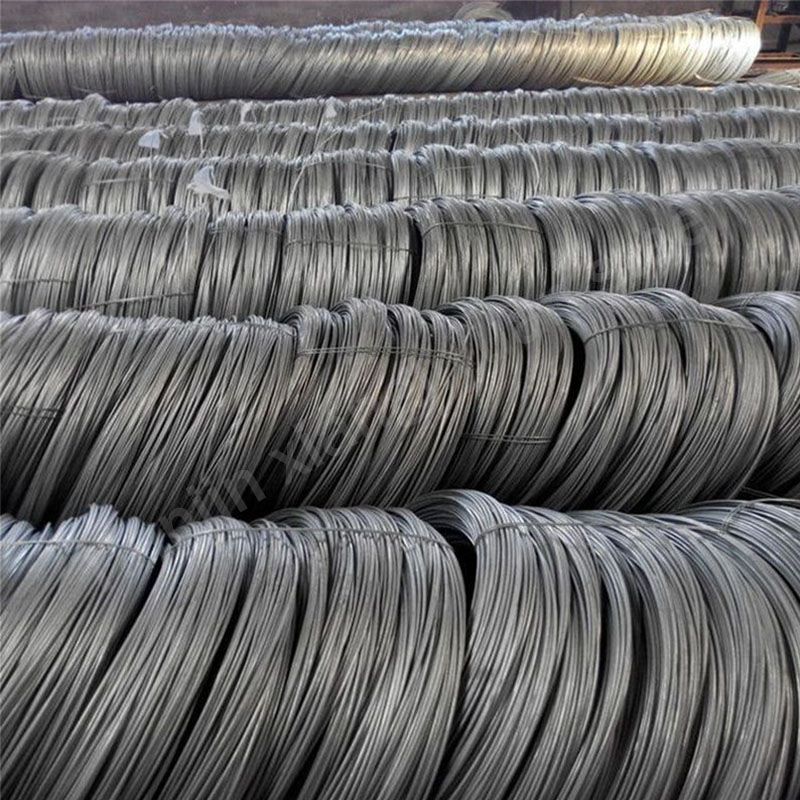
Our product portfolio includes high carbon spring steel wire in diameters from 0.3 mm to 13.0 mm, available in various grades and tensile strength levels to meet your specific application requirements. We maintain rigorous quality control throughout production, from wire rod selection through drawing, patenting, and final testing.
We invite global spring manufacturers, automotive suppliers, and industrial component producers to partner with us for their high carbon steel wire needs. Experience the Tianjin Xiangliyuan Steel difference—exceptional product quality, competitive pricing, and reliable delivery backed by decades of metallurgical expertise and customer service excellence.
For technical specifications, quotations, or custom manufacturing inquiries, please reach out to our team:
Tianjin Xiangliyuan Steel Trading Co., Ltd.
Email: infosteel@xlygt.com
Website: https://www.xlysteel.com/
Location: Tianjin, China – Advantageously positioned for global shipping
Let us be your trusted partner in spring manufacturing excellence.