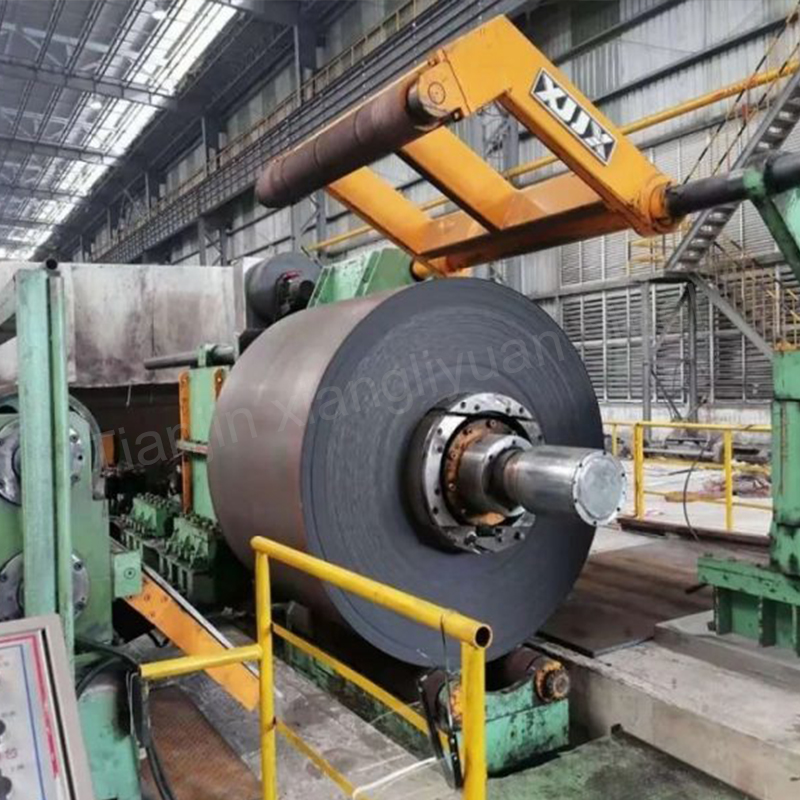
In the global steel procurement landscape, understanding the fundamental differences between hot rolled steel plate and cold rolled steel coil is essential for making informed sourcing decisions. Whether you are procuring carbon steel coil, steel pipe, or structural steel for construction, automotive manufacturing, or industrial applications, the choice between hot rolled and cold rolled products significantly impacts your downstream operations, production costs, and final product quality. As a leading supplier based in Tianjin, China—strategically positioned near one of the world’s busiest ports—Tianjin Xiangliyuan Steel provides comprehensive solutions for international buyers seeking reliable steel products with competitive pricing and fast delivery.
The Manufacturing Processes: A Technical Overview
Hot Rolling: High-Temperature Forming
Hot rolling is a process conducted at temperatures above the recrystallization temperature of steel, typically between 900°C and 1250°C. The process begins with continuous casting slabs or blooms as raw materials. These are heated in a step-by-step reheating furnace, descaled with high-pressure water, then passed through roughing and finishing mills with computer-controlled precision.
The high temperature makes the steel highly malleable, allowing significant deformation with relatively low energy consumption. After final rolling, the material undergoes laminar cooling with precisely controlled cooling rates before being coiled into hot rolled steel coil. This process can achieve production speeds of 10–30 m/s, making it highly efficient for mass production.
Cold Rolling: Precision at Room Temperature
Cold rolling starts with hot rolled steel coil that has been pickled to remove oxide scale. The material is then rolled at room temperature—below the recrystallization temperature—through a series of rolling stands. This cold deformation work-hardens the steel, increasing strength and hardness while reducing ductility.
The cold rolling process produces SPCC steel, DC01 steel, and other grades commonly used in applications requiring precision dimensions and superior surface quality. The cold rolled steel coil is typically annealed after rolling to eliminate work hardening and restore formability, with continuous annealing lines or bell-type furnaces used for this purpose.
Surface Finish: Visual Quality and Functional Performance
Hot Rolled Steel Surface Characteristics
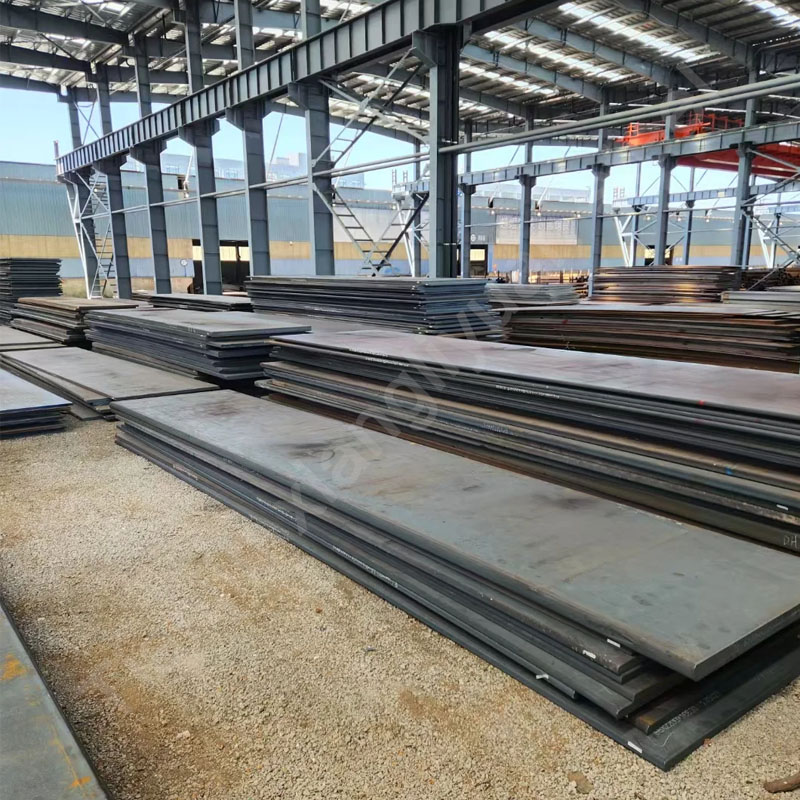
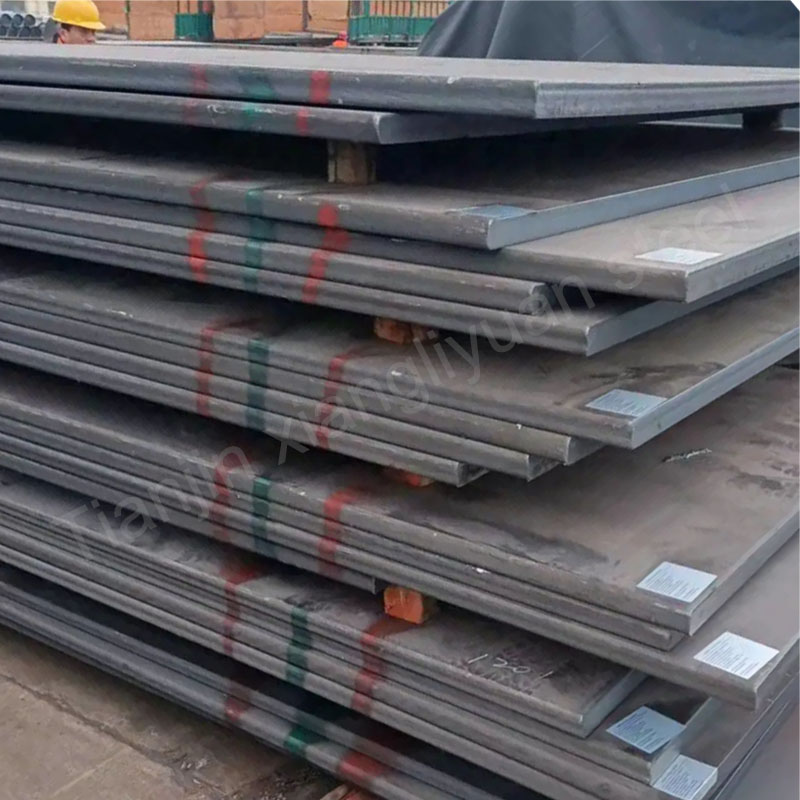
The surface of hot rolled steel plate is characterized by the presence of mill scale—a layer of iron oxide (Fe₃O₄) that forms during the high-temperature rolling and cooling process. This results in a rough, scaly appearance with a characteristic purple-black color on unrusted surfaces. Surface defects such as pitting, wave edges, folds, and tower-shaped coiling are common due to the high-temperature forming process.
For applications requiring improved surface quality, hot rolled steel can be processed into pickled and oiled steel, where the mill scale is removed through acid pickling and a rust-preventive oil coating is applied. This HRPO steel offers a cleaner surface while maintaining the cost advantages of hot rolling.
Cold Rolled Steel Surface Excellence
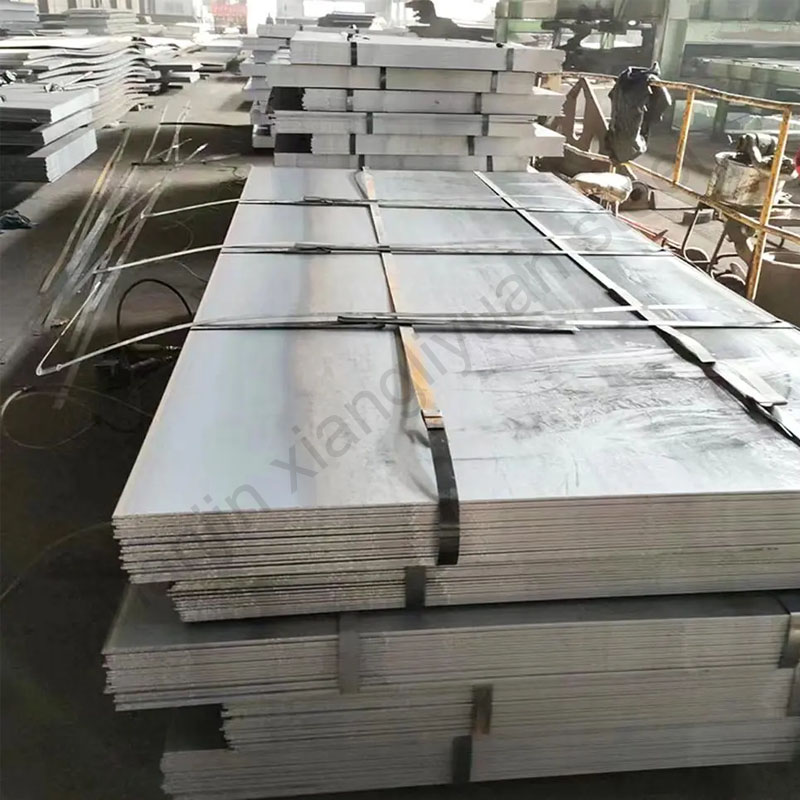
Cold rolled steel coil delivers superior surface quality with a smooth, bright finish that can even achieve mirror-like appearance. The absence of high-temperature oxidation during rolling eliminates scale formation and pitting defects. The surface has a certain glossiness and smooth feel, comparable to the finish of quality steel products.
The surface roughness pattern of cold rolled steel can be engineered to enhance specific performance characteristics. Research has shown that controlling surface roughness parameters—such as center-line average roughness (Ra) and peak spacing—can improve press formability, phosphatability, weldability, and resistance to galling during forming operations. This precision surface engineering is particularly important for automotive steel sheet used in outer panels where paint appearance and surface finish are critical.
Dimensional Accuracy: Precision That Matters
Hot Rolled Tolerances
Hot rolled steel plate generally offers moderate dimensional accuracy due to thermal expansion and contraction during cooling. Typical thickness tolerances range from ±0.1mm to ±0.3mm for plate products. The thickness and width accuracy is relatively poor compared to cold rolled products, with straight-rolled coils often showing tongue-shaped and fishtail-shaped heads and tails.
Despite these limitations, hot rolled steel is commonly used in the pipe industry where coil inner diameters of 760mm are standard. The material is available in thicknesses typically from 1.2mm to 20mm and beyond, with widths up to 3000mm or more.
Cold Rolled Precision
Cold rolling achieves significantly tighter dimensional tolerances, typically within ±0.01mm to ±0.05mm for sheet products. The thickness variation of cold rolled strip does not exceed 0.01–0.03mm, and thickness can be reduced to as thin as 0.18mm or even 0.001mm in specialized applications.
Cold rolled steel coil is produced in coil weights of 6–13.5 tons with an inner diameter of 610mm. The standard coil weight and dimensions are designed to optimize handling in downstream processing operations such as tube making, pipe manufacturing, and stamping.
Forming Performance: Workability and Mechanical Properties
Hot Rolled Formability
Hot rolled steel plate exhibits excellent plasticity and weldability due to its refined grain structure. The high-temperature rolling breaks down the casting structure, refines grain size, eliminates internal defects, and improves mechanical properties—particularly in the rolling direction.
However, there are important considerations. Non-metallic inclusions (sulfides, oxides, and silicates) are compressed into sheets during hot rolling, creating a lamination effect that can reduce tensile properties through the thickness direction. Uneven cooling during production also induces residual stresses that can affect deformation behavior, stability, and fatigue resistance in fabricated components.
Cold Rolled Formability
Cold rolled steel coil undergoes work hardening during rolling, resulting in increased yield strength—typically 15–25% higher than hot rolled products of the same grade—and higher surface hardness. This strengthening comes at the cost of reduced ductility and plasticity in the as-rolled condition.
Through annealing processes, cold rolled steel can be tailored to achieve specific mechanical properties and formability characteristics. Annealed cold rolled sheet offers good stamping performance, with grades such as SPCE and DC03 specifically designed for deep drawing applications. The material is commonly used in automobile manufacturing, electrical appliances, and applications requiring both precision and formability.
The surface quality of cold rolled steel also contributes to forming performance. The smooth surface allows better lubricant distribution during stamping operations, reducing friction and improving drawability. For applications requiring superior press formability, surface roughness can be optimized to balance lubrication retention with mechanical interlocking for lubricant films.
Applications and Industry Selection Guide
Hot Rolled Steel Applications
Hot rolled steel plate is widely used in:
-
Construction and structural applications: Beams, columns, and building frameworks
-
Shipbuilding: Hull plates and structural components
-
Bridge construction: Bridge girders and support structures
-
Pressure vessels: Industrial tanks and containers
-
Pipe and tube manufacturing: Raw material for welded pipe production
-
Railway equipment: Rails, wheels, and structural components
-
General engineering: Machinery frames, agricultural equipment, and earthmoving machinery
Common hot rolled steel grades include A36, SS400, Q235B, and Q345B. The material is available as hot rolled steel coil, hot rolled steel plate, and slit strip products.
Cold Rolled Steel Applications
Cold rolled steel coil is preferred for:
-
Automotive body panels: Outer panels, doors, hoods, and roofs
-
Home appliances: Refrigerator panels, washing machine drums, and air conditioner components
-
Electrical equipment: Motor housings, transformer cores, and control cabinets
-
Furniture: Office furniture, shelving systems, and storage units
-
Precision machinery: Components requiring tight tolerances and smooth finishes
-
High-quality welded tubes: Precision tubes for automotive and hydraulic applications
Common cold rolled steel grades include SPCC, SPCD, SPCE, DC01, DC02, and DC03.
Procurement Considerations and Cost Analysis
Cost Comparison
Cold rolled steel typically commands a 18–25% price premium over hot rolled steel due to the additional processing steps—pickling, cold reduction, annealing, and skin passing. For steel plate and steel coil sourced from China, typical FOB pricing shows hot rolled products at $490–550 per ton compared to $590–680 per ton for cold rolled equivalents.
However, the higher initial cost of cold rolled steel often proves economical when considering downstream processing savings. A $50 per ton saving on hot rolled steel can quickly evaporate if the buyer must spend an additional $80 per ton on machining, descaling, or straightening operations to achieve the required surface quality and dimensional accuracy.
Quality and Sourcing Strategy
When procuring carbon steel from China, buyers should consider:
-
Specification requirements: Match material specifications to application needs
-
Surface finish requirements: Determine if hot rolled, pickled and oiled, or cold rolled finish is required
-
Tolerance needs: Calculate the true cost of additional machining for looser tolerances
-
Lead time requirements: Consider inventory availability and shipping logistics
-
Total cost of ownership: Factor in downstream processing costs, not just material price
Our Commitment to Quality and Service
At Tianjin Xiangliyuan Steel, we understand the critical importance of selecting the right steel products for your applications. Since 2011, we have specialized in seamless pipes, welded pipes, galvanized pipes, square pipes, steel plates, steel coils, and various other carbon steel products. Our 4,580-square-meter facility and team of 77 professionals enable us to maintain extensive inventories of common specifications for the fastest possible delivery.
Our location in Tianjin—China’s third-largest port city—provides significant logistical advantages for international buyers. Proximity to Tianjin Seaport ensures efficient shipping operations, shorter lead times, and reduced transportation costs for global shipments. We stock over 20,000 tons of available goods in our modern outdoor and indoor storage facilities.
We offer products to various international standards including GB/T, API, ASTM, JIS, and DIN, serving markets across Asia, Africa, America, and the Middle East. Our commitment to quality is backed by rigorous inspection procedures, with every product traceable to its raw material source.
The choice between hot rolled steel plate and cold rolled steel coil involves careful consideration of surface finish requirements, dimensional accuracy needs, forming performance expectations, and overall project economics. Hot rolled steel offers cost advantages and excellent weldability for structural applications, while cold rolled steel delivers superior surface quality, tighter tolerances, and optimized formability for precision applications.
As a trusted supplier of carbon steel products, Tianjin Xiangliyuan Steel is committed to helping our international customers make the right selection for their specific applications. Our combination of quality products, competitive pricing, and strategic location enables us to provide responsive service and reliable delivery to customers worldwide.
For more information about our carbon steel plate, cold rolled steel coil, seamless steel pipe, galvanized pipe, or other steel products, please contact us:
Tianjin Xiangliyuan Steel Trading Co., Ltd.
Website: https://www.xlysteel.com/
Email: infosteel@xlygt.com
We look forward to building a partnership grounded in trust and excellence, paving the way for a prosperous future in the realm of steel and metals.