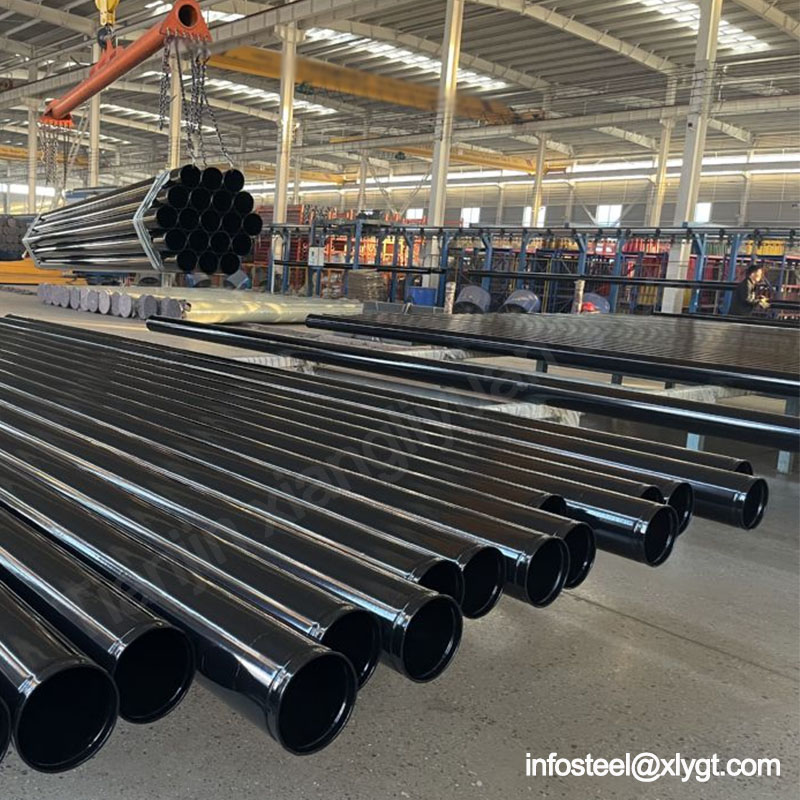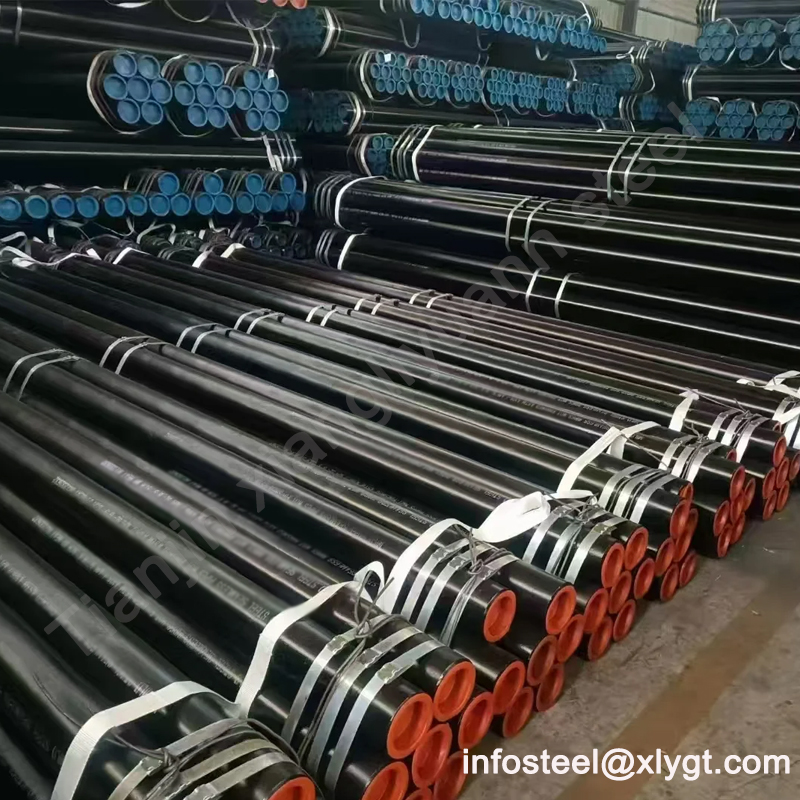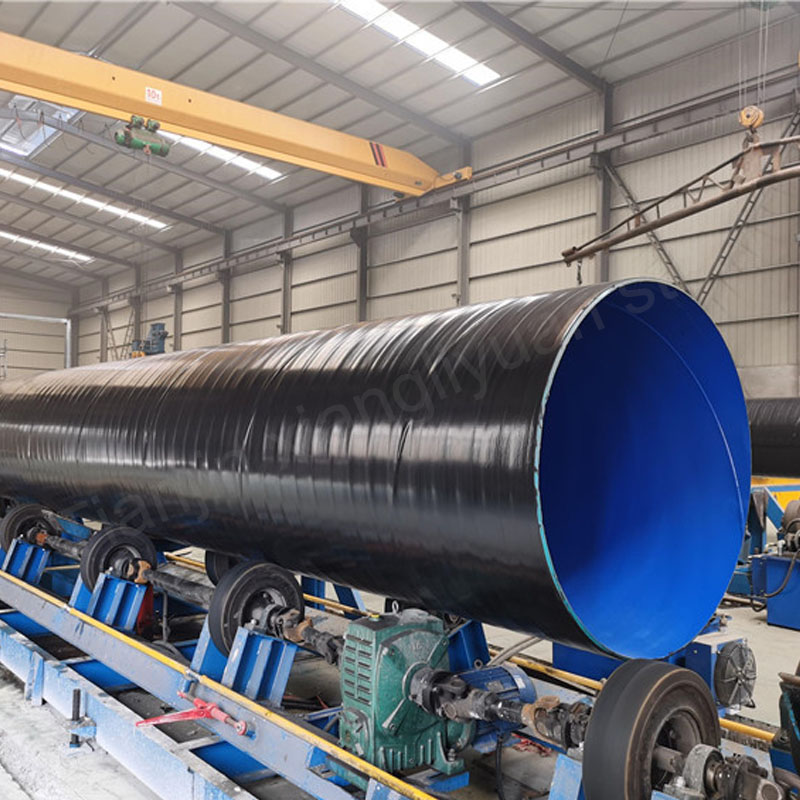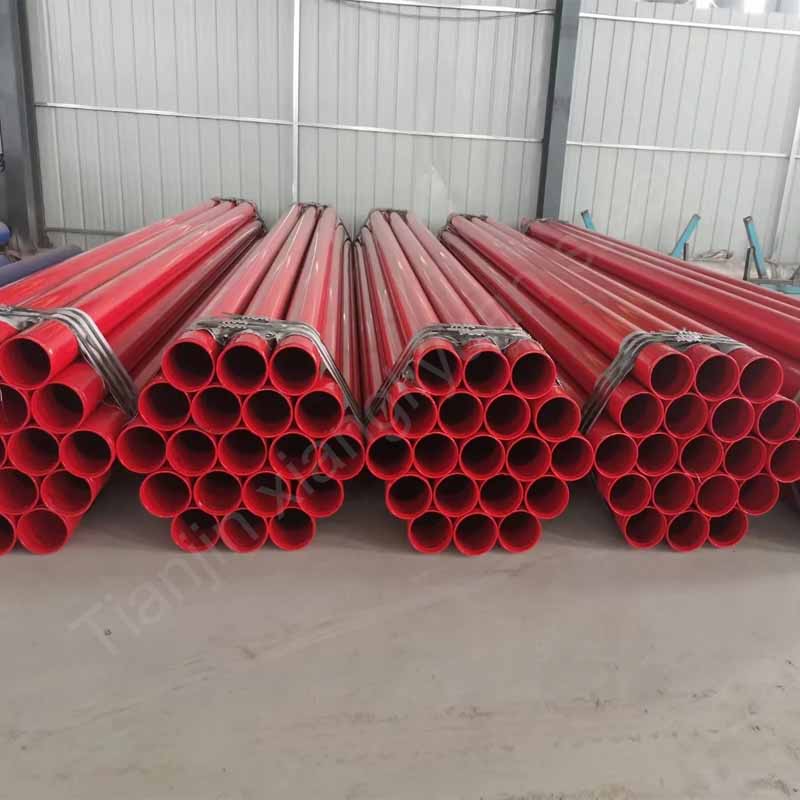
In the global water infrastructure sector, the protection of steel pipelines against internal corrosion remains a paramount engineering concern. For decades, cement mortar lining (CML) has been recognized as one of the most reliable and cost-effective methods for safeguarding steel pipes used in potable water transmission and distribution systems. This article provides a comprehensive technical overview of internal cement mortar lining for steel pipes, with particular focus on potable water applications and the critical standards governing lining thickness.
As a leading supplier of high-quality steel pipes, Tianjin Xiangliyuan Steel understands the importance of delivering products that meet international standards for water infrastructure projects worldwide. Our commitment to quality and technical excellence ensures that every pipe we supply—whether LSAW, SSAW, or ERW—is engineered to perform reliably for decades in demanding water service conditions.
Historical Context and Industry Adoption
Cement mortar lining has a well-documented service history dating back to the late 1800s . Its widespread adoption in the water transmission market is no coincidence—the lining provides dual protection mechanisms that make it uniquely suited for potable water applications.
The protective mechanism operates through two distinct pathways. First, the cement mortar layer acts as a physical barrier between the steel substrate and the conveyed water. Second, and perhaps more importantly, the cement hydration process creates a highly alkaline environment with a pH typically ranging from 12 to 13 . At this elevated pH level, a thin, stable oxide film forms on the steel surface—a process known as passivation. This passive film effectively prevents active corrosion even if minor amounts of moisture penetrate through microscopic pores in the mortar .
This dual protection—physical barrier plus chemical passivation—explains why cement mortar lining remains the most common internal lining specified for steel water pipes in the water transmission market . Today, virtually all steel pipes carrying potable water utilize cement mortar lining, and the technology has also found application in raw water systems, cooling water circuits, and certain wastewater applications .
Potable Water Applications: Meeting Health and Safety Standards
For potable water applications, the selection of materials and application methods must satisfy stringent health and safety requirements. The cement used for drinking water pipelines must be of Portland type or, in some specifications, blast furnace cement . These cement types have been validated for contact with drinking water and comply with health certification standards such as NSF/ANSI/CAN Standard 61 .
Tianjin Xiangliyuan Steel supplies steel pipes with cement mortar linings that are fully compliant with these health standards, ensuring that our products are suitable for municipal water authorities and infrastructure projects globally. Our pipes are manufactured to support the delivery of clean, safe drinking water to communities around the world.
The Centrifugal Application Process
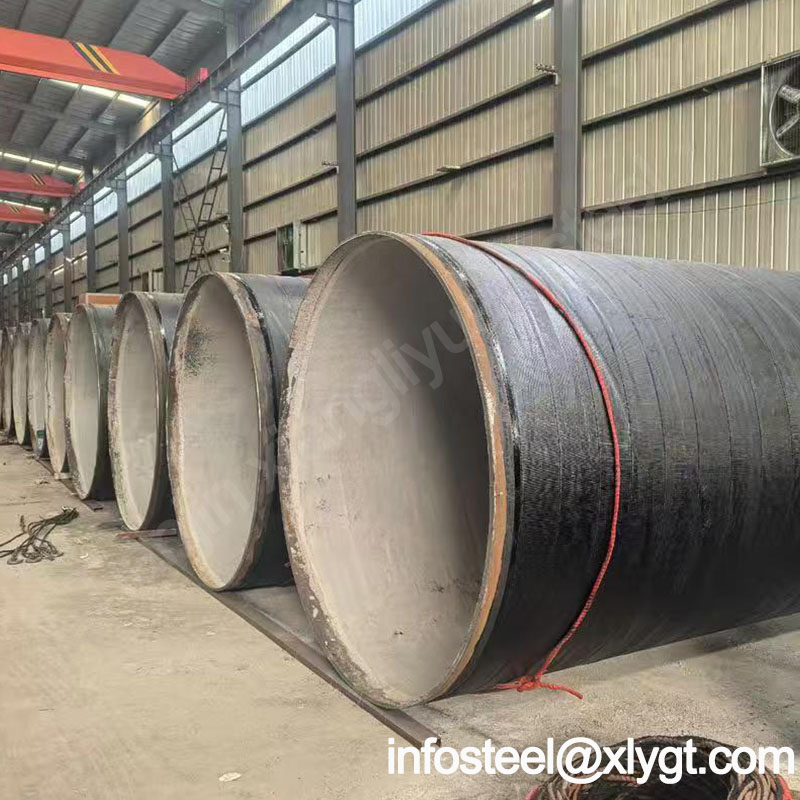
The standard method for shop-applied cement mortar lining is the centrifugal application process, which is specified in AWWA C205 for pipe diameters of 4 inches (100 mm) and larger . This process involves pumping a high-slump cement mortar mixture into a rotating pipe. Once the lining is placed along the full length of the pipe, the rotational speed is increased to consolidate the mortar and evacuate excess water . This procedure yields a dense, smooth lining with excellent adhesion to the steel substrate.
Following application, the lining undergoes a controlled curing process to achieve the required compressive strength . Proper curing is essential for developing the lining’s full protective capabilities and ensuring long-term durability in service. The shop-applied nature of this lining—as opposed to field-applied—ensures consistent quality control and optimal curing conditions .
Hydraulic Performance Benefits
Beyond corrosion protection, cement mortar lining significantly enhances the hydraulic performance of steel pipelines. The smooth internal surface reduces friction losses, resulting in an excellent Hazen-Williams flow coefficient of approximately C=145 . This translates to a 15-25% improvement in flow efficiency compared to unlined steel pipe . For municipal water authorities and industrial operators, this improved efficiency means reduced pumping costs over the service life of the pipeline.
The hydraulic benefits, combined with the corrosion protection and relatively low material cost, make cement mortar lining particularly attractive for large-diameter transmission mains . For projects involving LSAW or SSAW steel pipes in diameters up to 120 inches, factory-applied cement mortar lining offers an optimal balance of performance and cost-effectiveness .
Lining Thickness Standards: AWWA C205 and Beyond
The dimensional specification of cement mortar lining is critical to its protective function. The industry reference standard for shop-applied cement mortar lining on steel water pipe is ANSI/AWWA C205, which covers pipe diameters of 4 inches and larger .
Standard Thickness Requirements
AWWA C205 defines nominal lining thickness based on pipe diameter, as shown in the table below :
| Nominal Pipe Size | Nominal Lining Thickness | ||
|---|---|---|---|
| inch | mm | inch | mm |
| 4–10 | 100–250 | ¼ | 6 |
| 11–23 | 275–575 | 5/16 | 8 |
| 24–36 | 600–900 | ⅜ | 10 |
| Over 36 | Over 900 | ½ | 13 |
Thickness Tolerances
The standard also specifies allowable tolerances for these thicknesses. For pipe diameters from 4 inches to 36 inches, the tolerance is -1/16 inch (-1.6 mm) to +1/8 inch (+3.2 mm). For diameters over 36 inches, the tolerance is -1/16 inch (-1.6 mm) to +3/16 inch (+4.8 mm) .
While these are the minimum requirements specified by the standard, it is important to note that thicker linings may be specified for projects with particular requirements. However, engineers should be aware that increased lining thickness adds weight to the pipe, which may affect shipping costs and handling logistics .
Supplementary Standards and Specifications
In addition to AWWA C205, several other standards govern cement mortar lining for steel and ductile iron pipes. ISO 4179 provides international specifications for cement mortar lining of ductile iron pipes for pressure and non-pressure pipelines . For the Australian and New Zealand markets, AS/NZS 1281 is the relevant standard .
Tianjin Xiangliyuan Steel is well-versed in these various international standards and can supply pipes with linings that meet the specific requirements of any global market. Our technical team works closely with clients to ensure that every specification is precisely met.
Innovative Features: Autogenous Healing
One of the most remarkable characteristics of cement mortar lining is its ability to self-heal minor cracks—a phenomenon known as autogenous healing. When hairline cracks develop in the mortar due to minor mechanical stresses or thermal cycling, water contacting the unhydrated cement particles within the mortar promotes continued hydration. The reaction products fill the cracks, restoring the integrity of the lining .
This self-healing capability is not merely a laboratory curiosity; it has been observed in real-world pipeline service. Studies have demonstrated that minor fissures can gradually seal after prolonged exposure to water . This property adds an additional layer of reliability to cement mortar-lined pipelines, reducing the risk of localized corrosion even under less-than-ideal conditions.
Material Composition and Quality Control
The quality of a cement mortar lining depends critically on the materials used and the strictness of quality control during application. The mortar consists of clean sand, potable water, and Portland cement . For potable water applications, the cement must meet specific composition requirements to ensure compatibility with drinking water .
For more demanding environments, such as water containing sulfates, sulfate-resistant cement may be specified . The quality control program should include testing of aggregates for organic impurities, silt and clay content, and verification of the mortar’s compressive strength .
At Tianjin Xiangliyuan Steel, our quality assurance program encompasses every stage of production—from raw material inspection through lining application and final testing. We understand that our pipes are critical components of water infrastructure that must perform reliably for decades, and our quality systems are designed to ensure that every pipe meets this expectation.
Comparison with Alternative Lining Systems
While cement mortar lining remains the dominant solution for large-diameter potable water pipelines, it is useful to understand how it compares to alternative internal lining systems, such as liquid epoxy.
| Parameter | Cement Mortar Lining | Liquid Epoxy Lining |
|---|---|---|
| Protection mechanism | Chemical passivation (pH 12–13) | Physical barrier |
| Typical thickness | 6–13+ mm (diameter-dependent) | 250–500 microns |
| Hazen-Williams C | 130–145 | 140–150 |
| Self-healing | Yes (autogenous) | No |
| Best application | Large-diameter transmission mains | Smaller diameters, energy-sensitive projects |
Cement mortar lining provides superior mechanical protection due to its greater thickness and offers the unique advantage of autogenous healing . However, liquid epoxy linings offer even smoother surfaces and are often preferred for smaller diameter pipelines where pumping energy efficiency is a primary concern .
Tianjin Xiangliyuan Steel can provide pipes with either lining system, depending on project requirements, and our technical team is available to advise clients on the optimal choice for their specific application.
Logistics and Delivery Advantages
As a Tianjin-based steel supplier, Tianjin Xiangliyuan Steel offers significant logistical advantages for international projects. Our proximity to one of the world’s busiest port complexes enables efficient, cost-effective shipping to destinations worldwide. This geographic advantage translates to shorter lead times and reduced transportation costs for our global clientele.
We understand that large-diameter pipelines—often the ones requiring cement mortar lining—present unique shipping challenges due to their size and weight. Our experience in export logistics ensures that your order arrives on time and in perfect condition, whether it is destined for the Middle East, Africa, the Americas, or beyond.
A Proven Solution for Global Water Infrastructure
Internal cement mortar lining has stood the test of time as the premier protective solution for steel pipelines in potable water service. With over a century of successful field experience, compliance with rigorous international standards such as AWWA C205, and unique features like chemical passivation and autogenous healing, CML provides the reliability that water infrastructure projects demand.
At Tianjin Xiangliyuan Steel, we combine our deep technical expertise in steel pipe manufacturing with a thorough understanding of international lining standards to deliver products that meet the most exacting specifications. Our commitment to quality, combined with our strategic location in Tianjin, makes us a trusted partner for water infrastructure projects worldwide.
We invite you to explore our full range of steel pipe products and lining solutions on our website: https://www.xlysteel.com/. For specific technical inquiries or to discuss your project requirements, please do not hesitate to contact our team at infosteel@xlygt.com.
This article is intended as a technical reference for engineers, specifiers, and procurement professionals involved in water infrastructure projects. For specific project requirements, please consult the applicable standards and speak with a qualified engineering professional.