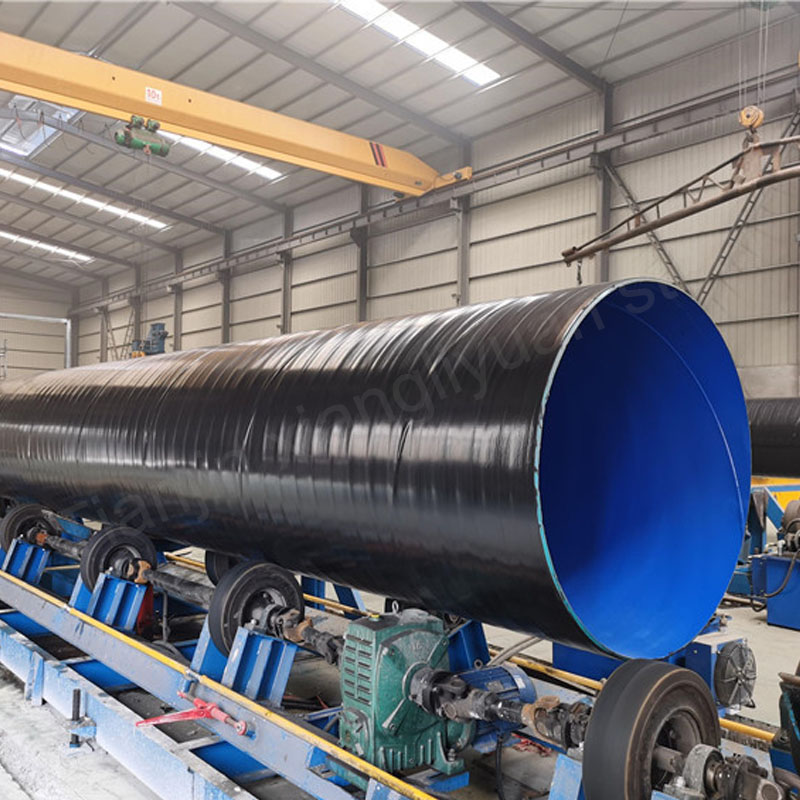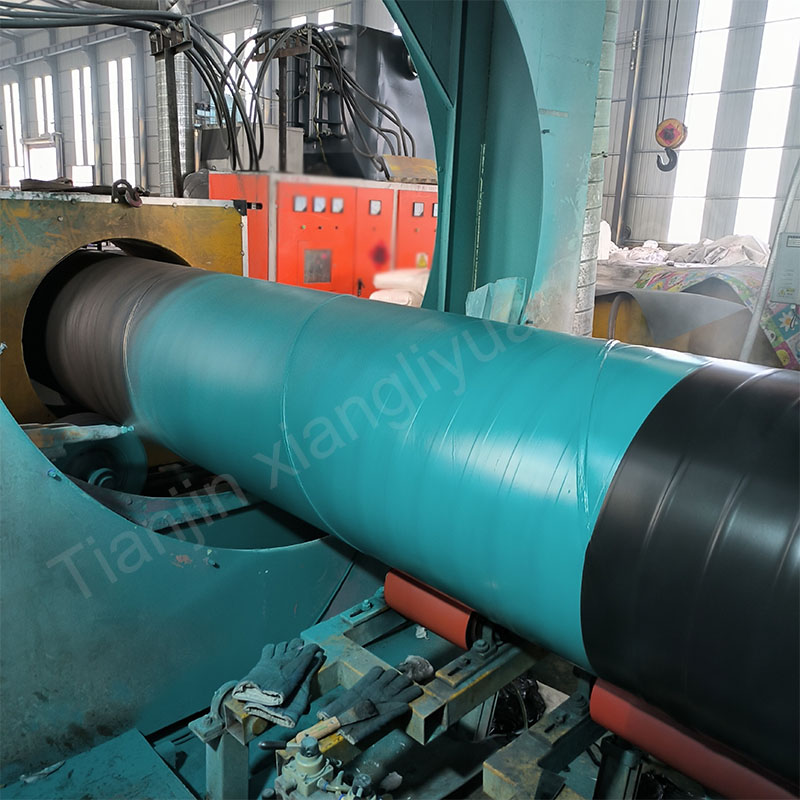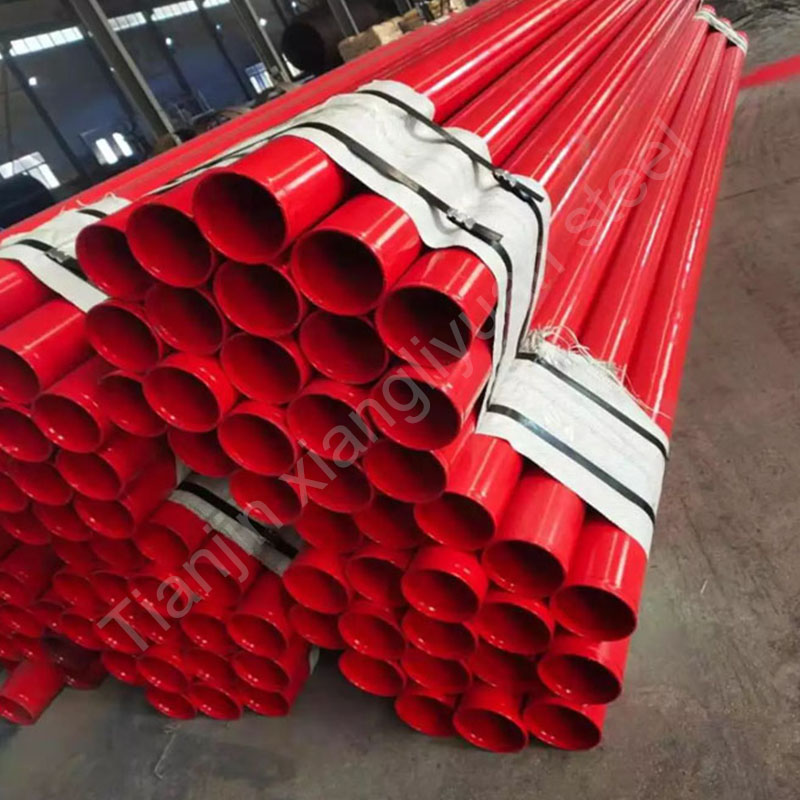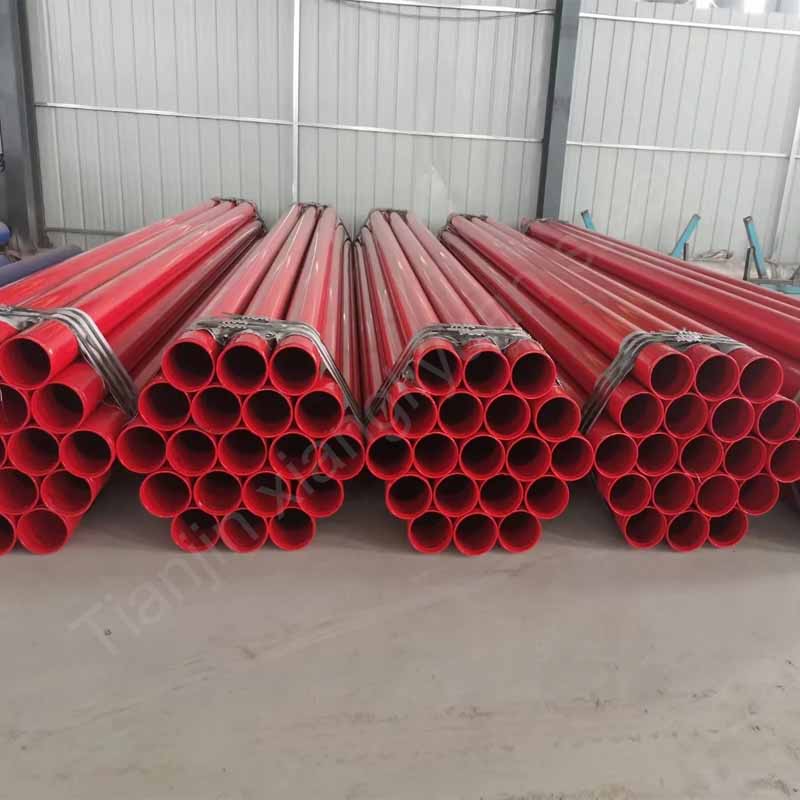
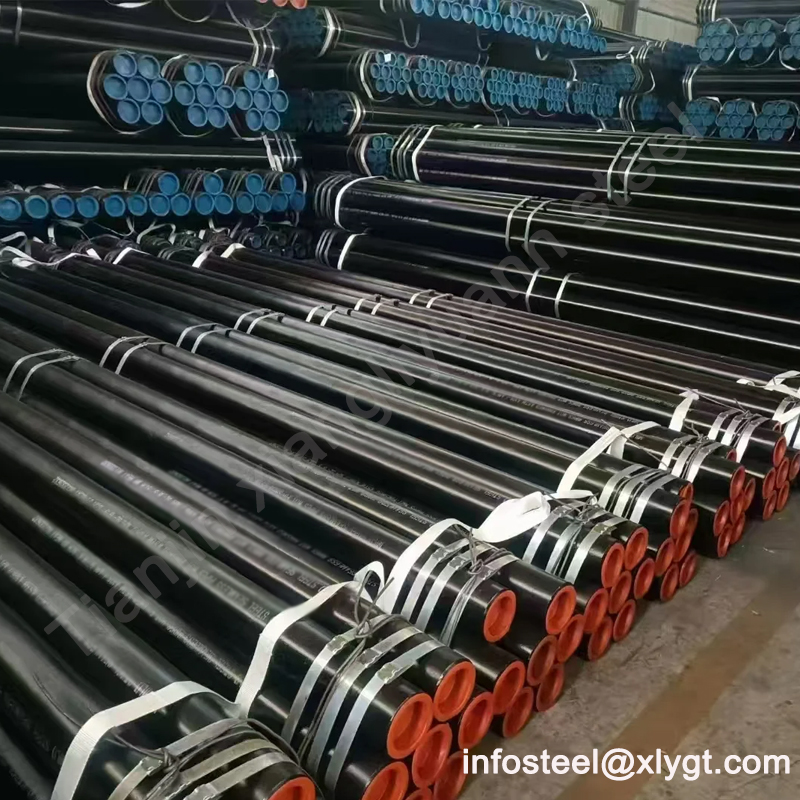
In the global pipeline industry, the integrity of plastic coated steel pipe—often referred to as plastic coated pipe, steel-plastic composite pipe, or coated steel pipe—is non-negotiable for project longevity and safety. Whether for water supply and drainage, fire protection systems, oil and gas transmission, or seawater desalination, the protective coating is the primary barrier against corrosion and environmental degradation.
However, a coating is only as good as its application and the rigor of its quality control. For engineering procurement and construction (EPC) contractors, inspectors, and project managers sourcing anti-corrosion steel pipe, understanding the three pillars of coating inspection—Coating Thickness Measurement, Holiday Detection (Pinhole Testing), and Adhesion Testing—is essential.
At Tianjin xiangliyuan steel, we specialize in manufacturing high-quality plastic coated steel pipes that meet rigorous international standards. Leveraging our strategic location in Tianjin, just minutes from one of the world’s busiest ports, we ensure rapid, cost-effective delivery to global markets. Our commitment to precision and testing ensures your infrastructure projects are built on a foundation of reliability.
This article serves as a technical guide to these critical inspection methods, reflecting our expertise in the field. For inquiries or technical support, reach us at infosteel@xlygt.com or visit our official website: https://www.xlysteel.com/.
1. Coating Thickness Measurement: The First Line of Defense
The dry film thickness (DFT) of a coating is arguably the most critical parameter affecting the performance of fusion bonded epoxy (FBE) or 3LPE/3LPP coated pipes. Insufficient thickness compromises corrosion resistance; excessive thickness can lead to cracking, peeling, or application issues.
The Standards and the Methodology
According to industry standards (such as CJ/T 120 and ASTM D4138), thickness measurement is typically performed using non-destructive electromagnetic or eddy-current gauges .
The Procedure:
-
Sampling: Technicians select two cross-sections from both ends of the plastic-coated steel pipe .
-
Measurement: On each cross-section, the coating thickness is measured at a minimum of four orthogonal points (90 degrees apart) around the circumference .
-
Verification: For multi-layer systems (like 3LPE), destructive cross-sectioning (per ASTM D4138) is often used to measure individual layer thicknesses via microscopic observation. This practice is particularly useful for pipes as small as 25mm in diameter and can measure ranges from 2 to 2000 microns .
Why this matters: Variations in thickness often indicate issues with the coating application process—such as uneven heating or electrostatic spraying parameters. At Tianjin xiangliyuan steel, our in-house quality control protocols ensure that every steel pipe meets the specified tolerances before leaving our facility.
2. Holiday Detection (Pinhole Testing): Seeking Invisible Defects
A “holiday” refers to a discontinuity, pinhole, or void in the coating that exposes the bare steel substrate to the environment. If undetected, a single pinhole can lead to localized corrosion and catastrophic coating disbondment .
Low-Voltage vs. High-Voltage Spark Testing
The choice of method depends entirely on the thickness of the protective layer .
-
Low-Voltage Wet Sponge Method:
-
Application: Used for thin-film coatings up to 500 microns (0.5mm) or internal linings.
-
Method: A moistened sponge electrode is passed over the coated surface. If the sponge contacts bare steel, the circuit closes, triggering an alarm .
-
Standards: NACE SP0188, ASTM D5162 .
-
-
High-Voltage Spark Test:
-
Application: The industry standard for thick coatings like FBE, 3LPE, and 3LPP.
-
Method: A high-voltage DC pulse is applied via a wire brush electrode. At a holiday, the voltage ionizes the air, creating a visible spark and audible alarm .
-
Voltage Calculation: Voltage is calculated based on thickness. The common formula per NACE SP0274 is: V = 1250 x √T (where T is thickness in mm) .
-
Example: A 3.0mm thick 3LPE coating requires approximately 2165V .
-
Note: The test voltage must be capped to avoid damaging the coating .
-
-
Our Advantage: At Tianjin xiangliyuan steel, we conduct 100% holiday detection on our plastic-coated composite steel pipes before shipment. This rigorous testing ensures that the anti-corrosion layer is flawless, a key reason why global clients trust our products for demanding applications.
3. Adhesion Test: The Bond Integrity
Even a thick, pinhole-free coating fails if it doesn’t adhere to the steel substrate. The adhesion test evaluates the mechanical bond strength, ensuring the coating won’t peel away under stress or in high-humidity environments.
The Pull-Off Test (ASTM D4541)
This is the most commonly used method for steel pipe coating quality assurance .
The Procedure:
-
A metal dolly is glued to the surface of the coated pipe using a fast-reacting adhesive (like cyanoacrylate or epoxy) .
-
The dolly is pulled off in a radial direction.
-
The force required to remove the dolly is measured. The failure location (cohesive failure within the coating, or adhesive failure between layers/steel) is also noted .
Challenges and Considerations:
-
Curvature: Testing on cylindrical surfaces is more difficult than on flat plates. Pipe curvature can cause misalignment, affecting results .
-
Equipment Limits: If the coating adhesion is exceptionally strong, the testing device may reach its force limit before failure occurs .
Our Expertise: Our technical team at Tianjin xiangliyuan steel is experienced in these nuances. We interpret not just the “pass/fail” result but analyze failure modes to ensure optimal performance. For projects requiring specific adhesion values (such as those above AWWA C222 levels), we work closely with clients to ensure compliance.
Beyond Manufacturing—Guaranteeing Performance
Quality inspection is the bridge between manufacturing and performance. For international buyers sourcing API 5L or ASTM A53 GrB plastic coated pipes, verifying these three aspects ensures the supply chain’s integrity.
At Tianjin xiangliyuan steel, we don’t just manufacture; we engineer confidence. Our strategic location in Tianjin reduces shipping times to North America, Europe, and the Middle East, but our real value lies in our dedication to technical excellence. By adhering to standards like NACE, ASTM, and CJ/T, we ensure our products withstand the test of time and environment.
To learn more about our product range or discuss your specific project requirements, please contact us:
-
Website: https://www.xlysteel.com/
-
Email: infosteel@xlygt.com
Choose Tianjin xiangliyuan steel—where quality meets reliability, and expertise meets global delivery.