The Critical Role of Coating Selection in Pipeline Integrity
In the global oil, gas, water, and chemical industries, the selection of anti-corrosion coatings for steel pipes is a decision with profound implications for project longevity, operational safety, and total cost of ownership. For international buyers—whether you are a procurement manager for a municipal water authority in the Middle East, an EPC contractor for an oil and gas pipeline in Southeast Asia, or an engineer specifying materials for a chemical processing plant in South America—understanding the technical distinctions between Epoxy Coated Steel Pipe and PE Coated Steel Pipe is essential.
At Tianjin Xiangliyuan Steel, we bring over decades of metallurgical expertise and manufacturing precision to this critical conversation. Located strategically in Tianjin, China—one of the world’s busiest port cities—we are uniquely positioned to deliver high-quality coated steel pipes to global markets with exceptional shipping efficiency. Our proximity to the Port of Tianjin ensures that your orders, whether large-diameter line pipe for oil and gas transmission or smaller-bore pipes for water treatment applications, are dispatched promptly and cost-effectively.
This comprehensive technical guide provides an authoritative comparison of Epoxy and Polyethylene coated steel pipes across three critical performance parameters: coating thickness, adhesion strength, and chemical resistance. Drawing from industry standards including ISO 21809, DIN 30670, AWWA C210, and API 5L, this analysis will equip you with the knowledge to make informed procurement decisions for your specific project requirements.
Understanding the Coating Systems: FBE, 2PE, and 3LPE
Before delving into comparative performance metrics, it is essential to understand the fundamental composition of each coating system.
Fusion Bonded Epoxy (FBE) Coated Steel Pipe
Fusion Bonded Epoxy coating is a thermosetting powder coating applied electrostatically to a heated steel pipe surface. The process involves heating the steel pipe to approximately 230°C, followed by electrostatic spray application of epoxy powder. The powder melts, flows, and chemically bonds with the steel surface, forming a continuous, highly adherent film through a process of cross-linking polymerization.
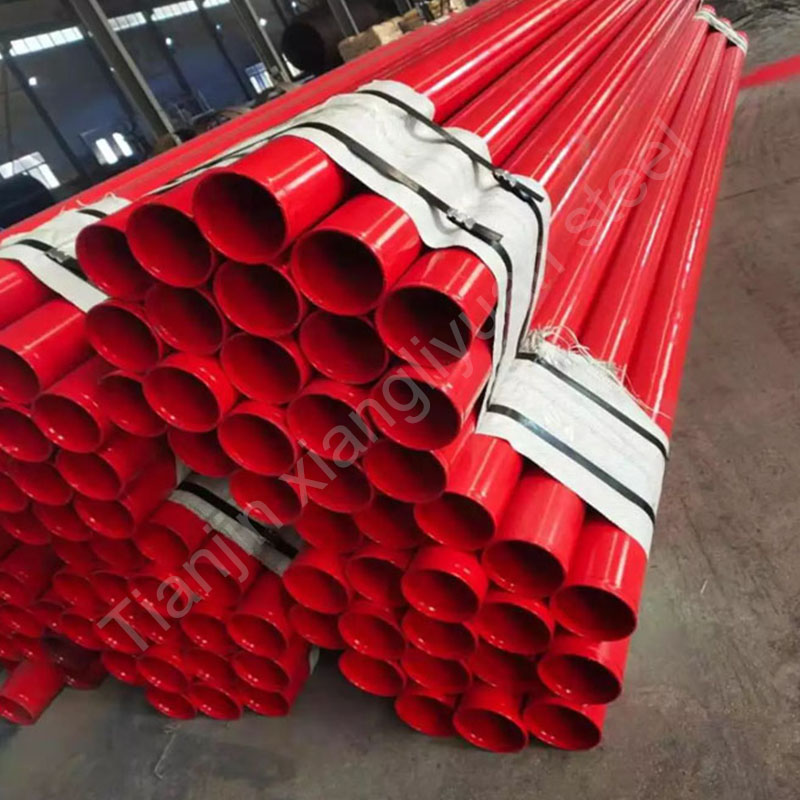
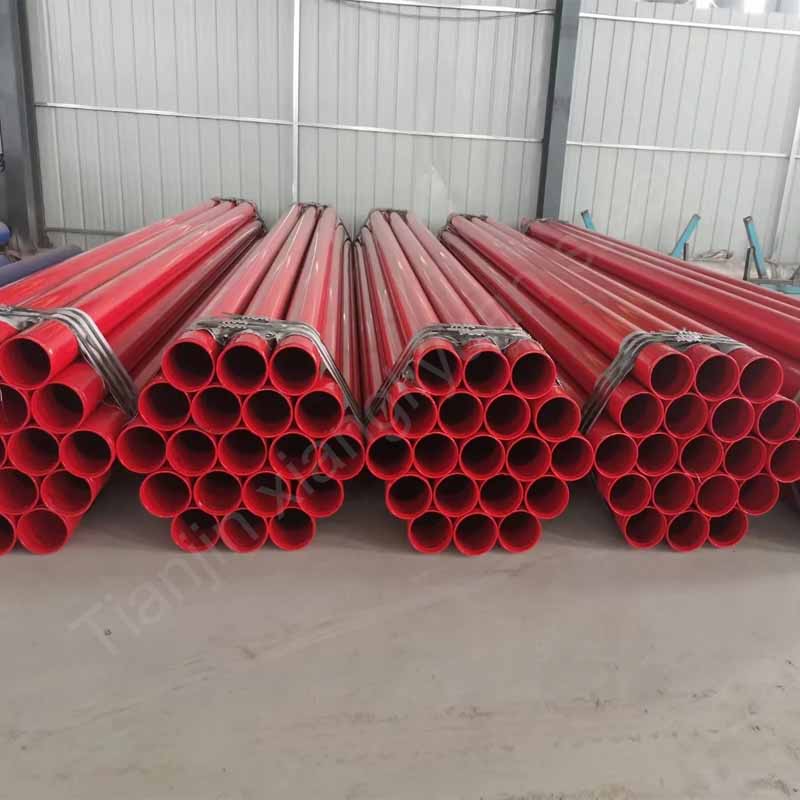
FBE coated steel pipe is available in single-layer and dual-layer configurations. Single-layer FBE provides a dense, hard barrier with exceptional adhesion and chemical resistance, suitable for most standard applications. Dual-layer FBE incorporates an additional impact-resistant topcoat, making it particularly suitable for offshore pipelines and harsh installation environments.
Three-Layer Polyethylene (3LPE) Coated Steel Pipe
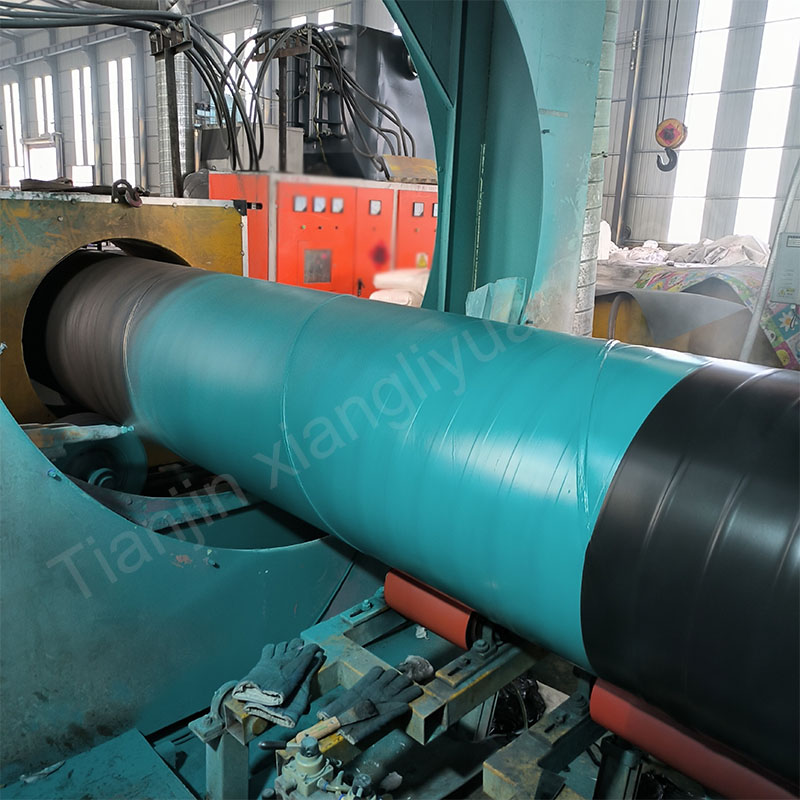
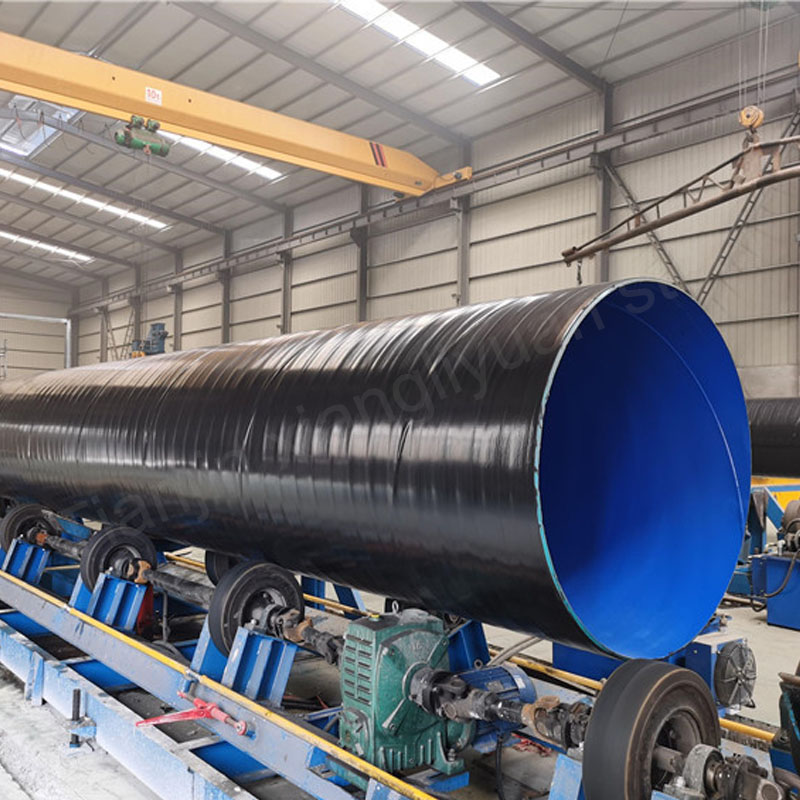
3LPE coated steel pipe represents an advanced, multi-layer anti-corrosion system that combines the strengths of both epoxy and polyethylene technologies. The three-layer structure comprises:
-
First Layer (Epoxy Primer): A fusion bonded epoxy layer (minimum 100μm) that provides exceptional adhesion to the steel substrate and primary chemical resistance.
-
Second Layer (Adhesive Copolymer): An intermediate adhesive layer (170–250μm) that chemically bonds the epoxy primer to the outer polyethylene layer.
-
Third Layer (Polyethylene Topcoat): A thick, extruded polyethylene layer (2.5–3.7mm depending on pipe diameter) that provides outstanding mechanical protection, moisture resistance, and abrasion resistance.
This three-layer system is widely regarded as the industry standard for buried pipelines operating in aggressive soil conditions, offering the adhesion of epoxy combined with the mechanical toughness of polyethylene.
Coating Thickness: A Tale of Two Approaches
Coating thickness is a fundamental parameter that directly influences a pipe’s protective capability. However, “thicker is better” is not always the correct engineering principle—the relationship between coating thickness and performance must be understood in the context of the coating’s inherent properties and the service environment.
FBE Coating Thickness Specifications
FBE coatings are applied as relatively thin films with precise thickness control. Single-layer FBE typically ranges from 300 to 600 microns (μm) , with standard applications around 400–500μm. For 3LPE systems, the internal FBE primer layer thickness is specified at a minimum of 100μm.
The thinner profile of FBE coatings is not a limitation but a design feature. Epoxy’s high cross-link density and excellent barrier properties provide effective corrosion protection even at moderate thicknesses. In fact, excessive thickness in FBE applications can lead to issues such as residual stress build-up and reduced flexibility. The dual-layer FBE system achieves total thicknesses of 625–1000μm, with the inner layer at 250–350μm and the outer impact-resistant layer at 350–600μm.
PE Coating Thickness Specifications
Polyethylene coatings, particularly in 3LPE systems, are significantly thicker than their FBE counterparts. The total 3LPE coating thickness typically ranges from 1.8mm to 4.5mm, depending on pipe diameter and application requirements.
The outer PE layer thickness varies by pipe diameter:
| Pipe Diameter (DN) | PE Layer Thickness |
|---|---|
| ≤ 100 | 2.5mm |
| >100 and ≤ 250 | 2.7mm |
| >250 and ≤ 500 | 2.9mm |
| >500 and ≤ 800 | 3.2mm |
| >800 | 3.7mm |
This substantial thickness provides significant mechanical protection against soil stress, rock impingement, and installation-related damage—advantages that are particularly valuable in rocky terrain and directional drilling applications.
Thickness Comparison Summary
| Coating Type | Total Thickness | Key Thickness Characteristic |
|---|---|---|
| Single FBE | 300–600 μm | Thin, dense barrier layer |
| Dual FBE | 625–1000 μm | Enhanced impact resistance |
| 3LPE (Outer PE) | 2.5–3.7 mm | Thick mechanical protection |
Adhesion Strength: The Foundation of Coating Performance
Adhesion between the coating and the steel substrate is arguably the most critical performance parameter for anti-corrosion coatings. Poor adhesion allows water and corrosive ions to migrate beneath the coating, leading to under-film corrosion and eventual coating failure. This phenomenon, known as cathodic disbondment, is a primary failure mechanism for coated pipelines.
FBE Adhesion Characteristics
Fusion Bonded Epoxy coatings exhibit exceptional adhesion to steel surfaces, forming a chemical bond through the cross-linking reaction between the epoxy resin and the activated steel surface. The coating is applied at elevated temperatures (around 230°C), which promotes molecular-level bonding.
Technical data indicates that FBE coatings achieve bond strengths of 40–100 MPa, which is 4 to 10 times greater than polyethylene powder coatings. This superior adhesion manifests in several practical benefits:
-
Resistance to Cathodic Disbondment: FBE’s strong adhesion significantly resists the alkaline environment created by cathodic protection systems, maintaining coating integrity even when the pipe is under cathodic protection.
-
Prevention of Crevice Corrosion: The intimate contact between FBE and the steel surface eliminates pathways for moisture ingress, preventing crevice corrosion at the coating-steel interface.
-
Minimal Under-film Migration: Even when coating damage occurs, FBE’s adhesion limits the lateral spread of corrosion beneath the coating, facilitating localized repair.
PE Adhesion Characteristics
Polyethylene, as a non-polar thermoplastic material, has inherently lower adhesion to steel surfaces. This limitation is precisely why 3LPE systems incorporate an epoxy primer layer—the epoxy provides the necessary adhesion to the steel substrate, while an adhesive copolymer layer bonds the epoxy primer to the outer PE layer.
The multilayer approach successfully addresses PE’s adhesion limitations by leveraging FBE’s superior bonding properties as the foundation layer. However, the adhesion achieved is effectively that of the epoxy primer, with the PE layer providing mechanical rather than chemical adhesion to the system.
Adhesion Comparison
| Parameter | FBE Coating | 3LPE Coating |
|---|---|---|
| Bond Strength | 40–100 MPa | FBE layer provides adhesion |
| Adhesion Mechanism | Chemical cross-linking | Epoxy primer + adhesive |
| Resistance to Cathodic Disbondment | Excellent | Good (FBE-dependent) |
| Under-film Migration Resistance | Excellent | Good |
Chemical Resistance: Protecting Against Corrosive Media
Chemical resistance is the primary function of anti-corrosion coatings, and both FBE and PE systems offer robust protection across a wide range of environments. However, their specific resistance profiles differ in ways that significantly influence material selection.
FBE Chemical Resistance
FBE coatings provide excellent chemical resistance across a broad spectrum of aggressive media due to their highly cross-linked, thermosetting polymer structure. Technical evaluations demonstrate FBE’s resistance to:
-
Acids: 40% sulfuric acid, 25% hydrochloric acid, 30% nitric acid (at ambient temperatures)
-
Alkalis: 20% sodium hydroxide solution
-
Solvents: Ethanol, formaldehyde, gasoline, diesel
-
Other Media: Water, crude oil, seawater, various brine solutions
FBE’s chemical resistance is particularly valuable in applications involving aggressive chemical transport or exposure to contaminated soils. Additionally, FBE coatings exhibit excellent resistance to high temperatures, with continuous service capability up to 110°C and peak temperatures up to 120°C for some formulations.
The chemical stability of FBE coatings also contributes to their excellent water resistance. Technical data indicates that FBE coatings show less than 3% weight gain when immersed in distilled water at 60°C, demonstrating outstanding resistance to water permeation.
PE Chemical Resistance
Polyethylene offers excellent resistance to water, moisture, and many inorganic chemicals due to its hydrophobic nature and chemical inertness. The PE outer layer in 3LPE systems provides:
-
Outstanding Moisture Resistance: PE has very low water absorption (below 0.01%), making it an excellent moisture barrier in buried pipeline applications.
-
Resistance to Soil Chemicals: PE is stable in a wide range of soil conditions, resisting attack from naturally occurring soil acids, bases, and salts.
-
Electrical Insulation: PE’s high electrical resistance provides excellent protection against electrochemical corrosion.
However, PE coatings have limitations with organic solvents and reduced resistance to certain hydrocarbons. At elevated temperatures, PE’s resistance to some chemicals may diminish, and the material may soften or swell when exposed to specific organic media. PE coatings are generally limited to continuous service temperatures up to 60–80°C, although specialized PP (polypropylene) topcoats can extend high-temperature capability to 140°C.
Chemical Resistance Comparison
| Chemical Environment | FBE Coating | 3LPE Coating |
|---|---|---|
| Acids (inorganic) | Excellent | Good |
| Alkalis | Excellent | Good |
| Organic Solvents | Good | Fair–Good |
| Water/Moisture | Excellent | Excellent |
| Hydrocarbons | Good | Fair (PE layer may swell) |
| High Temperature (>80°C) | Up to 110°C | Up to 80°C (PE) |
| Soil Chemicals | Excellent | Excellent |
Practical Application Guidelines: Selecting the Right Coating
Based on the comparative analysis of coating thickness, adhesion, and chemical resistance, the following application guidelines are recommended:
Choose FBE Coated Steel Pipe When:
-
Internal linings are required for fluid conveyance systems
-
High-temperature operation exceeds 80°C but remains below 110°C
-
Chemical resistance to a broad range of aggressive media is required
-
Tight dimensional tolerances are essential
-
Cathodic protection compatibility is a priority
-
Superior adhesion to the steel substrate is necessary for the application
Choose 3LPE Coated Steel Pipe When:
-
Buried pipeline applications in aggressive soil conditions
-
Mechanical protection against rocks, soil stress, and impact is required
-
Extreme moisture conditions are present
-
Rocky terrain or directional drilling is involved
-
Long-term, low-maintenance service is expected (30–50 years)
-
Abrasive conditions are present (PE wear resistance is 4 times that of standard pipe)
The Tianjin Xiangliyuan Steel Advantage
As a premier manufacturer and exporter of coated steel pipes, Tianjin Xiangliyuan Steel offers distinct advantages to international buyers:
1. Comprehensive Manufacturing Capability
Our state-of-the-art facilities produce a complete range of steel pipes—including seamless steel pipes, ERW pipes, LSAW pipes, and SSAW pipes—in diameters from 1/2″ to 48″. We apply coatings according to rigorous international standards including API 5L, ASTM A53/A106, ISO 21809, DIN 30670, and AWWA C210/C213.
2. Quality Assurance
Every batch undergoes comprehensive testing: chemical composition analysis, mechanical properties testing (yield strength, tensile strength, elongation), flattening and bending tests, impact testing, non-destructive testing (UT, ECT, hydrostatic), and full dimensional inspection. Our quality management system ensures full traceability and compliance with specified standards.
3. Strategic Location Advantage
Located in Tianjin, China—adjacent to one of the world’s busiest and most efficient port complexes—we offer significant shipping advantages to global customers. Quick turnaround times, reduced logistics costs, and efficient containerized shipping are inherent benefits of our location.
4. Customization Capability
We offer tailored solutions including custom diameters (DN15–DN2200), coating types (FBE, 2PE, 3LPE, 3PP), and connection specifications. Our engineering team works closely with clients to develop coating solutions that precisely match project requirements.
5. Technical Expertise
Our team possesses deep expertise in coated steel pipe technology, providing authoritative technical support for material selection, coating specification, and quality compliance.
The selection between Epoxy Coated Steel Pipe and PE Coated Steel Pipe—including FBE, 2PE, and 3LPE systems—requires a thorough understanding of the specific service environment and performance requirements. FBE coatings offer superior adhesion and chemical resistance in a thinner profile, while 3LPE systems provide exceptional mechanical protection and moisture resistance through a thick, multilayer approach. Many engineering decisions favor 3LPE for buried pipeline applications, where its combination of FBE adhesion and PE mechanical toughness provides comprehensive corrosion protection.
At Tianjin Xiangliyuan Steel, our commitment to excellence in coated steel pipe manufacturing, combined with our strategic shipping location and technical expertise, positions us as a reliable partner for your anti-corrosion steel pipe needs across the globe.
Tianjin Xiangliyuan Steel
Website: https://www.xlysteel.com/
Email: infosteel@xlygt.com
We invite you to contact our technical team for consultation on your specific project requirements. Let us help you select the optimal coating solution for your pipeline integrity needs.