In the demanding arena of long-distance oil and gas transmission, the choice of steel pipe is not merely a logistical decision—it is a critical determinant of operational safety, project longevity, and environmental stewardship. For engineers, procurement managers, and project stakeholders, navigating the labyrinth of international standards is paramount. The transition from API 5L to ISO 3183 represents a significant maturation in pipeline technology, harmonizing North American legacy requirements with global best practices.
At Tianjin Xiangliyuan Steel, we have witnessed this evolution firsthand. With our strategic location in the Tianjin port economic zone, we specialize in supplying high-frequency welded (HFW), submerged arc welded (SAW), and seamless steel pipes that strictly adhere to these rigorous standards. For technical consultations or quotations, contact us at infosteel@xlygt.com or visit our technical library at https://www.xlysteel.com.
1. The Genesis of Pipeline Standards: Understanding API 5L
Before the push for globalization, the American Petroleum Institute’s API 5L standard was the de facto global language for line pipe. API 5L specifies manufacturing requirements for two product specification levels (PSL1 and PSL2).
-
PSL1 (Product Specification Level 1): A basic quality standard covering chemical properties and tensile strength. Suitable for low-risk, low-pressure distribution lines.
-
PSL2 (Product Specification Level 2): Enhanced requirements including stricter carbon equivalents (CEV), impact toughness, and non-destructive testing (NDT). PSL2 is mandatory for sour service environments and high-pressure onshore pipelines.
However, API 5L historically focused on manufacturing and testing, leaving gaps in risk management, design factor consistency, and offshore requirements. This fragmentation led to confusion when sourcing large diameter pipes for cross-border projects.
2. The Paradigm Shift: Why ISO 3183 Emerged
To address the disconnect between regional standards, ISO 3183:2019 – Petroleum and natural gas industries – Steel pipe for pipeline transportation systems was developed. It technically aligns with API 5L but introduces critical expansions:
-
Risk-Based Approach: ISO 3183 integrates ISO 13623 (pipeline transportation systems), forcing engineers to consider design scenarios like frost heave, seismic activity, and third-party interference.
-
Unified Sour Service Testing: While API 5L mentions SSC (Sulfide Stress Cracking) and HIC (Hydrogen Induced Cracking), ISO 3183 provides explicit testing frequencies and acceptance criteria for sour gas pipelines.
-
Ductile Fracture Propagation: ISO 3183 includes stricter requirements for shear area percentage in drop-weight tear tests (DWTT), critical for high-pressure long-distance pipelines to prevent long-running fractures.
Essentially, ISO 3183 is the application standard, while API 5L remains the product standard. Modern specifications often require “API 5L in conformance with ISO 3183.”
3. Comparative Analysis: Technical Requirements Deep Dive
For a Line Pipe Manufacturer like Tianjin Xiangliyuan Steel, understanding the nuance between these standards dictates heat treatment schedules and forming parameters.
| Parameter | API 5L PSL2 (Historically) | ISO 3183 (Current Best Practice) |
|---|---|---|
| Carbon Equivalent (CEV) | Fixed max values. | Dynamic CEV based on wall thickness and hydrogen partial pressure. |
| Impact Toughness | 40 J average (Often at 0°C). | 60 J minimum at design minimum temperature (as low as -46°C for arctic lines). |
| Hardness Testing | Optional for HIC resistance. | Mandatory HV10 testing for weld seams and HAZ (Heat Affected Zone) in sour service. |
| Dimensional Tolerances | API specific. | Harmonized with ISO 11960, tighter ovality for reel-lay installation. |
The “Sour Service” Distinction: When selecting steel for H2S environments, ISO 3183 Annex H imposes strict limits. For example, hardness must be ≤ 250 HV10, and the microstructure must avoid hard martensite phases. Our team at Tianjin Xiangliyuan Steel routinely supplies ISO 3183 L360QS/L415QS pipes with verified HIC performance.
4. Practical Selection Guide for Long-Distance Projects
Selecting the right pipe involves matching the standard to the operational envelope. Below is our recommended framework, informed by two decades of supplying projects via our port-adjacent facility in Tianjin.
4.1. For Standard Onshore Transmission (Low/Medium Risk)
-
Standard: API 5L PSL2 (Gr. B to X70).
-
Why: Cost-effective and widely accepted by local EPC contractors.
-
Our Sourcing Advantage: From our Tianjin stockyard, we ship API 5L X42, X52, and X60 pipes with 3LPE coating to Southeast Asia and Africa within 15 days.
4.2. For High-Pressure, Sour Service, or Offshore
-
Standard: ISO 3183 (L450Q to L555Q).
-
Why: Mandates fracture control plans and CTOD (Crack Tip Opening Displacement) testing.
-
Our Expertise: We produce LSAW (Longitudinal Submerged Arc Welded) pipes up to 24 meters in length, ideal for deep-water reeling. Contact infosteel@xlygt.com for material test certificates (MTCs) traceable to ISO 3183.
4.3. Key Keyword Integration for Technical Searches
When foreign clients search for “High-strength low-alloy steel pipe for arctic conditions” or “Corrosion-resistant alloy lined pipe for gas gathering”, they need evidence. Our website (https://www.xlysteel.com) hosts detailed whitepapers on DWTT performance at -20°C and field bending behavior of X70M line pipe.
5. The Tianjin Xiangliyuan Steel Advantage: Logistics Meets Metallurgy
Technical compliance is worthless if logistics fail. This is where our geographic location transforms your supply chain.
5.1. Proximity to Tianjin Port – The Gateway to Global Shipping
Tianjin Port is the largest comprehensive port in Northern China and the primary hub for steel exports. Our manufacturing base is located less than 20 kilometers from the port’s heavy-lift terminals. This offers:
-
Reduced Inland Freight: No expensive rail or trucking across China. We load directly onto ocean-going vessels.
-
Lower Risk of Damage: Less handling means fewer scratches on your beveled end pipe coatings.
-
Faster Lead Times: Standard orders can be shipped within 10 working days after final hydrostatic testing.
5.2. Quality Assurance Infrastructure
We maintain in-house NDT capabilities including:
-
Ultrasonic Testing (UT) for lamination checks.
-
Electromagnetic Induction (EMI) for wall thickness consistency.
-
Dimensional checks to ISO 3183 Table 8 (Diameter and Ovality).
Every pipe batch we ship is accompanied by an EN 10204 Type 3.1 certificate, verifying chemistry and mechanical properties against the specific standard requested (API 5L, ISO 3183, or combined).
6. Future Trends: Carbon Steel, CRA, and Digital Twins
The evolution from API 5L to ISO 3183 is not the end. Current technical requirements are shifting toward traceability 4.0.
-
Heat Traceability: ISO 3183:2019 emphasizes digital recording of heat treatment cycles. We utilize barcode scanning from billet to finished seamless pipe.
-
Hydrogen Embrittlement: As the world moves to hydrogen blending, new annexes in ISO 3183 are addressing high-pressure hydrogen gas transmission. Our R&D team is actively testing API 5L X52 grades for 100% hydrogen service.
-
Corrosion Resistance: For enhanced longevity, we also supply CRA (Corrosion Resistant Alloy) clad pipes, though carbon steel remains the backbone of global energy transport.
7. Why Choose Tianjin Xiangliyuan Steel for Your Next Project?
In a market flooded with traders, we are manufacturers and stockists with skin in the game.
-
Certification Assurance: We provide guaranteed compliance to both API 5L and ISO 3183 simultaneously.
-
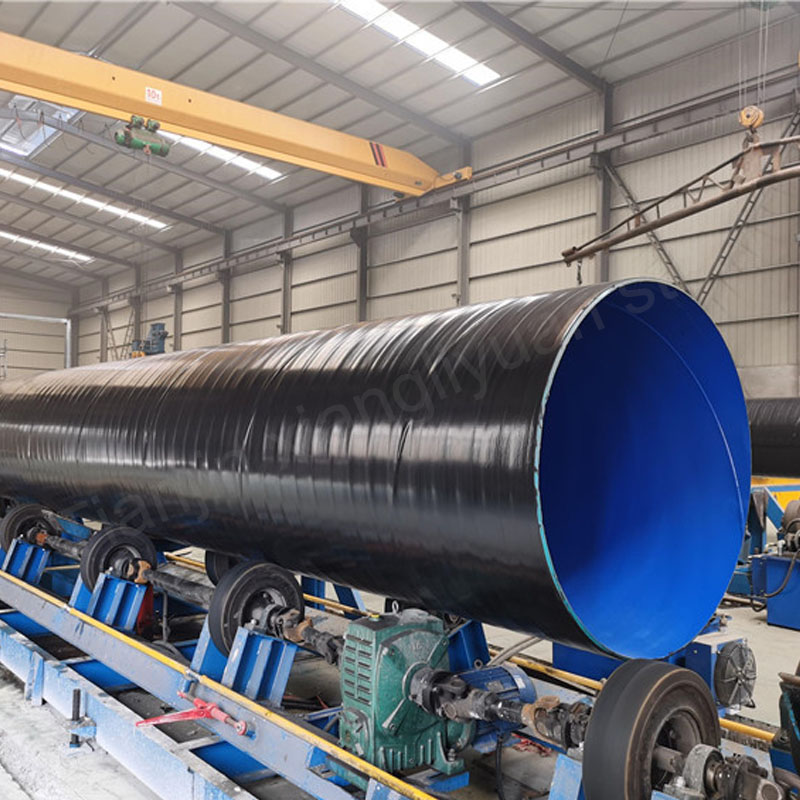
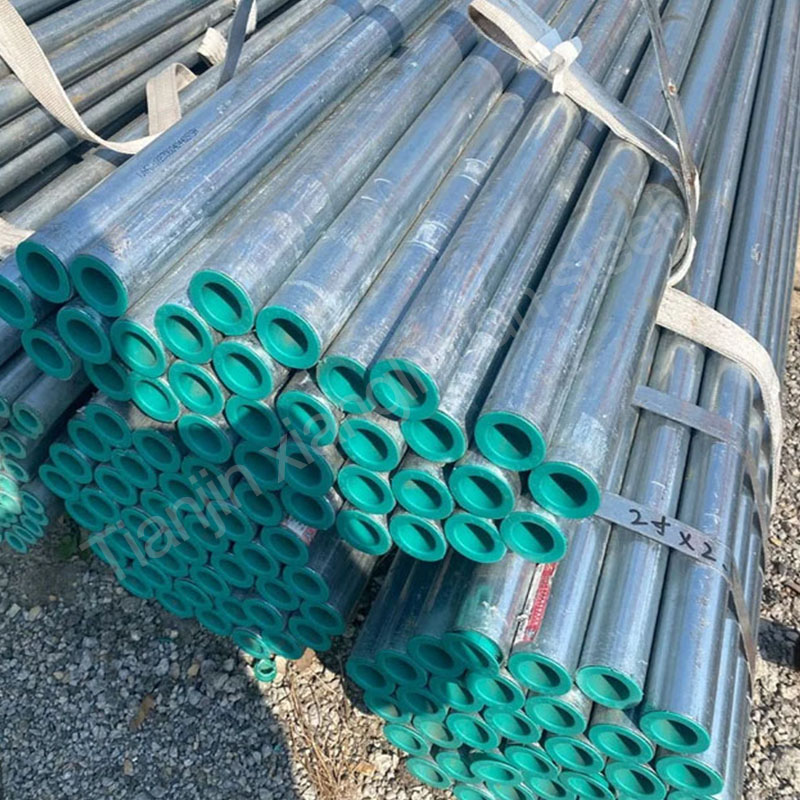
Inventory Diversity: We stock ERW steel pipe (1/2″ to 24″), SSAW steel pipe (20″ to 120″), and seamless grades.
-
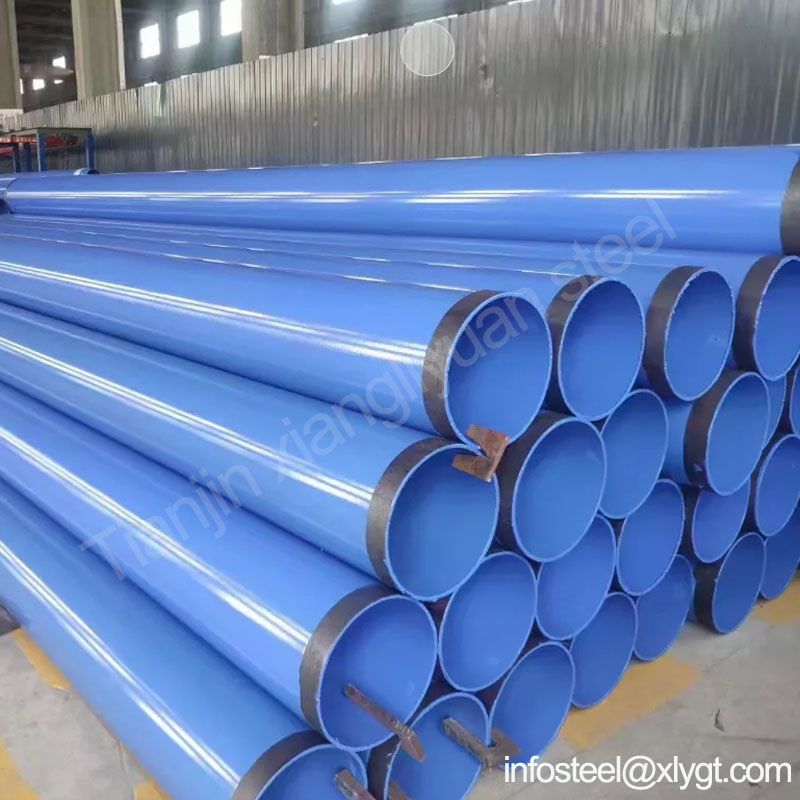
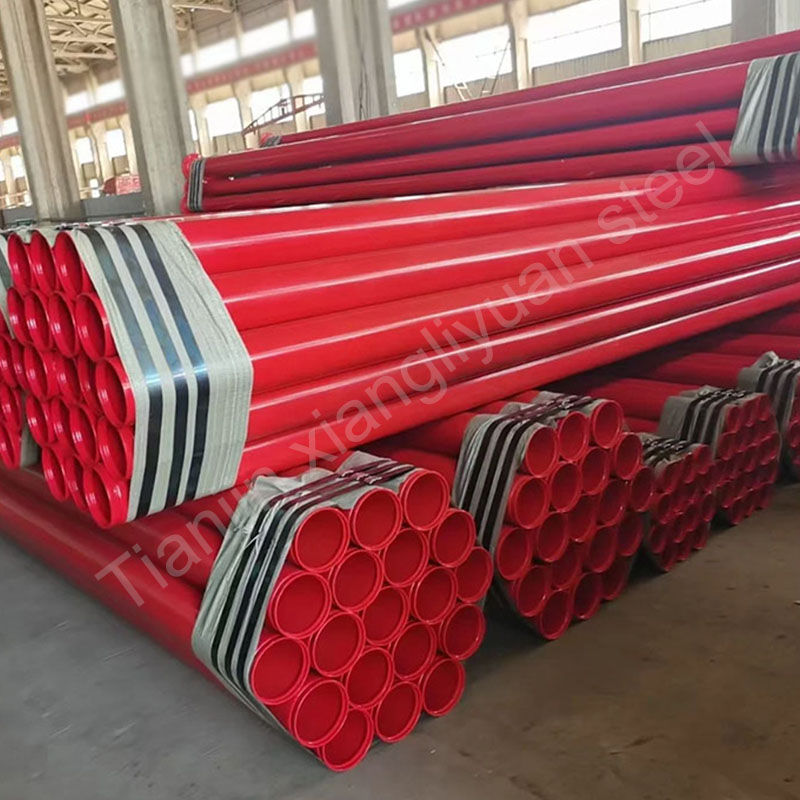
Coating Capabilities: 3LPE, FBE, and liquid epoxy applied in-house adjacent to the port.
-
Responsive Communication: Our engineering team responds to RFQs within 6 hours.
The shift from API 5L to ISO 3183 represents a global commitment to safer, more reliable long-distance pipelines. By specifying ISO 3183, you are not just buying steel—you are buying a risk management framework. However, a standard is only as good as the mill that manufactures to it.
Tianjin Xiangliyuan Steel bridges the gap between stringent international specifications and efficient Chinese manufacturing. Whether you require high-frequency welded line pipe for a water injection project or spiral submerged arc welded pipe for a natural gas trunkline, our proximity to Tianjin Port ensures you receive it on time and on budget.
Ready to source compliant line pipe?
Visit our technical data center: https://www.xlysteel.com
Send your inquiry to: infosteel@xlygt.com
Let us quote you for API 5L PSL2 or ISO 3183 steel pipes today.