In large-diameter water transmission, fire protection, and industrial fluid transport, the weakest point of any steel pipeline is rarely the pipe body itself. It is the joint. A welded joint demands skilled labor, time, and equipment on site—often under conditions that are less than ideal. A flanged joint introduces potential leak paths and requires precise alignment. For project owners and contractors across the Middle East, Southeast Asia, and Africa, the question is not whether plastic-coated steel pipe is the right material. The question is how to connect it quickly, reliably, and with verifiable sealing performance.
The socket-type plastic-coated steel pipe system answers that question. At Tianjin Xiangliyuan Steel, we manufacture these systems with a documented sealing rate of 99.8% under field conditions—a figure that reflects not laboratory idealism, but the practical reality of push-in assembly with elastomeric sealing rings. This article examines the engineering behind that number and why it matters for your next project.
What Defines a Socket-Type Plastic-Coated Steel Pipe?
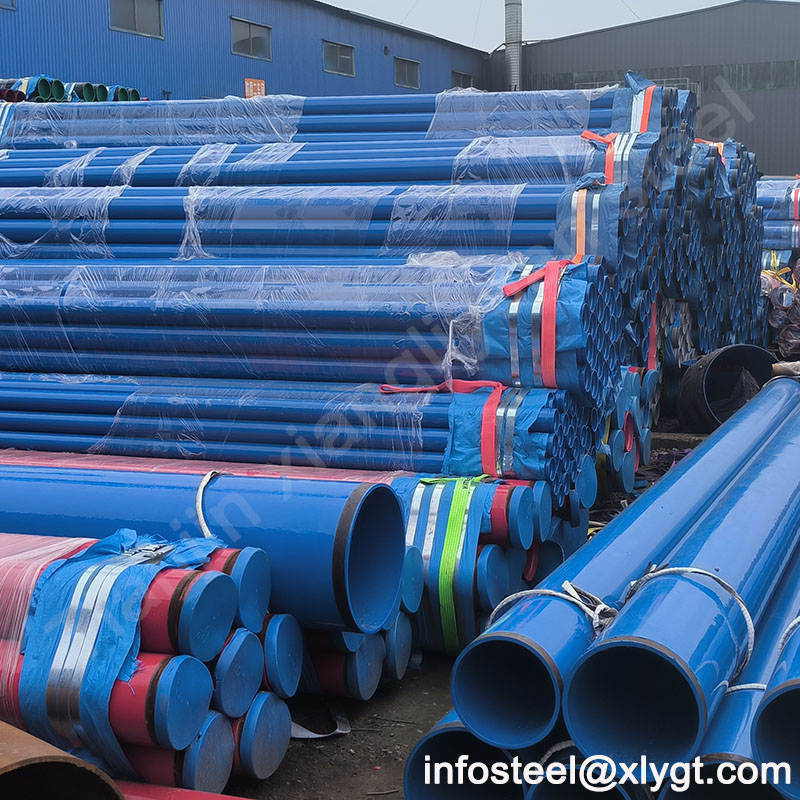
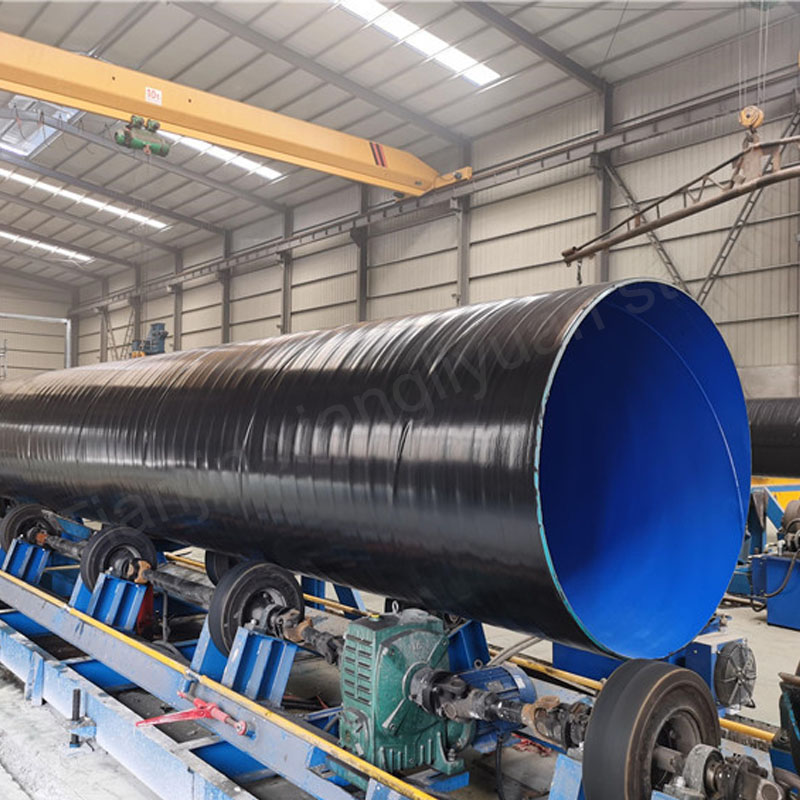
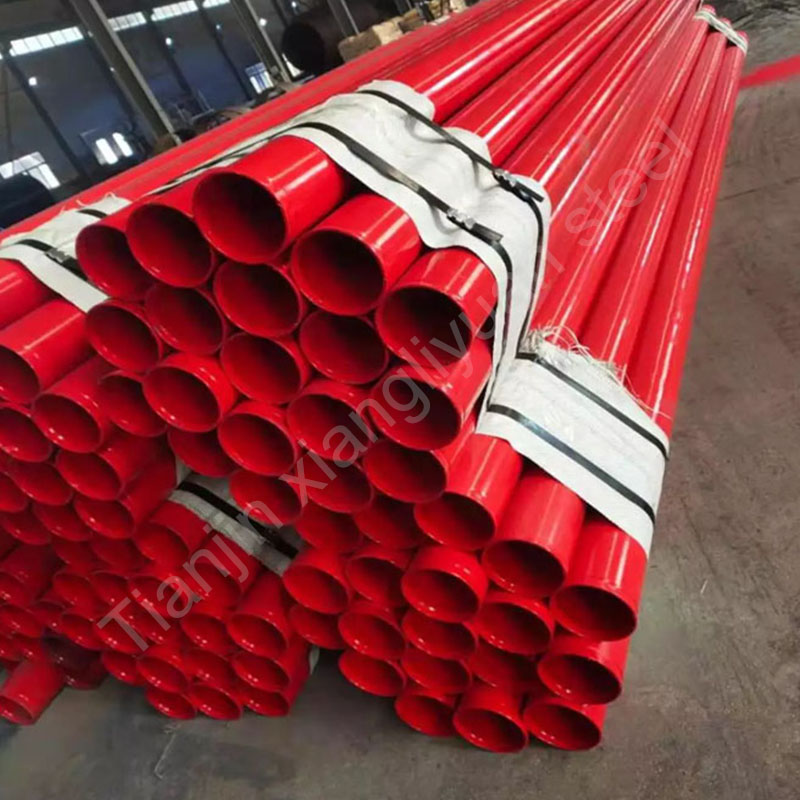
A socket-type plastic-coated steel pipe is a composite system: a steel pipe substrate, an internal and external plastic coating (typically polyethylene or epoxy), and a bell-and-spigot end configuration that allows push-in connection. The spigot end of one pipe inserts into the socket end of the next, compressing a rubber sealing ring that sits in a groove inside the socket. No welding. No flanging. No on-site coating repair at the joint.
The Chinese national standard T/CCCTA 0044-2023, Technical specification for plastic coated steel pipe with socket joint, formally codifies this product category . Its existence reflects the maturity of the socket-type format in markets where installation speed and joint integrity are non-negotiable. For international buyers, the relevant performance criteria are sealing reliability under internal pressure, resistance to angular deflection during installation, and long-term corrosion protection at the joint interface—the three variables that determine whether a pipeline performs for 30 years or fails in the third rainy season.
The Engineering Behind a 99.8% Sealing Rate
A sealing rate is only meaningful when its test conditions are defined. The 99.8% figure for Tianjin Xiangliyuan Steel socket-type systems is derived from hydrostatic proof testing of production batches and field installation validation, where joints are subjected to internal pressure and angular deflection consistent with ISO 13845, the international test method for leaktightness of elastomeric-sealing-ring-type socket joints under internal pressure and angular deflection .
Three design factors drive this performance:
Sealing ring geometry and material. The rubber ring is not a simple O-ring. It is a profiled elastomer—often EPDM for water applications—designed to deform predictably as the spigot enters the socket. The ring sits in a machined groove that prevents it from rolling or displacing during insertion. This is a critical distinction: poorly designed sockets allow the ring to shift, creating a potential leak path before the pipe is even pressurized. Our socket profile uses a retention shoulder that locks the ring in position through the full insertion stroke.
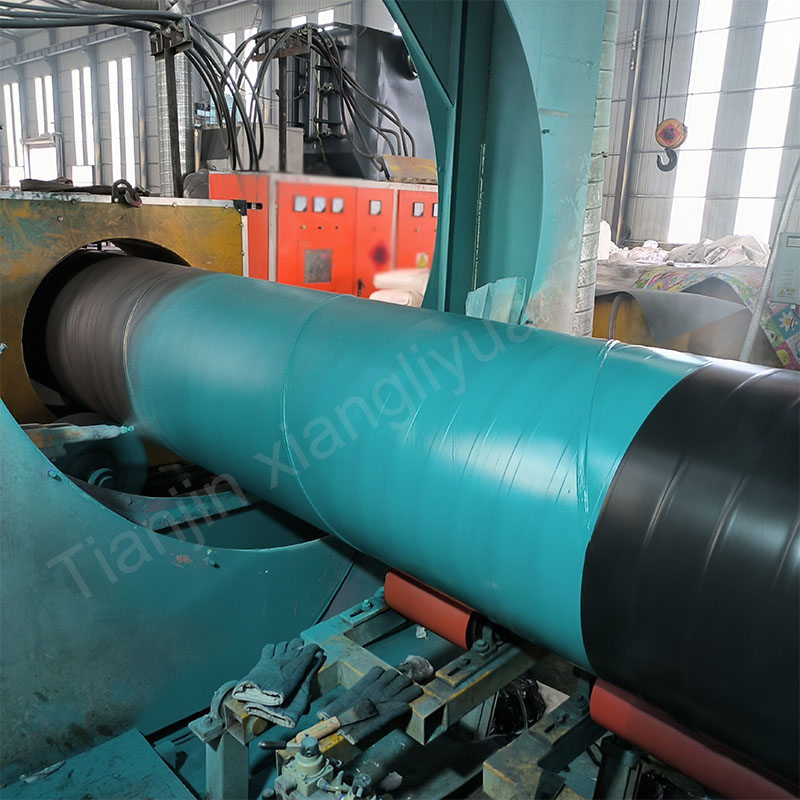
Coating continuity at the interface. The external and internal plastic coatings on a socket-type pipe must extend to the very edge of the socket and spigot. If bare steel is exposed within the joint zone, corrosion begins at the exact location where wall thickness loss is most dangerous—the connection. Our coating process applies epoxy or polyethylene to the socket interior and spigot exterior after end-forming, ensuring that the sealing surface is coated and the rubber ring bears against a smooth, corrosion-resistant face rather than exposed steel.
Tolerance control on the spigot and socket diameters. The interference fit that compresses the rubber ring is a function of dimensional precision. A spigot that is too small will under-compress the ring; too large, and insertion becomes impractical in the field. Our CNC end-finishing maintains diametric tolerances that allow consistent hand or light-machine insertion while preserving the compression required for a 99.8% seal rate across the production range.
Field Installation Efficiency: The Real Cost Driver
Material cost per meter is visible. Installation cost is not—until the project is underway. A welded DN800 steel pipeline joint can require several hours of skilled labor, plus non-destructive testing, plus coating repair at the weld seam . Multiply that by hundreds of joints across a municipal water transmission line, and the schedule impact becomes the dominant cost.
Socket-type assembly changes the equation. A trained crew can complete a push-in joint in minutes, not hours. The pipe is lowered into the trench, the spigot is aligned with the socket, and insertion is achieved with a lever or light winch. No hot work. No weld inspection. No field-applied coating. The sealing integrity is established by the factory-manufactured ring and the dimensional precision of the pipe ends, not by the skill of the welder on the day of installation.
This has direct implications for projects in regions where certified welders are scarce, where weather conditions limit field welding, or where the construction window is compressed by client deadlines. For a water transmission main in a Middle Eastern summer or a fire protection system in a Southeast Asian industrial park, the ability to install hundreds of meters per day with a small crew is not a convenience. It is a project delivery strategy.
Coating Systems for Application-Specific Corrosion Protection
The steel substrate provides strength. The coating determines service life. Tianjin Xiangliyuan Steel supplies socket-type plastic-coated steel pipe systems with coating options matched to the conveyed fluid and the external environment:
| Coating Type | Service Temperature | Typical Application | Key Property |
|---|---|---|---|
| Epoxy (EP) | up to 120°C | Fire protection, potable water | Smooth bore, high adhesion, complies with drinking water standards |
| Polyethylene (PE) | -30°C to 60°C | Buried water mains, industrial fluids | High impact resistance, low-temperature toughness |
| 3LPE (external) | Application-dependent | Buried oil/gas, aggressive soils | Mechanical protection plus corrosion barrier |
For potable water applications, epoxy coatings must meet hygiene standards that prevent leaching or bacterial growth. Our internal epoxy coatings are formulated to comply with recognized drinking water contact requirements, and the smooth bore—with a roughness coefficient significantly lower than uncoated steel—reduces pumping energy over the life of the pipeline . For buried installations in aggressive soils, the external coating must resist cathodic disbondment and mechanical damage during backfill. This is where coating thickness and adhesion quality, not just coating type, become the determining factors.
Why Tianjin: Port Access and Logistics Advantage
Tianjin Xiangliyuan Steel operates from Tianjin, China‘s largest port complex for steel products. This is not a trivial detail. Large-diameter plastic-coated steel pipe is a volumetric product: DN1200 pipe in 6-meter or 12-meter lengths occupies significant vessel space, and the cost difference between shipping from an inland mill and shipping from a port-adjacent facility is substantial.
Our location allows us to consolidate orders, coordinate with freight forwarders directly, and load containers or breakbulk vessels without the intermediate trucking and handling that adds cost and damage risk. For project cargo requiring mixed diameters, fittings, and sealing ring spares in a single shipment, port proximity means faster consolidation and more reliable sailing schedules. When a contractor needs pipe on site by a specific date, the logistics chain matters as much as the production line.
Quality Verification: What We Test and What We Document
A sealing rate claim without test documentation is marketing. We provide test reports. Every production batch of socket-type pipe is subject to hydrostatic proof testing of the joint assembly at specified pressure and duration. Coating thickness is measured at multiple points along the pipe length and around the circumference. Adhesion is verified by pull-off testing. For projects requiring third-party inspection, we coordinate with recognized surveyors and provide mill test certificates for the steel substrate.
The relevant standards framework includes T/CCCTA 0044-2023 for the socket-type product category , ISO 13845 for joint leaktightness testing methodology , and application-specific standards such as ASTM A795 for fire protection or EN 10255 for water supply. We work with buyers to confirm which standard governs their project and to ensure that test documentation aligns with the specified acceptance criteria.
Selecting the Right System for Your Project
Socket-type plastic-coated steel pipe is not a universal replacement for every steel pipeline application. It is the correct choice when:
-
The pipe diameter is DN100 and above, where welded joint time and cost become significant
-
The installation environment favors speed and reduced hot work
-
The conveyed fluid is compatible with the selected coating (epoxy for potable water and fire protection, PE for many industrial fluids)
-
The project can benefit from factory-controlled joint quality rather than field-dependent welding
For higher pressure ratings or applications requiring longitudinal restraint beyond what the elastomeric seal provides, we can discuss hybrid configurations or alternative joint designs. The engineering conversation should begin with your project parameters: diameter, pressure, fluid, installation environment, and governing standard.
Contact Tianjin Xiangliyuan Steel
If your project requires socket-type plastic-coated steel pipe with verified sealing performance and a supply chain that leverages Tianjin‘s port infrastructure, we welcome your inquiry. Our technical team can review your specifications, confirm coating compatibility, and provide a quotation that reflects the full system—pipe, sealing rings, and documentation.
Email: infosteel@xlygt.com
Website: https://www.xlysteel.com/
We respond to technical inquiries within one business day. For urgent project requirements, please include your diameter range, pressure class, and required delivery window in your initial message, and we will prioritize your request.