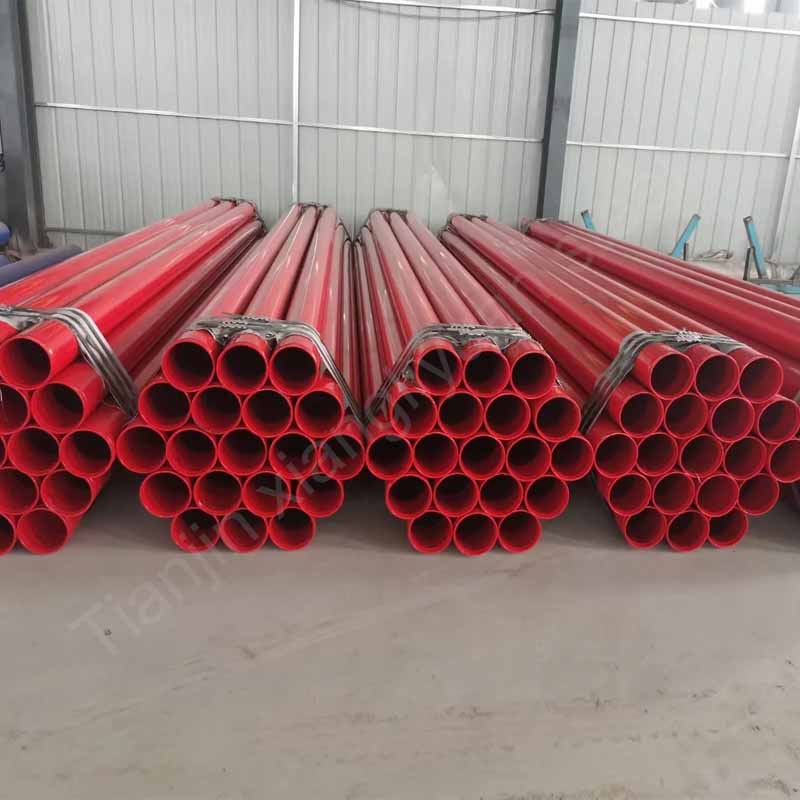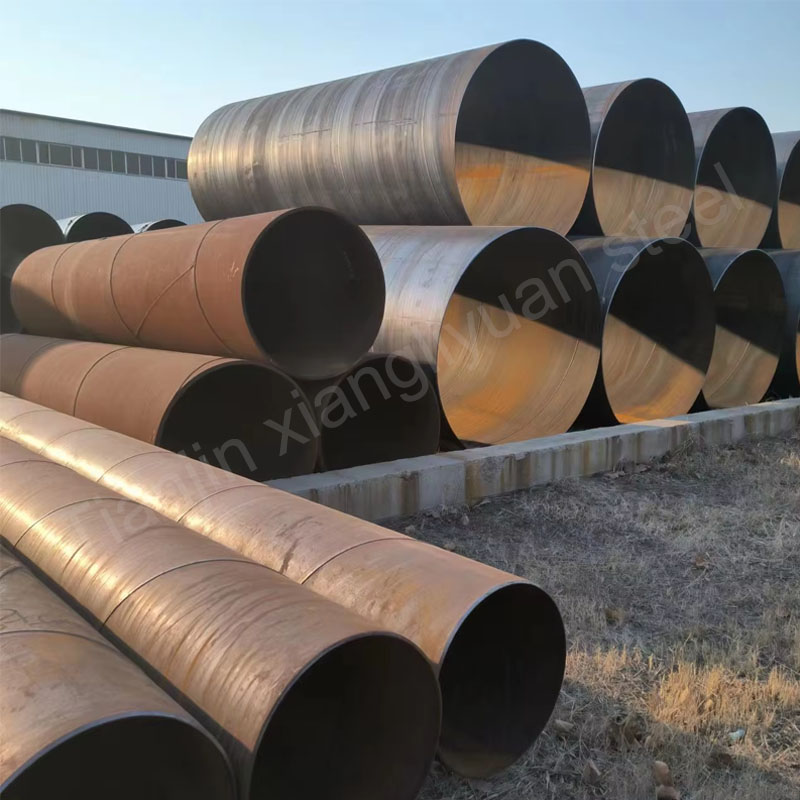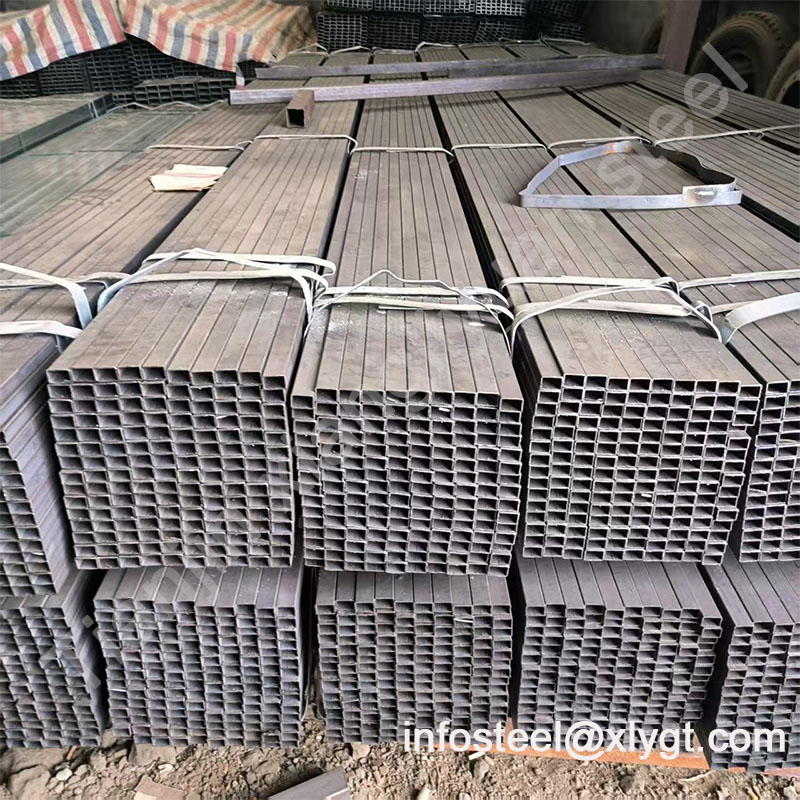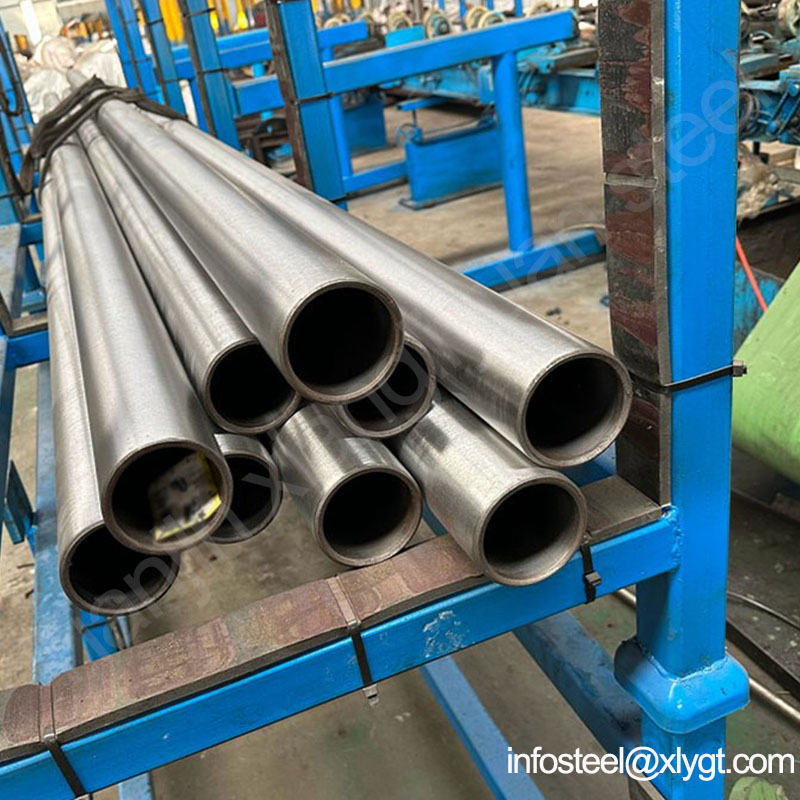
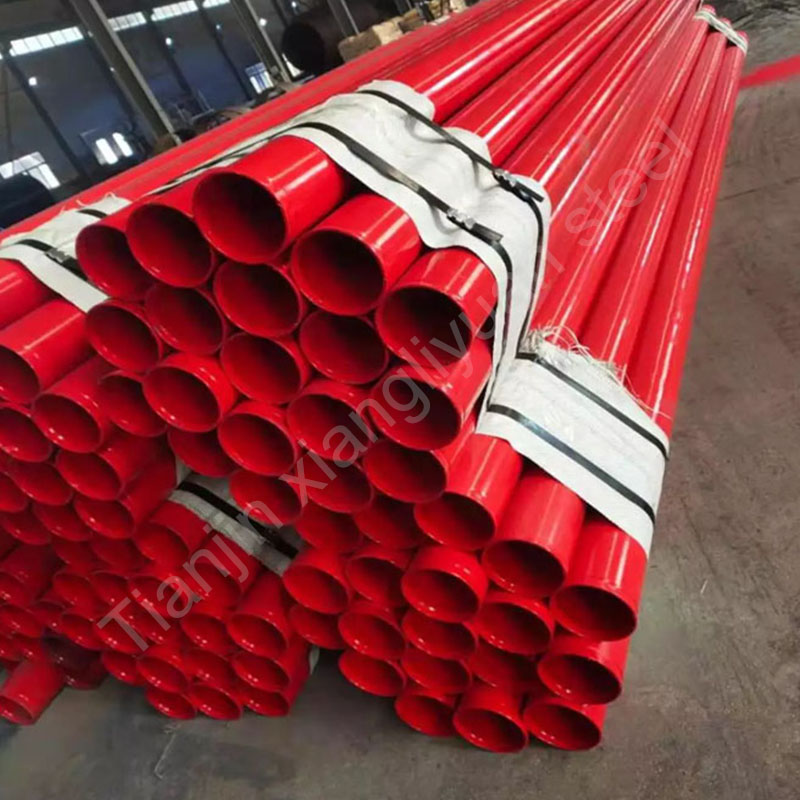
In fire protection systems, pipe is not merely a conduit for water—it is a life-safety component whose integrity depends as much on its end connections as on the pipe body itself. A sprinkler system that performs flawlessly in a hydrostatic test can still fail at a grooved joint or threaded fitting if the end preparation does not conform to the relevant standard. For engineers, contractors, and procurement specialists sourcing steel pipe for fire protection applications, understanding the technical distinctions between roll-grooving, cut-grooving, and threaded ends is essential for specifying compliant, durable, and code-accepted systems.
At Tianjin Xiangliyuan Steel (XLY Steel), we supply fire protection steel pipe from our Tianjin facility with a clear focus on dimensional accuracy and end-preparation consistency. Located near one of northern China’s busiest ports, we are positioned to support international projects with efficient logistics and responsive technical communication. This article outlines the governing standards and practical specifications for the three primary connection methods used in fire protection piping today.
The Material Baseline: ASTM A795
Before examining end connections, it is necessary to establish the pipe specification that underpins fire protection systems. ASTM A795/A795M is the standard specification for black and hot-dipped zinc-coated (galvanized) welded and seamless steel pipe for fire protection use . It covers NPS 1/2 through NPS 10, with wall thicknesses tailored to fire protection service—notably Schedule 10 (light-wall) and Schedule 40 (standard-weight). Pipe ordered under this specification is intended specifically for sprinkler and standpipe systems, and its dimensional tolerances are tighter than those of general-purpose pipe.
This distinction matters because grooving and threading operations are unforgiving of dimensional variation. An out-of-round pipe or a wall thickness below the minimum required for grooving will produce a joint that cannot achieve its listed pressure rating, regardless of the coupling quality. XLY Steel maintains strict physical and chemical testing protocols before shipment, a practice that begins with verifying that the base pipe meets the dimensional requirements of ASTM A795 or the equivalent project specification.
Roll-Grooving: Cold-Formed Connections for Light and Standard Wall Pipe
Roll-grooving is the dominant end-preparation method in modern fire protection piping. The process uses a grooving machine with rollers that press a circumferential indentation into the pipe OD near the end. No metal is removed. The pipe wall is displaced inward, creating a groove that accepts a mechanical coupling housing with a corresponding key profile.
The principal advantage of roll-grooving is that it preserves the full wall thickness at the groove. Because no material is cut away, the pipe retains its corrosion allowance and structural margin. This makes roll-grooving suitable for Schedule 10 pipe and for thinner-wall specialty products where cut-grooving would reduce the remaining wall below acceptable limits . Industry guidance consistently notes that roll-grooving is the preferred method for light-wall pipe, while cut-grooving is restricted to Schedule 30 and heavier .
The critical dimensional parameter for roll-grooved ends is the groove diameter, not the groove depth. Groove depth is a reference dimension only; the groove diameter must be uniform around the circumference and must fall within the coupling manufacturer’s published tolerance. Additionally, roll-grooving produces a slight flare at the pipe end. The maximum allowable flare diameter is specified by the coupling manufacturer and must be verified, as excessive flare can prevent proper gasket seating .
For fire protection systems, roll-grooved joints are typically listed by UL and approved by FM Global when used with compatible couplings. The pressure ratings of these joints depend on pipe schedule, diameter, and coupling design—commonly 300 psi to 365 psi for standard fire protection sizes . Specifiers should confirm that the coupling’s listing covers the specific pipe wall thickness being used, as ratings differ between Schedule 10 and Schedule 40.
Cut-Grooving: Machined Grooves for Heavier Wall Pipe
Cut-grooving removes material from the pipe OD using a machining tool, creating a groove with a smooth, machined surface. Because metal is removed rather than displaced, cut-grooving is intended for Schedule 30 and heavier wall pipe, where the remaining wall thickness at the groove root is sufficient to maintain pressure integrity and corrosion resistance .
The choice between roll-grooving and cut-grooving is sometimes dictated by project specification rather than technical necessity. Some engineers prefer cut-grooving on larger-diameter or higher-pressure systems because the machined groove provides a more precise dimensional interface with the coupling key. In sloped piping runs, the smooth interior of a cut-grooved joint eliminates the internal ridge created by roll-grooving, which can be a minor consideration for drainage and sediment accumulation .
However, cut-grooving introduces two practical constraints. First, the reduced wall thickness at the groove bottom lowers the corrosion allowance at the most vulnerable location of the joint. For galvanized pipe, cut-grooving exposes bare steel at the groove, requiring field touch-up with zinc-rich coating to maintain corrosion protection. Second, cut-grooving produces chips and requires careful deburring to prevent debris from entering the system—a particular concern in sprinkler piping where small orifices are present.
Both roll-grooved and cut-grooved ends share a common requirement: the gasket seating surface must be free of score marks, ridges, loose paint, scale, dirt, and rust . This surface is distinct from the groove itself and is the area where the coupling gasket compresses against the pipe OD. A damaged seating surface will leak regardless of how accurately the groove was formed.
Threaded Ends: NPT Specifications and Practical Limits
Threaded connections remain common in fire protection piping, particularly in smaller sizes and at equipment connections. The governing standard is ANSI/ASME B1.20.1 for National Pipe Thread Taper (NPT) . NPT threads have a 60-degree thread angle and a taper of 3/4 inch per foot (1:16), which creates an interference fit when mated with a corresponding internal thread. The taper is what provides the seal; thread sealant or tape fills the spiral gap between crest and root.
The dimensional specifications for NPT threads are precise and non-negotiable. For a 2-inch NPT thread, for example, the thread count is 11-1/2 threads per inch, and the effective thread length is approximately 0.7565 inches . These dimensions are verified with thread gauges during inspection. A thread that is too short will not engage sufficiently; a thread that is over-cut will have a thin crest that strips under pressure.
Industry practice and model specifications frequently limit threaded connections to NPS 2 and smaller. For larger sizes, grooved or flanged connections are preferred because threading large-diameter pipe requires significant torque and removes a substantial amount of wall thickness at the thread root. Some specifications explicitly state that piping 50 mm (2 inch) and smaller shall be Schedule 40 with threaded joints, while larger sizes use grooved or welded connections .
Threaded pipe for fire protection must also account for the threaded-and-coupled (T&C) length and the weight of couplings. ASTM A795 provides weight tables for pipe in the threaded and coupled condition, which differ from plain-end weights . Procurement documents should specify whether pipe is to be supplied plain-end or threaded-and-coupled, as this affects both handling and installed cost.
Compatibility, Listings, and the Role of the Pipe Supplier
A recurring theme across all three connection methods is that the pipe end is only half of the joint. The coupling or fitting—whether grooved mechanical coupling, threaded elbow, or reducing tee—must be listed or approved for the intended service and must be compatible with the pipe dimensions. UL listing and FM approval are the benchmarks in North American fire protection practice, and international projects may reference EN, ISO, or local codes with equivalent requirements.
For the pipe supplier, this means that end-preparation quality is not a cosmetic concern. A groove diameter outside tolerance, a thread with improper taper, or a gasket seating surface with handling damage will cause installation delays and failed inspections. At XLY Steel, our quality control process includes dimensional verification of end preparations and surface condition checks before packing. Because we are located in Tianjin, within easy reach of the port, we can consolidate orders and arrange shipment schedules that reduce transit time and handling risk for export customers.
Specification Checklist for Procurement
When specifying fire protection steel pipe with grooved or threaded ends, the following parameters should be explicitly stated in the purchase order:
-
Base pipe standard: ASTM A795 (or project-specific equivalent), with schedule and wall thickness.
-
End type: Roll-grooved, cut-grooved, or threaded (NPT).
-
Groove dimensions: Reference the coupling manufacturer’s specification and require groove diameter verification.
-
Thread standard: ANSI/ASME B1.20.1, with thread gauge inspection.
-
Surface condition: Gasket seating surface free of defects; galvanized pipe with undamaged zinc coating at ends.
-
Coupling compatibility: If couplings are supplied, confirm listing/approval for the pipe schedule.
-
Documentation: Mill test certificates, dimensional inspection records, and coating thickness reports where applicable.
The connection methods used in fire protection piping—roll-grooving, cut-grooving, and threading—are each governed by distinct technical standards and practical limits. Roll-grooving preserves wall thickness and suits light-wall pipe; cut-grooving provides a machined interface for heavier schedules; threaded ends follow the precise taper requirements of ANSI/ASME B1.20.1 and are best limited to smaller diameters. In every case, the reliability of the joint depends on the dimensional accuracy of the pipe end and the compatibility of the coupling or fitting.
Tianjin Xiangliyuan Steel supplies fire protection steel pipe with attention to these end-preparation requirements. Our location near Tianjin Port supports efficient export logistics, and our quality testing protocols are designed to ensure that the pipe delivered to your project site meets the dimensional and material requirements of the applicable standard. For technical inquiries or quotation requests, please contact us at infosteel@xlygt.com or visit https://www.xlysteel.com/ to review our product range and specifications.