Tianjin Xiangliyuan Steel | Technical Bulletin | External Corrosion Protection Series
Selecting the correct external coating for a buried steel pipeline is not a matter of preference—it is an engineering decision governed by three non-negotiable variables: the operating temperature envelope, the aggressivity of the soil environment, and the design life required by the asset owner. A mismatch in any one of these parameters accelerates coating degradation, compromises cathodic protection efficiency, and ultimately exposes the steel substrate to corrosion mechanisms that can lead to premature failure.
This framework is intended for pipeline engineers, procurement specialists, and project managers who specify coated line pipe for oil and gas transmission, water conveyance, and infrastructure applications. At Tianjin Xiangliyuan Steel, we supply coated steel pipe from our facilities in the Tianjin Economic-Technological Development Area, with direct logistics access to Tianjin Port (Xingang) for efficient global delivery. This guide reflects the technical criteria our engineering team applies when reviewing coating specifications against project requirements.
1. Temperature Limits: The First Screening Criterion
Operating temperature is the most immediate constraint on coating selection. Each coating family has a defined service temperature range beyond which its mechanical integrity or adhesion chemistry degrades.
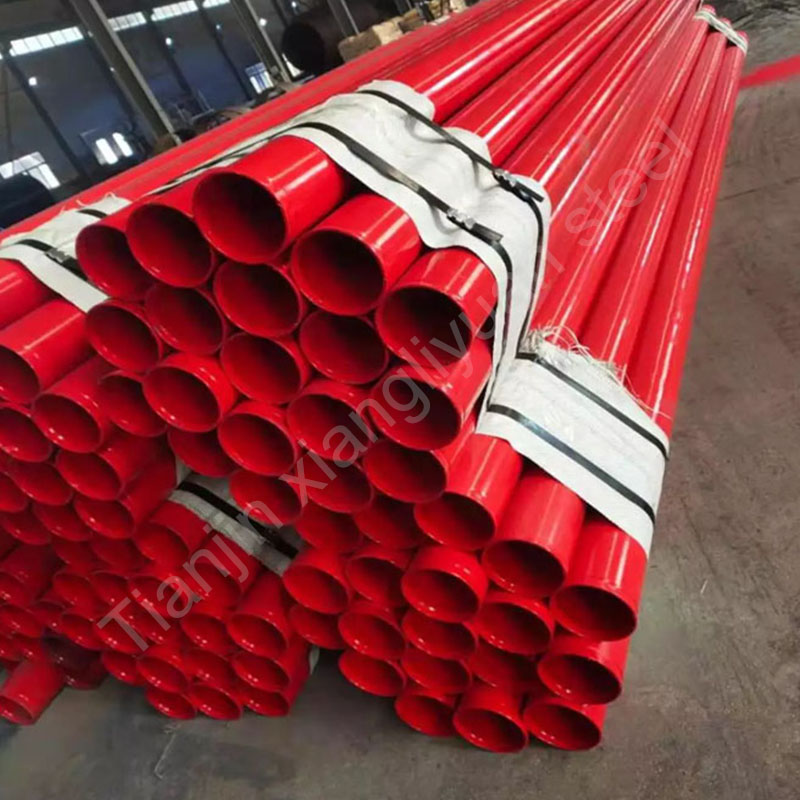
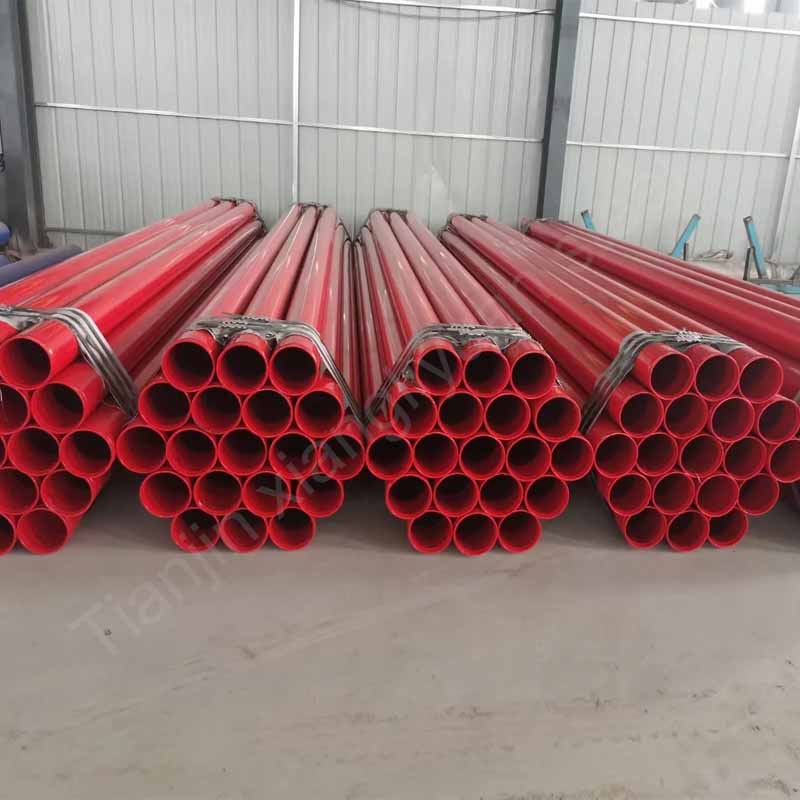
Fusion-Bonded Epoxy (FBE) provides a continuous barrier film with excellent adhesion to properly blasted steel. Single-layer FBE is typically suited for service temperatures from approximately -40°C to 80°C . This range covers the majority of onshore transmission pipelines operating at ambient or moderately elevated product temperatures. The application process requires heating the pipe to between 204°C and 260°C to fuse the epoxy powder, demanding precise induction heating control and a surface profile of 1.5 to 4.0 mils (38–100 microns) after near-white blast cleaning . Above 80°C, standard FBE formulations begin to soften and lose adhesion strength, though specialized high-temperature epoxies exist at significantly higher cost.
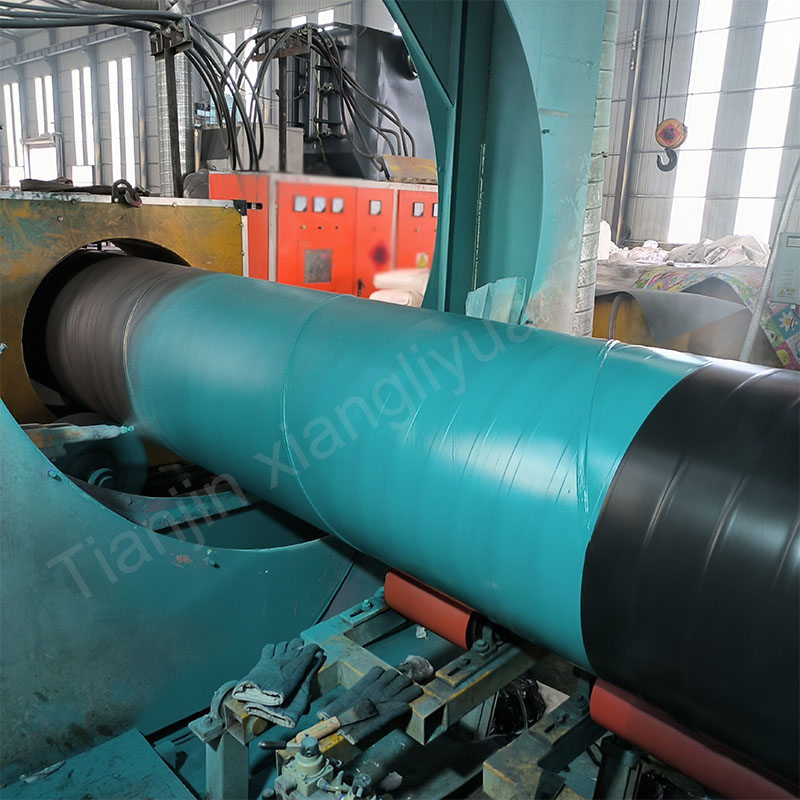
Three-Layer Polyethylene (3LPE) and Three-Layer Polypropylene (3LPP) extend the thermal ceiling. 3LPE, comprising an FBE primer, a copolymer adhesive, and a polyethylene topcoat, is the dominant choice for high-integrity onshore pipelines globally . The FBE primer layer (typically 100–150 μm) provides adhesion and barrier protection, while the PE topcoat (2–3 mm) delivers mechanical damage resistance during transport, installation, and service . 3LPE is generally applied where enhanced mechanical protection or elevated temperature resistance beyond FBE’s range is required . For temperatures approaching or exceeding 100°C, 3LPP becomes the appropriate selection, though the polypropylene topcoat exhibits a greater tendency toward stress cracking under certain conditions .
Coal Tar Enamel, once the industry standard, carries a maximum temperature rating of approximately 60°C and has been largely superseded by FBE and 3LPE systems in new construction due to its brittleness and handling limitations .
Practical specification note: The design temperature should include any potential excursion scenarios—shutdown conditions, solar heating of exposed pipe sections, and pigging operations—not merely the nominal operating temperature.
2. Soil Conditions: Resistivity, Moisture, and Mechanical Stress
Soil is not a passive environment. It is an electrolyte that varies in resistivity, pH, moisture content, and microbial activity across a single pipeline right-of-way. Coating selection must account for the most aggressive conditions the pipeline will encounter.
Low-resistivity soils (typically below 1,000 ohm·cm) accelerate electrochemical corrosion at coating defects and increase cathodic protection current demand. In such environments, coating quality—specifically adhesion and resistance to cathodic disbondment—becomes critical. FBE is selected for its excellent cathodic disbondment resistance, which is precisely why it serves as the primer layer in 3LPE systems . The FBE primer prevents corrosive media from migrating along the steel-coating interface when the outer layers are damaged.
High-moisture and high-water-table conditions present a different challenge. FBE coatings, while excellent barriers, are susceptible to blistering and disbondment after extended exposure to water at elevated temperatures . 3LPE’s thick polyethylene topcoat provides superior resistance to water permeation and mechanical damage from soil movement, rock impingement, and backfill operations . For pipeline sections crossing rocky terrain or subject to significant soil settlement, the mechanical protection afforded by 3LPE’s 2–3 mm topcoat is not optional—it is a durability requirement.
Microbially influenced corrosion (MIC) in anaerobic soils can proceed beneath disbonded coatings where cathodic protection current is shielded from reaching the steel surface. This phenomenon, known as cathodic protection shielding, is particularly dangerous because external monitoring may indicate adequate protection at the pipe-to-soil potential while localized corrosion proceeds undetected . Coating systems with high adhesion and resistance to disbondment—again, FBE-based systems—reduce this risk, but no coating eliminates the need for proper CP system design and periodic integrity assessment.
Soil stress and thermal cycling can impose shear forces at the coating-steel interface. 3LPE’s compliant adhesive layer accommodates minor soil movement better than rigid FBE, making it preferable in regions with significant ground temperature variation or frost heave potential.
3. Design Life: Matching Coating Degradation Mechanisms to Asset Strategy
Design life expectations for buried pipelines commonly range from 20 to 50 years, and in some transmission projects, beyond. No coating survives indefinitely, but the degradation mechanism and the point at which coating breakdown becomes operationally significant differ markedly between systems.
FBE coatings generally have a useful life of 25 to 30 years in typical buried service. Beyond this period, blistering and disbondment become more prevalent, particularly in high water-table environments . This does not mean the pipeline is unprotected—cathodic protection continues to function—but the coating’s contribution to corrosion control diminishes, and CP current demand increases. For projects with a 30-year design life and moderate soil conditions, FBE remains a cost-effective and technically sound choice.
3LPE coatings are reported to achieve useful lives approaching 50 years, with the qualification that disbondment at the FBE primer interface remains the primary degradation mode when moisture access is continuous . The thick polyethylene topcoat provides a durable mechanical barrier that maintains integrity through the construction phase and into long-term service, reducing the frequency of coating damage that would otherwise require field repair. For high-value transmission assets where intervention costs are high and service interruption is unacceptable, 3LPE’s extended life profile supports the higher initial material cost.
Coal tar enamel systems, where still encountered in rehabilitation or legacy projects, have a useful life of approximately 25 years before coating resistivity falls to a level where supplementary CP becomes uneconomical .
Critical design consideration: Design life is not solely a coating property. It is the product of coating selection, application quality, cathodic protection design, and construction care. A premium 3LPE coating applied over inadequately blasted steel—surface cleanliness below Sa 2.5, or insufficient anchor profile—will underperform a standard FBE coating applied with rigorous quality control. At Tianjin Xiangliyuan Steel, our coating lines operate under documented procedures aligned with ISO 21809 and related standards, with in-process inspection covering surface preparation, coating thickness, holiday detection, and adhesion testing .
4. Application and Logistics: The Often-Overlooked Variables
Coating selection cannot be separated from application feasibility and project schedule. FBE application requires specialized plant equipment and significant energy input; 3LPE requires extrusion equipment for the adhesive and topcoat layers. Both are plant-applied processes, and field joints require compatible field-applied coatings—typically heat-shrink sleeves or liquid epoxies—that must be qualified against the plant coating system.
The ISO 21809 series provides the governing framework: Part 2 for single-layer FBE, Part 4 for two-layer PE, and related parts for three-layer systems and field joint coatings . Specifications should reference these standards explicitly, including the qualification testing requirements for cathodic disbondment, peel strength, and impact resistance that are appropriate to the project’s temperature and soil conditions.
From our location in Tianjin, Tianjin Xiangliyuan Steel supports projects requiring coated line pipe with a logistics advantage that directly benefits schedule-sensitive construction: proximity to Tianjin Port (Xingang), one of China’s largest and most connected seaports, with direct shipping access to international markets. Coated pipe that would otherwise absorb weeks of inland transport time can be delivered to the port and loaded with minimal road or rail transfer.
5. A Practical Selection Sequence
For engineers finalizing a coating specification, the following sequence reflects the decision logic used in our technical reviews at Tianjin Xiangliyuan Steel:
-
Define the temperature envelope. Include operating, shutdown, and solar-exposure conditions. If the maximum exceeds 80°C, evaluate 3LPE or 3LPP; if it exceeds 60°C, eliminate coal tar enamel.
-
Characterize the soil. Obtain resistivity data, moisture content, and mechanical stress indicators along the right-of-way. Low-resistivity or high-moisture sections may warrant 3LPE regardless of temperature, for mechanical and moisture-barrier reasons.
-
Confirm the design life expectation. Align coating choice with the asset management strategy. A 50-year design life with minimal intervention tolerance points toward 3LPE; a 25-year life in benign soil permits FBE.
-
Specify the application standard and inspection regime. Reference ISO 21809-2 or the appropriate three-layer standard, and require documentation of surface profile, coating thickness, holiday testing, and adhesion testing for every production lot.
-
Plan field joint compatibility. Field coating must be qualified against the plant coating system; do not assume compatibility without test data.
Pipeline coating selection is a technical decision with long-term economic and safety consequences. Temperature limits define the feasible coating family; soil conditions determine the required barrier and mechanical properties; design life dictates the acceptable degradation rate and the corresponding investment level. No single coating is universally optimal, and specifications that treat coating as a commodity item rather than an engineered system invite premature failure.
Tianjin Xiangliyuan Steel supplies coated steel pipe with full traceability and inspection documentation, supported by our engineering team’s review of project-specific coating requirements. For technical inquiries regarding coating selection, availability, or delivery schedules, contact us at infosteel@xlygt.com or visit https://www.xlysteel.com/ to review our product and quality documentation.
This bulletin is provided for engineering reference. Project-specific coating selection should be confirmed by the responsible pipeline design engineer against applicable standards and site investigation data.