Selecting the correct external coating for a buried steel pipeline is not a matter of convention or habit. It is a decision that must be justified by two governing variables: the maximum continuous operating temperature the pipeline will see, and the chemical and physical aggressiveness of the soil environment in which it will be buried. A coating that performs flawlessly in one service condition can fail prematurely—through disbondment, cracking, or cathodic protection shielding—in another. This article examines the three dominant factory-applied coating systems used in modern pipeline construction: three-layer polyethylene (3PE), three-layer polypropylene (3LPP), and fusion-bonded epoxy (FBE). The objective is to provide a technically grounded framework for selection, aligned with international standards and field-proven performance data.
Operating Temperature as the Primary Constraint
Temperature determines the polymer chemistry that can be employed. Each coating system has a defined service envelope, beyond which the material either softens, embrittles, or degrades chemically.
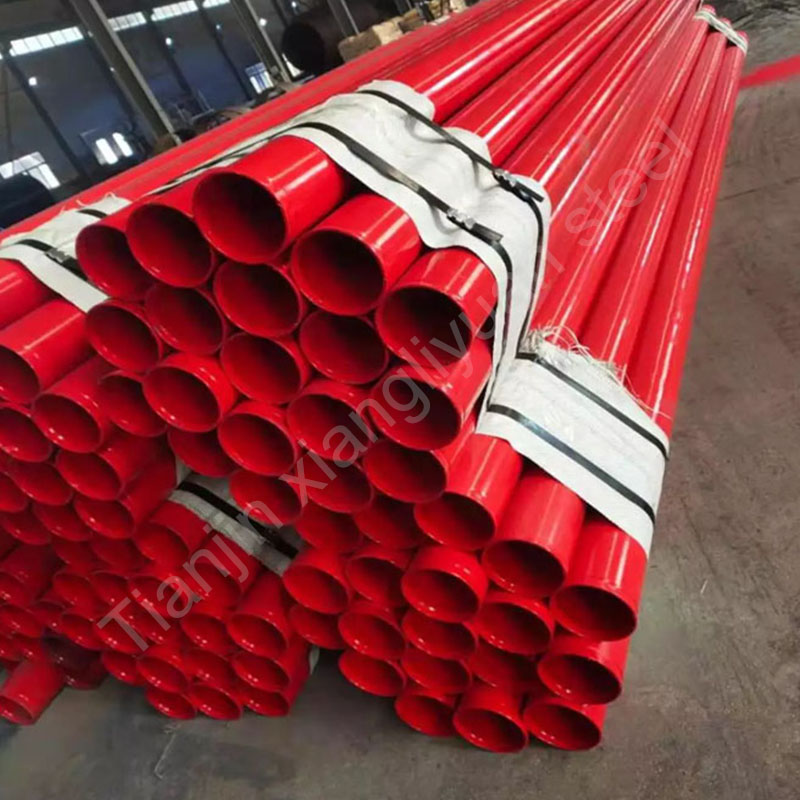
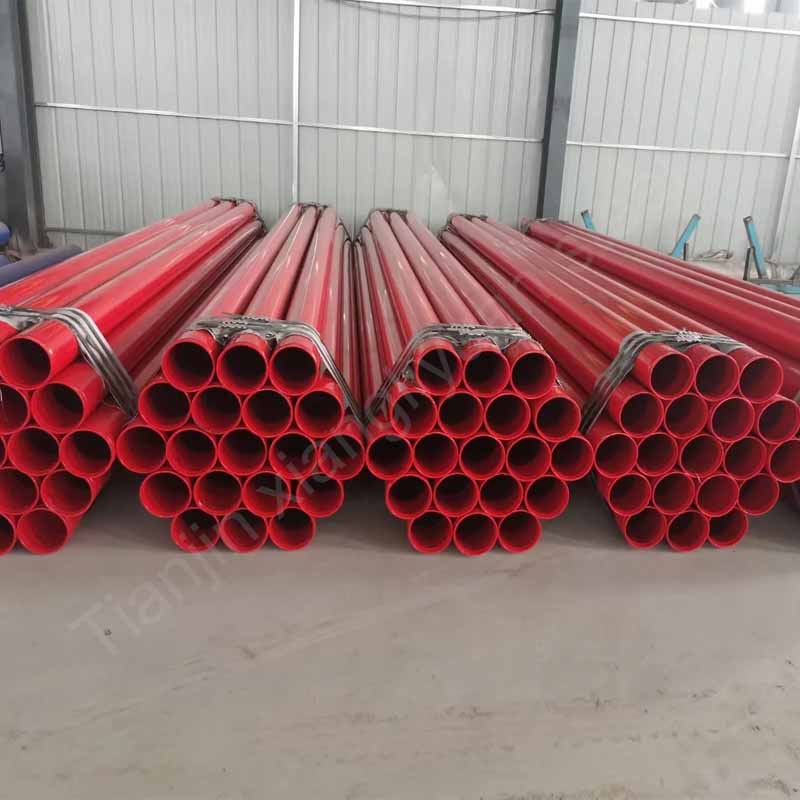
FBE is a thermosetting epoxy powder applied to a preheated pipe surface, typically between 230°C and 245°C, where it melts, flows, and cures into a hard, adherent film . Standard single-layer FBE coatings are generally rated for continuous service from approximately -40°C to 85°C, with thicknesses in the range of 300 to 600 microns . Within this envelope, FBE offers excellent adhesion to steel and strong resistance to cathodic disbondment, owing to its polar molecular structure . However, FBE is a relatively thin coating with limited mechanical protection, making it sensitive to handling damage and backfill abrasion.
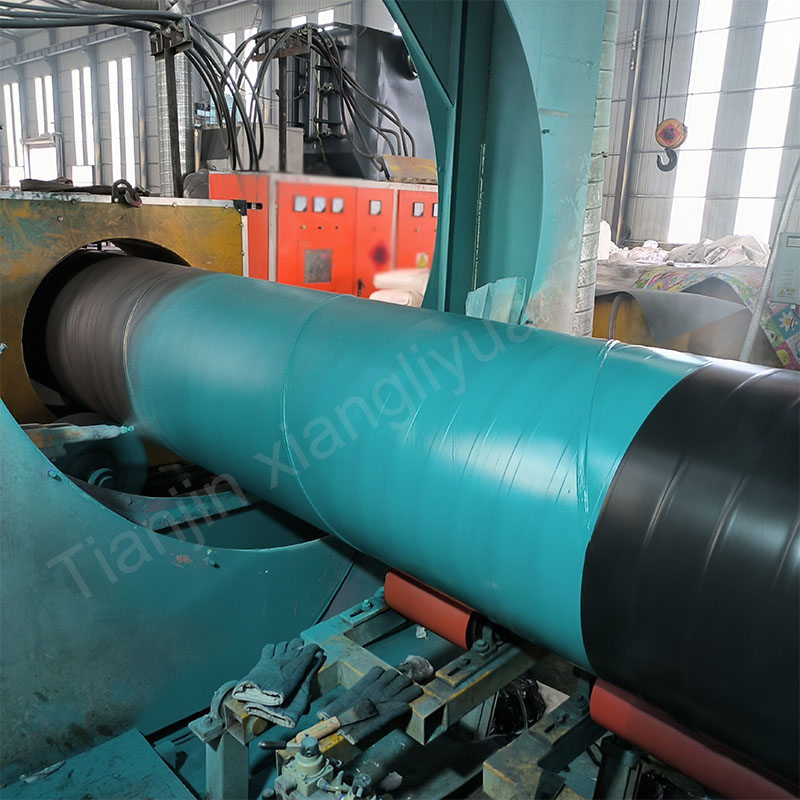
3PE extends the FBE concept by adding a copolymer adhesive layer and a thick polyethylene topcoat. The FBE primer provides the corrosion barrier and adhesion to steel; the adhesive bonds the FBE to the PE; and the PE outer layer delivers mechanical toughness. The standard 3PE system is typically rated for service temperatures up to 80°C . The polyethylene outer layer is available in high-density (HDPE) grades, and standards such as CSA Z245.20 allow for reduced total thickness compared to older DIN specifications because HDPE provides comparable impact resistance at lower film build .
3LPP substitutes polypropylene for polyethylene in the outer layer. This change raises the upper service limit substantially, with PP coating manufacturers specifying service temperatures in the 110°C to 140°C range . The trade-off is that polypropylene is more prone to cracking under certain conditions, and field experience has documented 3LPP cracking and disbondment at lower service temperatures in some applications . For high-temperature flowlines and export lines where operating temperatures exceed the 3PE ceiling, 3LPP becomes a necessary consideration, but the design must account for the material‘s reduced flexibility compared to PE.
Soil Chemistry and the Cathodic Protection Interface
Buried pipelines are never protected by coating alone. The coating is the primary barrier, and cathodic protection (CP) is the secondary, complementary system that protects the steel at coating defects—holidays, mechanical damage, and field joint areas. The compatibility of a coating with CP is therefore as important as its barrier properties.
FBE is widely regarded as the most CP-friendly coating because of how it fails. When FBE disbonds from the steel, its brittleness leads to microcracking, which provides a path for CP current to reach the exposed steel beneath the blister . This prevents the formation of a shielded environment where corrosion could proceed unchecked. Research has confirmed that under FBE blisters, a high-pH solution typically forms with no significant corrosion or stress corrosion cracking, indicating that CP has permeated the disbonded area .
3PE behaves differently. The polyethylene outer layer is a highly effective electrical insulator and moisture barrier, which is precisely why it provides excellent long-term corrosion protection when intact. However, if the PE layer disbonds while the FBE primer remains intact, CP current cannot reach the steel, but the steel is also not corroding because the FBE primer is still bonded. The more problematic scenario arises when both the PE and the FBE primer disbond, creating a crevice where CP current access is restricted. Laboratory studies have shown that if the trapped solution beneath a disbonded 3PE coating is renewed—as might occur in soils with fluctuating water tables—concentration of salts and oxygen replenishment can drive localized corrosion . In practice, however, modern 3PE systems with high adhesion strength between the PE and FBE primer exceed the shear stresses imposed by soil movement, and the incidence of CP-shielding failures in 3PE-coated pipelines is low .
Soil chemistry adds another layer of consideration. Chloride concentration is a critical variable. A critical chloride concentration of approximately 355 ppm has been identified as a boundary between passivation and pitting initiation for steel . In chloride-rich soils, coatings with high resistance to chloride ion penetration—FBE and 3PE both perform well—are preferred over systems with lower barrier integrity. Soil pH buffering capacity, dissolved CO₂ content, and microbial activity also influence the interfacial chemistry at coating defects and the efficiency of CP current in maintaining passivation .
Practical Selection Framework
The selection logic can be summarized as follows. For operating temperatures below 80°C and soils ranging from normal to moderately aggressive, 3PE offers the best combination of mechanical protection, long service life, and proven field performance. Its thick PE outer layer resists backfill damage and rock impingement, making it suitable for rocky terrain and rocky trench conditions. For operating temperatures between 80°C and approximately 120–140°C, 3LPP is the appropriate choice, with the caveat that cracking resistance must be verified for the specific temperature profile and installation conditions. For operating temperatures below 85°C and soils where mechanical damage risk is low—or where the pipeline will be directionally drilled and coating flexibility is important—FBE provides excellent adhesion and CP compatibility at a lower film thickness.
It must be emphasized that field joints and girth welds represent the weakest locations in any coated pipeline . No factory coating selection can compensate for inadequate field joint protection. The specification should address field joint coating compatibility with the mainline coating and with the CP system.
Sourcing and Execution
A technically correct specification is only as good as the coating applicator‘s ability to execute it consistently. Coating quality is determined by surface preparation, preheat control, FBE cure, adhesive application, and PE or PP extrusion—each of which must be monitored and documented. Buyers should request material certificates, coating thickness records, holiday detection reports, and adhesion test results for every production lot.
Tianjin Xiangliyuan Steel operates from Tianjin, one of northern China’s principal port and steel processing hubs. This location provides direct access to major shipping routes and enables efficient logistics for coated pipe orders destined for international pipeline projects. The company supplies steel pipe with external coating systems applied in accordance with ISO 21809 and project-specific specifications, with full traceability and inspection documentation. For technical inquiries regarding coating selection, project specifications, or delivery schedules, contact infosteel@xlygt.com or visit https://www.xlysteel.com/ to review available product ranges and quality certifications.
Coating selection is a technical decision with long-term consequences for pipeline integrity. Temperature defines the polymer system; soil chemistry and CP interaction define the required failure mode. 3PE remains the workhorse for buried onshore pipelines within its temperature limit, 3LPP serves high-temperature service where its cracking risk is managed, and FBE offers a proven, CP-compatible solution for moderate temperatures and lower mechanical risk environments. Specifying the right system—and verifying that it is applied correctly—is the foundation of a pipeline that will perform for decades.