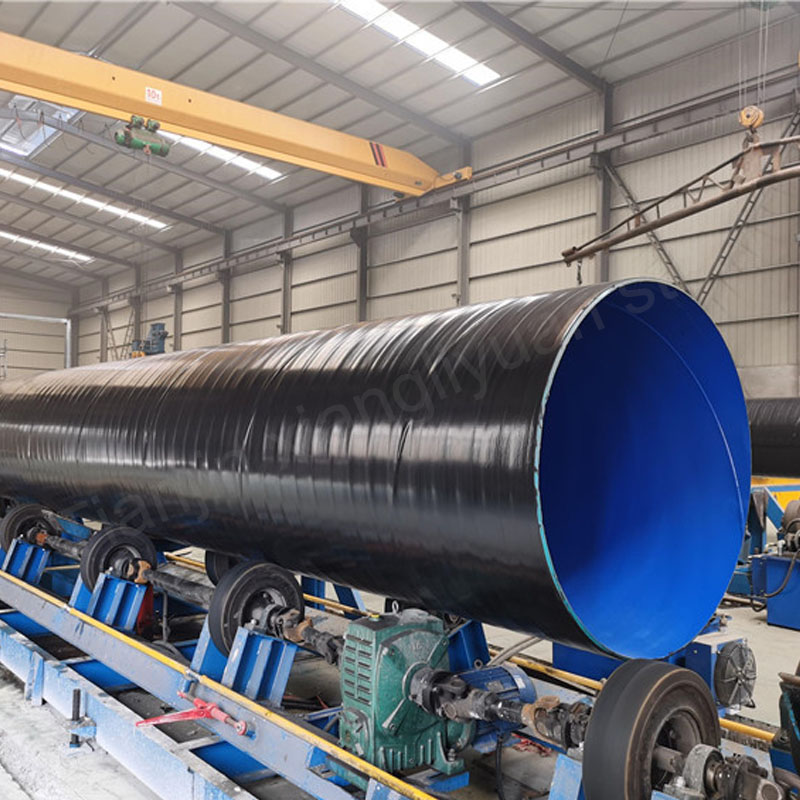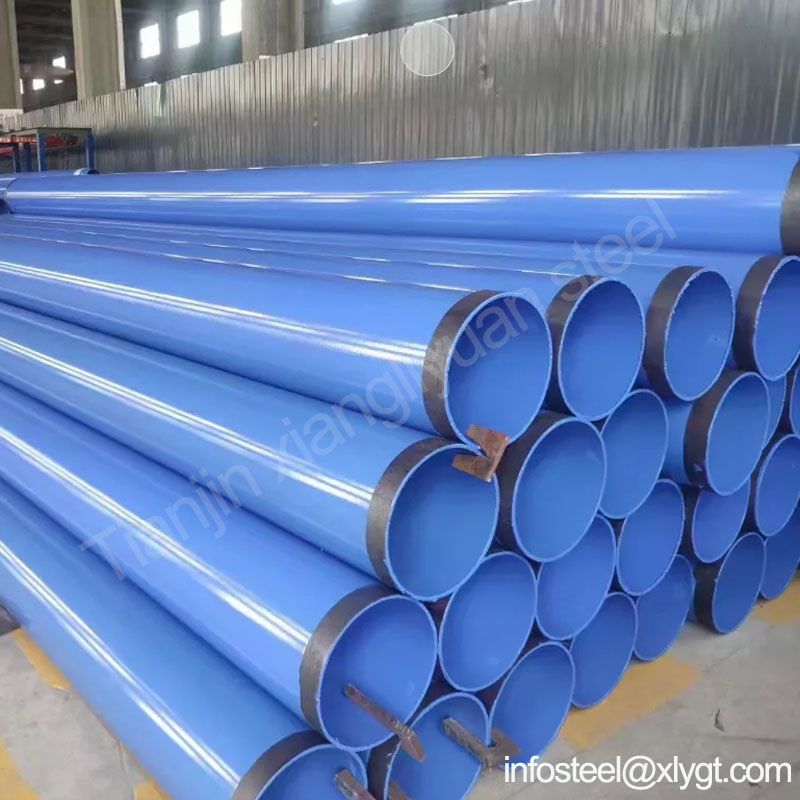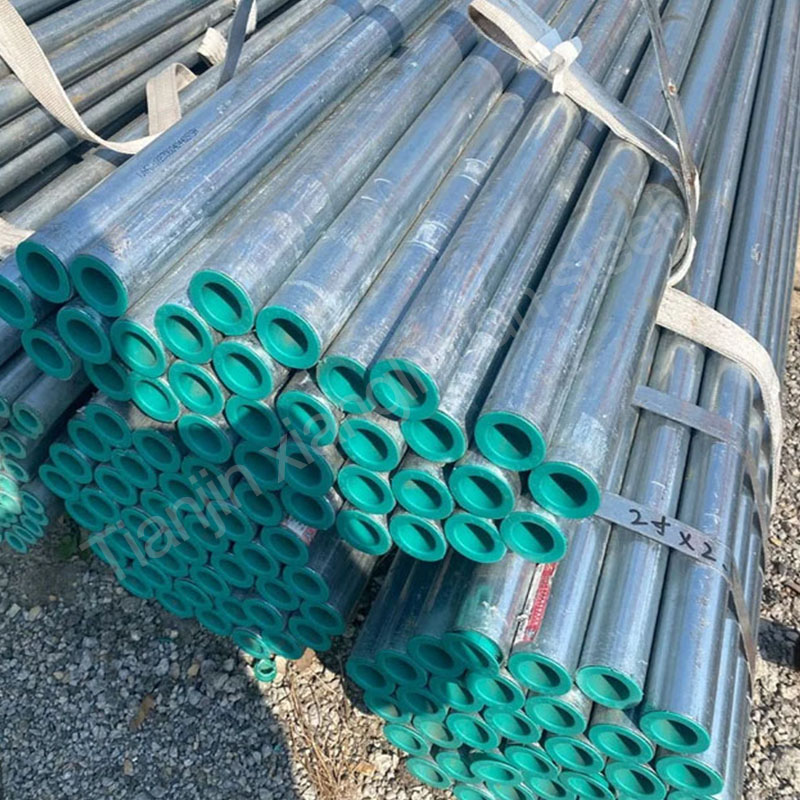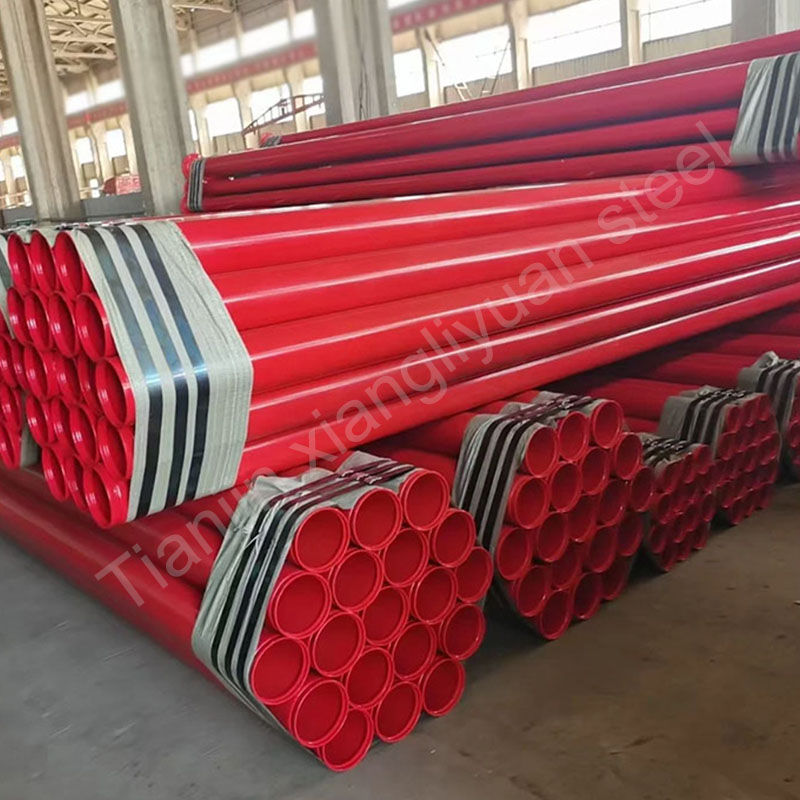
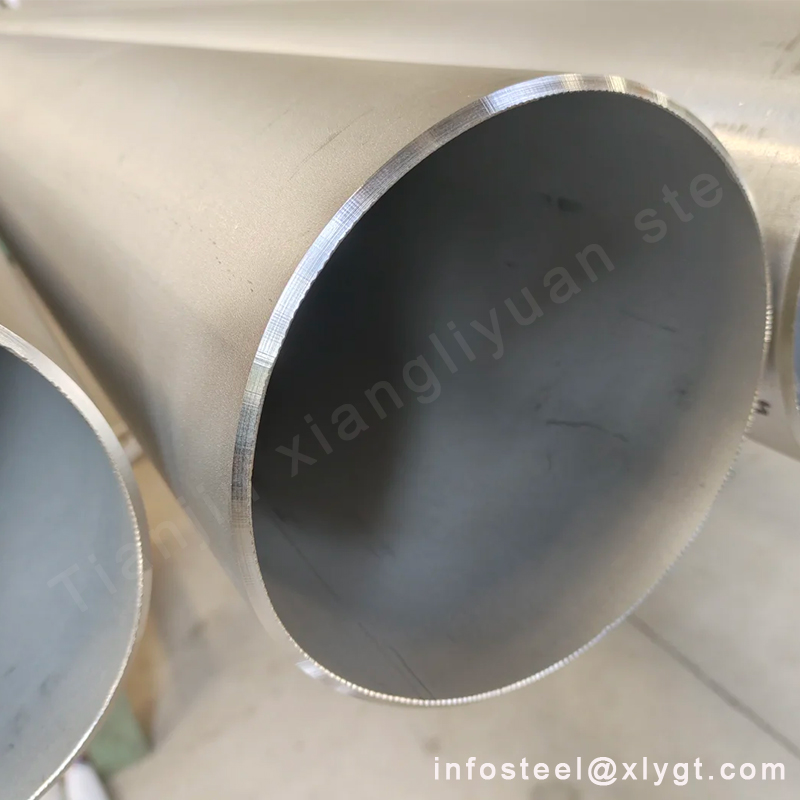
In the world of pipeline construction, pressure vessel fabrication, and structural welding, the edge of a steel pipe is far more than a simple cut. It is the foundation of weld integrity. A poorly prepared bevel leads to lack of fusion, slag entrapment, and ultimately, catastrophic joint failure. This is why steel pipe beveling technology stands as a critical discipline in modern metallurgy and welding engineering.
At Tianjin Xiangliyuan Steel, we recognize that a precision-beveled pipe end is the first guarantee of a successful field weld. As a premier supplier located in the Tianjin Binhai New Area—minutes away from one of the world’s busiest ports—we have invested heavily in automated beveling machinery capable of producing V-type, U-type, and J-type bevels to the most demanding international standards.
This article provides a comprehensive technical overview of bevel geometry, design specifications, and application criteria for seamless steel pipes, LSAW steel pipes, and carbon steel pipes used in critical service environments.
1. Why Beveling Matters: The Foundation of Weld Quality
Before examining specific geometries, we must understand the purpose of beveling. A bevel is an angled preparation at the pipe end that allows full penetration welding. Without a proper bevel, thick-walled pipes cannot be welded soundly.
Key functions of beveling include:
-
Ensuring complete fusion at the root pass.
-
Providing access for welding electrodes or filler wire.
-
Controlling heat input to minimize distortion and residual stress.
-
Accommodating backing rings or gas purging systems.
For API 5L line pipes, ASTM A106 Grade B seamless pipes, and high-pressure boiler tubes, the bevel specification is often mandated by the engineering design code (ASME B31.3, ASME Section IX, or DIN 2559).
Tianjin Xiangliyuan Steel produces bevels on all hot rolled seamless pipes and welded steel tubes destined for welding applications, ensuring every pipe is field-ready upon arrival.
2. Overview of Bevel Types: V, U, and J
Three primary bevel geometries dominate the industry. Each offers distinct advantages depending on wall thickness, material grade, and welding process.
2.1 V-Type Bevel: The Industry Standard
The V-bevel (also known as single-V or compound-V) is the most common preparation for schedule 40 steel pipe and general structural applications.
Design specifications:
-
Bevel angle: Typically 30° to 37.5° (included angle 60° to 75°)
-
Root face (land): 1.6 mm to 3.2 mm (1/16″ to 1/8″)
-
Root gap: 2 mm to 4 mm depending on process
Advantages:
-
Simple to machine using standard portable bevelers or lathes.
-
Compatible with SMAW (stick), GTAW (TIG), and GMAW (MIG) processes.
-
Cost-effective for wall thicknesses up to 20 mm.
Limitations:
-
For heavy wall pipes (>25 mm), the V-bevel requires excessive filler metal and produces high residual stress.
-
Limited access for root pass inspection.
Tianjin Xiangliyuan Steel recommends V-bevels for carbon seamless pipes in non-critical oil and gas applications, as well as for structural hollow sections.
2.2 U-Type Bevel: Optimized for Heavy Wall Thickness
The U-bevel (often called a J-U compound bevel) features a curved transition from the pipe face to the bevel surface. This geometry is specifically designed for heavy wall seamless pipes (WT > 25 mm) and high-integrity rotating equipment.
Design specifications:
-
Bevel angle: 10° to 20° (much narrower than V)
-
Radius at root: 3 mm to 8 mm (eliminates sharp stress concentrators)
-
Root face: 1 mm to 2 mm
-
Root gap: 2 mm to 3 mm
Advantages:
-
Reduces filler metal consumption by 30–40% compared to V-bevel.
-
Lowers heat input and distortion due to smaller weld volume.
-
Improves root pass penetration and reduces lack-of-fusion defects.
Applications:
-
API 5L X70 line pipes for long-distance transmission.
-
High-pressure steam lines in power generation.
-
Thick wall seamless pipes for hydraulic cylinders and pressure vessels.
Precision requirement: U-bevels require CNC-controlled beveling machines. At Tianjin Xiangliyuan Steel, our automated beveling line holds dimensional tolerances of ±0.5° on bevel angle and ±0.2 mm on radius.
2.3 J-Type Bevel: The Choice for Critical Services
The J-bevel is a specialized preparation featuring a long, shallow radius transitioning into a near-parallel root face. It is the most challenging bevel to produce but offers superior weld integrity for sour service pipes (HIC-resistant) and cryogenic applications.
Design specifications:
-
Bevel angle: 5° to 15° (extremely shallow)
-
Root radius: 6 mm to 12 mm (large radius reduces stress)
-
Root face: 0.5 mm to 1.5 mm
-
Land width: 1 mm to 2 mm
Advantages:
-
Minimizes heat-affected zone (HAZ) softening—critical for quenched-and-tempered alloys.
-
Reduces dilution between base metal and filler metal.
-
Provides smooth transition for automated GTAW (orbital welding).
Typical applications:
-
Alloy steel pipes (P11, P22, P91) for refinery hydrogen service.
-
Low-temperature carbon steel (ASTM A333 Grade 6).
-
Duplex and super duplex stainless steel lines.
Note: J-bevels are rarely field-machined. They must be supplied pre-beveled by the manufacturer. Tianjin Xiangliyuan Steel offers J-bevel preparation as a value-added service on all seamless and welded steel pipes exported from our Tianjin facility.
3. Bevel Design Specifications by Standard
Global standards dictate specific bevel geometries. Below is a technical summary of the most referenced codes:
| Standard | Bevel Types | Typical Angle | Root Face | Application |
|---|---|---|---|---|
| ASME B31.3 | V, U, J | 37.5° (V), 10° (U) | 1.6 mm | Process piping |
| ASME Section IX | Any qualified | As per WPS | Variable | Pressure vessels |
| API 5L (Appendix B) | V or compound | 30° to 35° | 1.6 mm ± 0.8 mm | Line pipes |
| EN 14832 | V, Y, K | 30° to 35° | 1–3 mm | European standards |
| DIN 2559 Part 1 | V, U, narrow gap | 30° (V), 10° (U) | 1–2 mm | German standard |
Tianjin Xiangliyuan Steel maintains digital bevel profiles for each standard. When you order ASTM A106 seamless pipes or API 5L Grade B, we ask for your welding procedure specification (WPS) to match the bevel exactly.
4. Precision Beveling Methods: From Flame to CNC
The method used to cut the bevel directly affects its geometry and metallurgy.
4.1 Flame Beveling (Oxy-fuel)
-
Best for: Carbon steel pipes, rough preparation.
-
Limitation: Produces a heat-affected zone (HAZ) and scale that must be ground clean.
-
Tolerance: ±2° to ±3° (not suitable for J-bevels).
4.2 Plasma Beveling
-
Best for: Stainless and alloy steels.
-
Advantage: Narrower HAZ than flame; higher speed.
-
Tolerance: ±1° with CNC guidance.
4.3 Mechanical Beveling (Lathe or Portable Beveler)
-
Best for: Precision steel tubes and all seamless pipes.
-
Advantage: No HAZ; mirror-like surface finish; tolerance ±0.5°.
-
Our method: At Tianjin Xiangliyuan Steel, we use CNC-controlled stationary beveling machines for pipes up to 24″ OD, and external/internal bevelers for larger diameters.
4.4 Laser Beveling
-
Best for: Thin wall tubes (WT < 6 mm) and exotic alloys.
-
Advantage: Zero mechanical stress; burr-free edge.
For LSAW steel pipes with wall thickness exceeding 30 mm, we recommend a compound preparation: a J-bevel at the root followed by a V-bevel for filling passes.
5. Quality Control of Beveled Ends
A bevel is only as good as its inspection. Tianjin Xiangliyuan Steel employs the following dimensional checks:
-
Bevel angle gauge (digital protractor): Measures angle accuracy to 0.1°.
-
Depth micrometer: Verifies root face and land width.
-
Radius templates (fillet gauges): For U and J-bevel radius conformity.
-
Visual inspection (VT) per AWS D1.1: Checks for notches, chatter marks, or stepped cuts.
We reject any bevel with:
-
Burn marks or excessive scale (indicates overheating).
-
Asymmetric geometry (will cause weld misalignment).
-
Cracks or tears at the root face.
All carbon seamless pipes and alloy pipes leaving our Tianjin warehouse include a bevel inspection report alongside the mill test certificate (MTC).
6. The Tianjin Logistics Advantage: Bevels Protected for Transit
A perfect bevel can be destroyed by poor handling. Because Tianjin Xiangliyuan Steel is located within 15 km of major container terminals, we minimize overland transport distance—reducing the risk of bevel damage from truck vibration or rough handling.
Our protection protocol:
-
Plastic bevel protectors (HDPE) fitted to every pipe end.
-
Steel strapping for bundle integrity.
-
Waterproof wrapping for corrosion-sensitive bevels (e.g., stainless steel).
Short transit to Tianjin port means your bevels arrive at your job site exactly as we machined them—no rework, no grinding, no delays.
7. Selecting the Right Bevel for Your Project
Choosing between V, U, or J depends on several factors. Use this decision matrix:
| Wall Thickness | Material Grade | Welding Process | Recommended Bevel |
|---|---|---|---|
| < 12 mm | Carbon steel | SMAW / GMAW | Single V (37.5°) |
| 12–25 mm | Carbon / Low alloy | GTAW root + SMAW fill | Compound V or U |
| 25–50 mm | API 5L X65/X70 | Automatic GMAW | U-bevel |
| > 50 mm | Alloy (P91, Duplex) | GTAW orbital | J-bevel |
| Sour service | HIC-resistant | Low-hydrogen processes | J-bevel with large radius |
Tianjin Xiangliyuan Steel offers free technical consultation. Send your WPS or project specification to infosteel@xlygt.com, and our welding engineers will recommend the optimal bevel geometry for your hot rolled seamless pipes or welded steel tubes.
Precision Beveling as a Core Competency
In the competitive world of steel pipe supply, beveling is often treated as an afterthought—a simple cut before shipping. At Tianjin Xiangliyuan Steel, we treat it as a precision engineering service. From standard schedule 40 steel pipe with a simple V-bevel to high-spec API 5L X70 line pipes requiring CNC-machined J-bevels, our commitment to accuracy is unwavering.
We combine:
-
ISO 9001:2015 certified quality systems.
-
Automated beveling lines with laser alignment.
-
Strategic location near Tianjin port for damage-free logistics.
-
Decades of experience exporting to North America, Europe, Southeast Asia, and the Middle East.
When you need seamless steel pipes, LSAW steel pipes, or carbon steel pipes with bevels that weld perfectly the first time, choose the supplier that measures twice and cuts once.
Request your quote today.
-
Company: Tianjin Xiangliyuan Steel
-
Website: https://www.xlysteel.com/
-
Email: infosteel@xlygt.com
Visit our website to download our Bevel Specification Chart (PDF) covering all ASME, API, and EN configurations. Let us ship precision-beveled pipes from Tianjin to your project site—fast, safe, and code-compliant.