The Foundation of Modern Structural Engineering
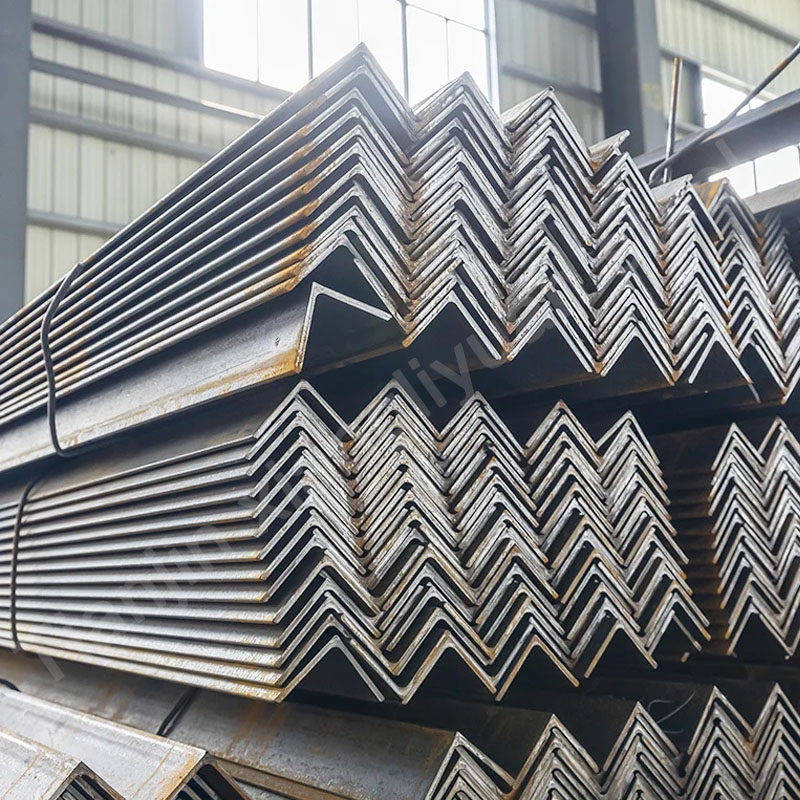
Steel angle bars, also known as L-shaped profiles or angle irons, represent one of the most versatile and essential structural steel products in modern construction and industrial fabrication. Their simple yet efficient L-shaped cross-section provides exceptional strength-to-weight ratio and bidirectional stiffness, making them indispensable in applications ranging from building frames and bridge supports to transmission towers and heavy machinery bases. For engineers, procurement specialists, and project managers navigating the global steel market, understanding the nuances of angle bar specifications—particularly the distinction between equal and unequal leg configurations and the material grades ASTM A36 versus EN 10025 S235JR—is paramount for ensuring project success, regulatory compliance, and structural integrity.
At Tianjin Xiangliyuan Steel, we have built our reputation on delivering premium structural steel products with precision and reliability. Located strategically in Tianjin, China, our facility enjoys unparalleled proximity to one of the world’s busiest port complexes, enabling rapid, cost-effective shipping to international destinations. Combined with our rigorous quality control protocols and deep technical expertise, we offer global clients a trusted partnership for their most demanding structural steel requirements. Contact our technical sales team at infosteel@xlygt.com or explore our comprehensive product portfolio at https://www.xlysteel.com/ to discuss your next project.
Part I: Equal Leg vs. Unequal Leg Angles – Geometric Distinctions and Application-Specific Advantages
Understanding the Basic Classification
Steel angles are categorized into two primary configurations based on the dimensions of their perpendicular legs. This seemingly simple distinction carries significant implications for load distribution, structural efficiency, and application suitability.
Equal Leg Angles (also referred to as equal-sided angles) feature two legs of identical length, specified by a single leg dimension and thickness—for example, L 75×75×8 denotes an equal angle with 75mm legs and 8mm thickness. This symmetrical geometry provides uniform strength characteristics along both axes, making it ideal for applications requiring balanced load distribution, such as compression members, symmetric framing, and general-purpose structural reinforcement.
Unequal Leg Angles (or unequal-sided angles) feature legs of different lengths, specified by listing the longer leg first, followed by the shorter leg and thickness—for instance, L 100×75×8. This asymmetric design offers a superior strength-to-weight ratio along the axis of the longer leg, providing greater bending resistance in a specific direction. Unequal angles excel in applications where primary loads are applied predominantly along one axis, such as roof purlins, crane brackets, asymmetric connections, and structural members subjected to eccentric loading.
Dimensional Standards and Global Availability
Internationally recognized standards govern the dimensions, tolerances, and mass calculations for hot-rolled steel angles. The European standard EN 10056-1 specifies nominal dimensions for both equal and unequal leg angles, while DIN 59370 provides detailed requirements for bright steel sharp-edged angles, including dimensional tolerances and perpendicularity limits. In the United States, ASTM A6/A6M serves as the general specification for rolled structural steel shapes, including angles.
Common equal angle sizes range from 20×20×3mm to 250×250×35mm, with weights varying from approximately 0.889 kg/m for the smallest section to over 128 kg/m for heavy structural sizes. Unequal angles are available in dimensions such as 25×16×3mm up to 200×125×18mm, offering engineers flexibility in optimizing section properties for specific loading conditions. Tianjin Xiangliyuan Steel maintains extensive inventories across both equal and unequal configurations, ensuring ready availability for urgent project requirements.
Application-Specific Selection Criteria
For residential construction and light-duty applications, S235JR equal angles (40×40×4mm or 50×50×5mm) provide adequate strength while maintaining cost-effectiveness and ease of handling on-site. These sections are commonly employed for roof trusses, wall frames, bracing members, and floor joists in single-story structures where symmetrical load distribution prevails.
Heavy industrial construction, bridge infrastructure, and transmission towers frequently require the enhanced capacity of ASTM A36 or higher-grade materials in both equal and unequal configurations. Unequal angles paired with S275JR (yield strength 275 MPa) deliver approximately 10% higher strength than A36, making them particularly suitable for load-bearing applications with asymmetric loading patterns, such as wall-mounted beams, industrial machinery frames, and bridge components exposed to cold-climate conditions.
At Tianjin Xiangliyuan Steel, our experienced engineering team assists clients in selecting the optimal geometry and material grade for their specific application, drawing on decades of collective industry expertise and comprehensive understanding of international building codes and standards.
Part II: ASTM A36 vs. EN 10025 S235JR – Material Grade Comparative Analysis
Chemical Composition and Compliance Frameworks
ASTM A36 is an American standard carbon structural steel governed by the ASTM International specification. It features a maximum carbon content of 0.25%, manganese content between 0.80-1.20%, and maximum phosphorus and sulfur contents of 0.04% and 0.05%, respectively. This low carbon content ensures excellent weldability without preheating for most thicknesses, a critical advantage in construction applications requiring extensive on-site fabrication.
EN 10025 S235JR is a European standard non-alloy structural steel specified under the S235 designation (minimum yield strength 235 MPa), with the “JR” suffix indicating guaranteed impact toughness at room temperature (27J minimum at +20°C). Its chemical composition is comparable to A36, with slightly lower maximum carbon content (0.17-0.20%), making it equally suitable for welding and forming operations.
Mechanical Properties: A Direct Comparison
| Property | ASTM A36 | EN 10025 S235JR |
|---|---|---|
| Minimum Yield Strength | 250 MPa (36 ksi) | 235 MPa |
| Tensile Strength Range | 400-550 MPa (58-80 ksi) | 360-510 MPa |
| Minimum Elongation | 20% in 8 inches | 26% (for thicknesses ≤40mm) |
| Impact Toughness | Not specified | 27J at +20°C |
| Weldability | Excellent (no preheat required) | Excellent (no preheat required) |
Sources:
While both grades exhibit similar mechanical characteristics, the subtle differences have practical implications for international projects. ASTM A36 offers approximately 6% higher minimum yield strength, making it the preferred choice for North American projects and applications governed by AISC (American Institute of Steel Construction) standards. S235JR is widely specified in European and globally harmonized projects requiring EN compliance, and its certified impact toughness provides added assurance for structural applications exposed to potential temperature variations.
Weldability and Fabrication Characteristics
Both ASTM A36 and S235JR exhibit exceptional weldability due to their low carbon equivalents, enabling trouble-free fabrication using MIG, stick, TIG, and submerged arc welding processes without preheating for typical section thicknesses. This characteristic significantly reduces on-site labor costs and accelerates construction schedules, particularly valuable for projects with tight timelines.
Hot rolling production processes refine the internal grain structure of both grades, eliminating potential defects such as porosity, inclusions, and micro-cracks. The resulting material exhibits enhanced toughness, compression resistance, and structural stability over the product lifecycle.
Interchangeability Considerations
For light to medium construction applications—including residential wall bracing, shelf frames, and low-rise roof trusses—S235JR and A36 are effectively interchangeable in terms of performance, provided the project’s governing code does not mandate a specific standard. The minor strength differential (250 MPa versus 235 MPa) is negligible for non-critical structural roles where conservative design factors already incorporate safety margins.
However, for projects with explicit standard requirements—EN compliance for EU-funded infrastructure or ASTM specifications for US federal projects—engineers should specify the grade aligned with the applicable building code. Tianjin Xiangliyuan Steel supplies both ASTM A36 and EN 10025 S235JR with full mill test certificates and third-party inspection support to ensure seamless compliance with regulatory requirements worldwide.
Part III: Manufacturing Excellence and Global Supply Chain Advantage
Hot Rolling Process and Quality Assurance
At Tianjin Xiangliyuan Steel, our steel angle bars are manufactured through advanced hot rolling processes that transform high-quality steel billets into precision structural profiles. The hot rolling technique enables excellent dimensional control, refined grain structure, and consistent mechanical properties throughout the section. Our quality control protocols encompass:
-
Chemical composition verification through spectroscopic analysis
-
Mechanical property testing including tensile, yield, and elongation measurements
-
Dimensional inspection ensuring compliance with EN 10056-1, ASTM A6, or DIN 59370 as applicable
-
Third-party inspection capabilities with SGS, BV, and other internationally recognized agencies
Strategic Location and Logistical Advantages
Our facility in Tianjin, China, positions us at the heart of one of the world’s most efficient steel export hubs. The Port of Tianjin, one of China’s largest and busiest ports, handles over 500 million tons of cargo annually, offering direct shipping routes to North America, Europe, the Middle East, Southeast Asia, Africa, and South America.
Key logistical benefits:
-
Reduced inland transportation costs – Our proximity to the port eliminates lengthy and expensive domestic shipping segments
-
Shortened delivery times – Standard export packing enables rapid container loading and vessel scheduling, typically achieving delivery within 7-10 workdays after deposit confirmation
-
Flexible order quantities – We accommodate orders from 20 metric tons (FCL) to large-scale project requirements, with supply capacity exceeding 20,000 metric tons per month
-
Professional export packaging – Mill-standard export packing in bundles with steel strapping ensures product integrity during ocean transit
Global Service and Commitment
Whether your project demands equal leg angles for structural framing, unequal leg angles for specialized load-bearing applications, ASTM A36 for North American compliance, or EN 10025 S235JR for European standards, Tianjin Xiangliyuan Steel delivers uncompromising quality with competitive pricing and reliable delivery.
Our technical team is available to provide:
-
Engineering consultation on material selection and specification optimization
-
Customized production for non-standard dimensions or special requirements
-
Comprehensive documentation including mill test certificates, inspection reports, and packing lists
-
After-sales support ensuring your complete satisfaction
Partnering for Structural Success
The selection of appropriate steel angle bar specifications—whether equal or unequal leg, ASTM A36 or EN 10025 S235JR—requires careful consideration of structural demands, regulatory requirements, and project economics. Our comprehensive understanding of these parameters, combined with extensive manufacturing capability and strategic logistical advantages, positions Tianjin Xiangliyuan Steel as a preferred partner for discerning clients worldwide.
We invite you to experience the Tianjin Xiangliyuan Steel difference: superior product quality, expert technical guidance, and dependable supply chain performance backed by our team’s unwavering commitment to excellence.
Contact us today to discuss your steel angle bar requirements:
-
📧 Email: infosteel@xlygt.com
-
🌐 Website: https://www.xlysteel.com/
From standard structural angles to specialized profiles, trust Tianjin Xiangliyuan Steel to deliver the precision, quality, and reliability your project deserves.