The Critical Role of CWC in Subsea Infrastructure
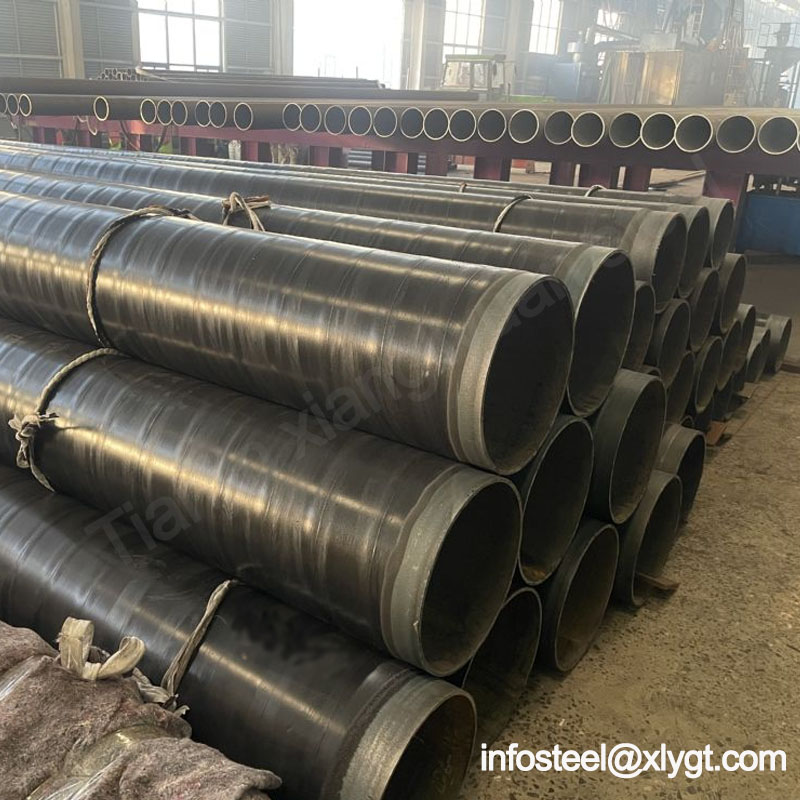
Submarine pipelines represent some of the most demanding infrastructure investments in the oil and gas industry. Operating in harsh marine environments, these pipelines must withstand hydrodynamic forces, seabed instability, and mechanical impacts while maintaining structural integrity over decades of service. Concrete Weight Coating (CWC) has emerged as the industry-standard solution for addressing two fundamental challenges: buoyancy control and mechanical protection. This comprehensive guide explores the technical aspects of CWC steel pipes, drawing on established engineering standards and industry best practices.
At Tianjin Xiangliyuan Steel, we specialize in supplying high-quality CWC pipes to international clients. Our strategic location in Tianjin—one of China’s busiest port cities—ensures efficient logistics and timely delivery for projects worldwide. For inquiries, please contact us at infosteel@xlygt.com or visit our website at https://www.xlysteel.com/.
Understanding Concrete Weight Coating: Technical Fundamentals
Concrete Weight Coating is an external layer applied to subsea steel pipelines to provide negative buoyancy and mechanical protection. The principle is straightforward: a steel pipeline filled with product is nearly neutrally buoyant in seawater. Without sufficient weight, lateral hydrodynamic forces from currents and wave action can move the pipeline, potentially causing buckling, overstress, and free-span issues.
CWC addresses these challenges through two primary functions:
-
Negative Buoyancy: Ensuring the pipeline remains stable on the seabed
-
Mechanical Protection: Shielding the pipe from fishing gear, anchors, and seabed debris
Key Parameters and Design Considerations
The design of a CWC system requires careful engineering analysis. According to DNVGL-RP-F109, the required concrete coating thickness is determined through on-bottom stability analysis that considers:
| Parameter | Typical Specification Range |
|---|---|
| Concrete Thickness | 40–150 mm |
| Concrete Density | 2,250–3,400 kg/m³ |
| Compressive Strength | 35–50 MPa (28-day) |
| Reinforcement | Steel wire mesh or polypropylene fiber |
| High-density Aggregate | Iron ore for densities of 3,000–3,400 kg/m³ |
The choice of concrete density is particularly critical. Standard CWC uses conventional aggregates (limestone, sand) with a density of 2,250–2,600 kg/m³. However, for gas pipelines where product density is low, iron ore aggregate is used to achieve densities of 3,000–3,400 kg/m³ without increasing coating thickness. Some engineering solutions employ steel slag as an aggregate to achieve unit weights exceeding 190 pcf (approximately 3,040 kg/m³).
Application Methods: Impingement vs. Compression
CWC is applied at dedicated coating yards using one of two primary methods:
Impingement Method
The impingement method is the most common approach for large-diameter offshore pipelines. Concrete is sprayed at high velocity onto the rotating pipe while a wire mesh cage is simultaneously wrapped around it. This method produces a dense, well-compacted coating with consistent thickness and reinforcement placement. Pipe rotation during application ensures uniform coverage, and the process can achieve high production rates suitable for large-scale projects.
Compression Method
The compression (wrap-around) method involves placing an outer form around the pipe and pouring or injecting concrete into the annular space. This approach is typically used for smaller batches or specialized applications where the impingement method may not be suitable.
The Application Process Sequence
Regardless of the method chosen, the CWC application process follows a standardized sequence:
-
Surface Preparation: Anti-corrosion coated pipes (typically FBE or 3LPE) are received and inspected for damage using holiday detectors
-
Reinforcement Placement: Steel wire mesh is positioned around the pipe, supported by spacers to avoid contact with the protective coating
-
Concrete Mixing and Application: Heavy-density concrete is mixed and applied to specified thickness
-
Curing: Concrete cures for 24–48 hours; steam curing may accelerate the process. Pipes are typically delivered after 28 days of curing to achieve full strength
-
Inspection: Each pipe undergoes thickness, density, compressive strength, and weight testing
The coating terminates approximately 50 mm short of the pipe end, leaving a cutback area for field joint welding. This cutback ensures proper weld integrity during pipeline installation.
Buoyancy Control: The Engineering Rationale
Subsea pipeline stability analysis focuses on two main force categories: hydrodynamic and hydrostatic. The relationship between forces acting on the pipeline and seabed soil resistance is governed by standards such as DNVGL-RP-F109. Stability calculations can be performed using analytical methods or finite element modeling.
When analysis determines that a pipeline is unstable under operating or installation conditions, concrete coating must be added. A comparative study using DNVGL-RP-F109 and finite element analysis found that a steel pipe with 18.203 mm wall thickness required a 41 mm concrete coating to achieve vertical and lateral stability for operating and installation conditions. This case demonstrates how CWC thickness is not arbitrary but is derived from rigorous engineering analysis.
Negative Buoyancy Verification
The “negative buoyancy” of a CWC pipe is the key performance metric. This is calculated as the submerged weight minus the buoyant force. For quality control purposes, each coated pipe is weighed when dry and marked with the “DW” (Dry Weight) designation. The acceptable weight tolerance is typically +5%/-2% of the calculated theoretical weight. Some projects require 20% extra concrete thickness if weighing is not performed.
Mechanical Protection and Durability
Beyond buoyancy control, CWC provides essential mechanical protection to the underlying anti-corrosion coating. The reinforced concrete layer acts as an armor against:
-
Impact from fishing trawl boards and anchors
-
Abrasion from seabed debris and rocks
-
Damage during installation (S-lay, J-lay, or reel-lay)
-
Handling and transportation at coating yards and lay vessels
The reinforcement steel wire mesh, embedded approximately midway in the coating thickness, provides structural integrity and prevents cracking under impact loads. For coatings exceeding 50 mm thickness, two layers of reinforcement are specified.
Compliance with International Standards
CWC pipes must comply with rigorous international standards to ensure quality and performance. The primary standards governing CWC include:
-
DNVGL-ST-F101: Submarine pipeline systems
-
DNVGL-RP-F109: On-bottom stability design
-
ISO 21809-5: Concrete coatings for external surfaces
-
ASME OMAE: Technical papers on CWC design and strain analysis
The industry has recognized that rational design approaches for CWC can allow selection from a wider range of installation vessels and relaxation of installation weather window criteria. Numerical models have been developed to estimate structural response of CWC pipes under typical installation and operation loadings, considering nonlinearities in steel and concrete material behavior.
Special Considerations for Directional Drilling
Horizontal Directional Drilling (HDD) installations present unique challenges for CWC pipes. The bending stiffness of concrete-coated pipes is significantly higher than uncoated pipes, which affects the minimum allowable elastic bend radius. Incidents have occurred where design institutes made incorrect calculations, leading to pipe strings becoming stuck during installation, resulting in economic losses and project delays.
Current standards do not fully address the calculation of minimum elastic bend radius for concrete-coated pipelines in HDD applications. Designers must account for the enhanced bending stiffness through analytical methods, considering both the steel pipe and concrete coating properties.
Why Tianjin Xiangliyuan Steel for Your CWC Pipe Needs
Tianjin Xiangliyuan Steel brings extensive experience in supplying steel pipes for demanding subsea applications. Our commitment to quality, combined with our strategic location near Tianjin Port, makes us a trusted partner for international clients.
Our Advantages
-
Strategic Location: Tianjin is one of China’s largest and busiest ports, providing direct access to international shipping routes. This minimizes logistics costs and ensures timely delivery to global destinations.
-
Comprehensive Product Range: We supply seamless pipes, welded pipes, galvanized pipes, and steel plates suitable for CWC application, all meeting international standards.
-
Quality Assurance: Our products are manufactured according to strict quality control procedures, ensuring compliance with API 5L, ASTM A53/A106, and other relevant standards.
-
Responsive Service: With an average response time of ≤2 hours, we provide rapid, professional support to our international clients.
-
Export Expertise: With established markets across Asia, Africa, America, and the Middle East, we understand the documentation, certification, and logistics requirements for global projects.
Our Commitment
At Tianjin Xiangliyuan Steel, we don’t just supply steel—we provide engineering support and technical consultation to ensure our clients receive the right product for their specific application. Whether you need line pipe for a major offshore project or specialized CWC pipe for a challenging installation, our team is ready to assist.
Partnering for Subsea Pipeline Success
Concrete Weight Coating remains an indispensable technology for subsea pipeline integrity. Proper engineering design, quality application, and compliance with international standards ensure that CWC pipes provide reliable performance over decades of service in harsh marine environments.
For international buyers seeking a trusted partner for their steel pipe requirements, Tianjin Xiangliyuan Steel offers the combination of quality products, technical expertise, and logistical efficiency that global projects demand. Our location in Tianjin, adjacent to one of the world’s busiest ports, gives us a distinct advantage in serving clients worldwide.
Contact Information:
-
Email: infosteel@xlygt.com
-
Website: https://www.xlysteel.com/
We welcome your inquiries and look forward to supporting your next subsea pipeline project with high-quality steel pipe solutions. Visit our website to explore our full product range and learn more about our capabilities.