A Policy Inflection Point
On December 9, 2025, China’s Ministry of Commerce and the General Administration of Customs jointly issued Announcement No. 79, introducing export license management for a comprehensive range of steel products effective January 1, 2026 . This marks the first reinstatement of such controls in sixteen years, covering approximately 300 customs commodity codes spanning from pig iron and semi-finished steel to finished flat products, long products, and—critically for global buyers—seamless steel pipes, welded steel tubes, and pipe fittings .
For international procurement teams sourcing from China, this is not merely a bureaucratic adjustment. It represents a structural shift in how Chinese steel pipe exports are conducted, with profound implications for supply chain reliability, pricing dynamics, and supplier qualification standards.
What the Policy Actually Requires
The regulatory mechanics are straightforward but consequential. Exporters of covered steel pipe products must now obtain an export license by submitting two core documents: the export contract and a Product Quality Inspection Certificate issued by the manufacturer . Licenses are issued by provincial or municipal commerce authorities, with a standard processing period of approximately 15 days .
Importantly, the policy does not impose quantitative export quotas or restrict enterprise eligibility . The stated objectives are twofold: to strengthen statistical monitoring of steel exports and, more significantly, to elevate quality standards across the export ecosystem by requiring verifiable manufacturer quality certification .
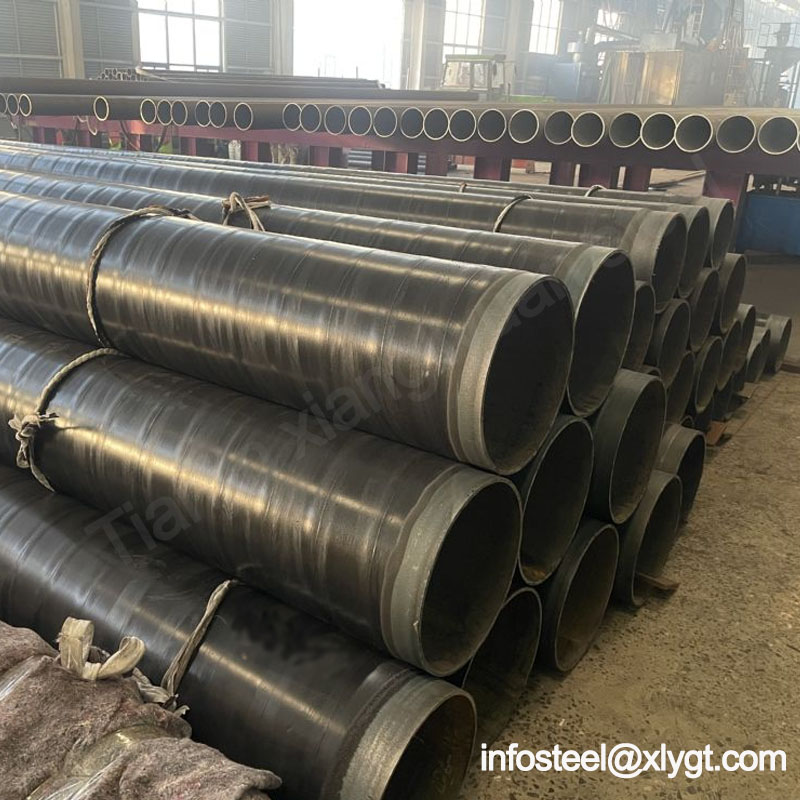
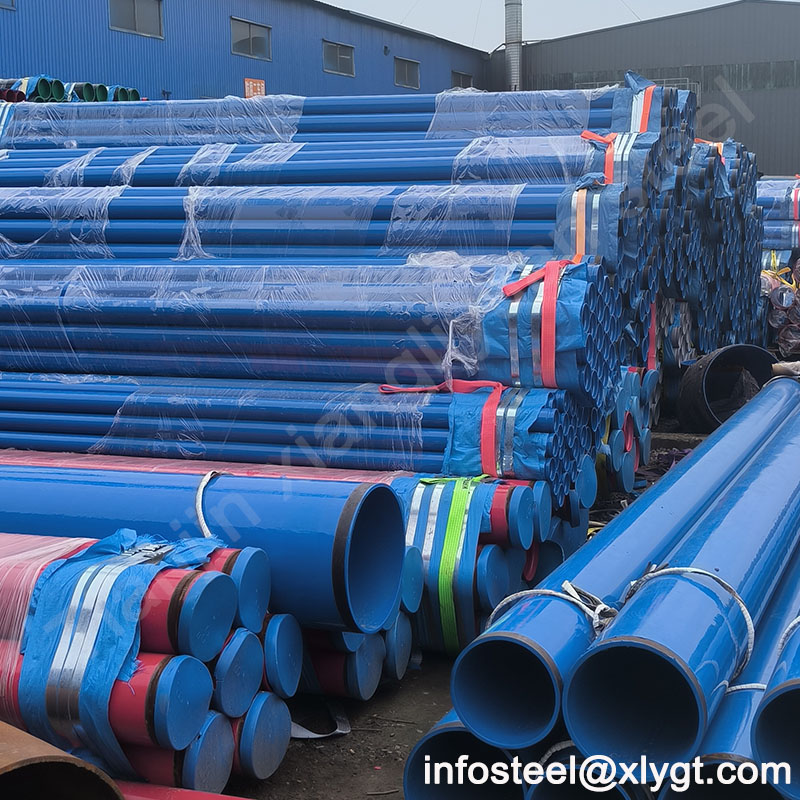
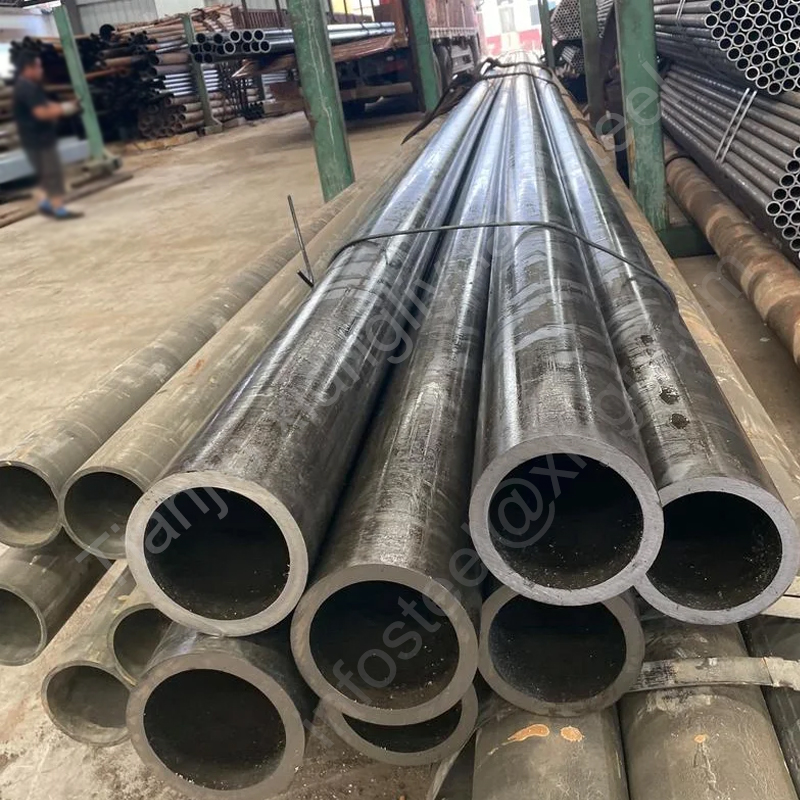
The coverage is extensive. For seamless pipes alone, 37 customs commodity codes have been incorporated, encompassing virtually the entire product spectrum including OCTG, line pipe, boiler tubes, and geological drill pipes . Welded pipe categories are similarly comprehensive .
The Compliance Divide: Winners and Losers
The immediate operational impact is a sharp increase in compliance costs and administrative lead times . However, the more strategic consequence is the emergence of a two-tier supplier landscape.
Tier One: Compliance-Ready Manufacturers. Producers with established quality management systems—ISO 9001, API monogram licensing, and recognized third-party inspection credentials—can generate the required quality certificates efficiently. For these suppliers, the license requirement is a manageable procedural step.
Tier Two: Compliance-Challenged Traders and Small Mills. The historical prevalence of “buy-back export” practices and intermediary trading arrangements has meant that many export transactions were conducted without direct manufacturer quality documentation. The new regime effectively disqualifies non-compliant intermediaries from the export channel .
Industry data already reflects this transition. China‘s welded pipe exports declined 3.76% year-on-year in Q1 2026, with March alone showing a 22.94% drop, as the market adjusted to the new compliance framework .
Supply Chain Restructuring: Three Observable Shifts
Shift One: From “Price-First” to “Qualification-First” Procurement. The “race to the bottom” on pricing that characterized Chinese steel pipe exports in recent years—where export volumes rose while unit prices declined—is being structurally disrupted . Buyers can no longer assume that any quoted FOB price is executable. Supplier qualification verification must now precede commercial negotiation.
Shift Two: Consolidation Toward Integrated Manufacturers. Mills with in-house quality assurance capabilities, direct export rights, and established documentation infrastructure are gaining share. Trading companies that previously aggregated supply from multiple small mills face existential pressure unless they formalize manufacturer relationships.
Shift Three: Regional Supply Chain Recalibration. Export flows to price-sensitive markets in Southeast Asia, the Middle East, and Africa—which together represented approximately 35% of China‘s steel pipe exports in 2025—are most exposed to disruption . Some volume may redirect to alternative suppliers in India, Japan, South Korea, or Turkey. However, for high-specification products requiring API certification or specialized grades, Chinese manufacturers retain a cost-competitiveness that is difficult to fully replace.
The Tianjin Xiangliyuan Steel Perspective: Compliance as Competitive Advantage
At Tianjin Xiangliyuan Steel, the 2026 regulatory change aligns with operational practices we have maintained since our founding. The export license requirement codifies what we have always believed: quality documentation is not a bureaucratic burden but a foundation of trustworthy trade.
Our manufacturing partners operate under rigorous quality management systems with full traceability from raw material to finished pipe. The Product Quality Inspection Certificates required for license applications are a natural output of our existing inspection protocols, not an additional hurdle. This means our clients experience minimal disruption to order processing and shipment scheduling.
Why Tianjin? A Logistics Advantage in the New Environment
Compliance costs and administrative lead times are now material factors in total landed cost calculations. Tianjin‘s position as Northern China’s premier steel export gateway provides tangible advantages :
-
Direct port access to Tianjin Port, one of the world‘s largest comprehensive ports, with dedicated steel and pipe terminals
-
Established shipping routes to major steel pipe destinations in Southeast Asia, the Middle East, Africa, and the Americas
-
Efficient customs clearance infrastructure that integrates with the export license verification process
-
Consolidation capabilities for mixed-product shipments
For urgent requirements, our local inventory position and proximity to port facilities enable shipment windows that inland mills simply cannot match. In the post-license environment, where administrative processing can add 15 days to order cycles, logistics efficiency becomes a critical differentiator .
Technical Product Coverage: What We Supply
Our product portfolio addresses the full spectrum of welded and seamless pipe applications subject to the new licensing regime:
-
API 5L line pipe (Gr. B through X70) for oil and gas transmission
-
API 5CT casing and tubing for well completions
-
ASTM A106 / A53 for high-temperature and general service
-
ASTM A335 P11/P22/P91 for power generation applications
-
ASTM A213 T11/T22/T91 boiler and heat exchanger tubes
-
ASTM A312 TP304/TP316 stainless for corrosive environments
-
ASTM A333 Gr. 6 for low-temperature service
-
ERW (Electric Resistance Welded) pipe for structural and line applications
-
LSAW (Longitudinal Submerged Arc Welded) for large-diameter transmission
-
SSAW (Spiral Submerged Arc Welded) for water and infrastructure projects
-
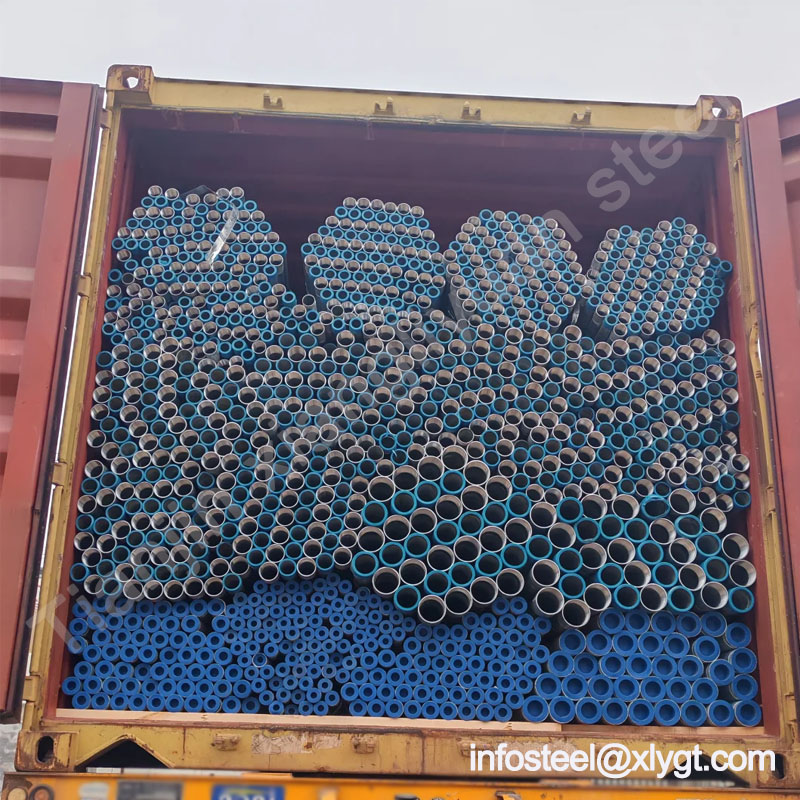
Galvanized pipe for fencing, construction, and agricultural applications
-
Hollow Structural Sections (HSS) for architectural and engineering use
Each product category is supported by mill test certificates, third-party inspection reports (SGS, BV, Intertek as required), and the manufacturer quality documentation necessary for export license applications.
Practical Guidance for International Buyers
Verify Supplier Eligibility Early. Confirm that your Chinese supplier has established direct manufacturer relationships and can produce the required quality inspection certificates. Requests for “flexible documentation” should be treated as red flags.
Build Documentation Time into Schedules. The 15-day licensing window is a best-case scenario. For orders involving multiple product categories or non-standard specifications, allow additional buffer.
Prioritize Integrated Suppliers. Manufacturers with in-house quality control and direct export capabilities eliminate the weakest link in the compliance chain—the intermediary without manufacturer accountability.
Consider Total Landed Cost, Not Just FOB Price. Compliance costs, potential delays, and quality verification expenses now form a meaningful component of procurement economics. A slightly higher unit price from a fully compliant supplier may deliver superior total value.
A More Professional Market
China‘s 2026 export license management is not a barrier to trade—it is a filter for quality. The policy benefits buyers who value documentation, consistency, and accountability. It disadvantages those whose business models depend on opacity and unverified quality claims.
At Tianjin Xiangliyuan Steel, we view this transition as an opportunity to demonstrate the operational discipline that has defined our approach to international trade. Our clients receive not only competitively priced steel pipes but also the assurance that every shipment is fully documented, fully traceable, and fully compliant.
For inquiries regarding export license procedures, product specifications, or logistics planning for 2026 shipments, please contact us directly.
Tianjin Xiangliyuan Steel
Email: infosteel@xlygt.com
Website: https://www.xlysteel.com/
Professional, Responsible, Integrity, and Long-Term—the principles that guide every transaction.