Technical Analysis and Material Selection Guide for Industrial Applications
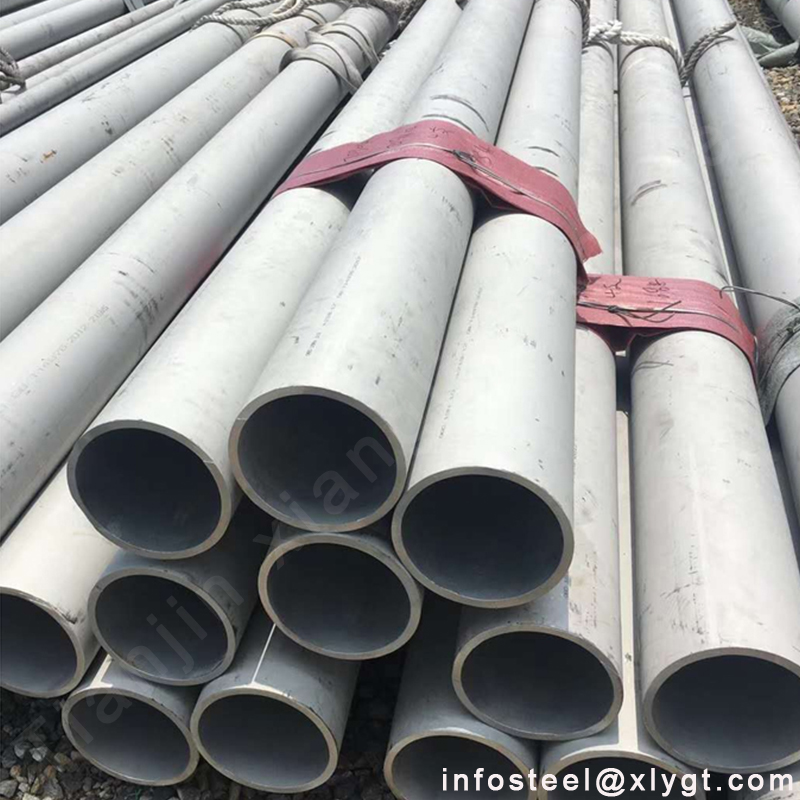
Duplex stainless steel pipes have revolutionized the industrial piping landscape, offering an exceptional combination of corrosion resistance and mechanical strength that surpasses conventional austenitic and ferritic stainless steels. As global industries face increasingly aggressive operating environments—from offshore oil platforms to chemical processing plants—the demand for high-performance piping solutions continues to escalate.
At Tianjin Xiangliyuan Steel (contact: infosteel@xlygt.com, website: https://www.xlysteel.com/), we specialize in manufacturing and supplying premium-grade duplex stainless steel pipes, leveraging our strategic location near Tianjin Port to ensure efficient global logistics and competitive delivery timelines. This comprehensive technical analysis examines the comparative performance of UNS S32205 (2205) and UNS S32750 (2507) duplex stainless steel pipes, providing engineers, procurement specialists, and project managers with data-driven insights for optimal material selection.
1. Metallurgical Fundamentals of Duplex Stainless Steels
1.1 Microstructure and Composition
Duplex stainless steels derive their superior properties from a balanced dual-phase microstructure, typically comprising approximately 50% austenite and 50% ferrite. This unique structure combines the excellent toughness and weldability of austenitic grades with the high strength and stress corrosion cracking resistance of ferritic grades.
UNS S32205 (2205) Composition:
Chromium: 22.0-23.0%
Nickel: 4.5-6.5%
Molybdenum: 3.0-3.5%
Nitrogen: 0.14-0.20%
Carbon: ≤0.030%
Iron: Balance
UNS S32750 (2507) Composition:
Chromium: 24.0-26.0%
Nickel: 6.0-8.0%
Molybdenum: 3.0-5.0%
Nitrogen: 0.24-0.32%
Carbon: ≤0.030%
Iron: Balance
The elevated chromium, molybdenum, and nitrogen content in 2507 confers significantly enhanced pitting and crevice corrosion resistance compared to 2205, quantified by higher PREN (Pitting Resistance Equivalent Number) values.
2. Mechanical Strength Comparison
2.1 Tensile and Yield Strength Properties
Mechanical performance represents a critical selection criterion for high-pressure piping systems. Both grades exhibit substantially higher strength than 316L austenitic stainless steel, enabling wall thickness reduction and weight savings.
| Property | 2205 (S32205) | 2507 (S32750) | 316L (Reference) |
|---|---|---|---|
| Yield Strength (0.2%) | ≥450 MPa | ≥550 MPa | ≥170 MPa |
| Tensile Strength | ≥620 MPa | ≥795 MPa | ≥485 MPa |
| Elongation | ≥25% | ≥15% | ≥35% |
| Hardness (HB) | ≤290 | ≤310 | ≤217 |
The 2507 grade demonstrates approximately 20-25% higher yield strength than 2205, making it particularly advantageous for subsea pipelines, high-pressure process piping, and structural applications where weight optimization is paramount.
2.2 Fatigue and Impact Resistance
Duplex stainless steels maintain excellent toughness at sub-zero temperatures, with Charpy V-notch impact values typically exceeding 40J at -46°C. This characteristic makes both 2205 and 2507 pipes suitable for Arctic LNG applications and cryogenic processing environments.
3. Corrosion Resistance Analysis
3.1 Pitting and Crevice Corrosion Resistance
The PREN calculation (Cr% + 3.3×Mo% + 16×N%) provides a quantitative metric for comparing localized corrosion resistance:
2205 PREN: 34-36
2507 PREN: 42-45
A PREN value above 35 generally indicates good resistance to pitting in seawater environments, while values exceeding 40 signify exceptional performance in aggressive chloride-containing media. Consequently, 2507 pipes are preferred for marine applications, desalination plants, and aggressive chemical environments where 2205 may experience localized corrosion.
3.2 Stress Corrosion Cracking (SCC) Resistance
Both grades demonstrate superior resistance to chloride-induced stress corrosion cracking compared to austenitic stainless steels. The ferritic phase disrupts crack propagation pathways, while the dual-phase structure accommodates higher stress levels without failure. This property is critical for heat exchanger tubes, boiler feedwater systems, and sour gas service applications.
3.3 General Corrosion and Acid Resistance
In sulfuric acid environments, both grades outperform 316L stainless steel, with 2507 showing enhanced stability in higher concentration ranges. For hydrochloric acid applications, neither grade is recommended without careful evaluation of concentration and temperature parameters.
4. Weldability and Fabrication Considerations
4.1 Welding Procedure Qualification
Proper welding is essential to maintain the balanced duplex microstructure and associated mechanical properties. Both grades require:
Controlled heat input (0.5-2.5 kJ/mm)
Interpass temperature limitation (<150°C)
Matching composition filler metals (2209 for 2205, 2594 for 2507)
Post-weld solution annealing for critical applications
Tianjin Xiangliyuan Steel provides comprehensive welding procedure specifications (WPS) and supports clients with technical consultation for fabrication challenges. Our quality assurance protocols include 100% radiographic testing and ferrite content verification to ensure weld integrity.
4.2 Forming and Machining
Both grades exhibit higher work-hardening rates than austenitic stainless steels, requiring appropriate tooling and process parameters for cold forming operations. Minimum bend radii typically range from 3-5× pipe diameter depending on wall thickness and grade specification.
5. Industry Applications and Selection Guidelines
5.1 Oil and Gas Sector Applications
2205 Recommended Applications:
Flowlines and gathering lines
Process piping in moderate chloride environments
Water injection systems
Riser pipes in mild offshore conditions
2507 Recommended Applications:
Subsea manifolds and jumpers
High-pressure sour service lines
Seawater cooling systems
Deepwater risers and flowlines
FPSO turret swivels
5.2 Chemical Processing and Power Generation
In flue gas desulfurization (FGD) systems, both grades resist the aggressive chloride-sulfate environments encountered in scrubber vessels and stack liners. 2507 pipes are increasingly specified for ultra-supercritical power plant condensers and high-temperature heat recovery steam generators (HRSG).
5.3 Desalination and Marine Infrastructure
Reverse osmosis (RO) plants, multi-stage flash (MSF) evaporators, and seawater intake systems benefit from the superior corrosion resistance of duplex stainless steel pipes. The 2507 grade has become the standard for high-salinity, high-temperature desalination operations in the Middle East and Mediterranean regions.
6. Quality Standards and Certification
Tianjin Xiangliyuan Steel manufactures duplex stainless steel pipes in strict accordance with international standards:
ASTM A790/A790M: Seamless and welded ferritic/austenitic stainless steel pipe
ASTM A928: Ferritic/austenitic (duplex) stainless steel pipe, welded
ASME SA-790: Boiler and pressure vessel code compliance
EN 10216-5: Seamless steel tubes for pressure purposes
NORSOK M-630: Material data sheets for offshore applications
API 5LD: CRA clad or lined steel pipe
Our manufacturing facility maintains ISO 9001:2015, ISO 14001:2015, and OHSAS 18001 certifications, with third-party inspection services available from TÜV, SGS, BV, and DNV GL.
7. Supply Chain Advantages and Logistics
Located in Tianjin, China’s premier northern port city, Tianjin Xiangliyuan Steel offers unmatched logistical efficiency for global distribution. Our proximity to Tianjin Port enables:
Reduced inland transportation costs
Flexible containerized and bulk vessel loading
Expedited customs clearance procedures
Competitive freight rates to European, American, Middle Eastern, and Southeast Asian destinations
We maintain substantial inventory positions of 2205 and 2507 duplex stainless steel pipes in standard dimensions (NPS 1/8″ to 48″, SCH 5S to SCH XXS), with rapid mill sourcing capabilities for non-stock sizes and specialized specifications.
8. Economic Analysis and Total Cost of Ownership
While 2507 pipes command a 30-40% price premium over 2205, lifecycle cost analysis frequently favors the higher-grade material in aggressive service environments. Factors influencing total cost of ownership include:
Reduced wall thickness requirements (strength advantage)
Extended service life in corrosive media
Decreased maintenance and inspection frequency
Minimized unplanned shutdown costs
Our technical sales team at infosteel@xlygt.com provides detailed material selection studies and corrosion modeling to optimize capital expenditure versus operational reliability.
9. Conclusion and Technical Recommendations
The selection between 2205 and 2507 duplex stainless steel pipes necessitates comprehensive evaluation of service environment severity, mechanical loading conditions, and lifecycle economic factors. For moderate chloride concentrations and standard pressure ratings, 2205 offers exceptional performance at optimized cost. For extreme environments—including high-pressure sour service, deepwater subsea installations, and aggressive chemical processing—2507 provides the enhanced corrosion resistance and mechanical strength required for decades of reliable operation.
Tianjin Xiangliyuan Steel stands as your strategic partner for duplex stainless steel pipe supply, combining metallurgical expertise, comprehensive quality assurance, and strategic logistics capabilities. We invite technical inquiries and project collaboration through infosteel@xlygt.com or via our corporate website https://www.xlysteel.com/.
Our commitment to engineering excellence, material traceability, and customer-specific solutions positions us as a preferred supplier for demanding industrial applications worldwide. Whether your project requires standard ASTM A790 seamless pipes or complex fabricated spools with full documentation packages, our team delivers the technical competence and responsive service that international clients demand.
Contact Information:
Company: Tianjin Xiangliyuan Steel
Email: infosteel@xlygt.com
Website: https://www.xlysteel.com/
Location: Tianjin, China (Strategic Port Access)