Why Tolerances Define Quality in Steel Pipe Supply
In the global steel pipe industry, dimensional tolerances are not merely technical footnotes—they are the critical parameters that determine whether a pipeline installation succeeds or fails, whether a pressure vessel operates safely for decades or requires premature replacement. For procurement professionals, project engineers, and EPC contractors sourcing carbon steel seamless pipes, stainless steel tubing, or API 5L line pipes, understanding tolerance specifications is fundamental to risk management and long-term asset performance.
At Tianjin Xiangliyuan Steel, located strategically in Tianjin—China’s premier steel production hub with direct port access—we have supplied precision-engineered steel pipes to over 60 countries since our establishment. Our proximity to Tianjin Port, one of the world’s busiest maritime gateways, enables us to deliver ASTM A106 Grade B seamless pipes, API 5L X52/X65 PSL2 line pipes, and EN 10216-2 pressure tubes with industry-leading lead times and competitive logistics costs. For technical consultations or quotation requests, contact our engineering team at infosteel@xlygt.com or visit our comprehensive product catalog at https://www.xlysteel.com/.
The Fundamentals: What Are Steel Pipe Tolerances?
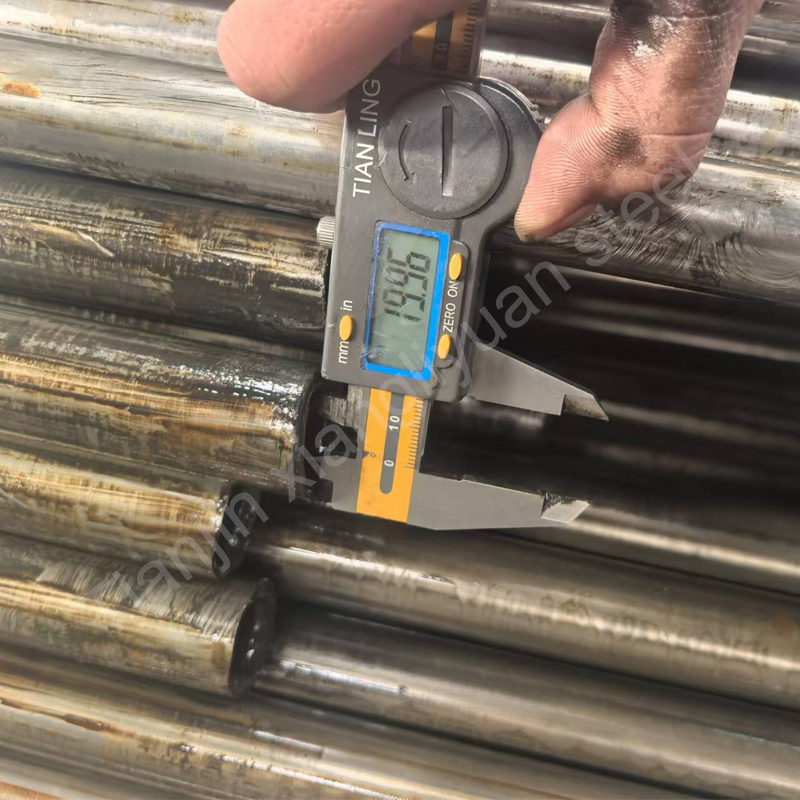
Dimensional tolerances in steel pipe manufacturing refer to the permissible variations in outside diameter (OD), wall thickness (WT), length, straightness, and ovality that do not compromise the pipe’s structural integrity or functional performance. These variations are inevitable consequences of the manufacturing process—whether hot rolling, cold drawing, cold rolling, or hot extrusion—and are rigorously defined by international standards to ensure interchangeability and safety across global supply chains.
According to ASTM A530/A530M and ASTM A999/A999M, which govern general requirements for carbon and stainless steel pipes, tolerances vary significantly based on pipe size, manufacturing method, and intended application . Understanding these distinctions is crucial for buyers specifying pipes for high-pressure boiler systems, oil and gas transmission pipelines, chemical processing plants, or structural applications.
Outside Diameter (OD) Tolerances: Precision Across Size Ranges
The outside diameter represents the most visually apparent dimensional characteristic, yet its tolerance requirements become increasingly complex as pipe dimensions scale. Under ASTM A312 for seamless stainless steel pipes, the tolerance structure follows a tiered approach: for pipes with OD ≤ 48.3 mm (approximately NPS 1½), the permissible variation is ±0.4 mm; for larger diameters, the tolerance expands to ±1% of the specified OD .
For carbon steel seamless pipes governed by ASTM A106 and ASTM A53, the tolerance matrix is more granular. Pipes from NPS 1/8 to 1½ (DN 6 to 40, OD 10.3 to 48.3 mm) must maintain OD within ±0.4 mm (±1/64 inch). As diameters increase to NPS 4 to 8 (DN 100 to 200, OD 114.3 to 219.1 mm), the tolerance widens to ±1.6 mm (±1/16 inch) on the over side while maintaining ±0.8 mm (±1/32 inch) on the under side . This asymmetric tolerance recognizes the practical challenges of hot-finished seamless pipe production while ensuring that pipes do not fall below minimum dimensions critical for pressure containment.
API 5L specifications for line pipe introduce additional complexity based on pipe end location. For seamless pipes with OD < 60.3 mm, end tolerances range from -0.8 mm to +0.4 mm, reflecting the practical constraints of pipe cutting and end finishing. For larger diameters up to 168.3 mm, the range shifts to -0.4 mm to +1.6 mm, accommodating the thermal expansion characteristics of hot-rolled mother pipes .
At Tianjin Xiangliyuan Steel, our hot-rolled seamless pipe production lines utilize advanced sizing mills and laser measurement systems to consistently achieve OD tolerances tighter than standard requirements. For precision applications such as heat exchanger tubes or hydraulic cylinder barrels, we offer cold-drawn seamless pipes with H7/H8 tolerance grades, achieving OD variations as tight as ±0.08 mm for diameters under 30 mm . This capability distinguishes us in markets requiring DIN 2391 ST35/ST52 precision tubes for automotive and mechanical engineering applications.
Wall Thickness Tolerances: The Critical Safety Parameter
While OD variations affect fit-up and alignment, wall thickness deviations directly impact pressure rating, weight calculations, and—most critically—safety margins. The tolerance philosophy for wall thickness differs fundamentally between seamless and welded steel pipes, reflecting their distinct manufacturing metallurgy.
For seamless carbon steel pipes, ASTM A530 establishes that wall thickness at any point must not fall below -12.5% of the nominal specified thickness, with no upper limit unless contractually agreed . This unilateral tolerance acknowledges that seamless pipe manufacturing—particularly hot rolling—tends toward material redundancy rather than deficiency. However, for cold-finished seamless pipes and welded pipes, the tolerance tightens to 0% under-tolerance, meaning the wall must meet or exceed nominal thickness .
The tolerance calculation becomes more nuanced for larger pipes. For seamless pipes NPS 3 to 18 with a diameter-to-thickness ratio (t/D) up to 5%, the permissible over-tolerance increases to +22.5%, while maintaining the -12.5% minimum . For pipes with t/D ratios exceeding 5%—typically thin-wall applications—the over-tolerance reduces to +15%, recognizing the manufacturing difficulty of maintaining uniform thickness in large-diameter, thin-wall configurations.
API 5L specifications provide thickness tolerance tables based on absolute dimensions rather than percentages. For seamless pipes with wall thickness ≤ 4.0 mm, the tolerance is +0.6 mm / -0.5 mm. For the common range of 4 mm < t < 25 mm, the tolerance becomes +0.150t / -0.125t, creating a proportional relationship that scales with pipe dimensions .
Tianjin Xiangliyuan Steel maintains comprehensive wall thickness inspection protocols using ultrasonic testing (UT) and electromagnetic inspection across our seamless pipe mills. For high-pressure boiler tubes conforming to GB/T 5310 or ASTM A213, we offer enhanced thickness control with ±10% bilateral tolerances, ensuring consistent thermal performance and creep resistance in power generation applications. Our quality assurance documentation, including Mill Test Certificates (EN 10204 3.1/3.2) and PMI (Positive Material Identification) reports, provides full traceability for every heat number supplied.
Length Tolerances: From Random to Precision Fixed Lengths
Length specifications in steel pipe procurement fall into three primary categories: random length, double random length, and fixed length, each with distinct tolerance implications and cost considerations.
Random length pipes, typically supplied in ranges of 5-7 meters or 10-12 meters (double random), offer manufacturers flexibility in optimizing raw material utilization and production efficiency. Under ISO 336, random lengths span 5-12 meters with no pipe shorter than 4.5 meters, ensuring usable material while minimizing waste . These lengths are standard for structural steel pipes, general process piping, and API 5L PSL1 line pipes where precise field cutting is anticipated.
Fixed length specifications, essential for heat exchanger bundles, boiler tube installations, and modular pipeline construction, require precision cutting with defined tolerances. Per ASTM A312, fixed length tolerances are typically ±6 mm for stainless steel pipes, while ISO 336 specifies ±50 mm for pipes ≤ 10 meters and ±75 mm for longer lengths . Tighter tolerances of ±3 mm are achievable through cold saw cutting or abrasive wheel cutting with advanced length control systems.
For EPC contractors and fabrication yards requiring multiple fixed lengths, Tianjin Xiangliyuan Steel offers multiple length processing, where pipes are supplied in precise multiples (e.g., 3×6 meters) with calculated cutting allowances of 5-10 mm per cut . This service reduces on-site cutting time by up to 40%, significantly improving project efficiency for offshore platform construction and refinery expansion projects.
Our Tianjin Port proximity enables direct loading of fixed-length pipes into open-top containers or flat-rack equipment, minimizing handling damage and ensuring that precision-cut lengths arrive at destination ports—from Houston to Rotterdam to Singapore—within specification.
Straightness and Ovality: The Hidden Geometry Factors
While OD, wall thickness, and length are immediately measurable, straightness and ovality (out-of-roundness) significantly impact installation efficiency and welding quality, particularly for large-diameter line pipes and structural hollow sections.
EN 10219 standards for structural hollow sections specify maximum straightness deviation of 2 mm per meter or 0.2% of total length, with ovality limited to 2% of outside diameter . These tolerances are critical for wind turbine tower construction, bridge support fabrication, and architectural steelwork where automated assembly and welding require consistent geometry.
For seamless steel pipes, straightness is controlled through rotary straightening or roller straightening processes. ASTM A450 requirements specify that local bow (deviation from straight) shall not exceed 1.0 mm per meter for pipes under 7.3 meters, with total curvature not exceeding 0.15% of total length . Tianjin Xiangliyuan Steel employs six-roll precision straighteners and laser straightness measurement to ensure compliance with these stringent requirements, particularly for precision mechanical tubing and automotive component applications.
Standard-Specific Tolerance Comparisons: ASTM, API, EN, and JIS
Global steel pipe procurement requires fluency across multiple standard systems. The following comparison illustrates key tolerance differences:
| Parameter | ASTM A106/A53 Carbon Steel | ASTM A312 Stainless Steel | API 5L Line Pipe | EN 10216-2 Pressure Tubes |
|---|---|---|---|---|
| OD Tolerance (≤48.3mm) | ±0.4 mm | ±0.4 mm | -0.8/+0.4 mm (ends) | ±0.5 mm |
| OD Tolerance (>48.3mm) | ±1% or ±1.6mm | ±1% | ±0.5% or ±1.6mm max | ±1% (min ±0.5mm) |
| Wall Thickness | -12.5% / + not limited | -12.5% / + not limited | +0.6/-0.5mm (t≤4mm) | ±10% or ±0.2mm min |
| Length (Fixed) | ±6 mm | ±6 mm | ±50mm (by agreement) | ±50mm |
Sources: ASTM A530 , ASTM A312 , API 5L , EN 10219
Japanese Industrial Standards (JIS) such as JIS G3454 and JIS G3455 for pressure service pipes generally align with ASTM tolerances but specify unique testing protocols for high-temperature and high-pressure applications prevalent in Japanese engineering specifications .
At Tianjin Xiangliyuan Steel, our multi-standard production capability allows simultaneous certification to ASTM, API, EN, and JIS requirements. Our quality management system, certified to ISO 9001:2015, ensures that every production batch meets the specific tolerance requirements of the invoked standard, supported by third-party inspection from SGS, Bureau Veritas, or TÜV when required.
The Tianjin Xiangliyuan Steel Advantage: Precision, Proximity, and Professionalism
Located in the Binhai New Area of Tianjin, approximately 40 kilometers from Tianjin Port (Xingang), Tianjin Xiangliyuan Steel leverages geographic advantages that translate directly to customer value:
Manufacturing Excellence: Our seamless steel pipe mills produce hot-rolled and cold-drawn pipes from 1/8″ to 24″ NPS (6 mm to 610 mm OD), with wall thicknesses from SCH 5S to SCH 160 and custom XXS dimensions. Advanced pilger mills and cold drawing benches enable us to achieve tight tolerance requirements for precision hydraulic tubing and automotive axle tubes.
Logistics Efficiency: Tianjin Port’s dedicated steel cargo terminals enable us to load breakbulk shipments of fixed-length pipes or containerized bundles with minimal inland transportation costs. This proximity reduces lead times for Middle East, Southeast Asian, and European destinations by 3-5 days compared to inland Chinese suppliers.
Technical Consultation: Our engineering team provides tolerance optimization guidance, helping clients balance specification requirements against cost implications. For non-standard tolerances—such as ±5% wall thickness for nuclear applications or ±0.5% OD for precision mechanical assemblies—we offer custom production protocols with dedicated process control.
Documentation and Compliance: Every shipment includes EN 10204 3.1 Mill Test Certificates with chemical composition, mechanical properties, and dimensional verification. For critical applications, 3.2 certificates with third-party witness are available. Our material traceability system maintains records for 10 years, ensuring compliance with NORSOK, PED 2014/68/EU, and ASME B31.3 requirements.
Tolerances as a Competitive Differentiator
In the competitive landscape of global steel pipe supply, tolerance compliance separates commodity traders from professional manufacturers. Understanding ASTM A106 tolerance tables, API 5L dimensional requirements, and EN 10216-2 precision specifications enables procurement professionals to write accurate technical specifications, evaluate supplier capabilities objectively, and avoid costly field modifications or rejection of non-conforming materials.
Tianjin Xiangliyuan Steel combines technical expertise in international standards, advanced manufacturing precision, and strategic port location to deliver carbon steel seamless pipes, stainless steel tubes, and alloy steel line pipes that meet the most demanding tolerance requirements. Whether your project requires standard ASTM tolerances for oil refinery piping or enhanced precision for aerospace applications, our engineering team is prepared to support your specification development and quality assurance needs.
For detailed tolerance charts, material certifications, or competitive quotations on API 5L Grade B/X52/X65, ASTM A106 Grade B, ASTM A312 TP304/TP316L, or EN 10216-2 P265GH steel pipes, please contact Tianjin Xiangliyuan Steel at infosteel@xlygt.com or visit our comprehensive technical resource center at https://www.xlysteel.com/. Our commitment to dimensional precision, material integrity, and logistical reliability makes us the preferred partner for steel pipe procurement across industrial sectors worldwide.