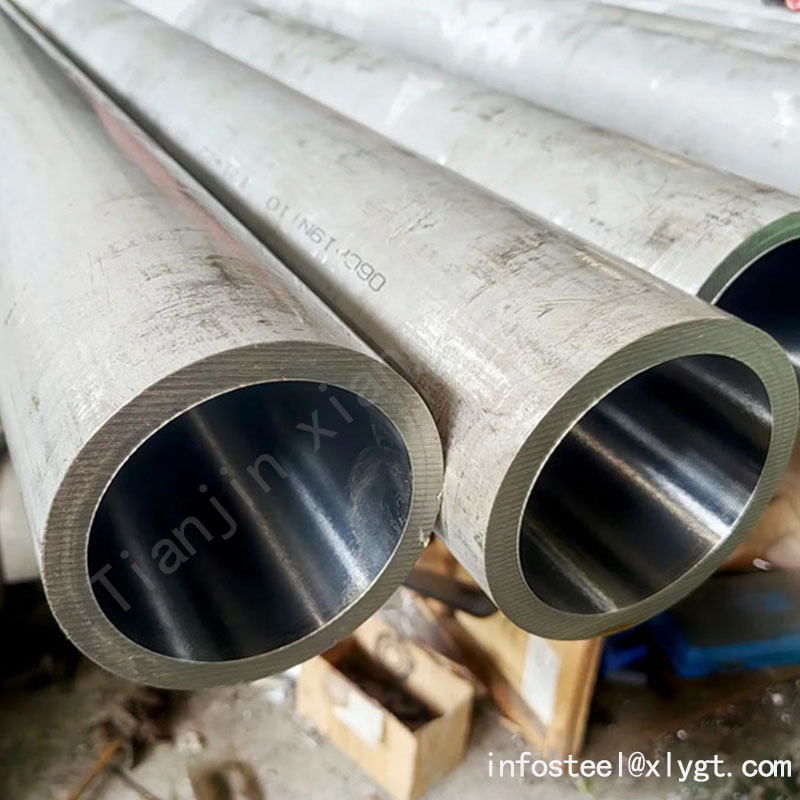
In the modern industrial landscape, the performance of a precision steel tube is defined not only by its dimensional accuracy and tensile strength but also by its ability to withstand environmental degradation. Whether for hydraulic systems, automotive components, or structural applications, corrosion resistance is a non-negotiable parameter that directly dictates the lifespan and safety of the end product.
At Tianjin Xiangliyuan Steel, we understand that the difference between a standard steel tube and a high-performance precision tube lies in its surface. As a leading provider of cold drawn seamless steel tubes and precision welded tubes, we employ advanced chemical surface treatment technologies—specifically phosphating, pickling, and passivation—to ensure our products meet the rigorous demands of global markets.
Strategically located in the Tianjin Economic-Technological Development Area (TEDA), our logistics hub is just a short transit from Tianjin Port (Xingang). This proximity grants us a significant logistical advantage, ensuring that our precision steel pipe solutions are delivered to our international clientele with exceptional speed and cost-efficiency.
This article provides a technical deep dive into these critical surface treatment processes, illustrating how we transform raw steel into a corrosion-resistant engineering asset.
1. The Necessity of Surface Treatment for Precision Steel Tubes
Raw steel, despite its strength, is thermodynamically unstable and will revert to its natural oxide state (rust) when exposed to moisture and oxygen. For honing tubes, cylindrical tubes, and injection tubes, surface imperfections or corrosion lead to seal failure, increased friction, and catastrophic system breakdowns.
Surface treatment serves three primary purposes:
-
Corrosion Protection: Shielding the base metal from electrochemical attacks.
-
Paint Adhesion: Creating a porous or crystalline surface profile that allows primers and topcoats to bond tenaciously.
-
Friction Reduction: Removing microscopic burrs and scale to achieve specific surface roughness (Ra) values for moving parts.
2. Pickling (Acid Cleaning): The Foundation of Surface Integrity
Before any conversion coating is applied, the precision steel tube must undergo pickling. Pickling is the process of removing high-temperature oxides (mill scale) and rust from the steel surface using strong mineral acids.
The Technical Process
At Tianjin Xiangliyuan Steel, our pickling lines typically utilize a solution of hydrochloric acid (HCl) or sulfuric acid (H₂SO₄). We adhere to strict bath chemistry controls:
-
Concentration: Optimized between 15% to 20% for HCl to ensure aggressive scale removal without over-pickling the base metal .
-
Inhibitors: We add proprietary pickling inhibitors to prevent hydrogen embrittlement, a common failure mode in high-strength seamless steel tubes.
Why Pickling Matters for Precision Tubes
For applications requiring EN 10305-1 or EN 10305-2 standards, the removal of scale is critical. Scale is hard and abrasive; if left on the surface of a hydraulic cylinder tube, it will damage piston seals and render the assembly useless. Pickling ensures a chemically clean, bare metal surface ready for the next stage.
3. Phosphating: The Gold Standard in Conversion Coatings
Following pickling, phosphating is the most common conversion coating applied to precision steel tubes intended for extreme environments. Unlike paint, which sits on top of the steel, a phosphate coating becomes part of the steel surface.
Zinc Phosphating vs. Manganese Phosphating
We utilize two primary types of phosphating processes depending on the end-use of the steel pipe:
Zinc Phosphating (Zn₃(PO₄)₂·4H₂O)
-
Application: Ideal for tubes that will be painted or powder-coated.
-
Mechanism: The acid bath reacts with the steel surface, etching it and depositing a crystalline layer of zinc phosphate. This layer is porous, acting as an excellent mechanical key for paint adhesion.
-
Corrosion Performance: When combined with a rust-preventive oil or paint, zinc-phosphated precision steel tubes can pass over 500 hours of salt spray testing (ASTM B117).
Manganese Phosphating (Mn₃(PO₄)₂)
-
Application: Used extensively in the automotive industry for gearbox shafts, piston rods, and camshafts.
-
Mechanism: Manganese phosphate forms a harder, more complex crystal structure. It has an exceptional ability to retain lubricating oils (oil absorption).
-
Tribological Benefit: This process significantly reduces friction and prevents scuffing and galling in moving assemblies. For cold drawn precision tubes used in shock absorbers, manganese phosphating is the preferred choice .
Technical Specifications
At Tianjin Xiangliyuan Steel, we control critical parameters to ensure coating weight (typically 5-30 g/m²) and crystal morphology:
-
Temperature: Maintained at 50°C – 60°C for consistent crystal nucleation.
-
Accelerators: We utilize nitrates and nitrites to accelerate the reaction and refine the crystal size, resulting in a dark grey to black, uniform finish.
4. Passivation: Enhancing the Passive Layer
While phosphating is dominant for carbon steel, passivation is critical for stainless steel precision tubes (e.g., ASTM A269 or A213). However, it also plays a role in post-phosphate sealing.
For Stainless Steel Tubes
When machining or welding stainless steel tubes, free iron particles can become embedded in the surface, creating “rust spots” on a supposedly stainless material. Passivation involves treating the tube with an oxidizing acid (typically nitric acid (HNO₃) or citric acid).
-
The Chemistry: The treatment removes free iron and sulfides. Subsequently, it promotes the formation of a uniform, continuous chromium-oxide (Cr₂O₃) passive film.
-
Result: This restores the corrosion resistance to the level expected of 304 or 316L stainless steel .
Sealing for Carbon Steel
For carbon precision pipes, a passivation step (often a post-rinse containing chromium or, more modern, chrome-free zirconium) is sometimes applied after phosphating to seal the pores of the phosphate crystal matrix, drastically reducing the “flash rusting” tendency during storage.
5. Integrating Processes for Maximum Durability
Many clients ask for a combined specification. For critical defense or heavy machinery applications, we often recommend a Pickling + Phosphating + Oil sequence.
-
Pickling (Cleans the surface).
-
Phosphating (Creates the crystalline layer).
-
Passivation/Sealing (Closes the pores).
-
Oil Application (Applies a protective top film).
This tri-cycle process transforms a standard ERW steel tube into a high-corrosion-resistant component suitable for export across high-humidity maritime environments.
6. Why Tianjin Xiangliyuan Steel Stands Out
Global procurement managers looking for steel pipe suppliers frequently search for “high precision steel tube manufacturers,” “Tianjin steel pipe factory,” and “hydraulic cylinder tube suppliers.” When you partner with Tianjin Xiangliyuan Steel, you are not just buying a product; you are investing in process control.
Our Technical Advantages:
-
Strict Compliance: We produce tubes that meet DIN 2391, EN 10305, ASTM A519, and JIS G3445 standards.
-
Green Chemistry: We utilize eco-friendly accelerators and chrome-free passivation sealers where possible, complying with RoHS and REACH regulations.
-
Anti-Rust Packaging: Leveraging our expertise in phosphating, we offer Value Addition (VCI) paper and anti-rust oil packaging suitable for sea freight consolidation.
Our Logistical Advantage:
Our facility in Tianjin is a cornerstone of our value proposition. We are located within the world-class supply chain of the Binhai New Area. Unlike inland suppliers who face complex rail logistics, our proximity to Tianjin Port (Xingang) allows us to offer:
-
Faster Loadings: 24-hour turnaround from factory to vessel.
-
Lower Sea Freight Costs: Inland haulage fees are minimized, passing savings directly to you.
7. Optimizing Your Specification (SEO & Technical Tips)
To ensure you receive the best product for your assembly line, when inquiring about precision steel tubing, please specify:
-
Material Grade: (e.g., ST 37.4, ST 52.3, E355, or 316Ti).
-
Surface Treatment: “Zinc Phosphate + Oil,” “Manganese Phosphate,” or “Passivated.”
-
Salt Spray Requirement: (e.g., “Require 72 hours neutral salt spray test without red rust”).
At Tianjin Xiangliyuan Steel, we don’t just stock raw tubes; we add value through science. Whether you need black phosphated seamless tubes for automotive suspension or pickled and passivated stainless coils for food processing, our technical team is ready to assist.
The difference between a failed component and a reliable machine often comes down to microns of surface treatment. By mastering pickling, phosphating, and passivation, Tianjin Xiangliyuan Steel ensures that our precision steel tubes perform reliably in the harshest conditions—from frozen hydraulic lifts in Siberia to humid pneumatic systems in Southeast Asia.
We invite global buyers, engineers, and procurement specialists to experience the Tianjin Xiangliyuan difference. Let our advanced chemical lines and our strategic port location work to your advantage.
Contact us today to discuss your next project or request a quote.
Company Name: Tianjin Xiangliyuan Steel
Website: https://www.xlysteel.com/
Email: infosteel@xlygt.com
Location: Tianjin, China – Close to Xingang Port for fast global shipping.