The Critical Role of 3PE Coating in Pipeline Integrity
In the modern oil, gas, water transmission, and petrochemical industries, pipeline corrosion represents one of the most significant operational risks and capital expenditure drivers. According to industry data from NACE International (now AMPP), the global cost of corrosion exceeds $2.5 trillion annually, with pipelines accounting for a substantial portion of this figure. To mitigate these risks, the three-layer polyethylene (3PE) anti-corrosion coating system has emerged as the global benchmark for buried and submerged steel pipe protection. This technical guide provides a comprehensive, engineering-grade analysis of the 3PE coating system—examining its three distinct layers, application parameters, quality assurance protocols, and global industry standards.
At Tianjin Xiangliyuan Steel, we have dedicated over a decade to manufacturing high-frequency welded (HFW), submerged arc welded (SAW), and seamless steel pipes with precision-engineered 3PE coatings. Our production facility is strategically located in Tianjin, China—one of the world’s busiest port cities—enabling us to offer streamlined logistics and rapid dispatch to international markets across Southeast Asia, the Middle East, Africa, South America, and Europe. This proximity to Tianjin Port significantly reduces lead times and shipping costs, a critical advantage for large-diameter pipeline projects requiring just-in-time delivery. For technical inquiries or project-specific coating requirements, our engineering team is available at infosteel@xlygt.com, and our full product portfolio can be explored at https://www.xlysteel.com/.
This guide is structured to serve as a definitive resource for pipeline engineers, procurement specialists, and project managers seeking to specify or procure 3PE-coated steel pipes that meet API 5L, DIN 30670, and ISO 21809-1 standards.
Overview of the 3PE Coating System – Structure and Function
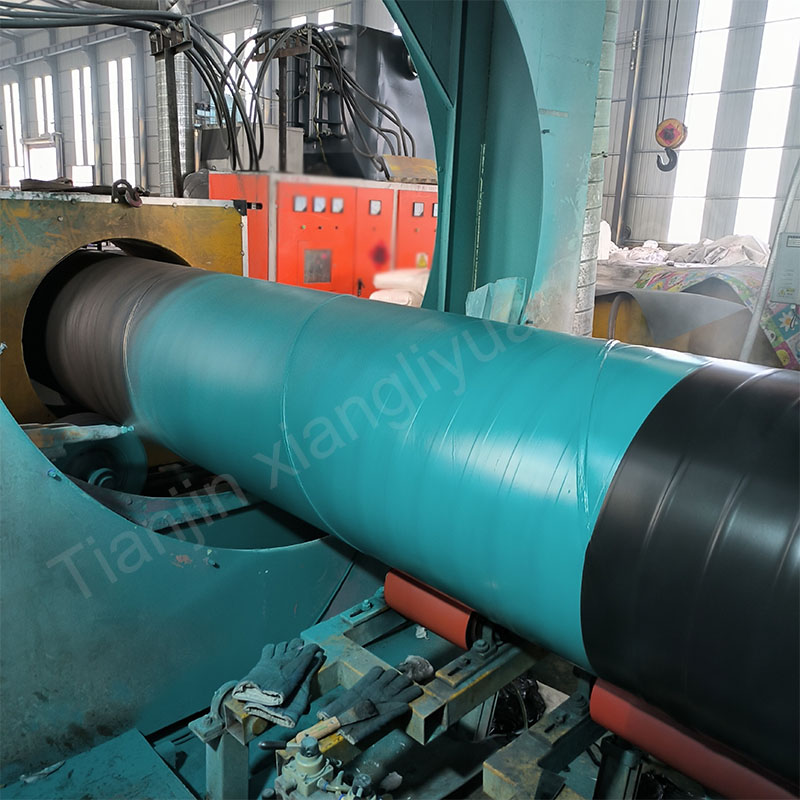
The 3PE anti-corrosion coating is a multi-layered composite system that combines the barrier properties of polyethylene with the adhesion characteristics of epoxy and copolymer adhesives. The system consists of three distinct functional layers, each applied sequentially in a controlled manufacturing environment:
-
Layer 1 – Fusion Bonded Epoxy (FBE) Primer: This layer, typically applied at a thickness of 80–150 microns, serves as the primary chemical adhesion layer and provides cathodic disbondment resistance. The epoxy powder is electrostatically sprayed onto the heated steel surface, where it melts and chemically bonds with the iron oxide layer to form a thermoset coating.
-
Layer 2 – Copolymer Adhesive (Adhesive Layer): Applied immediately after the epoxy layer while it is still reactive, this intermediate layer—often a maleic anhydride-grafted polyethylene (MAH-g-PE) or ethylene acrylic acid (EAA) copolymer—ensures a robust interlayer bond between the polar epoxy and the non-polar polyethylene outer layer. Typical thickness ranges from 170 to 250 microns.
-
Layer 3 – Polyethylene Outer Layer (PE Topcoat): This extruded or side-wound polyethylene layer—available in high-density (HDPE), medium-density (MDPE), or low-density (LDPE) grades—provides mechanical protection against soil stress, rock impingement, and moisture ingress. The outer layer thickness generally varies from 1.8 mm to 3.7 mm, depending on pipe diameter and service conditions.
This synergistic design ensures that 3PE-coated steel pipes offer superior resistance to cathodic disbondment, impact damage, and long-term permeation by water and oxygen—critical factors for pipeline design lives exceeding 50 years.
Technical Specifications and Industry Standards
To ensure global interoperability and quality assurance, 3PE coatings must comply with rigorous international standards. At Tianjin Xiangliyuan Steel, our production processes and quality management systems are fully aligned with the following normative documents:
-
DIN 30670: The German standard specifying requirements for polyethylene coatings (3PE and 2PE) for steel pipes and fittings used in buried and submerged pipelines. It defines minimum layer thicknesses, impact resistance (≥ 5 J/mm), and adhesion values (> 150 N/10mm).
-
ISO 21809-1: The international standard for external coatings applied to buried or submerged pipelines used in the petroleum, petrochemical, and natural gas industries. It covers FBE, 3PE, and 3PP coating systems and includes rigorous testing for temperature resistance (-40°C to +80°C), UV aging, and bendability.
-
API 5L / CSA Z245.20: While API 5L governs pipe body manufacturing, CSA Z245.20 provides complementary requirements for plant-applied external polyethylene coatings. Our 3PE-coated line pipes are engineered to meet or exceed these combined requirements.
-
AWWA C215 / C210: For water transmission applications, we ensure compliance with American Water Works Association standards, tailoring the adhesive and PE grades for potable water service.
Each batch of 3PE-coated steel pipe produced by our facility undergoes full dimensional inspection, holiday detection (spark testing at ≥ 5 kV per 100-micron thickness), and peel adhesion testing to guarantee zero defects. We provide mill test certificates (MTCs) that include full traceability—from coil origins to final coating cure parameters.
Epoxy Powder (FBE Primer) – Chemistry and Performance
The FBE primer is the cornerstone of the 3PE system’s corrosion resistance. The powder formulation comprises a solid epoxy resin (bisphenol-A or bisphenol-F type), a curing agent (dicyandiamide or phenolic novolac), flow modifiers, and inorganic fillers. During application, the pipe is induction-heated to a temperature of 180°C–240°C; the powder is electrostatically charged and sprayed uniformly onto the surface. Upon contact, the powder melts and flows into the anchor pattern (achieved via grit blasting to Sa 2½, with a profile depth of 50–100 microns), then chemically cross-links to form a dense, impermeable film.
Key performance parameters of the FBE layer include:
-
Glass Transition Temperature (Tg): ≥ 95°C, ensuring dimensional stability at elevated service temperatures.
-
Cathodic Disbondment (CD) Radius: ≤ 8 mm at 65°C after 28 days (per ASTM G8), demonstrating strong resistance to CP current interference.
-
Wet Adhesion: ≥ 90% retention of initial adhesive strength after 28 days immersion in deionized water at 60°C (ASTM D3359).
We routinely conduct differential scanning calorimetry (DSC) to monitor curing degree, targeting ≥ 95% cross-linking density to avoid premature embrittlement or porosity.
Adhesive Layer – The Bonding Bridge
The intermediate adhesive layer is often overlooked but is functionally critical for preventing delamination under thermal or mechanical stress. We utilize maleic anhydride-grafted polyethylene (MAH-g-PE) as the standard adhesive, with a melt flow index (MFI) of 3–5 g/10 min (190°C/2.16 kg) and a grafting ratio of 0.8–1.2 wt%. This material forms both covalent bonds with the hydroxyl groups of the cured FBE and crystalline chain entanglements with the outer PE layer.
The adhesive is applied via either side-extrusion or cross-winding technique, with close temperature control (190°C–210°C) to prevent premature cross-linking. Post-application, the peel strength between the adhesive and PE layer must exceed 150 N/cm at 23°C, while the FBE-to-adhesive bond must exhibit cohesive failure rather than adhesive failure—indicating optimal interlayer chemical compatibility.
For projects requiring extended service temperatures (e.g., 80°C–100°C), we recommend upgrading to an ethylene-vinyl acetate (EVA)-based or acid-modified adhesive with higher thermal stability, which we can tailor upon request.
Polyethylene Outer Layer – Mechanical Protection and Environmental Resistance
The outermost PE layer serves as the primary mechanical shield against installation damage, backfill compaction, and soil-induced abrasion. We stock and compound three PE grades to match project-specific requirements:
-
HDPE (≥ 0.941 g/cm³): Offers the highest impact strength and stiffness, ideal for rocky terrains and high-depth marine installations.
-
MDPE (0.926–0.940 g/cm³): Balances flexibility and strength, suitable for most onshore buried pipelines.
-
LDPE (≤ 0.925 g/cm³): Provides superior environmental stress crack resistance (ESCR) and low-temperature flexibility for cryogenic or arctic service.
The extruded PE layer must meet minimum impact resistance of 5 J/mm (DIN 30670) and a minimum indentation hardness of 70 Shore D. We perform carbon black dispersion tests (per ASTM D5596) to ensure UV protection, with a typical loading of 2.0–2.5% by weight. The outer layer also undergoes accelerated aging testing (Xenon-arc or UV-condensation) to simulate 25-year field exposure, with retention of ≥ 80% tensile elongation.
Application Process – Quality Control at Every Stage
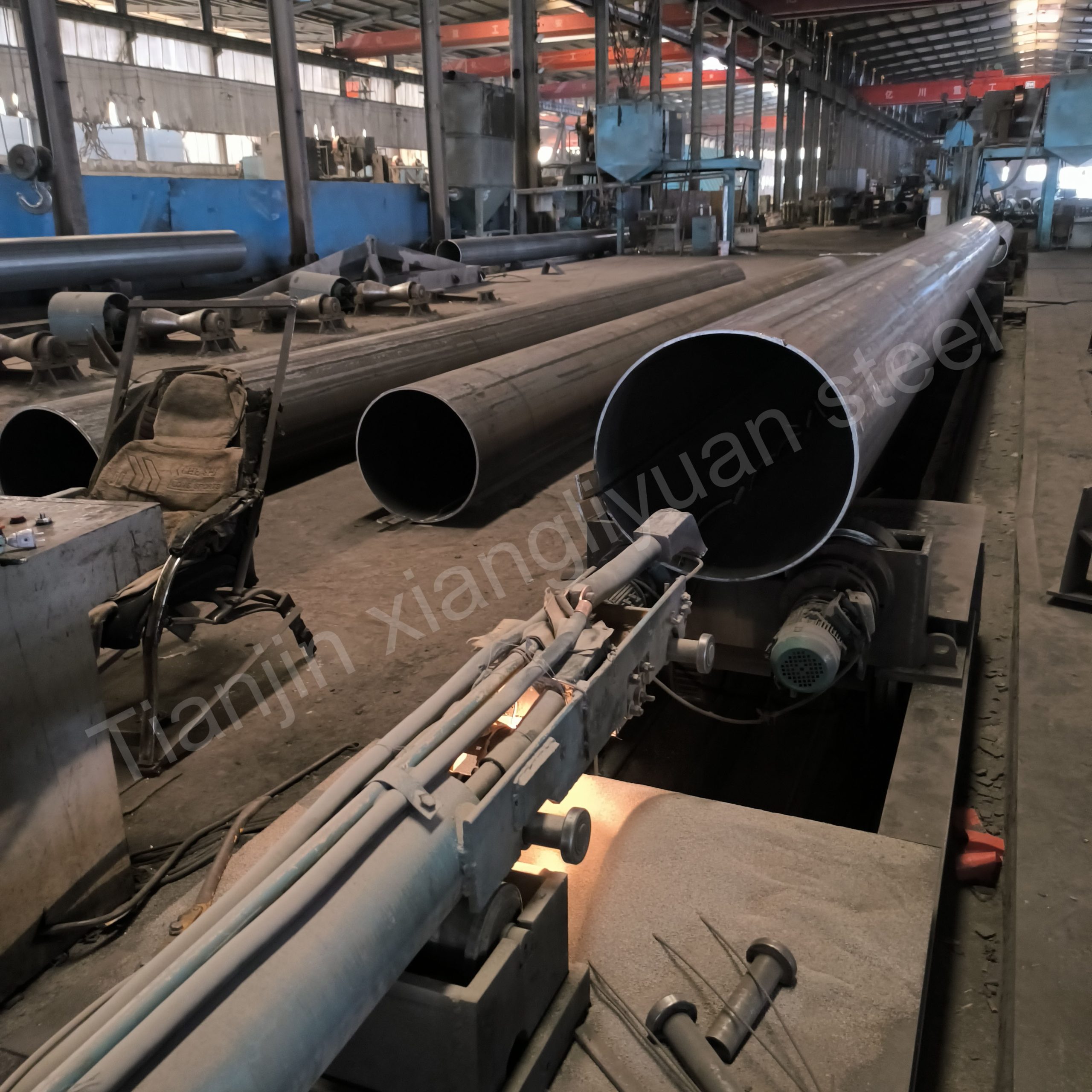
Our coating line is equipped with a 9-meter induction heating system, triple-extrusion crosshead, and a spiral cooling trough to maintain precise thermal gradients. The following process controls are enforced:
-
Surface Preparation: Pipes are shot-blasted to Sa 2.5, with a residual salt level ≤ 20 mg/m² (Bresle test) and a surface profile of 50–100 µm (Ra).
-
Heating and Powder Application: Pipe surface temperature is maintained within ±5°C of setpoint; electrostatic spray guns apply FBE powder at a rate yielding 80–150 µm thickness.
-
Adhesive and PE Extrusion: The adhesive and PE are co-extruded through a side-feed die, with layer thicknesses monitored by continuous ultrasonic gauging.
-
Cooling and Trimming: Water spray cooling gradually reduces pipe temperature to ≤ 60°C to avoid thermal shock; ends are left bare (150–200 mm) for field welding.
Our quality lab performs destructive testing (peel, impact, bend) and non-destructive testing (holiday detection, ultrasonic thickness mapping) on every shift and every pipe diameter—ensuring zero non-conformances.
Logistics and Export Advantages from Tianjin Port
One of the often-underestimated risks in international pipeline procurement is logistics cost and transit time variability. Tianjin Xiangliyuan Steel leverages its location just 12 kilometers from Tianjin Port—China’s largest comprehensive port and a key hub for the Belt and Road Initiative—to offer distinct logistical benefits:
-
Reduced inland freight: Most competitor mills are located in northern or central China, incurring 500–1,000 km of trucking before export. Our pipes are loaded directly onto vessels within 48 hours of completion.
-
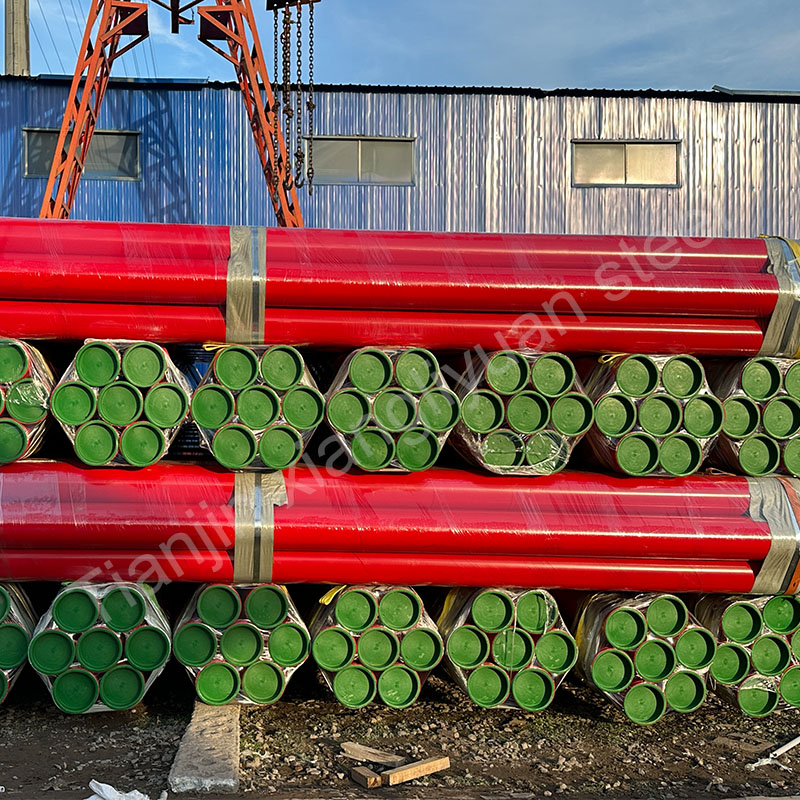
Flexible packaging: We offer coated pipe packaging per ASTM A700 and DIN 30670 recommendations, including wooden cradles, VCI film, and steel end protectors.
-
Fast turnaround: Standard 3PE coating production lead time is 15–20 days, and bulk shipments via break-bulk or container vessels are coordinated without intermediary warehousing.
We have successfully exported 3PE-coated line pipes to over 30 countries, including Saudi Arabia (SABIC projects), Australia (water infrastructure), and Nigeria (oil trunk lines). Our shipping department provides real-time tracking, Bill of Lading expediting, and full customs documentation support.
FAQ – Addressing Common Engineering Concerns
To further assist our global clientele, we have compiled technical answers to the most frequently raised questions:
Q1: Can 3PE-coated pipes be welded after coating?
Yes, but only the bare pipe ends (factory-applied cutback) should be welded. Post-weld field joint coating must be applied using either heat-shrink sleeves (per EN 12068) or liquid epoxy + PE tape systems. We can supply matching shrink sleeves validated against our FBE chemistry.
Q2: How does 3PE compare to FBE or 3LPP?
FBE is cost-effective for mild environments but has lower impact resistance. 3LPP (polypropylene) is suited for higher temperatures (≤ 140°C), while 3PE is optimal for -20°C to 80°C with superior economics and proven long-term performance.
Q3: What is the maximum pipe diameter and wall thickness your facility can coat?
We can coat pipes from 2” (DN50) up to 60” (DN1500) with wall thicknesses from 3 mm to 25 mm—covering both seamless and welded varieties.
Q4: How can I request a sample or technical datasheet?
Simply email us at infosteel@xlygt.com with your project specifications. We provide custom datasheets, MTCs, and sample coupons within 3 working days.
Why Choose Tianjin Xiangliyuan Steel as Your 3PE Coating Partner?
Beyond our technical rigor and logistical agility, we distinguish ourselves through:
-
In-house testing lab: Equipped with universal testing machines, DSC, FTIR, and salt spray chambers—allowing rapid root-cause analysis and product optimization.
-
Certifications: ISO 9001, ISO 14001, and API Q1 (in process), with full third-party inspection by SGS, BV, and TÜV at client request.
-
Project engineering support: Our team provides pipe-wall thickness optimization, coating grade selection, and cathodic protection compatibility calculations.
-
Long-term reliability: We have never had a single coating-related failure claim in 8 years of dedicated 3PE production—our commitment to zero-defect quality is built into every step.
We understand that pipeline operators are not just buying steel—they are buying the assurance of uninterrupted flow for decades. Our 3PE system is engineered to deliver that assurance, backed by transparent testing, clear documentation, and responsive communication.
Contact Us for Your Next Pipeline Project
Selecting a 3PE-coated steel pipe supplier is a decision that impacts asset integrity, project economics, and environmental safety. At Tianjin Xiangliyuan Steel, we combine rigorous coating engineering, strategic port-side logistics, and a customer-first technical service model to deliver products that perform—from the mill to the deepest trench.
We invite pipeline engineers, EPC contractors, and procurement managers to visit our facility (virtual or physical), review our testing records, and discuss your specific coating requirements. Please direct all inquiries to:
-
Company: Tianjin Xiangliyuan Steel
-
Email: infosteel@xlygt.com
-
Website: https://www.xlysteel.com/
-
Location: Tianjin, China – less than 20 km from Tianjin International Port.
Our technical sales team is available 24/7 to provide quick-turn quotes, coating design reviews, and competitive pricing. We look forward to becoming your trusted partner in anti-corrosion pipeline solutions.