The Critical Role of Engineering Specifications in Boiler Safety
In the power generation and industrial heating sectors, the choice of seamless boiler tubes is not merely a commercial decision but a critical engineering calculation. Selecting the wrong material standard for a superheater, water wall, or economizer directly impacts creep life, thermal fatigue resistance, and operational safety.
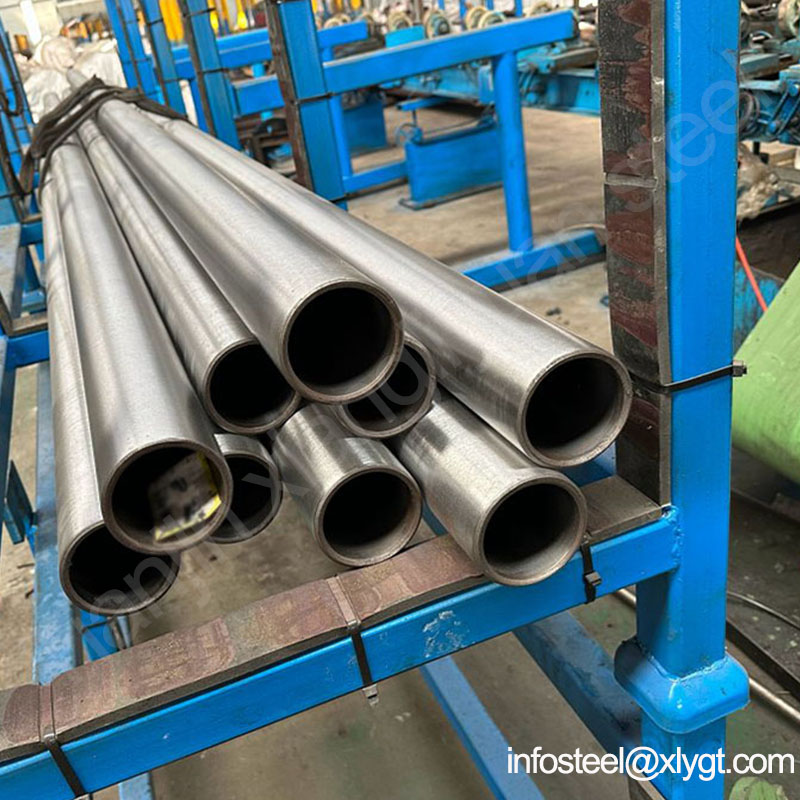
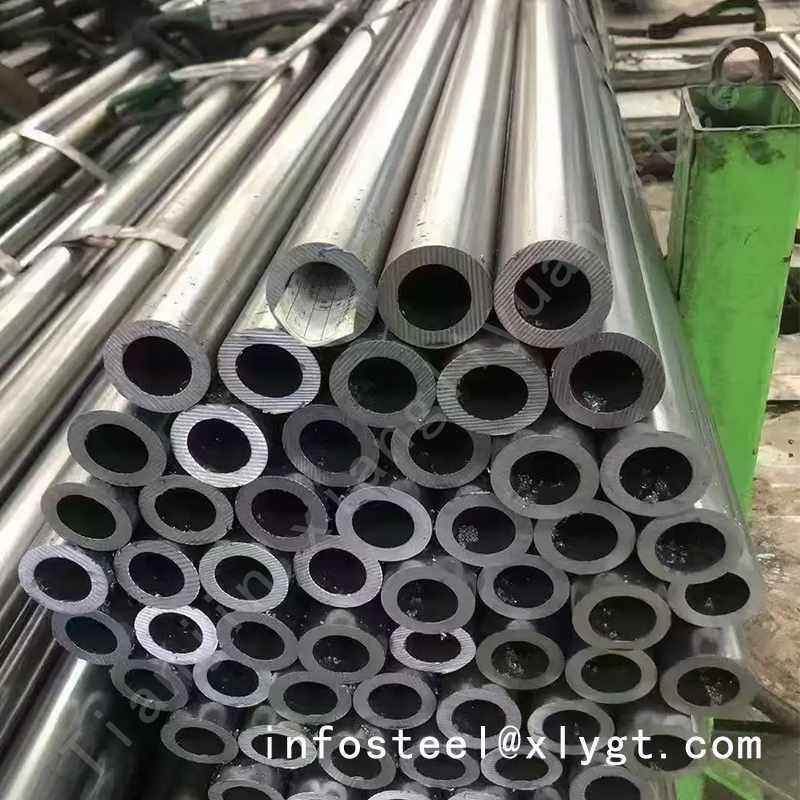
At Tianjin Xiangliyuan Steel, we specialize in the supply of high-pressure boiler tubes and alloy steel pipes compliant with ASTM/ASME standards. Our proximity to the Tianjin Port—one of the world’s largest logistics hubs—ensures that whether you require ASTM A192 carbon tubes for a sub-critical boiler or ASTM A213 T91 for an ultra-supercritical unit, your lead times are minimized and material handling strictly adheres to NDT standards.
This technical breakdown provides a metallurgical and mechanical comparison of ASTM A192, A210, and A213. For engineering procurement, we also invite you to review our mill test certificates (MTCs) at https://www.xlysteel.com or contact our technical team directly at infosteel@xlygt.com.
1. Material Overview and Scope of Application
To optimize boiler tube selection, one must first classify the service temperature and pressure.
ASTM A192 / ASME SA-192
Grade: High-pressure service carbon steel seamless tubes.
Application: Water wall tubes, economizers, and low-temperature superheaters in subcritical power plants.
Limitation: Maximum service temperature typically caps at 400°C (750°F) due to creep strength limitations .
ASTM A210 / ASME SA-210
Grade: Medium-carbon steel seamless tubes (Grades A-1 and C).
Application: Boiler tubes, superheater flues, and high-pressure steam lines.
Distinction: Provides higher tensile strength than A192, allowing for thinner wall sections under equivalent pressure .
ASTM A213 / ASME SA-213
Grade: Seamless ferritic and austenitic alloy steel tubes.
Application: Superheaters, reheaters, and high-temperature heat exchangers.
Distinction: Essential for supercritical and ultra-supercritical boilers where oxidation resistance and creep rupture strength above 450°C are mandatory .
Expert Insight from Tianjin Xiangliyuan Steel:
For clients in Southeast Asia and the Middle East, we often see substitutions attempted between A192 and SA210. While both are carbon steels, A192 is strictly a “boiler tube” with specific flattening test requirements, whereas A210 is tailored for higher stress. We ensure strict adherence to the ASME Boiler and Pressure Vessel Code (BPVC) Section II. Contact us via infosteel@xlygt.com for a cross-reference guide.
2. Chemical Composition and Mechanical Properties
The metallurgical differences dictate weldability and heat treatment protocols.
Table 1: Chemical Requirements (Heat Analysis, %)
| Element | ASTM A192 (Carbon Steel) | ASTM A210 Gr. C (Medium Carbon) | ASTM A213 T22 (2.25Cr-1Mo) |
|---|---|---|---|
| Carbon (C) | 0.06 – 0.18 | ≤ 0.35 | 0.05 – 0.15 |
| Manganese (Mn) | 0.27 – 0.63 | 0.29 – 1.06 | 0.30 – 0.60 |
| Phosphorus (P) | ≤ 0.035 | ≤ 0.035 | ≤ 0.025 |
| Sulfur (S) | ≤ 0.035 | ≤ 0.035 | ≤ 0.025 |
| Silicon (Si) | ≤ 0.25 | ≤ 0.10 | ≤ 0.50 |
| Chromium (Cr) | — | — | 1.90 – 2.60 |
| Molybdenum (Mo) | — | — | 0.87 – 1.13 |
Table 2: Mechanical Properties (Tensile Requirements)
| Property | ASTM A192 | ASTM A210 Gr. A-1 | ASTM A213 T91 (9Cr-1Mo-V) |
|---|---|---|---|
| Tensile Strength (Min) | 325 MPa (47 ksi) | 415 MPa (60 ksi) | 585 MPa (85 ksi) |
| Yield Strength (Min) | 180 MPa (26 ksi) | 255 MPa (37 ksi) | 415 MPa (60 ksi) |
| Elongation | 35% (min) | 30% (min) | 20% (min) |
Analysis:
-
A192 offers high ductility (35% elongation), making it ideal for bending and forming water wall panels .
-
A210 bridges the gap between carbon and alloy steel, offering higher yield strength for headers.
-
A213 (T91) provides almost 2.3x the yield strength of A192. This modified 9Cr steel allows engineers to drastically reduce wall thickness, improving thermal shock resistance in cyclic operations .
3. Heat Treatment and Microstructure Requirements
Processing is where these standards differ significantly.
-
ASTM A192: Requires hot forming or cold drawing followed by annealing. The low carbon content prevents carbide precipitation, ensuring a ferritic structure with pearlite .
-
ASTM A213 (Ferritic Grades like T11, T22): Requires a full anneal or normalize and temper. The addition of Cr and Mo necessitates slow cooling to prevent martensite formation until specified.
-
ASTM A213 (Martensitic Grades like T91): Requires a specific normalizing at 1040–1080°C followed by tempering at 730–800°C. Critical Note: T91 requires rigorous Post Weld Heat Treatment (PWHT). Failure to perform PWHT results in a brittle heat-affected zone (HAZ) susceptible to hydrogen cracking .
Logistics Note:
At Tianjin Xiangliyuan Steel, we source directly from mills that provide strict thermal treatment logs. Because we are based in Tianjin, we can arrange third-party inspections (SGS, BV) at the port to verify heat treatment integrity before your shipment leaves China. Visit https://www.xlysteel.com to download our sample MTCs.
4. Sourcing Strategy and Global Logistics
For international buyers, lead times and port logistics are as critical as metallurgy.
Advantages of Tianjin Xiangliyuan Steel:
Located in the Tianjin Binhai New Area, our warehouse is within 15 kilometers of the Tianjin Xingang Port. This geographical advantage offers:
-
Reduced Inland Costs: No expensive rail hauls from interior Chinese provinces.
-
Faster Roll-On/Roll-Off (RoRo): Immediate vessel scheduling for break-bulk or containerized seamless steel pipes.
-
Corrosion Protection: We specialize in maritime packaging—plastic caps, VCI paper, and rust-proof oiling—critical for seamless boiler tubes exposed to salt spray during sea freight.
We serve the oil and gas industry, petrochemical plants, and EPC contractors across the Middle East, Africa, and South America.
5. Procurement Guidelines: Which Standard to Choose?
To assist your engineering team in making the right specification, here is the “Xiangliyuan Decision Matrix”:
Choose ASTM A192 if:
-
You are building low-to-medium pressure industrial boilers.
-
Operating temperatures do not exceed 400°C.
-
You require maximum formability (tight U-bends).
-
SEO Context: Standard “High Pressure Boiler Tubes” for cost-efficient projects.
Choose ASTM A210 if:
-
You need medium-carbon steel for superheater service.
-
Operating temperatures range 400°C to 450°C.
-
You require higher strength without stepping up to Chrome-Moly alloys.
-
SEO Context: “Carbon Steel Superheater Tubes” and “Seamless Medium-Carbon Steel Boiler Tubes”.
Choose ASTM A213 if:
-
Your boiler is supercritical or ultra-supercritical.
-
Operating temperatures exceed 450°C, up to 650°C (T91/T92).
-
You require creep resistance (T22, T91) or oxidation resistance under high heat flux (TP347H).
-
*SEO Context: “Alloy Steel Heat Exchanger Tubes,” “9Cr-1Mo-V Material,” “High Temperature Seamless Tubing.”
Quality Assurance and Contact Information
The difference between a tube failure and a 30-year lifecycle is strict adherence to ASTM specifications. While A192 offers reliability for standard heat recovery, A213 T91 represents the pinnacle of modern metallurgy for high-efficiency power plants.
Tianjin Xiangliyuan Steel ensures that every length of pipe—whether cold drawn seamless (CDS) or hot finished—meets the hydrostatic testing, eddy current, and dimensional tolerances required in ASME Section II.
Ready to source compliant boiler tubes?
-
Explore our inventory: https://www.xlysteel.com
-
Send your inquiry (including technical specs and destination port) to: infosteel@xlygt.com
-
Why Tianjin Xiangliyuan? We bridge the gap between Chinese metallurgical excellence and global project logistics, utilizing the strategic efficiency of the Port of Tianjin to deliver seamless steel tubing faster, safer, and more economically.
For a comprehensive quote on ASTM A192, A210, or A213 materials, including T91 and T22 alloy steel, contact our sales engineers today.
-