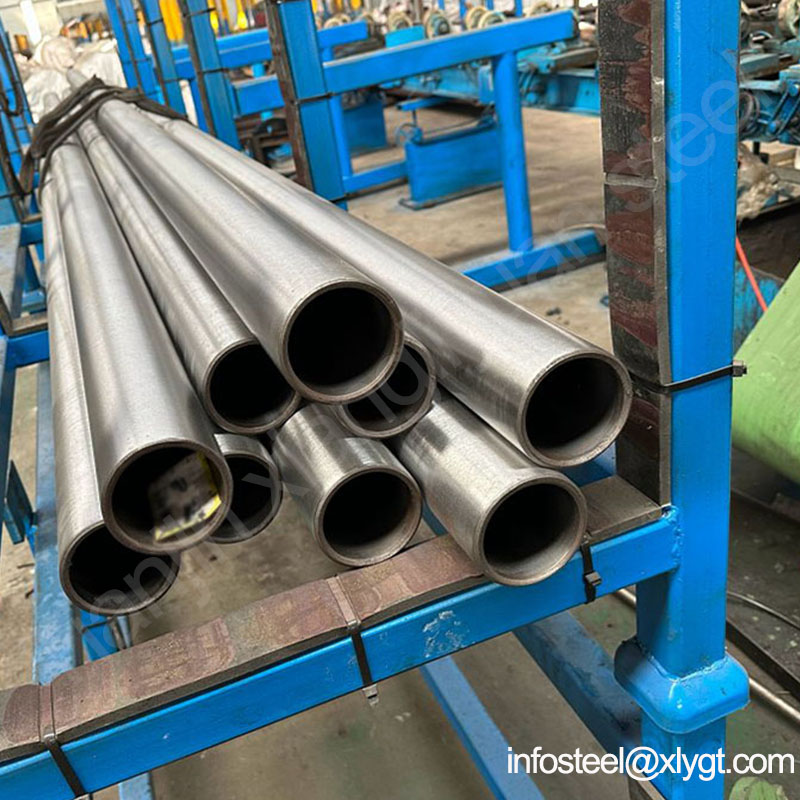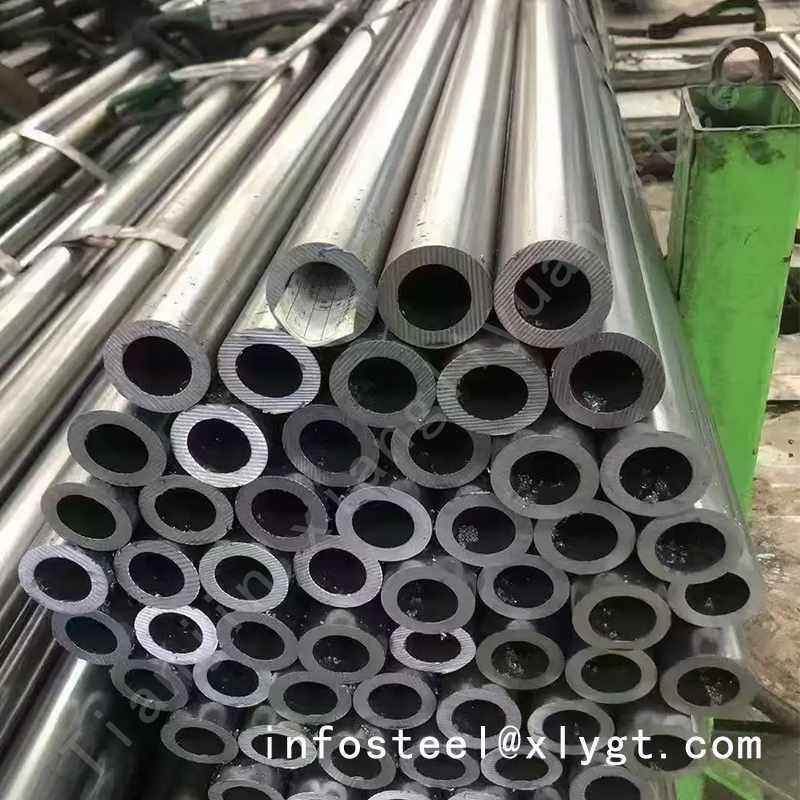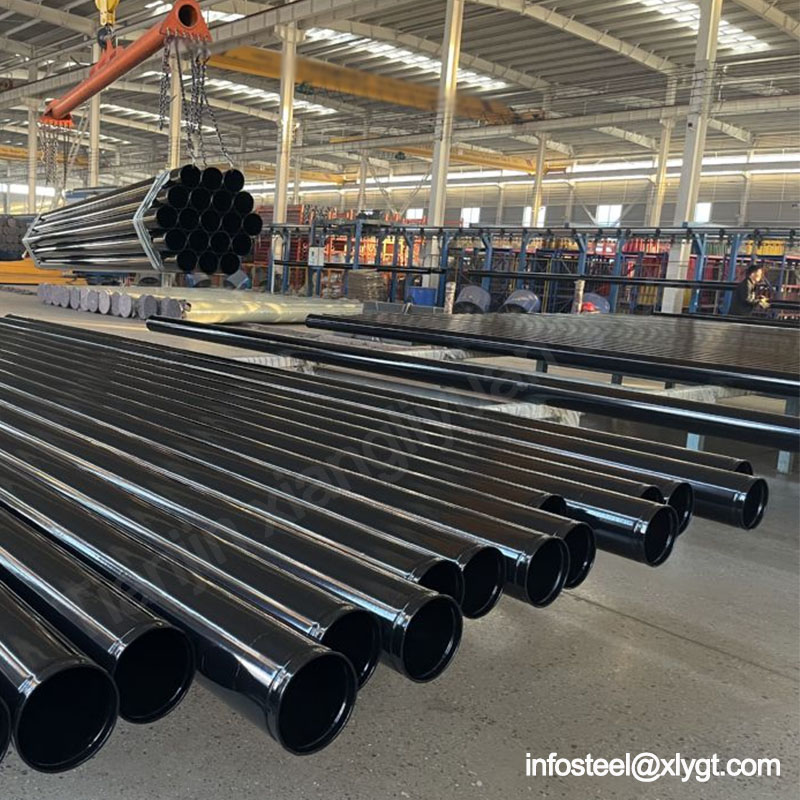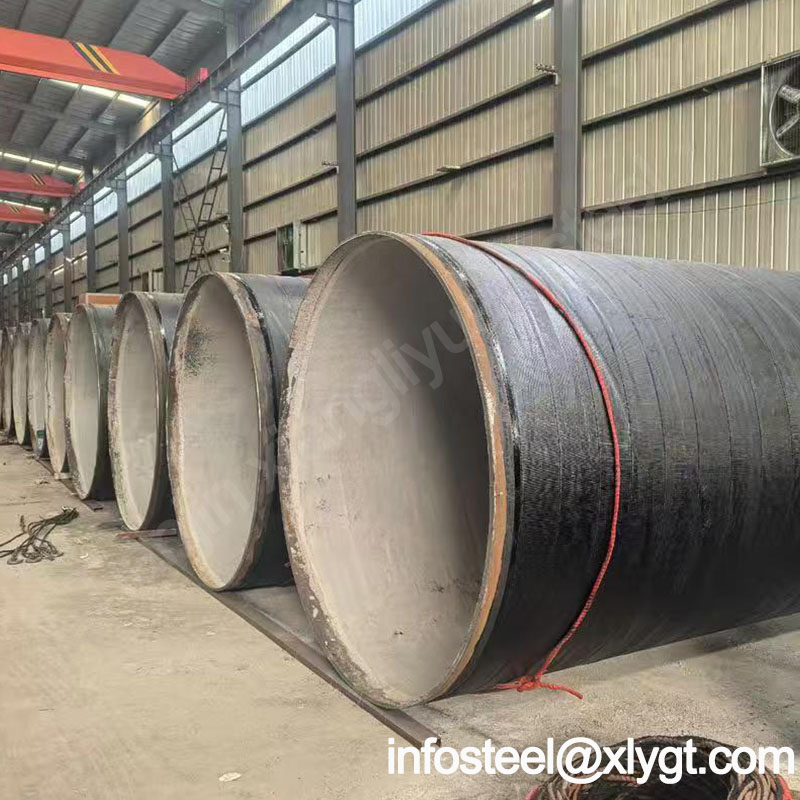
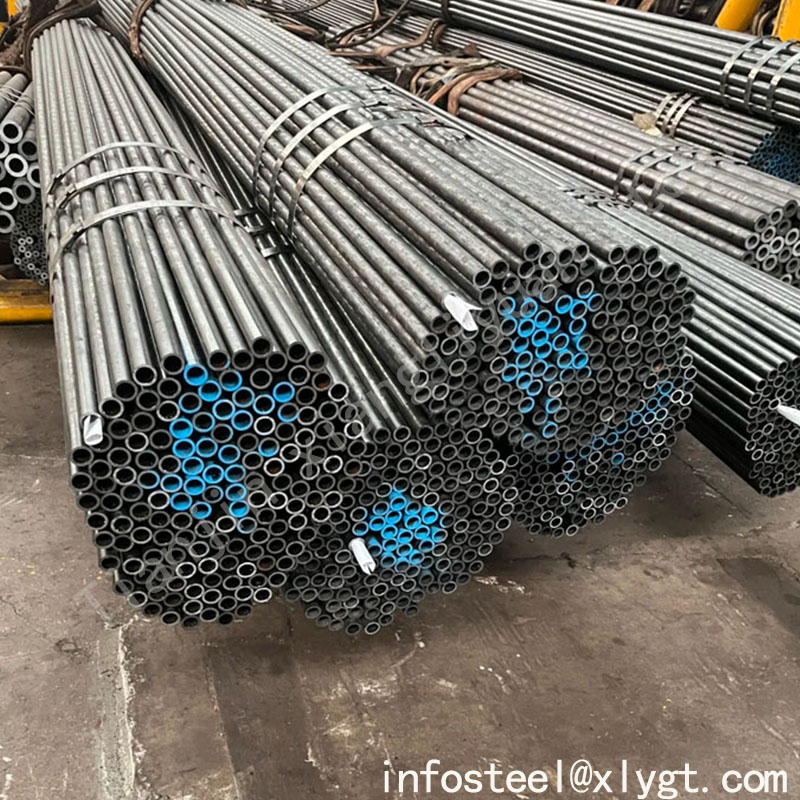
In the realm of pneumatic actuator systems, the performance, longevity, and reliability of the equipment are almost entirely dictated by the quality of the precision steel tube used as the cylinder barrel. Unlike hydraulic systems that operate at extremely high pressures, pneumatic systems rely on high-speed cycling, sealing efficiency, and low friction coefficients. Consequently, the specifications for Cold Drawn Seamless (CDS) tubes and SRB (Skived & Roller Burnished) tubes used in pneumatic applications are uniquely stringent.
At Tianjin Xiangliyuan Steel, we specialize in the manufacturing and global supply of precision steel pipes tailored for pneumatic cylinder applications. Operating out of the Tianjin Economic-Technological Development Area (TEDA), we leverage our proximity to the Port of Tianjin to deliver DIN EN 10305-1/4 compliant solutions with industry-leading lead times. This technical guide outlines the critical parameters of Inside Diameter (ID) tolerance, straightness, and surface finish required for modern pneumatic systems.
1. The Critical Role of ID Tolerance in Pneumatic Efficiency
In pneumatic cylinders, the inner diameter (ID) of the steel tube forms the chamber for the piston. Unlike hydraulics, where leaks are visible, pneumatic leaks are often internal (blow-by), leading to significant drops in efficiency and compressor cycling.
Standard Specifications (ISO H8 / H9)
For standard pneumatic cylinders, the ID tolerance is typically governed by ISO H8 (and sometimes H9 for larger bores).
-
ISO H8 Tolerance: For a 50mm bore cylinder, H8 allows a variance of +0.039mm / -0.000mm.
-
Why it matters: A deviation beyond this range causes inconsistent compression of the piston seal. If the ID is too large, the seal cannot maintain pressure; if too small, it causes excessive wear and heat generation.
Advanced Precision for Tie-Rod & Stainless Cylinders
High-cycle pneumatic systems (e.g., automated pick-and-place robots) require Seamless precision steel tubes with tolerances reaching IT7 or specialized honed tolerances.
-
Seamless vs. Welded: For pneumatic applications requiring no surface defects, seamless steel tubes (EN 10305-1/4) are preferred over welded tubes (EN 10305-2) because the absence of a weld seam eliminates the risk of micro-leaks under fluctuating air pressure.
-
Our Advantage: At Tianjin xiangliyuan steel, we supply Cold drawn seamless tubes where the ID tolerance is held strictly to H8 as standard, with the ability to customize to tighter tolerances for high-speed pneumatic tools.
2. Straightness: The Key to High-Speed Operation
While static leaks are a concern, straightness is the primary factor determining the operational speed of a pneumatic cylinder. A bent barrel creates a “banana effect,” causing the piston rod and bearing to bind.
Industry Benchmarks (0.3mm/m to 0.5mm/m)
The standard delivery condition for steel cylinder tubes often stipulates a straightness of 1.0mm per running meter. However, for high-quality pneumatic cylinders, this is insufficient.
-
Standard Pneumatic: Requires < 0.5mm/m.
-
High-Speed Pneumatic: Requires < 0.3mm/m.
-
The Consequence: Poor straightness leads to “stick-slip” motion, where the piston jerks rather than glides, destroying the cycle time efficiency of the automation line.
Material Condition: BK (+N) vs. GBK (+C)
The straightness is heavily influenced by the manufacturing process and stress relief.
-
GBK (as-drawn / +C): Retains residual stresses from drawing. While strong, it has a higher risk of stress relaxation over time, potentially warping.
-
BK (stress-relief annealed / +N): Normalized annealing removes internal stresses.
-
Best Practice: Tianjin Xiangliyuan Steel supplies BK (+N) condition steel tubes for pneumatic cylinders. The stress relief ensures that the straightness tolerance is stable during machining (honing/skiving) and throughout the cylinder’s lifecycle.
3. Surface Finish (Ra): Friction, Sealing, and Lubrication
The internal surface of a pneumatic cylinder tube is not merely a container; it is a bearing surface. The Roughness (Ra) value directly dictates the Coefficient of Friction (CoF) between the seal and the wall.
The Ra Value Standard (Ra ≤ 0.4 µm)
While raw drawn tubes have rough, peaked surfaces (Rz values), pneumatic cylinders require a plateaued surface.
-
Industry Requirement: Ra ≤ 0.4µm, with common targets of Ra 0.2µm – 0.3µm.
-
Roller Burnishing vs. Honing:
-
Honing: An abrasive process that creates a cross-hatch pattern. Good for oil retention but can be too aggressive for dry-air pneumatics.
-
Skiving & Roller Burnishing (SRB): A two-step process where a tool first skives (cuts) the ID to size, then rolls (burnishes) it. This work-hardens the surface (increasing hardness by 10-20%) and creates a mirror-like finish without cutting metal chips.
-
Why Surface Finish Matters
-
Seal Life: Rough surfaces (Ra > 0.8µm) act like sandpaper on polyurethane seals, reducing seal life by up to 50%.
-
Friction: A smooth SRB surface (Ra < 0.3µm) allows for lower lubricant usage (or oil-free operation) and reduces the required breakaway pressure.
Tianjin xiangliyuan steel utilizes advanced production lines to ensure that our Precision steel honed tubes and SRB tubes consistently achieve Ra 0.2µm – 0.4µm, matching European standards for EN 10305-4.
4. Material Grades and Machinability
For pneumatic applications, the steel grade must balance strength (to withstand burst pressure) with machinability (for porting and mounting).
Common Grades
-
E355 / ST52.3 (1.0580): The industry standard for hydraulic and pneumatic cylinders. It offers excellent weldability and a minimum yield strength of 355 MPa.
-
ST37.4 (1.0254): Used for lighter duty pneumatic cylinders.
-
Stainless Steel (304/316): Required for food-grade and medical pneumatic equipment (corrosion resistance to sterilizing agents).
Manufacturing Processes
Our raw material conforms to DIN 2391 (the predecessor standard) or EN 10305-1 (the current EU standard for seamless precision tubes).
-
Cold Drawing: The process of pulling the tube through a die to reduce the OD/ID, ensuring precise dimensional accuracy.
-
Annealing: Used to achieve the required mechanical properties without brittleness.
5. The Tianjin Logistics Advantage: Reducing Your Supply Chain Risk
In the steel pipe industry, the quality of the product is only half the story; the reliability of the logistics is the other half. As a supplier based in Tianjin, China, we offer a distinct geographical advantage.
Port Proximity
Our manufacturing facility is located within 100km of the Xingang (Tianjin) Port, one of the largest and most efficient comprehensive ports in Northern China.
-
Faster Loading: We can execute container loading and LCL (Less than Container Load) shipments with minimal trucking time, reducing the risk of rust caused by long inland transits.
-
Roll-on/Roll-off (RoRo) Options: For long-length steel cylinder tubes (exceeding 6 meters), we utilize specialized break-bulk and RoRo services directly from Tianjin, which is not feasible for inland suppliers.
Export Packaging
We understand that surface finish is destroyed if the tube rubs against steel strapping during sea freight. Therefore, we utilize:
-
Anti-rust VCI paper wrapping and plastic end caps.
-
Bundling with nylon slings rather than bare steel chains to protect the Outside Diameter (OD) .
6. Why Choose Tianjin Xiangliyuan Steel for Pneumatic Projects?
Sourcing precision steel tubes from China requires a partner who understands both European standards and American ANSI/ASME requirements. Tianjin Xiangliyuan Steel bridges that gap.
Technical Compliance
We strictly adhere to ISO 9001:2015 quality management systems. Every batch of seamless precision steel tubes undergoes rigorous testing:
-
Dimensional Inspection: Laser micrometers for OD; pneumatic probes for ID.
-
Mechanical Testing: Tensile strength (≥600 MPa) and proof stress.
-
NDT: Eddy current or ultrasonic testing (UT) to ensure no internal defects exist in the precision pipe.
Customization Services
We do not just sell stock tubes; we provide Value-Added Services (VAS) :
-
Cut-to-length: Precision cutting from 500mm to 12,000mm.
-
Pre-machining: Honing or skiving to final dimensions (ISO H7/H8).
-
Chrome Plating: For piston rods paired with the tubes.
Commitment to E-E-A-T
Our expertise is proven by our long-standing relationships with European and North American OEMs. We are not a trading company; we are a manufacturer. We control the cold drawing, annealing, and finishing in-house.
7. Conclusion and Call to Action
Selecting the right steel tube for pneumatic cylinder applications is a decision that impacts ID tolerance, straightness, and surface finish. To achieve optimal cycle rates, reduce downtime, and extend seal life, engineers must specify EN 10305-1/4 compliant tubes, manufactured via cold drawing or SRB processes, with strict Ra ≤ 0.4µm and straightness ≤ 0.5mm/m.
At Tianjin xiangliyuan steel, we combine this technical rigor with the logistical efficiency of the Port of Tianjin to deliver precision steel tubes that compete with European mills on quality and outperform them on delivery speed.
Contact us today to discuss your pneumatic cylinder project.
-
Company: Tianjin Xiangliyuan Steel
-
Email: infosteel@xlygt.com
-
Website: https://www.xlysteel.com
-
*Request your quote or view our current stock of DIN 2391 / EN 10305-1 tubes.*
Technical Data Sheet Reference Table
| Parameter | Specification Required | Tianjin Xiangliyuan Steel Capability |
|---|---|---|
| Standard | DIN 2391, EN 10305-1 / EN 10305-4 | 100% Compliant |
| Material | E355 (ST52.3), ST37.4, 20# | High-quality Raw Steel |
| ID Tolerance | ISO H8 (Standard) / H7 (High Precision) | H8, H7, H9 |
| Straightness | ≤ 0.5mm per meter | ≤ 0.3mm/m (Achievable) |
| Surface Roughness | Ra ≤ 0.4µm | Ra 0.2µm – 0.4µm (SRB/Honed) |
| Surface Treatment | Skived & Roller Burnished | Yes (Work-hardened surface) |
| Logistics | Fast, Rust-proof Sea Freight | Tianjin Port (Direct Loading) |
Ensure your pneumatic cylinders operate at peak efficiency. Email us at infosteel@xlygt.com for a certified sample.