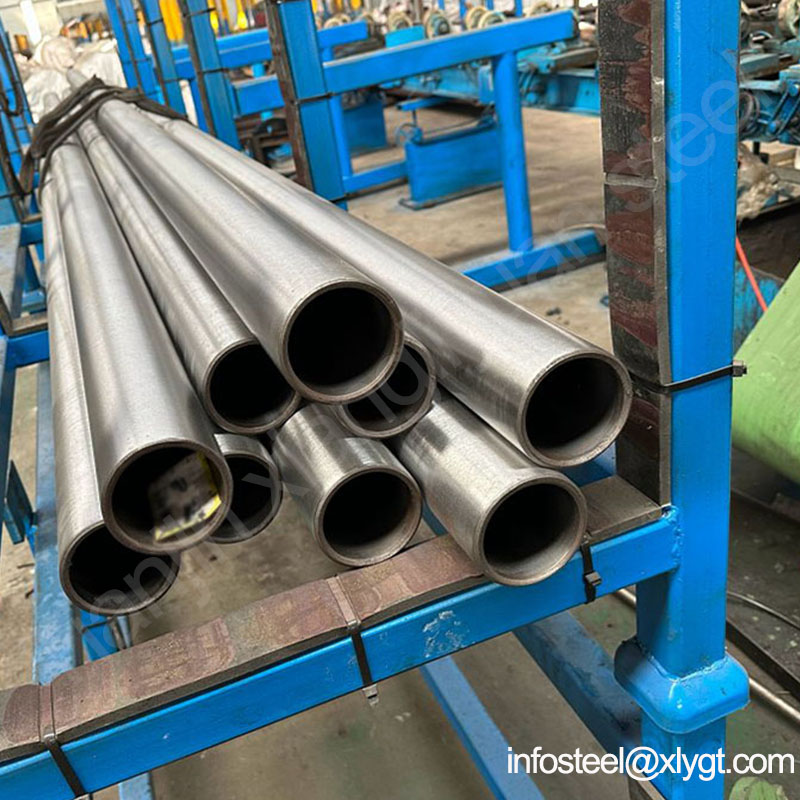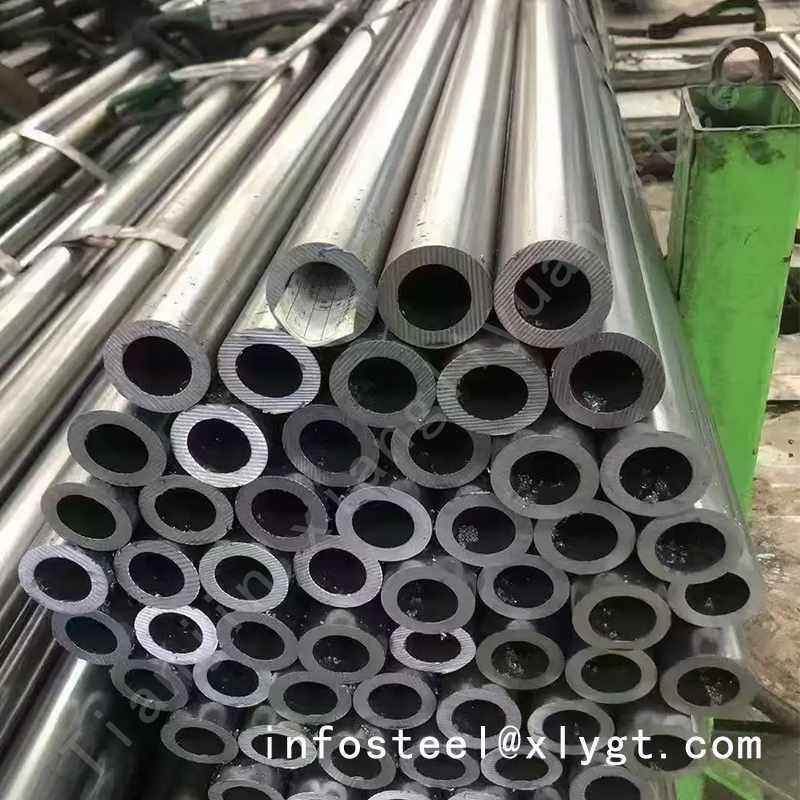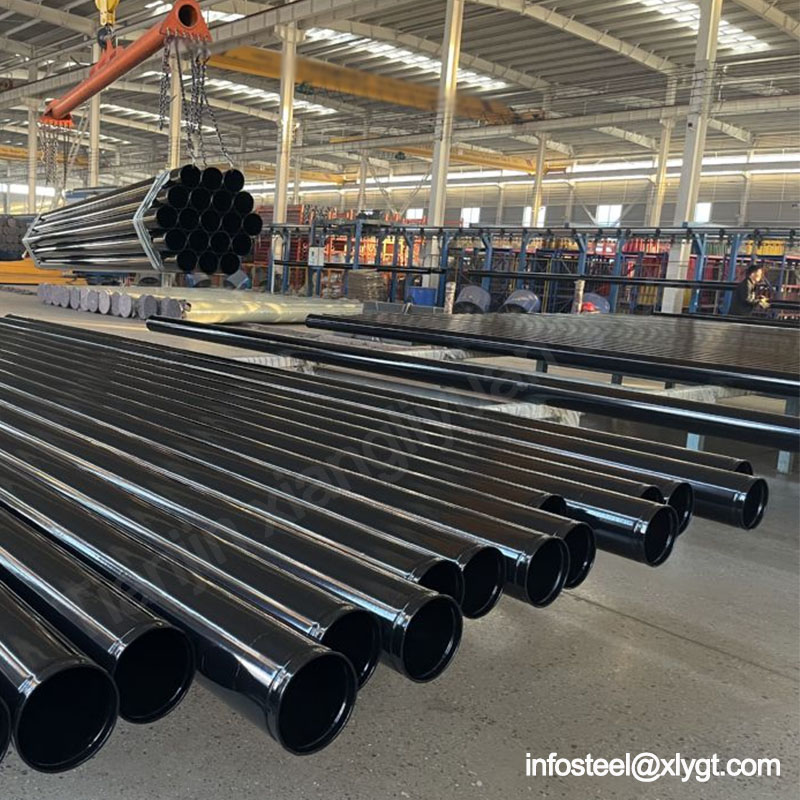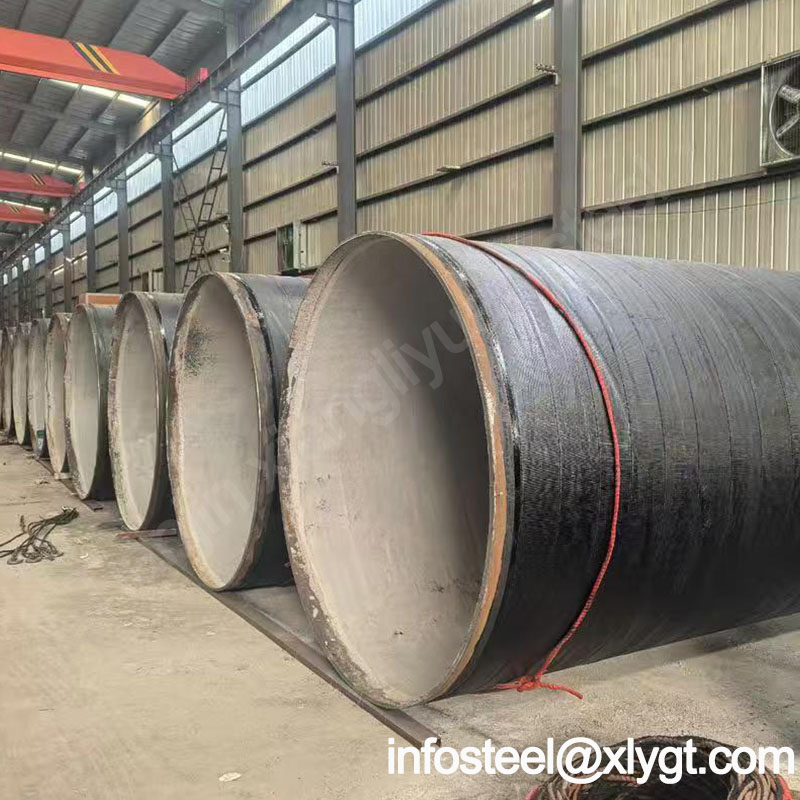
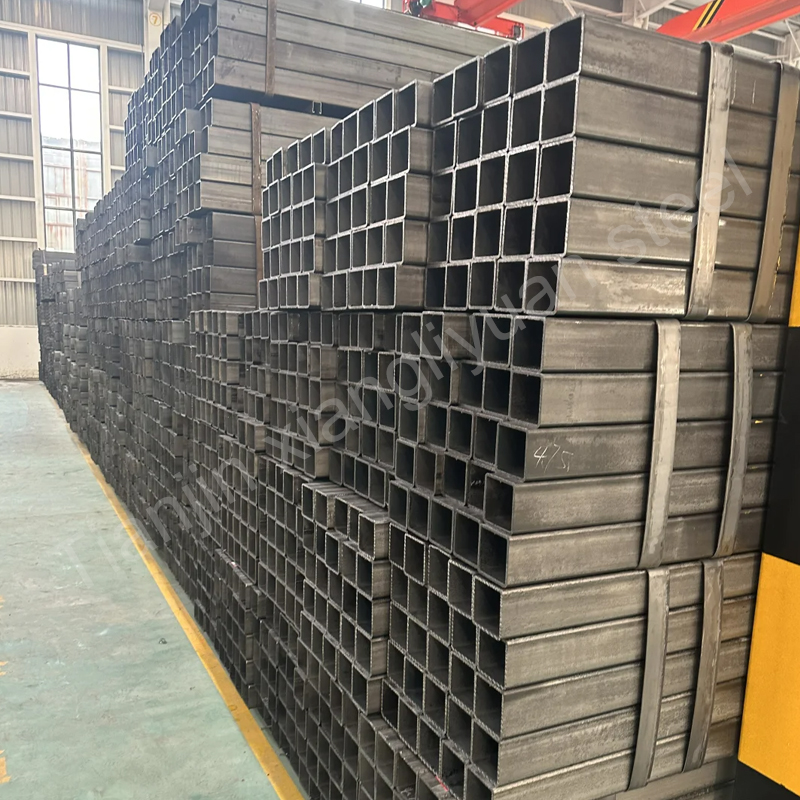
In the modern industrial landscape, High-Frequency Electric Resistance Welding (ERW) steel pipe has become the backbone of critical infrastructure—from oil and gas transmission lines to structural and automotive components. For engineers and procurement managers, the single most defining factor between a reliable pipeline and a catastrophic failure is not the steel grade alone, but the integrity of the longitudinal weld seam.
At Tianjin Xiangliyuan Steel, we recognize that weld seam quality is the silent ambassador of your project’s safety. With decades of manufacturing precision adjacent to one of the world’s busiest ports (Tianjin Port), we combine logistical superiority with metallurgical expertise. This technical guide explores the physics of ERW weld formation, potential discontinuities, and the rigorous international testing standards that guarantee pipe integrity. For direct inquiries, reach our engineering team at infosteel@xlygt.com or visit https://www.xlysteel.com for mill test certificates (MTCs) and real-time stock updates.
The Metallurgy of High-Frequency ERW: How a Seam is Formed
Unlike submerged arc welding (SAW), high-frequency ERW utilizes the skin effect and proximity effect to concentrate welding current at the edges of the steel strip. The process operates at frequencies between 100 kHz and 800 kHz. As the Vee angle of the strip edges converges, the current heats the metal to a plastic state (approximately 1300°C to 1500°C) without melting it entirely. The squeeze rolls then forge the softened edges together, expelling molten metal (flash) and creating a solid-state forge weld.
Critical quality variables include:
-
Vee angle geometry: A misaligned angle causes open seams.
-
Squeeze roll pressure: Insufficient pressure results in incomplete fusion; excessive pressure creates excessive flash (external and internal burrs).
-
Heat input balance: Too little heat yields a cold weld (lack of fusion); too much heat leads to oxide inclusions.
A superior ERW pipe displays a seamless appearance but with a grain structure that flows continuously across the bond line. Any deviation—such as lack of fusion (LOF) , hooking crack, or penetrator—compromises the pipe’s pressure rating.
Common Weld Seam Discontinuities in ERW Pipe (Why Testing Matters)
Global buyers searching for “ERW pipe weld defects” or “high frequency welding flaws” must understand three primary failure modes:
-
Lack of Fusion (LOF): The most critical defect. Occurs when the strip edges reach plastic but not forging temperature. LOF is typically undetectable by visual inspection but reveals itself under NDT.
-
Hooking Crack: A planar defect oriented along the fusion line, often initiated by inclusions dragged from the strip surface during forming. It propagates easily under internal pressure.
-
Oxide Inclusions (Solidified Oxides): Excess heat draws oxygen into the weld zone, forming brittle iron oxides. These act as stress risers.
At Tianjin Xiangliyuan Steel, our production protocols are designed to eliminate these via closed-loop feedback control systems monitoring welding temperature and upset pressure. Every coil’s chemistry is matched to welding parameters before rolling begins.
Destructive Testing (DT) for Weld Seam Integrity
For full API 5L and ASTM A53 compliance, destructive tests remain the gold standard for weld seam quality assurance. These are performed on pipe ends or coupons from each heat number.
a. Flattening Test (ASTM A370 / API 5L)
A specimen is flattened between parallel plates until the distance between plates is 2/3 of the original OD. The weld seam must show no cracks or openings until the flattening exceeds this threshold. For reversed flattening, the weld is placed at 90° to the load direction.
b. Guided Bend Test (Face and Root Bends)
A strap containing the weld is bent around a mandrel of specified diameter. Face bends test the weld reinforcement; root bends test penetration. Any crack over 1/8 inch (3.2 mm) constitutes failure. Our lab uses calibrated hydraulic bend testers with digital recording.
c. Charpy V-Notch (CVN) Impact Test
Crucial for low-temperature service (e.g., Arctic pipelines). Notches are placed at the weld centerline, fusion line, and HAZ (heat-affected zone). For API 5L Grade B or X42, typical requirements are 27 J minimum at 0°C. Tianjin Xiangliyuan Steel guarantees full traceability from ladle to finished pipe.
Non-Destructive Testing (NDT) Methods for ERW Pipe
NDT is the frontline defense for every linear meter of pipe. Reputable buyers demand 100% inspection.
a. Ultrasonic Testing (UT) – Weld Seam & Laminar Checks
Two configurations are standard:
-
Normal beam UT: Detects laminations in the parent plate before forming.
-
Shear wave UT (Angle beam): Directed at 45° to 70° into the weld seam. It detects LOF, hook cracks, and slag lines. Our automated UT system at Tianjin Xiangliyuan Steel uses phased array (PAUT) for 3D mapping of discontinuities, exceeding API 5L requirements.
b. Eddy Current Testing (ECT)
Using high-frequency probes, ECT identifies surface-breaking cracks and near-surface flaws. While fast, it is often paired with UT for volume coverage.
c. Hydrostatic Testing
Every pipe is pressure-tested to a minimum of 60% of specified minimum yield strength (SMYS) but typically 100% to test pressure calculated per Barlow’s formula. Hold time is a minimum of 5 seconds (API 5L mandates 10 seconds for certain grades) with no leak or permanent expansion allowed.
d. Magnetic Particle Inspection (MPI)
Used primarily on pipe ends (upset area) and test coupons. MPI reveals surface cracks invisible to the naked eye, especially in high-carbon grades.
International Standards Governing ERW Pipe Quality
Your clients are searching for “API 5L X42 ERW pipe” , “ASTM A53 Grade B” , or “EN 10217-1” . Here is how our compliance stack ranks:
| Standard | Grade Range | Key Weld Testing Requirement |
|---|---|---|
| API 5L PSL1/PSL2 | B, X42, X52, X60, X65, X70 | 100% UT + Hydrostatic; CVN for PSL2 |
| ASTM A53 / A500 | Gr A/B, Structural | Flattening + Bend test + Eddy Current |
| ISO 3183 | L245 to L485 | Similar to API 5L with HIC testing for sour service |
| ASME B36.10 | Schedule 40, 80, 160 | Weld joint factor of 0.85 (EW) |
Tianjin Xiangliyuan Steel supplies with full MTC (Mill Test Certificate) 3.1 per EN 10204, stamped by our in-house quality wing. For high-frequency ERW steel pipe for sour service (H₂S environments), we perform HIC and SSC testing via third-party labs like SGS or BV.
Sour Service and High-Frequency Welding: Special Considerations
When searching “ERW pipe for oil and gas” or “sour service ERW” , note that standard welding parameters induce hard microstructures (martensite) in the HAZ. This is lethal in H₂S-rich environments, causing sulfide stress cracking.
Our solution: Post-weld heat treatment (PWHT) . By normalizing or tempering the weld seam (typically 540°C to 650°C), we reduce HAZ hardness to below 22 HRC (per NACE MR0175). Every batch destined for Middle Eastern or North American shale plays is validated with hardness traverse surveys (HV10).
Why Tianjin Xiangliyuan Steel? Logistics Meets Metallurgy
Positioned in the Tianjin Binhai New Area, we are 45 kilometers from Tianjin Xingang Port – the largest comprehensive port in Northern China. This geographical advantage translates to:
-
20–30% lower ocean freight compared to inland mills (e.g., Shandong or Hebei interior).
-
Lead times of 15–25 days for standard ASTM A53/API 5L ERW pipe.
-
Bulk breakbulk or container loading flexibility for schedules 10 through XXS.
But logistics without quality is pointless. Our ERW production line (HF 630, 720, 114mm) features online ultrasonic pinhole detectors and saw blade cutoff with burr removal systems. For structural applications (EN 10219 S355JOH), our weld seam passes 180° flattening without a whisper of a crack.
Traceability and Documentation: The Trust Factor
Search engines favor E-E-A-T; buyers trust traceability. Every pipe from Tianjin Xiangliyuan Steel is stamped with:
-
Heat number (traceable to ladle analysis)
-
Standard (API 5L / ASTM A53)
-
Grade (X42 / B / S275)
-
Wall thickness schedule
-
Our logo and “Made in China”
We accompany each shipment with:
-
Inspection release note (IQC, IPQC, FQC).
-
Hydrostatic test chart (digital printout of time vs. pressure).
-
Third-party inspection (optional: SGS, TÜV, Intertek, Lloyd’s).
For instant access to our test procedures or to request a sample coupon for your own lab testing, email infosteel@xlygt.com or browse our virtual mill tour at https://www.xlysteel.com.
Avoiding Common Buying Mistakes: Red Flags in ERW Pipe
-
No UT confirmation: If a supplier offers “100% inspection” without specifying shear wave UT, treat as suspicion.
-
Missing PWHT for sour grades: Many small mills ship “API 5L” but skip HAZ tempering. Demand a hardness test report.
-
Vague origin steel coils: We only use coils from Baosteel, Shougang, and HBIS – fully killed, fine-grain practice steel.
Weld Quality is Non-Negotiable
Whether you are procuring high-frequency electric resistance welding steel pipe for a cross-country gas line, ASTM A53 schedule 40 for firefighting systems, or API 5L X52 for structural piling, the weld seam is the pipe’s spine. Compromised testing leads to deferred maintenance costs and safety hazards.
At Tianjin Xiangliyuan Steel, we don’t just weld steel; we engineer microstructures. Our proximity to Tianjin Port ensures you don’t wait weeks for customs clearance. Request a quote or a mill test certificate sample today.
🌐 Website: https://www.xlysteel.com
📧 Email: infosteel@xlygt.com
📍 Location: Tianjin, China – 45 km from Tianjin Xingang Port
✅ Keywords we deliver: *ERW steel pipe, high-frequency welded tube, API 5L line pipe, ASTM A53 grade B, carbon steel pipe for oil and gas, structural hollow section, EN 10219 S355J2H, sour service pipe, weld seam UT, NDT for steel pipes.*
*All technical data cited conforms to API 5L 46th Edition, ASTM A53/A53M-20, and ASME B31.3 process piping standards.*