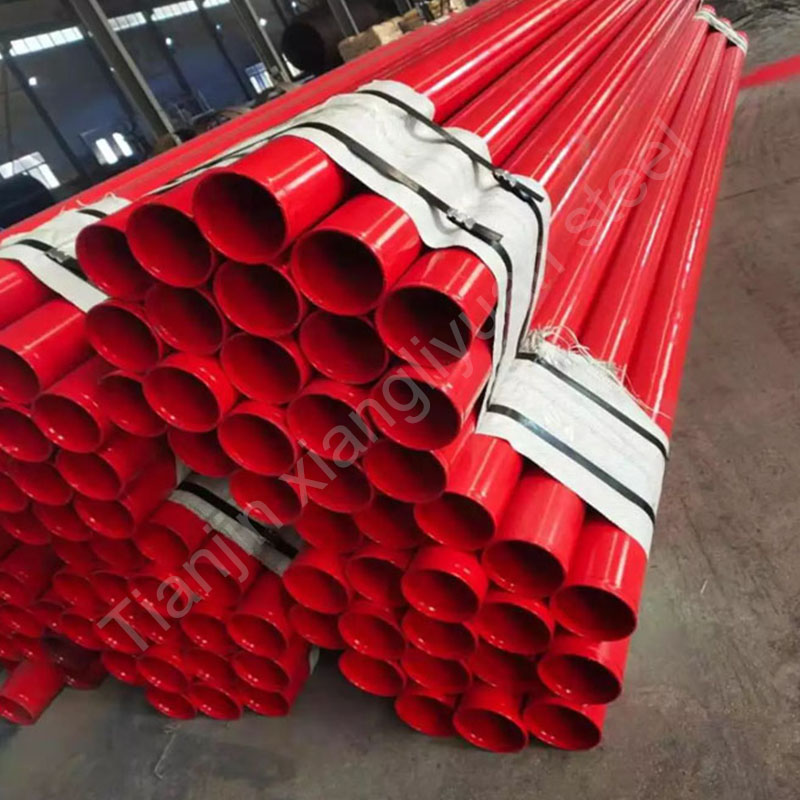
In the realm of fire protection systems, the integrity of the piping network is non-negotiable. When a fire event occurs, the sprinkler system must operate flawlessly—not merely to convey water, but to withstand fire conditions, maintain pressure integrity, and ensure reliable connections under extreme duress. This is why fire fighting steel pipe is held to a different standard than conventional plumbing or process piping.
Fire sprinkler pipe must perform when called upon, and the framework ensuring this performance rests on three pillars: UL Listing, FM Approval, and compliance with NFPA 13. Together, these standards form the backbone of fire protection system specifications globally. This article provides a technical deep dive into these requirements, explaining what they mean for engineers, contractors, and procurement professionals, and demonstrating how Tianjin Xiangliyuan Steel delivers pipe that meets—and exceeds—these exacting standards.
Understanding the Regulatory Framework: UL, FM, and NFPA
NFPA 13: The Installation Standard
The National Fire Protection Association’s NFPA 13, Standard for the Installation of Sprinkler Systems, serves as the foundational document governing fire sprinkler system design and installation. While it does not manufacture pipe, it dictates which pipe standards are acceptable and under what conditions they may be used .
Chapter 6 of NFPA 13 specifies material requirements, including minimum wall thicknesses based on joining methods. For steel pipe joined by welding or roll-grooved connections, Schedule 10 is permitted for pipe sizes up to 5 inches, with specific thickness requirements for larger diameters . For threaded connections, however, NFPA 13 requires thicker walls—Schedule 40 for pipe sizes less than 8 inches and Schedule 30 for 8 inches and larger .
The standard also provides detailed tables for hanger spacing, pipe support, and seismic bracing—all critical factors that depend on the pipe’s physical properties and the integrity of its end connections.
UL Listing and UL 852
Underwriters Laboratories (UL) provides independent certification that fire protection products meet specific safety and performance criteria. For metallic sprinkler pipe, UL 852 (Standard for Metallic Sprinkler Pipe for Fire Protection Service) is the relevant standard . This covers pipe intended for water-based fire protection systems, including those installed under NFPA 13, 13R, and 13D, as well as NFPA 14 (standpipes) and NFPA 15 (water spray systems) .
UL-listed pipe is categorized by size, pressure rating, end configuration, and wall thickness designation. Steel pipe is further categorized by its Corrosion Resistance Ratio (CRR) , with a CRR of 1.0 or greater required for threaded pipe applications . This CRR rating accounts for the localized wall thinning that occurs during the threading process, ensuring that even after threads are cut, the remaining wall retains sufficient corrosion resistance.
FM Approval and FM 1630
Factory Mutual (FM) Approval represents another globally recognized mark of quality for fire protection equipment. FM Approvals, an independent testing and certification organization, evaluates products specifically for property loss prevention. For fire sprinkler pipe, FM 1630 is the approval standard .
FM Approval is particularly significant in industrial and commercial projects where insurers mandate FM-approved components for coverage. The FM mark demonstrates that the pipe has undergone rigorous testing, including hydrostatic pressure tests and mechanical integrity assessments. Some project specifications explicitly require that “fire protection system materials and components shall be Underwriter’s Laboratories listed and labeled, and Factory Mutual approved” .
Material Specifications: ASTM A795, A53, and A135
ASTM A795: The Fire Protection Standard
While UL and FM certify the product’s performance, the underlying material standard is primarily ASTM A795—the specification specifically developed for black and hot-dip galvanized steel pipe used in fire protection systems . This standard covers seamless and welded pipe in sizes ranging from NPS ½ inch to 10 inch (DN 15 to 250) .
ASTM A795 differs from general-purpose ASTM A53 in several important respects:
-
Optimized Tensile Requirements: Slightly lower tensile strength than A53, specifically balanced for fire sprinkler service where ductility for threading and grooving is paramount .
-
More Stringent Flattening Test: Ensures adequate ductility to withstand the deformation of roll-grooving without cracking .
-
Impact Testing Availability: Low-temperature options with Charpy V-Notch impact testing are available, as required by NFPA 13 for specific environments .
In practice, many engineers also specify ASTM A53 or ASTM A135—both acceptable under NFPA 13 when meeting the prescribed wall thickness requirements . However, ASTM A795 is the pipe standard most directly associated with fire protection service .
Pipe Schedules and Wall Thickness
NFPA 13 distinguishes between joining methods when determining minimum wall thickness . The key requirements for pressures up to 300 psi are:
-
Threaded Pipe: Schedule 40 for pipe sizes under 8 inches; Schedule 30 for 8 inches and larger .
-
Welded or Roll-Grooved Pipe: Schedule 10 for pipe sizes up to 5 inches; 0.134-inch wall for 6-inch pipe; 0.188-inch wall for 8- and 10-inch pipe; 0.330-inch wall for 12-inch pipe .
This distinction has significant cost and weight implications. Roll-grooved Schedule 10 pipe, permitted for wet systems where NFPA 13 allows, offers substantial weight savings—reducing material cost, shipping expense, and installation labor .
Galvanized vs. Black Steel
NFPA 13 mandates galvanized pipe for dry-pipe and pre-action systems . In these systems, the pipe is not continuously filled with water; instead, it is pressurized with air or nitrogen until a fire event releases water. The absence of water allows moisture from condensation to accumulate, creating a corrosive environment that black steel cannot withstand. Hot-dip galvanizing—applied inside and out per ASTM A795—provides the necessary corrosion protection .
For wet-pipe systems in non-corrosive environments, black steel remains the default choice—economical, readily available, and fully compliant .
End Connections: Threaded, Grooved, and Welded
Threaded Connections
Threaded pipe is the most common joining method for smaller pipe diameters, up to 2 inches (and occasionally 2½ inches) . The threads conform to ANSI/ASME B1.20.1 (NPT) standards .
However, threading presents a critical consideration: the cutting process physically reduces wall thickness, creating weaker points susceptible to corrosion breakthroughs . This is why NFPA 13 requires Schedule 40 wall thickness for threaded pipe—the extra material accommodates the thread depth while maintaining sufficient structural and corrosion resistance. Threaded pipe must also meet a CRR of 1.0 or greater .
Grooved Connections
Grooved pipe connections—pioneered by Victaulic and now widely adopted—offer speed and reliability . Two grooving methods exist:
-
Roll Grooving: A pressing process that displaces material, forming a groove without removing wall thickness. This preserves the pipe wall but creates a slight interior indentation that can trap water in low-sloped dry systems, potentially accelerating corrosion .
-
Cut Grooving: A machining process that removes material, thinning the wall at the groove. This method is limited to Schedule 40 or thicker pipe .
Grooved couplings and fittings must be UL-listed (per UL 213) and FM-approved, with grooved fittings manufactured to ASTM A47 (malleable iron) or ASTM A536 (ductile iron) .
Welded Connections
Welded connections require full-penetration butt welds conforming to ASME B31.9 . NFPA 13 permits Schedule 10 wall thickness for welded pipe up to 5 inches in diameter . Welding is common in high-rise standpipe systems and industrial installations where permanent, leak-free joints are essential.
Technical Requirements for Fire Sprinkler Pipe
Hydrostatic Testing
All fire protection pipe must be hydrostatically tested to ensure leak-free performance. NFPA 13 requires testing at not less than 200 psi (14 bar) for 2 hours, unless otherwise specified . ASTM A795 requires that each pipe pass either a hydrostatic test or a non-destructive electric test . This rigorous testing ensures that defects—whether in the weld seam, the parent metal, or the pipe ends—are identified before installation.
Corrosion Resistance Ratio (CRR)
The CRR is a critical metric for threaded pipe. It represents the ratio of the remaining wall thickness at the thread root to the nominal wall thickness. A CRR of 1.0 or greater indicates that the threaded pipe retains at least the base material’s corrosion resistance . UL-listed pipe manufacturers must provide CRR data, and threaded pipe without adequate CRR is prohibited .
Low-Temperature Service
For projects in cold climates, NFPA 13 may require Charpy V-Notch impact testing to verify ductility at low temperatures . This is particularly important for dry-pipe systems where moisture and freezing conditions pose additional risks to pipe integrity.
Advantages of Sourcing from Tianjin Xiangliyuan Steel
At Tianjin Xiangliyuan Steel, we understand that delivering certified fire protection pipe is not simply about meeting minimum standards—it is about engineering confidence into every length of pipe.
Manufacturing Capabilities
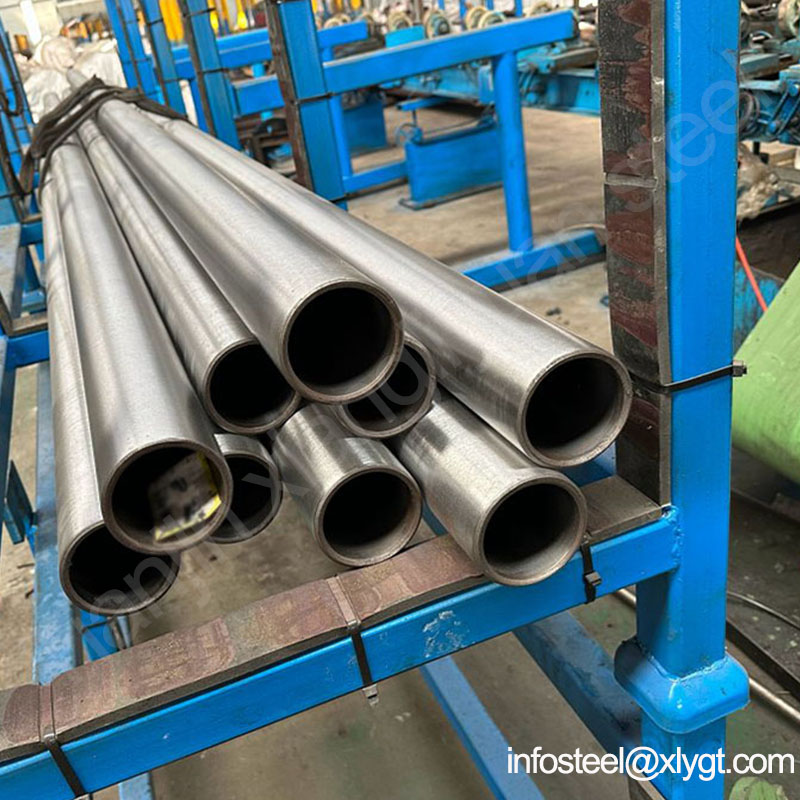
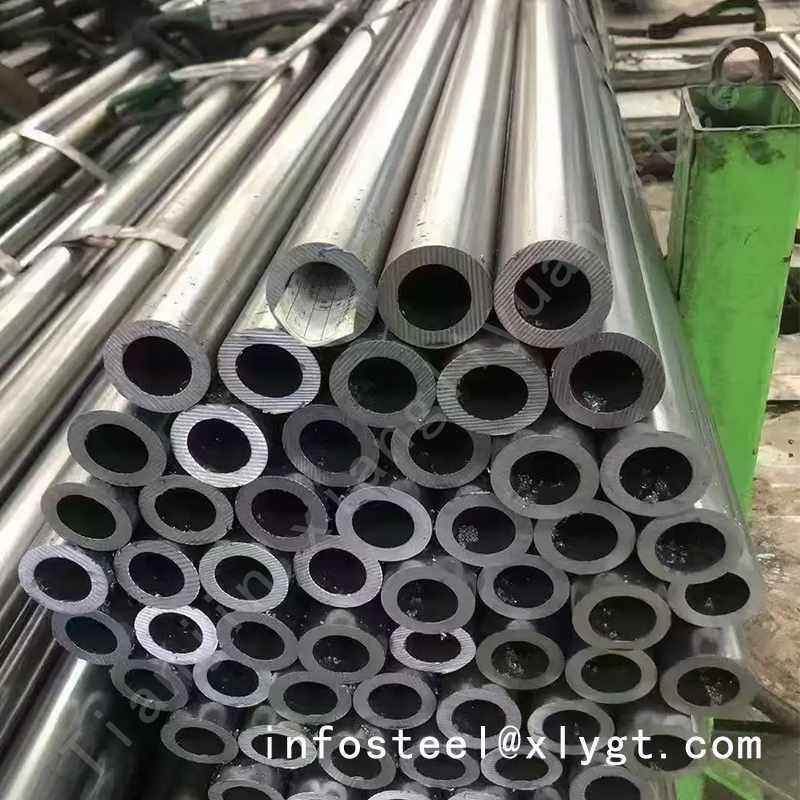
We produce fire fighting steel pipe in accordance with ASTM A795, ASTM A53, and ASTM A135, available in Schedule 10, Schedule 40, and Schedule 80 wall thicknesses . Our production spans ERW (Electric Resistance Welded) and seamless configurations, with sizes ranging from 1 inch to 12 inches .
All pipe is manufactured in facilities that maintain current UL Listings and FM Approvals, with full traceability and certification packages available upon request. We offer end finishes including:
-
Threaded (NPT, 100% gauge-inspected)
-
Roll-grooved and cut-grooved
-
Beveled (for welding)
-
Plain-end
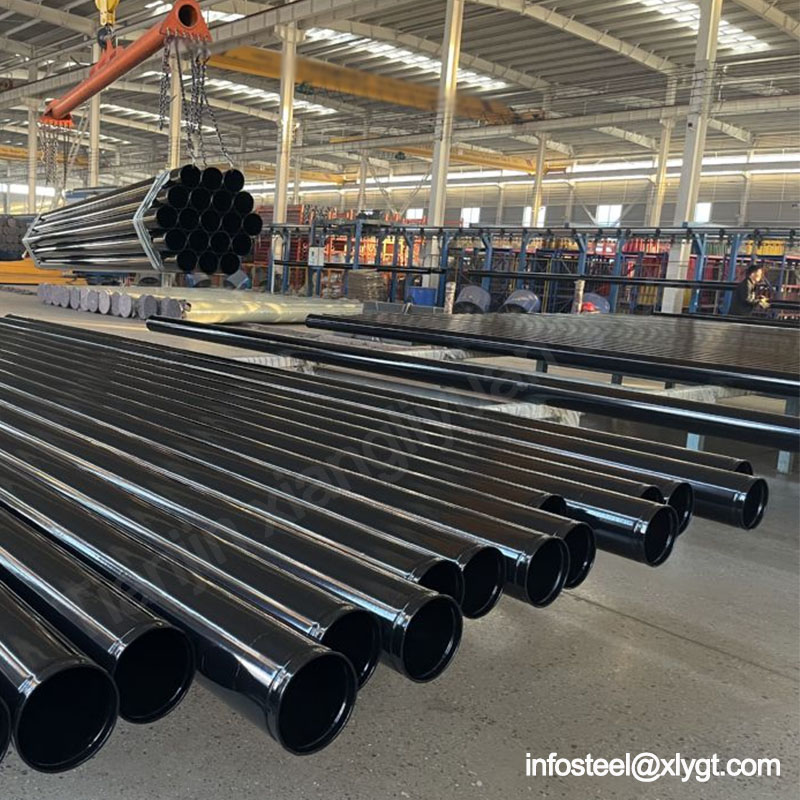
We supply both black steel (for wet systems) and hot-dip galvanized steel (for dry and pre-action systems) . For projects requiring low-temperature performance, we offer Charpy V-Notch impact-tested material that meets NFPA 13 requirements .
Quality Assurance
Every order is backed by comprehensive testing and certification, including:
-
EN 10204 Type 3.1 certification for full material traceability
-
Hydrostatic testing per NFPA 13 requirements
-
Flattening tests to verify ductility for grooving and threading
-
CRR verification for threaded pipe
Our quality management system ensures that every pipe shipped carries the manufacturer’s permanent marking: our name, specification (ASTM), size, schedule, and UL/FM approval stamp .
Logistics Advantage
Tianjin Xiangliyuan Steel is strategically located in Tianjin, China—one of the world’s busiest ports and a major gateway for steel exports to North America, Europe, the Middle East, and Southeast Asia. Our proximity to Tianjin Port translates directly into:
-
Reduced shipping costs: Lower overland freight to the port means more competitive freight quotes for our customers.
-
Faster delivery: We can load containers and break-bulk vessels within days, reducing lead times.
-
Reliable scheduling: Direct access to the port enables consistent departure schedules, minimizing project delays.
For customers sourcing fire protection pipe internationally, our logistics advantage ensures that certified product arrives on-site promptly, without the premium shipping charges often associated with inland manufacturers.
Customer Support
We pride ourselves on technical support that matches the quality of our product. Our engineering team can provide guidance on:
-
Selecting the right schedule for your system (Schedule 10 vs. Schedule 40)
-
Choosing the appropriate end finish for your joining method
-
Interpreting NFPA 13 requirements for your specific project
-
Preparing certification packages for UL/FM documentation
We understand that fire protection is not a commodity—it is a life-safety system. Every decision matters, and we are committed to helping our customers make informed choices.
The Standard of Confidence
Fire fighting steel pipe that meets UL Listed, FM Approved, and NFPA 13 compliance requirements is not merely a component—it is the foundation of a reliable fire protection system. Understanding the distinctions between ASTM A795 and A53, the implications of Schedule 10 vs. Schedule 40, and the requirements of different joining methods is essential for any engineer, contractor, or project owner.
Tianjin Xiangliyuan Steel combines deep technical expertise with manufacturing excellence and a logistics advantage that few competitors can match. Our certified fire protection pipe—backed by current UL and FM listings—is ready to support your next project, from high-rise commercial buildings to industrial facilities requiring the highest levels of performance.
For a quote, technical consultation, or to request UL/FM certification documentation, please contact us today. We are committed to delivering fire protection pipe that you can trust—when it matters most.
Tianjin Xiangliyuan Steel
Website: https://www.xlysteel.com/
Email: infosteel@xlygt.com
Our office is located in Tianjin, China—minutes from Tianjin Port, ensuring fast, cost-effective shipping to destinations worldwide.