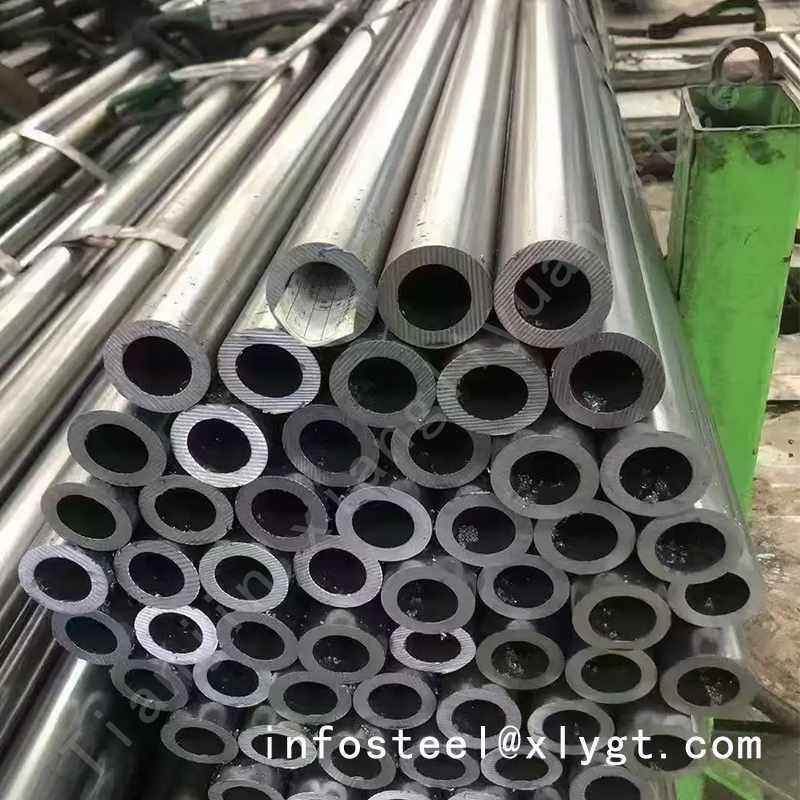
In the world of industrial manufacturing and infrastructure, precision is not merely a specification—it is the foundation of reliability. For engineers, procurement managers, and project consultants, selecting the right seamless steel pipe is a critical decision that impacts hydraulic efficiency, structural integrity, and assembly costs. When comparing Cold Drawn Seamless Steel Pipe (CDS) against Hot Rolled Seamless Steel Pipe (HRS), the most frequent and technically significant question revolves around dimensional accuracy.
At Tianjin Xiangliyuan Steel, we specialize in bridging the gap between raw metallurgy and application-specific requirements. As a leading supplier operating out of the Tianjin port—one of the world’s largest shipping hubs—we provide both hot rolled seamless tubing and precision cold drawn steel pipes to global markets. This article provides a rigorous, data-driven analysis of which manufacturing process truly delivers superior tolerances, and why that matters for your bottom line.
Understanding the Metallurgical Divide: The Manufacturing Processes
Before analyzing accuracy, one must understand the distinct thermal and mechanical pathways that define these two products.
Hot Rolled Seamless Pipe: The Foundation
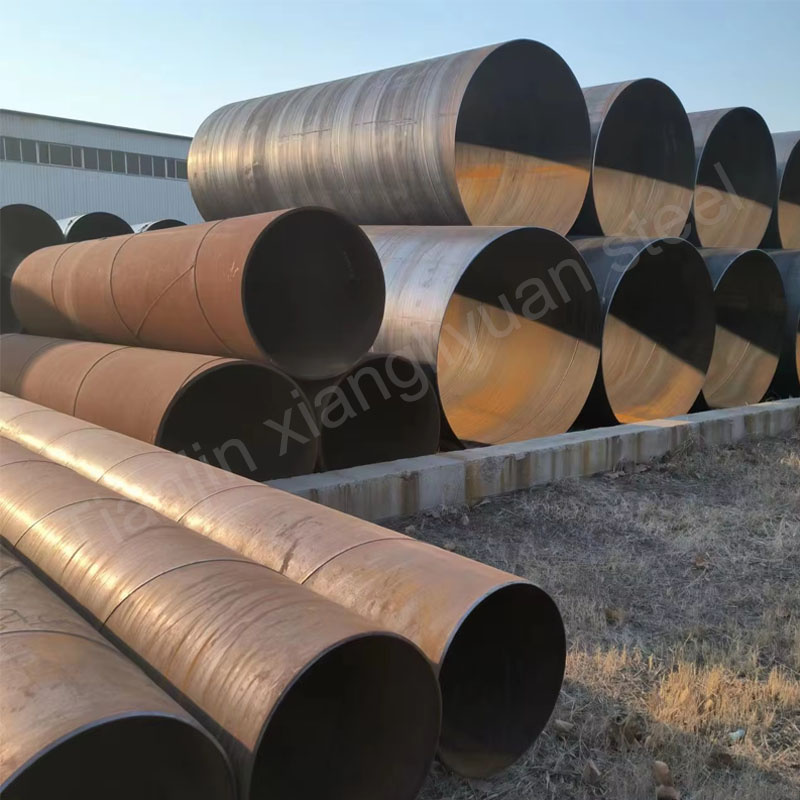
The hot rolled seamless pipe process begins with a solid round steel billet. Heated to approximately 1200°C (2192°F)—above the recrystallization temperature—the billet is pierced to create a hollow shell. It is then rolled and stretched to achieve the desired dimensions . Because the steel is shaped while in a plastic, semi-solid state, it is ideal for large diameters and heavy wall thicknesses. However, this high-temperature environment introduces variables such as thermal expansion, contraction, and die wear, which inherently limit precision .
Cold Drawn Seamless Pipe (CDS): The Refinement
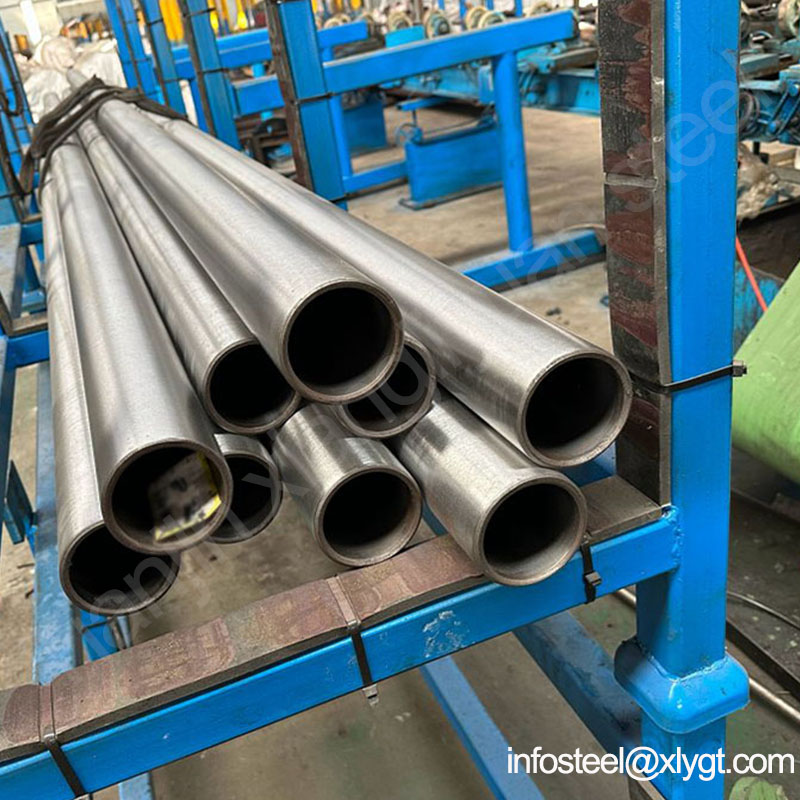
The cold drawn seamless tube process takes the hot rolled pipe as a starting point (a “mother tube”) and processes it further at room temperature. The tube is pulled through a die and over a mandrel to reduce its outer diameter (OD) and wall thickness (WT) simultaneously . Because this is a cold working process, it does not just resize the steel; it breaks down coarse grains, refines the microstructure, and creates a uniform, work-hardened surface.
Quantitative Analysis: Dimensional Accuracy Showdown
When we discuss dimensional accuracy in seamless steel pipes, we typically focus on four key metrics: Outer Diameter (OD) tolerance, Wall Thickness (WT) tolerance, Eccentricity (Concentricity) , and Straightness.
1. Outer Diameter (OD) Tolerance
The data here strongly favors the cold drawing process.
-
Cold Drawn: Because cold drawing utilizes a rigid die and mandrel at stable ambient temperatures, it achieves remarkable precision. For precision applications, cold drawn seamless pipes can achieve OD tolerances as tight as ±0.05mm, particularly when adhering to standards like ASTM A519 or DIN 2391 .
-
Hot Rolled: Hot rolling is subject to scale formation, varying cooling rates, and roll deflection. Standard hot rolled pipes generally hold tolerances to approximately ±0.5% to ±1% of the diameter . For larger diameters, this variance can be several millimeters.
2. Wall Thickness Tolerance and Eccentricity
In hydraulic cylinders and mechanical components, uneven wall thickness (eccentricity) leads to weak points and machining waste.
-
Cold Drawn: The combination of a die and a fixed plug ensures the steel is centered perfectly during the draw. Modern mass-production data shows that cold drawn tubes maintain exceptional concentricity, with wall thickness deviations often below 5% . In many high-precision grades from Tianjin xiangliyuan steel, we guarantee zero (0) OD tolerance limits for specific hydraulic lines .
-
Hot Rolled: The piercing process is violent. As the billet is pushed over a plug, the wall thickness can vary significantly. Typical hot rolled tolerances are ±10% to ±12.5% of the nominal wall thickness . This often necessitates significant machining if a precise inner diameter is required.
3. Surface Finish (Ra) and Straightness
While not strictly “dimensional,” surface finish affects the functional fit of a pipe.
-
Cold Drawn: Yields a smooth, bright surface finish (often Ra ≤ 0.4µm ) with excellent straightness (e.g., 0.3mm per meter ) .
-
Hot Rolled: Results in a dark, scaled surface with moderate straightness, requiring descaling and straightening before use in precision assemblies.
Summary: For applications requiring interference fits, O-ring sealing surfaces, or telescopic tubing, Cold Drawn Seamless (CDS) is objectively superior in accuracy. For massive structural columns or low-pressure conveyance where millimeters don’t matter, Hot Rolled is sufficient.
The “Tianjin Xiangliyuan Steel” Advantage: Precision Meets Logistics
At Tianjin Xiangliyuan Steel, we recognize that accuracy on paper must translate to reliability at the job site. We stock and manufacture both hot rolled seamless pipes and precision cold drawn tubes across a vast range of specifications, including ASTM A106 Gr. B, ASTM A519 (Grade 4140/4130) , DIN 2391 (St 37.4, St 52) , and GB/T 3639 .
Our expertise lies in matching the process to the application:
-
For hydraulic and pneumatic systems: We supply high-accuracy cold drawn seamless steel pipes with guaranteed OD tolerances of H8-H10, ensuring leak-free fittings.
-
For oil and gas line pipes (API 5L): We supply robust hot rolled seamless pipes with certified chemical compositions and mechanical properties for high-pressure transmission.
Furthermore, our strategic location in Tianjin, China—one of the busiest ports in the world—gives us a distinct logistical edge. Being adjacent to major shipping terminals means we manage faster loading times, lower inland freight costs, and rigorous pre-shipment quality checks before your order hits the high seas.
Which Should You Choose?
You should not ask which process is “better” in absolute terms; ask which is better for your specific tolerances.
Choose Hot Rolled Seamless Pipe if:
-
The application is structural (fencing, scaffolding, low-pressure columns).
-
You require large diameters (over 16 inches).
-
Cost is the primary driver, and machining stock is plentiful.
Choose Cold Drawn Seamless Pipe (CDS) if:
-
You need tight tolerances for hydraulic cylinders, precision shafts, or bearing races.
-
Surface finish is critical for assembly.
-
You require consistent mechanical properties (cold drawing increases tensile strength by up to 30% without heat treatment).
At Tianjin xiangliyuan steel, we bridge the gap between these two worlds. We offer the hot rolled mother tubes for cost-effectiveness and the cold drawn finishes for precision. Whether you need a ASTM A519 1541 high-strength mechanical tube or a general structural pipe, our technical team is ready to assist.
Contact Us Today
For certified mill test reports, competitive pricing (CIF, FOB Tianjin), or to discuss your specific tolerance requirements, reach out to our global sales team.
-
Website: https://www.xlysteel.com
-
Email:
infosteel@xlygt.com
Partner with Tianjin Xiangliyuan Steel—Where Process Science Meets Port-Side Efficiency.