Navigating Carbon Steel Pipe Standards
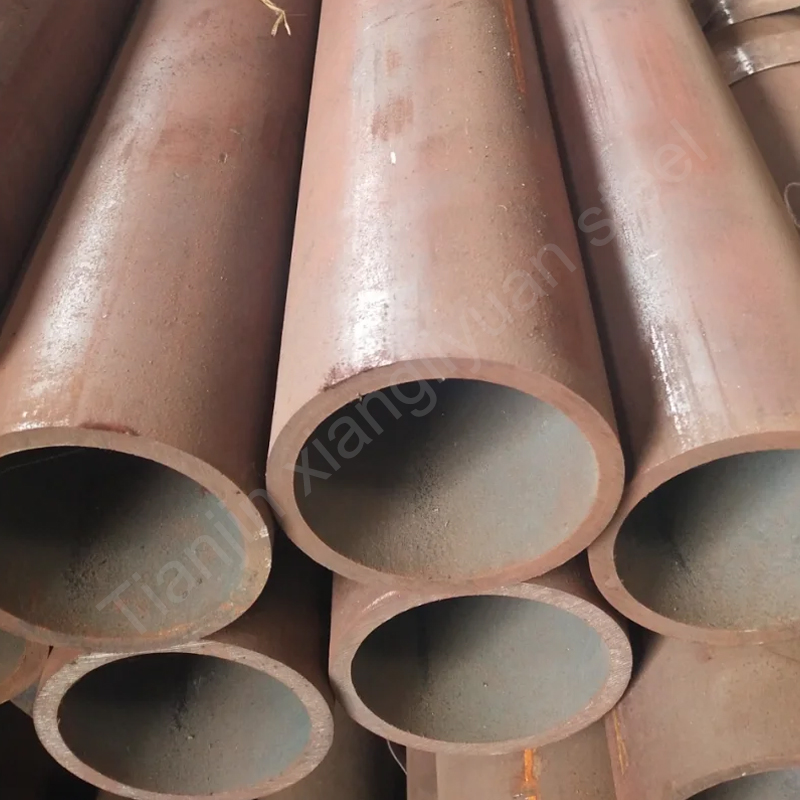
In the global procurement of carbon steel pipe, two standards dominate the specifications for high-temperature and general-pressure applications: ASTM A106 Grade B and ASTM A53 Grade B. At first glance, they appear interchangeable—both offer a minimum yield strength of 240 MPa (35,000 psi) and tensile strength of 415 MPa (60,000 psi). However, for engineers, project managers, and procurement officers dealing with seamless pipe for critical infrastructure, the distinctions in chemical composition and manufacturing process are vital.
At Tianjin Xiangliyuan Steel, we specialize in the supply of dual-certified and high-performance seamless carbon steel pipe. Leveraging our strategic location in Tianjin, China—one of the world’s busiest port cities—we ensure rapid, logistics-optimized delivery to global destinations. This article provides a technical deep-dive into the specific differences between ASTM A106 Gr. B and ASTM A53 Gr. B, ensuring you select the right material for oil and gas, petrochemical, and power generation systems.
Section 1: Chemical Composition Analysis
While mechanical properties often align, the chemical composition dictates the pipe’s performance under extreme temperatures, weldability, and long-term resistance to operational degradation.
The Role of Carbon Equivalent (CEV)
For projects requiring welding, the Carbon Equivalent (CEV) is critical. Both specifications maintain a maximum carbon content of 0.30% for Grade B. However, the differences lie in the residual elements and mandatory additions.
Comparative Table: Chemical Limits (Grade B)
| Element (Max % unless specified) | ASTM A106 Grade B (High-Temp Service) | ASTM A53 Grade B (General Service) | Impact on Application |
|---|---|---|---|
| Carbon (C) | 0.30 | 0.30 | Ensures weldability and hardness balance. |
| Manganese (Mn) | 0.29 – 1.06 | 1.20 | Higher Mn in A53 improves strength but can reduce ductility vs. A106. |
| Phosphorus (P) | 0.035 | 0.050 | A106’s tighter restriction reduces embrittlement risks. |
| Sulfur (S) | 0.035 | 0.045 | A106’s lower sulfur enhances toughness. |
| Silicon (Si) | 0.10 min | Not Required | Critical difference: Si acts as a deoxidizer in A106, essential for high-temp stability. |
Why Silicon (Si) Matters in ASTM A106
The most defining chemical difference is the 0.10% minimum Silicon content mandated by ASTM A106. Silicon is a deoxidizer that significantly reduces oxidation and scaling when the pipe is exposed to temperatures above 400°C (752°F). ASTM A53 Grade B has no required silicon content unless specified for other types, making A53 susceptible to oxidation in high-temperature steam lines.
Furthermore, A106 has tighter controls on phosphorus and sulfur, which are known to cause segregation and reduce impact toughness. If your project involves sour service environments or fluctuating thermal loads, A106 Grade B (or dual-certified stock) is the superior choice.
At Tianjin Xiangliyuan Steel, we provide Mill Test Certificates (MTC) with every shipment, verifying these tight chemical tolerances. Our inventory strictly adheres to the melting and heat analysis requirements of the latest ASTM revisions.
Section 2: Mechanical Properties & Heat Treatment
Because the chemical compositions overlap, ASTM and ASME have aligned the tensile requirements. However, the manufacturing process—specifically heat treatment—distinguishes the reliability of A106.
Tensile and Yield Strength
Both standards meet the following minimum requirements for Grade B:
-
Yield Strength: 240 MPa (35,000 psi)
-
Tensile Strength: 415 MPa (60,000 psi)
-
Elongation: 30% (Longitudinal strip test).
The “Seamless” Distinction
While ASTM A53 allows for seamless (Type S), ERW (Type E), and Furnace welded (Type F) pipes, ASTM A106 is Seamless Only.
-
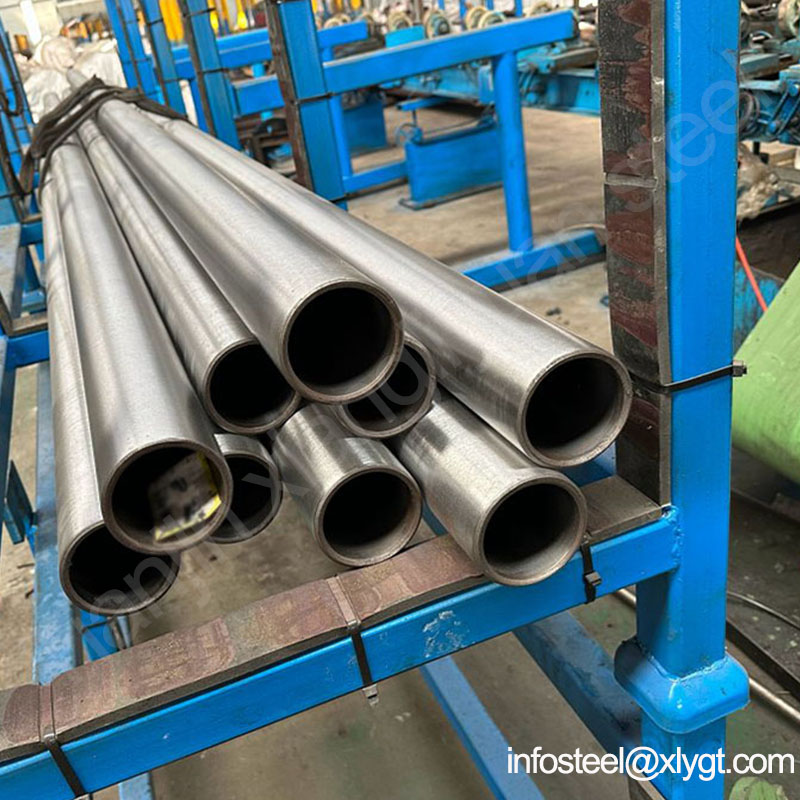
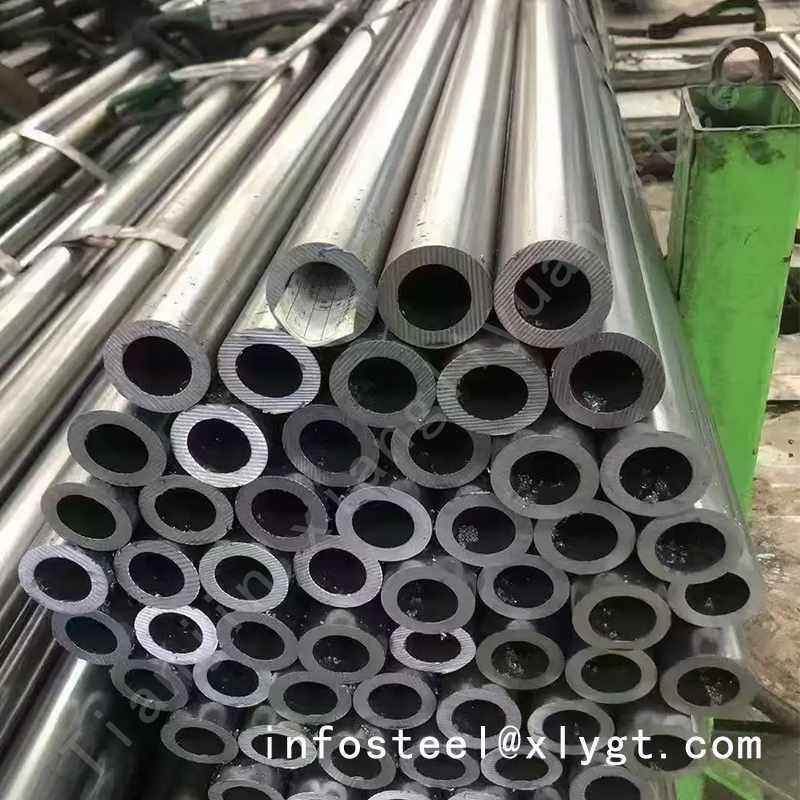
ASTM A106 Grade B requires the pipe to be manufactured via a seamless process (hot finished or cold drawn). It is explicitly designed for high-temperature bending and flanging.
-
ASTM A53 Type S is seamless, but it lacks the high-temperature verification of A106. ASTM A53 Type E (ERW) has a weld factor of only 0.85 in ASME B31.3, compared to 1.0 for seamless.
Hardness and High-Temp Performance
ASTM A106 Grade B includes specific hardness requirements (max 197 HBW) to prevent brittle fracture during thermal cycling. A106 is rated for service up to 425°C (800°F) , whereas the weld seam in A53 ERW pipes derates significantly above 340°C.
Expert Insight from Tianjin Xiangliyuan Steel:
For boiler tubes, superheaters, and refinery piping, we always recommend dual-certified ASTM A106/A53 Grade B. This ensures you have the seamless integrity of A106 with the general compliance of A53. Our Tianjin warehouse stocks full sizes from NPS 1/8″ to NPS 24″, ready for hydrostatic testing.
Section 3: “Dual Certification” – The Best of Both Worlds
One of the most frequently searched terms in the steel pipe industry is “Dual Certified Pipe.” Due to the overlapping specifications, most seamless pipes that meet A106 Grade B will automatically meet the chemistry and mechanicals of A53 Grade B Type S.
What is Dual Certification?
A dual-certified pipe carries a marking (e.g., A106 Gr. B / A53 Gr. B) indicating it satisfies the more stringent requirements of both standards simultaneously. This is possible because:
-
A106’s chemistry is a subset of A53’s max ranges.
-
The mechanical testing protocols (flattening, hydrostatic) are similar.
Why Request Dual Certification?
-
Inventory Optimization: You stock one line item for multiple project needs.
-
Code Compliance: Satisfies ASME B31.1 (Power Piping) and B31.3 (Process Piping) simultaneously.
-
Safety Margin: Because A106 requires a specific de-oxidation process (Silicon), a dual-certified pipe inherently has higher purity.
At Tianjin Xiangliyuan Steel, our seamless carbon steel pipe is predominantly dual-certified. We export vast quantities to Southeast Asia, the Middle East, Africa, and South America, ensuring that local inspectors accept our documentation without friction.
Section 4: Application Guide – Which One Do You Need?
Choosing the wrong grade can lead to catastrophic failure or code violations. Use this decision matrix based on your working environment:
Specify ASTM A106 Grade B (Seamless) When:
-
Temperature exceeds 400°C: Any steam line or boiler application.
-
The code requires seamless: Refineries and high-pressure chemical plants.
-
Flanging or Bending is required: A106’s ductility and silicon content prevent cracking during hot forming.
-
Vibration is present: Seamless pipe has no weld seam weak point for reciprocating compressor lines.
ASTM A53 Grade B is Acceptable When:
-
Ambient temperature water/gas lines: Fire protection systems (sprinklers).
-
Structural applications: Rollers, bollards, or piling.
-
Galvanization is required: ASTM A53 is commonly ordered hot-dipped galvanized (HDG) for corrosion resistance. (Note: A106 is rarely galvanized due to high-temp applications).
A Warning on Substitution
Do not use ASTM A53 Type E (ERW) in place of A106 Grade B for high-pressure steam. The longitudinal weld can experience selective corrosion or seam splitting under high heat. If your spec calls for A106, trust only seamless suppliers like Tianjin Xiangliyuan Steel.
Section 5: The Tianjin Xiangliyuan Supply Advantage
Beyond the metallurgy, the supply chain determines your project’s success. Being based in Tianjin, we offer unique logistical leverage.
Strategic Location: Tianjin Port
China’s largest port for international steel trade is Xingang (Tianjin Port) . Our warehouse is located just 40 kilometers from the port terminal.
-
Freight Efficiency: We secure the best freight rates and shortest vessel schedules to Houston, Rotterdam, Dubai, and Singapore.
-
Stock Availability: We maintain massive stocks of seamless steel pipe in standard schedules (Sch 40, Sch 80, Sch 160, and XXS), ready for immediate consolidation.
-
Inspection Access: We facilitate third-party inspections (SGS, BV, Intertek) on-site before the goods leave Tianjin, ensuring zero delays at your discharge port.
Our Product Range
We specialize in:
-
Carbon Steel Seamless Pipe: ASTM A106 Gr. B, API 5L Gr. B (PSL1/PSL2).
-
Low-Temperature Pipe: ASTM A333 Gr. 6.
-
Alloy Steel Pipe: ASTM A335 P11, P22, P91.
-
Surface Treatment: Black painting, varnish oil, galvanized, or 3PE coated.
Quality Assurance
We adhere strictly to ISO 9001:2015 standards. Every pipe is subjected to:
-
Chemical composition verification (Spectrometer analysis).
-
Mechanical property testing (Tensile and flattening tests).
-
NDT (Non-destructive testing) – Ultrasonic or Hydrostatic upon request.
Partnering with a Professional
The debate between ASTM A106 Grade B vs. ASTM A53 Grade B ultimately resolves to the service temperature and manufacturing integrity. For high-stakes, high-temperature environments, ASTM A106 Grade B seamless pipe is non-negotiable due to its silicon-killed chemistry and superior toughness. For utilities and structural work, ASTM A53 offers versatility.
When you source from Tianjin Xiangliyuan Steel, you are not just buying steel; you are investing in technical accuracy and logistical fluency. Our team of engineers reviews your POs to prevent specification errors that cost time and money.
Ready to secure your carbon steel seamless pipe supply chain?
📞 Contact us today:
-
Email:
infosteel@xlygt.com -
Website: https://www.xlysteel.com/
-
Office: Tianjin, China (Adjacent to Xingang Port)
Request your quote for ASTM A106/A53 seamless pipe now. We respond within 2 hours with FOB Tianjin or CIF pricing.