Why Pipe Specification Determines Fire Protection System Integrity
Fire sprinkler systems represent one of the most critical life-safety installations in commercial buildings. While the visible components—sprinkler heads, valves, and control panels—receive considerable attention during design reviews, the specification of the pipe that carries water throughout the system often determines whether the installation will perform reliably for decades or require premature replacement. In the United States and many international markets, three ASTM standards govern steel pipe for fire protection use: ASTM A53, ASTM A135, and ASTM A795.
Understanding the distinctions between these specifications is not merely an academic exercise. Project engineers, specifying authorities, and procurement specialists must navigate subtle differences in manufacturing methods, wall thickness availability, joining compatibility, and testing requirements. A misinformed pipe selection can lead to installation delays, code compliance issues, or long-term system failures. This article provides a technical comparison of these three standards, drawing on established industry references and standards documentation to support informed decision-making.
For commercial building projects, the choice between A53, A135, and A795 typically hinges on system design parameters, local code requirements, and the joining methods specified by the installing contractor. Each standard offers distinct advantages and limitations that we will examine in detail.
ASTM A53: The General-Purpose Workhorse
ASTM A53 stands as the most broadly applicable specification among the three, titled “Standard Specification for Pipe, Steel, Black and Hot-Dipped, Zinc-Coated, Welded and Seamless”. Originally developed for mechanical and pressure applications, A53 pipe is acceptable for ordinary uses in steam, water, gas, and air lines. Its inclusion in NFPA 13 for sprinkler systems reflects this versatility rather than a fire-protection-specific design intent.
Manufacturing Methods and Types
The A53 specification encompasses three distinct manufacturing methods:
Type F (Furnace-butt welded): A continuous welding process that produces pipe from coiled steel strip. Type F pipe is available only in Grade A and is not intended for flanging. It represents the most economical manufacturing route but offers limited size range and is generally produced in smaller diameters.
Type E (Electric-resistance welded): The most common manufacturing method for A53 pipe in fire protection applications. Flat steel is formed into cylindrical shape and welded longitudinally using electrical resistance. The welded seam is typically normalized to reduce residual stresses and potential corrosion sites. Type E pipe is available in both Grades A and B.
Type S (Seamless): Produced by piercing a solid steel billet and rolling it to final dimensions. Seamless pipe eliminates the longitudinal weld seam entirely, offering superior uniformity and pressure containment characteristics. Type S is available in Grades A and B, with Grade B being the predominant selection for fire protection service.
Grade and Wall Thickness Considerations
A53 pipe is furnished in two primary grades: Grade A and Grade B. Grade B offers higher minimum yield strength (35,000 psi vs. 30,000 psi for Grade A) and tensile strength, making it the default choice for sprinkler system mains and branch lines. Grade A finds application where bending or flanging is required, as its lower strength correlates with improved ductility.
The standard weight designation for A53 pipe corresponds to Schedule 40 for sizes up to NPS 10. For fire sprinkler systems, Schedule 40 remains the most commonly specified wall thickness when A53 is selected. Heavier schedules (80 and 160) are permitted but rarely specified due to cost and unnecessary pressure rating for typical sprinkler system working pressures.
Testing Requirements
A53 welded pipe must be hydrostatically tested without leakage, with the test performed at the mill on each length of pipe. This mandatory hydrostatic testing distinguishes A53 from A135 and A795, both of which permit non-destructive electric testing (eddy current or ultrasonic) as an alternative to hydrostatic testing. For specifiers who prioritize conventional pressure testing documentation, A53 offers this assurance by default.
ASTM A135: The Electric-Resistance Welded Specialist
ASTM A135, titled “Standard Specification for Electric-Resistance-Welded Steel Pipe,” restricts production exclusively to the ERW method. This singular focus on ERW manufacturing creates a specification optimized for consistent, economical production of light-wall and standard-wall pipe.
Scope and Dimensional Range
The A135 specification covers pipe in NPS 2 through NPS 30, with nominal wall thickness up to 0.500 inches. Additionally, nominal sizes NPS 3/4 through NPS 5 are included with wall thicknesses ranging from 0.083 inches to 0.134 inches, depending on size. This size range comfortably encompasses the majority of commercial sprinkler system piping requirements.
Two grades are available under A135: Grade A and Grade B. Only Grade A is adapted for flanging and bending, though this provision does not prohibit cold bending of Grade B pipe. For sprinkler systems, Grade A has become the de facto standard due to its combination of adequate strength and favorable forming characteristics.
Light-Wall Pipe and Schedule 10
The most significant attribute of A135 for fire protection applications is its accommodation of light-wall pipe, commonly designated as Schedule 10. Light-wall pipe offers substantially reduced weight and material cost compared to Schedule 40, while maintaining adequate pressure containment for sprinkler system working pressures. The Steel Tube Institute confirms that fire protection sprinkler pipe is produced to A135 in sizes NPS 2 through 8, Schedule 10 and 40.
Schedule 10 pipe under A135 has become ubiquitous in commercial installations where rolled grooved couplings are used for joining. The thinner wall of Schedule 10 necessitates particular attention to joining method compatibility, a topic we will address subsequently.
Testing and Certification
A135 permits either hydrostatic testing or non-destructive electric testing at the manufacturer’s option, subject to purchaser acceptance. This flexibility allows producers to select the most efficient testing method for their production lines while maintaining quality assurance. For contractors and specifying engineers, the key is verifying that the pipe carries the appropriate UL listing and FM approval for the intended service, regardless of which testing method was employed.
ASTM A795: The Fire Protection Dedicated Specification
ASTM A795, formally titled “Standard Specification for Black and Hot-Dipped Zinc-Coated (Galvanized) Welded and Seamless Steel Pipe for Fire Protection Use,” represents the only ASTM pipe standard written expressly for fire protection service.
Purpose-Built for Fire Protection
Unlike A53, which serves general pressure applications, or A135, which targets general ERW pipe production, A795 exists solely to address the unique requirements of fire sprinkler systems. This focused scope manifests in several ways. The specification permits both welded (ERW) and seamless manufacturing methods, providing flexibility in sourcing. It covers NPS 1/2 through NPS 10, with wall thicknesses categorized as Light-Weight and Standard-Weight.
The Light-Weight designation in A795 corresponds closely to Schedule 10 dimensions, while Standard-Weight aligns with Schedule 40. Additionally, A795 permits Schedule 30 wall thickness for certain sizes, offering an intermediate option between the two extremes.
Joining Method Compatibility
The A795 specification explicitly addresses joining methods appropriate for each weight class. Light-Weight fire protection pipe is suitable for rolled groove, welding, and fittings for plain end pipe. Standard-Weight pipe accommodates cut or rolled groove, threading, welding, and plain end fittings.
This joining method guidance is critical for commercial installations. Threading is permitted only on Schedule 40 and heavier pipe under NFPA 13, unless a lighter wall pipe has been specifically listed by a testing laboratory for threading. Cut grooving, which removes material from the pipe wall, is similarly restricted to Schedule 40 and heavier for pipe under 8 inches, and Schedule 30 for 8 inches and larger. Rolled grooving, which displaces rather than removes material, can be applied to any wall thickness.
Black and Galvanized Options
A795 covers both black and hot-dipped galvanized pipe. Galvanized pipe is frequently specified for dry pipe systems and pre-action systems where internal condensation may occur, as the zinc coating provides corrosion protection. The specification’s explicit coverage of galvanized product makes it a natural fit for these demanding applications.
Comparative Analysis: Key Differences at a Glance
Manufacturing Method Comparison
The three specifications differ fundamentally in their permitted manufacturing methods. A53 encompasses furnace-butt welded, ERW, and seamless. A135 permits only ERW. A795 allows ERW and seamless. This distinction affects sourcing flexibility, lead times, and occasionally cost, though for commercial sprinkler applications the practical differences are often minimal since ERW dominates production.
Wall Thickness Availability
A53 pipe for sprinkler service is typically specified in Schedule 40, though heavier schedules are permitted. A135 offers both Schedule 10 and Schedule 40. A795 provides Light-Weight (Schedule 10), Schedule 30, and Standard-Weight (Schedule 40).
The availability of Schedule 10 in A135 and A795 provides significant cost and weight savings for large commercial projects. A building with substantial sprinkler coverage may achieve meaningful material cost reductions by specifying Schedule 10 pipe where hydraulic calculations permit and where rolled grooving is the chosen joining method.
Testing Requirements
A53 welded pipe mandates hydrostatic testing of each length. A135 and A795 permit non-destructive electric testing as an alternative to hydrostatic testing, with purchaser acceptance. This difference does not imply inferior quality for A135 and A795 pipe; eddy current and ultrasonic testing are highly effective methods for detecting discontinuities in the weld seam and pipe body.
Intended Service
The service intent distinction is important for specification writing. A53 is intended for mechanical and pressure applications generally. A135 is a general ERW pipe specification. Only A795 states explicitly that pipe ordered under it is intended for fire protection systems. For a specifier seeking the most directly applicable standard, A795 offers the clearest alignment between standard scope and end use.
Practical Selection Guidance for Commercial Projects
When Schedule 40 is Required
Projects specifying Schedule 40 pipe for all sprinkler piping typically allow any of the three standards, provided the pipe meets the wall thickness and grade requirements. A53 Grade B, Schedule 40 remains a common specification. A795 Standard-Weight offers an equivalent wall thickness with fire-protection-specific pedigree. A135 Grade A, Schedule 40 is equally acceptable where permitted by the authority having jurisdiction and the project specifications.
When Schedule 10 is Permitted
Schedule 10 pipe, available under A135 and A795, has become the norm for branch lines and often mains in commercial installations using grooved couplings. The NFPA 13 restrictions on threading and cut grooving of light-wall pipe mean that Schedule 10 installations must rely on rolled grooving, welding, or listed mechanical fittings. Where these joining methods are acceptable to the design team, Schedule 10 offers compelling economic advantages.
Galvanized Pipe for Dry Systems
For dry pipe and pre-action systems, galvanized pipe is frequently specified to resist internal corrosion from condensation. A795 explicitly covers galvanized product for fire protection use, making it a natural specification choice. A53 also permits hot-dipped galvanized pipe, though its general-purpose scope makes A795 the more targeted selection.
Authority Having Jurisdiction Considerations
Local building codes and the authority having jurisdiction may impose requirements beyond NFPA 13. Some jurisdictions accept all three ASTM standards; others may specify particular standards or editions. Project specifications sometimes impose Schedule 40 regardless of NFPA 13 allowances for Schedule 10, as seen in certain government solicitations. Early consultation with the AHJ remains essential regardless of which standard is initially selected.
Sourcing Considerations and Supply Chain Reliability
The Importance of Verified Mill Certifications
Regardless of which ASTM standard is specified, procurement should include verification of mill test reports demonstrating compliance with chemical composition and mechanical property requirements. For fire protection pipe, UL listing and FM approval provide additional third-party verification that the product meets recognized performance standards.
Manufacturing Quality and Consistency
The ERW process used for A135 and most A795 and A53 Type E pipe requires careful control of welding parameters to ensure a sound, normalized weld seam. Established manufacturers implement rigorous quality management systems covering raw material certification, in-process inspection, and final product testing. Verification of a supplier’s quality credentials—including ISO certifications and third-party inspection capabilities—should accompany any pipe procurement decision.
Logistics and Delivery Reliability
For international projects, delivery reliability can be as important as product specification. Port proximity and logistics infrastructure affect lead times, shipping costs, and ultimately project schedules. Suppliers located near major export ports can offer competitive advantages in transit time and freight consolidation. This consideration becomes particularly relevant for projects in regions where local pipe production is limited and import is the primary sourcing route.
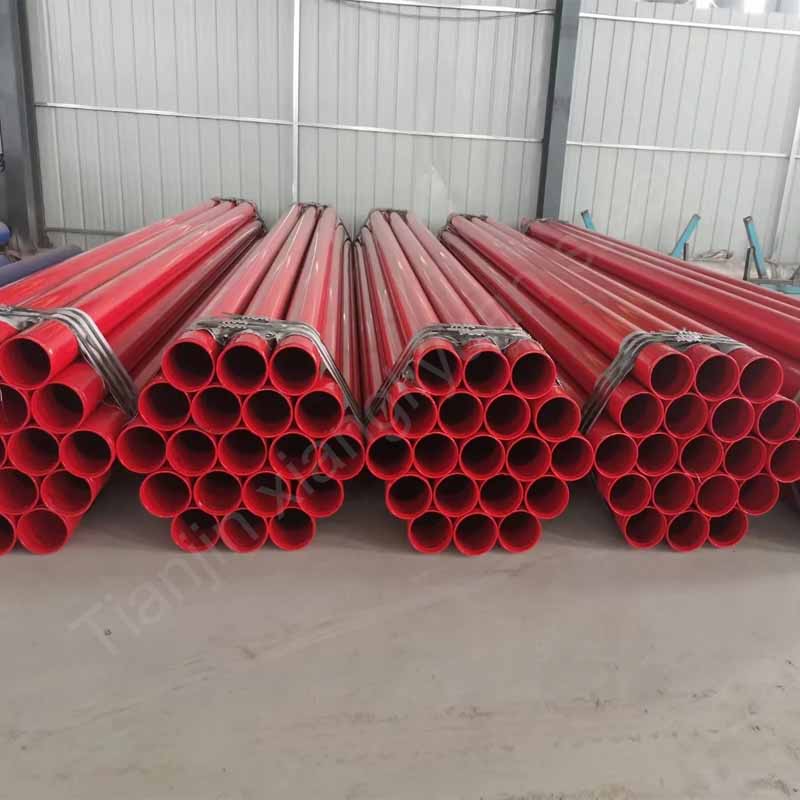
For projects requiring ASTM A53, A135, or A795 pipe, Tianjin xiangliyuan steel maintains production and inventory capabilities to serve international markets. The company’s location in Tianjin, adjacent to one of China’s largest port complexes, supports efficient export logistics to destinations worldwide. Product inquiries may be directed to infosteel@xlygt.com or submitted through the company website at https://www.xlysteel.com/.
Matching Specification to Project Requirements
The selection among ASTM A53, A135, and A795 for commercial fire sprinkler pipe should be guided by system design parameters, joining methods, code requirements, and project economics. All three standards are acceptable under NFPA 13 and produce pipe capable of reliable fire protection service when properly installed.
ASTM A53 offers the broadest manufacturing method coverage and mandatory hydrostatic testing, suited to projects where these attributes are valued. ASTM A135 provides a focused ERW specification accommodating light-wall Schedule 10 pipe for cost-effective grooved installations. ASTM A795, as the dedicated fire protection specification, offers the clearest alignment of standard scope to end use, with explicit coverage of black and galvanized product and joining method guidance.
Specifying engineers should document their pipe selection rationale in project specifications, referencing the applicable ASTM edition and any additional requirements such as UL listing, FM approval, or hydrostatic testing documentation. Procurement specialists should verify mill certifications and third-party listings before accepting material delivery. With appropriate specification and verification, steel sprinkler pipe will provide reliable service for the life of the building.