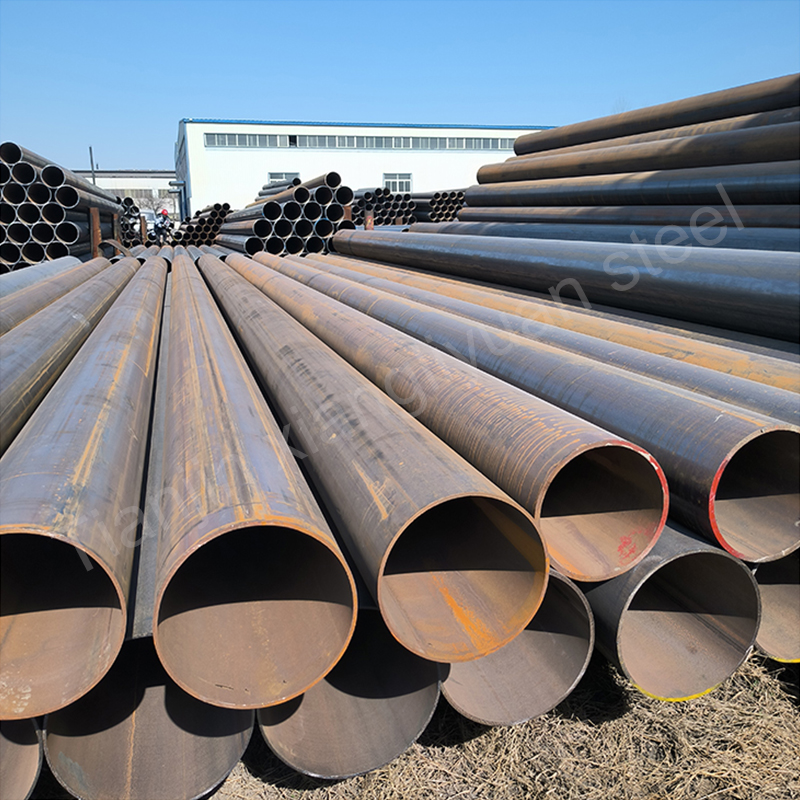
In the global steel pipe industry, weld seam quality is the cornerstone of product reliability and safety. Whether for oil and gas pipelines, structural applications, or high-pressure fluid transport, the integrity of a welded joint determines the service life and performance of the entire piping system. Non-destructive testing (NDT) plays a vital role in verifying weld quality without compromising the material’s usability . This article provides a comprehensive technical overview of the three primary inspection methods—Visual Inspection, Ultrasonic Testing, and X-Ray Examination—while demonstrating how Tianjin Xiangliyuan Steel integrates these rigorous quality assurance protocols into our production process. As a leading steel pipe supplier headquartered in Tianjin, we leverage our strategic location near major ports to deliver high-quality LSAW steel pipe, ERW steel pipe, and seamless steel pipe to clients worldwide with exceptional efficiency.
The Foundation of Quality: Visual Inspection
Before any advanced NDT methods are applied, visual inspection serves as the first and most fundamental line of defense in weld quality control. This process is far more than a casual glance; it is a systematic examination conducted according to stringent standards such as API 5L and ASTM specifications.
For straight seam steel pipe and other welded products, the appearance of the weld must meet specific criteria before proceeding to further non-destructive testing. The requirements are precise: the weld surface must be properly formed, and the width should cover the edge of the groove by at least 2mm on each side. The transition between the weld metal and the base material must be smooth, avoiding sharp notches that could become stress concentration points .
During visual inspection, our experienced quality control engineers at Tianjin Xiangliyuan Steel meticulously check for surface defects. Cracks, lack of fusion, pores, slag inclusions, and welding spatter are strictly prohibited. For critical applications—such as seamless steel pipe for low-temperature services below -29°C or alloy steels with high hardenability—undercutting is not permitted at all. For other steel grades, undercut depth must not exceed 0.5mm, with continuous length limitations and total length restrictions on both sides of the weld . Additionally, the weld reinforcement (excess height) must be controlled—typically not exceeding 3mm—and the misalignment of the welded joint must not exceed 10% of the wall thickness, capped at 2mm .
Visual inspection also involves macro examination, which can be performed at low magnification (up to 5X) to assess the weld profile and identify surface-breaking discontinuities. This method evaluates critical features such as the height of face reinforcement and root reinforcement, ensuring the weld profile meets design requirements . While visual inspection alone cannot detect subsurface flaws, it is an essential prerequisite that ensures the weld surface is suitable for subsequent, more advanced NDT procedures.
Ultrasonic Testing (UT): Detecting Subsurface Imperfections
Ultrasonic Testing is one of the most versatile and widely used NDT methods for steel pipe inspection, valued for its ability to detect internal defects with high accuracy. This method employs high-frequency sound waves that travel through the material; when these waves encounter a discontinuity—such as a crack, lamination, or porosity—they are reflected back to the receiver, allowing technicians to pinpoint the location and estimate the size of the flaw . Tianjin Xiangliyuan Steel employs advanced UT techniques to ensure the integrity of our line pipe and structural products.
Online vs. Offline Ultrasonic Testing
To ensure comprehensive coverage, we implement both online and offline ultrasonic testing systems. Online UT is integrated directly into the production line, typically immediately after the welding process. Automated sensors scan the weld seam in real-time, allowing for early detection and immediate corrective action. This system is highly efficient and forms the backbone of our continuous quality monitoring .
Complementing this is Offline UT, a more detailed examination performed after production is complete. This method is often used for supplementary tests on LSAW steel pipe and ERW steel pipe to verify results or meet specific client requirements for critical applications . Furthermore, specialized UT on Plate Lamination is conducted on raw steel plates before they are formed into pipes. This pre-production inspection identifies internal laminar imperfections that could compromise the integrity of the final welded product .
Advanced Ultrasonic Techniques: Phased Array (PAUT)
For projects requiring the highest level of scrutiny—such as OCTG (Oil Country Tubular Goods) or high-pressure gas transmission lines—Tianjin Xiangliyuan Steel can employ Phased Array Ultrasonic Testing (PAUT) . This advanced technique uses multiple sensor elements to steer and focus the sound beam electronically, producing a detailed 2D cross-sectional image of the weld. PAUT provides superior accuracy in sizing and characterizing defects, offering a level of detail that conventional UT cannot match . By utilizing PAUT, we ensure our API 5L and ASTM A106 products meet the most demanding international quality standards.
Radiographic Examination (X-Ray): Imaging Weld Integrity
Radiographic Testing (RT) , commonly known as X-Ray examination, is the gold standard for visualizing the internal structure of a weld. This method uses X-rays or gamma rays to penetrate the weld and produce a shadow image on film or a digital detector. The resulting radiograph reveals internal defects such as porosity, slag inclusions, incomplete fusion, and cracks, providing a permanent record of weld quality .
The primary object of radiographic inspection is the butt joint—the most critical weld in line pipe and structural steel applications. The selection of RT as a testing method must align with design documents and applicable codes . For certain materials, radiographic inspection is mandatory. For example, welded joints of titanium, aluminum, copper, and nickel alloys are commonly inspected using this method . Additionally, for welds with a tendency to delay cracking (common in high-strength low-alloy steels), RT must be performed after a specified cooling time to ensure that any hydrogen-induced cracks are detectable .
At Tianjin Xiangliyuan Steel, we utilize digital radiography for enhanced image quality and faster processing. This modern approach, known as fluoroscopic inspection, allows for real-time assessment of the weld seam and pipe ends, significantly improving inspection efficiency compared to traditional film-based methods . For critical applications, such as SAW steel pipe used in offshore or high-pressure environments, we ensure 100% radiographic inspection of the weld seam to guarantee flawless performance.
Integrated Quality Assurance at Tianjin Xiangliyuan Steel
Maintaining superior weld seam quality requires more than just performing tests; it demands an integrated quality management system. At Tianjin Xiangliyuan Steel, our commitment to excellence is evident in our adherence to international standards and our investment in advanced NDT equipment.
Our strategic location in Tianjin—one of China’s largest and most efficient port cities—provides a significant logistical advantage. Being in close proximity to the port allows us to minimize transportation time and costs, ensuring that our API 5L, ASTM A53, and EN 10219 compliant steel pipes reach our global clients rapidly. Whether you require straight seam welded pipe, spiral steel pipe, or galvanized steel pipe, our location ensures that your supply chain remains uninterrupted.
We understand that every project has unique requirements. That is why our quality control program is tailored to meet specific client needs, ranging from standard PSL 1 requirements to the more stringent PSL 2 specifications. For PSL 2 products, we routinely perform supplementary NDT such as full-body ultrasonic testing after the hydrostatic test, ensuring our products are free from harmful indications . In addition to UT and X-Ray, we also employ magnetic particle testing (MT) and liquid penetrant testing (PT) for surface defect detection on ferromagnetic and non-ferromagnetic materials respectively .
Ensuring weld seam quality is a multi-layered process that begins with rigorous visual inspection and progresses through advanced NDT methods like Ultrasonic Testing and X-Ray Examination. Each technique plays a crucial role in a comprehensive quality assurance program designed to verify the integrity of the weld, from its surface appearance to its internal structure. By adhering to international standards such as ISO 10893 and utilizing both conventional and advanced technologies like PAUT and digital radiography, manufacturers can guarantee the safety and reliability of their products .
Tianjin Xiangliyuan Steel stands at the forefront of this commitment to quality. Our dedication to employing the latest NDT technologies, combined with our strategic logistics advantages in Tianjin, positions us as a reliable partner for your line pipe, structural steel, and OCTG needs. We invite you to experience the professionalism and precision that defines our operations.
For more information on our products and quality assurance processes, please contact our sales team. We are ready to discuss your specific requirements and provide the steel solutions you need, delivered on time and to the highest standard.
Tianjin Xiangliyuan Steel
Website: https://www.xlysteel.com/
Email: infosteel@xlygt.com