The Critical Role of LSAW Technology in Global Infrastructure
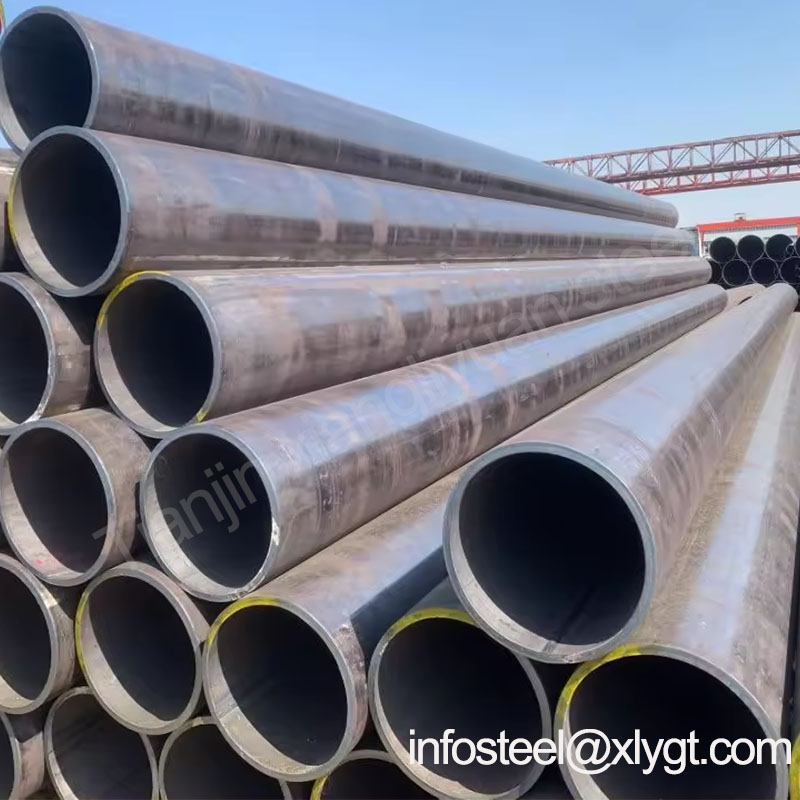
In the modern landscape of oil and gas transmission, high-pressure water conveyance, and structural support for offshore engineering, the choice of steel pipe is not merely a procurement decision—it is a commitment to safety, longevity, and operational efficiency. Among the various families of welded pipes, Longitudinal Submerged Arc Welded (LSAW) Steel Pipe stands as the gold standard for applications demanding high dimensional accuracy, superior corrosion resistance, and the ability to withstand extreme internal and external pressures.
At Tianjin Xiangliyuan Steel, we understand that the backbone of any pipeline project lies in the manufacturing process. Specifically, the forming method—predominantly JCOE or UOE—dictates the mechanical properties of the final product. As a leading supplier based in the Tianjin port cluster, we combine advanced manufacturing logic with strategic logistics to deliver API 5L PSL1/PSL2 pipes (Grades B, X42, X52, X60, X65, X70, and X80) to a global clientele .
This article provides a rigorous technical comparison between JCOE and UOE forming processes. Whether you are specifying pipes for onshore pipelines in the Middle East, offshore platforms in the North Sea, or piling projects in Southeast Asia, understanding these differences ensures optimal material selection.
Raw Material and Pre-Bending: The Foundation of Quality
Before forming begins, the integrity of the steel plate is paramount. Both JCOE and UOE processes utilize hot-rolled steel coils or plates, which are first leveled and then subjected to ultrasonic testing (UT) .
At Tianjin Xiangliyuan Steel, we strictly adhere to NDT (Non-Destructive Testing) protocols. The edges of the plate undergo milling and beveling to ensure a precise fit-up for the submerged arc weld. This edge preparation is identical in both methods, ensuring that the base metal meets ASTM A252 or EN 10219 standards before the forming stage begins.
The UOE Forming Process: High-Volume Precision
The UOE process is historically recognized as the standard for large-diameter, thin-to-medium wall thickness pipes. The acronym stands for U-pressing, O-pressing, and Expanding.
1. U-Forming
The steel plate, having been pre-bent at the edges, is transferred to a U-press. A large hydraulic die forces the plate into a U-shape. This is a single, high-force operation. The UOE method is characterized by its high-speed cycle times, making it ideal for massive projects requiring hundreds of thousands of tons of a single specification .
2. O-Forming
The “U” shape is immediately transferred to the “O” press. This die closes around the U-form, forcing it into a circular, open-ended cylinder. The O-press applies circumferential pressure to ensure the edges meet perfectly for tack welding.
3. Expansion (E)
After welding (both inner and outer submerged arc welding), the pipe passes through a mechanical expander. This process expands the pipe diameter to the nominal size, relieving residual stresses caused by the U and O forming. This expansion is critical for achieving tight OD tolerances, often within ±1.6mm for the pipe body .
UOE Technical Advantages:
-
High Production Efficiency: Capable of producing high volumes (300,000 to 1,000,000 tons annually) .
-
Uniformity: Excellent for large batches of standard sizes (typically 16″ to 44″ OD).
The JCOE Forming Process: Flexibility and Thick-Wall Dominance
The JCOE process is a progressive forming method. The name derives from the sequential shapes the plate takes: J-shape, C-shape, O-shape, and Expansion. Unlike the two-step UOE process, JCOE uses a single press with a punch that incrementally bends the plate.
1. J-Forming (Step-by-Step)
The steel plate is fed into the JCO press. The punch presses the edge of the plate at specific intervals, forming a “J” shape on one side.
2. C-Forming
The process repeats along the length of the plate. The punch moves across the plate, gradually forming the arc until the profile looks like a “C.”
3. O-Forming
The punch continues forming the remaining half of the plate, eventually closing the gap to create an “O” shape.
Why Choose JCOE?
The incremental nature of JCOE imposes less mechanical stress on the steel plate at any single moment. This results in lower residual stress and makes the process highly suitable for thick-walled pipes (up to 75mm WT) and high-grade materials like API 5L X70, X80, and even X100 .
At Tianjin Xiangliyuan Steel, we favor the JCOE process for customized orders because of its flexibility. A single JCOE line can produce a wide range of diameters (typically 16″ to 64″) and wall thicknesses without requiring expensive die changes, which is essential for the diverse needs of our clients.
Comparative Analysis: JCOE vs. UOE
To assist procurement managers and engineers, here is a data-driven comparison based on Tianjin Xiangliyuan Steel’s operational experience.
1. Dimensional Range and Flexibility
-
UOE: Best suited for diameters between 20″ and 44″. It struggles economically with very thick walls (generally < 40mm) because the massive U and O presses cannot easily adapt to varying thicknesses without tooling changes.
-
JCOE: Superior range. Can handle diameters from 16″ to 64″+ and wall thicknesses from 6mm to 75mm. This is the preferred method for high-pressure deep-water pipelines requiring thick walls .
2. Mechanical Properties and Residual Stress
-
UOE: Because the U and O steps are violent, single-stroke events, the pipe experiences significant work hardening. While the mechanical expansion relieves some stress, UOE pipes tend to have higher residual stress at the “corners” of the weld.
-
JCOE: The progressive, multi-step bending (often 20-30 steps per pipe) results in a more uniform deformation. This translates to a rounder pipe with less “flattening” at the weld seam and minimal residual stress, enhancing fatigue resistance in dynamic environments.
3. Economical Order Quantity (EOQ)
-
UOE: Economical for Mass Production (single specification, >50,000 tons). The high speed of the line amortizes the high energy and die costs.
-
JCOE: Economical for Medium to Small Batches (1,000 to 50,000 tons). The flexibility of the JCO press means we can switch between different diameters and steel grades (e.g., switching from X52 to X70) with minimal downtime.
Manufacturing Precision and Quality Control (QCP)
Regardless of whether the LSAW pipe is formed via JCOE or UOE, the welding and inspection protocols remain the gold standard for safety. At Tianjin Xiangliyuan Steel, our Quality Control Plan (ITP) is rigorous:
-
Welding: Double-sided Submerged Arc Welding (DSAW). This ensures 100% weld penetration and a smooth weld seam with high impact toughness.
-
Non-Destructive Testing (NDT):
-
100% Ultrasonic Testing (UT) of the plate edges before forming.
-
100% Radiographic Testing (RT) or X-ray of the weld seam to detect internal flaws .
-
Hydrostatic Testing: Each pipe is filled with water and pressurized to a specific percentage of the Specified Minimum Yield Strength (SMYS) to verify leak-tightness and burst resistance.
-
-
Visual and Dimensional: Full-length inspection of OD, roundness, and weld height.
Why Tianjin Xiangliyuan Steel is Your Strategic Partner
Choosing the right process is only half the battle. You need a supplier who can deliver safely, on time, and within budget. This is where Tianjin Xiangliyuan Steel leverages its geographic and operational advantages.
1. The Tianjin Port Advantage (Logistics)
Our headquarters and warehouse are strategically located in Tianjin, China—one of the busiest and best-connected ports in the world.
-
Freight Efficiency: Being adjacent to Xingang Port allows us to execute FOB Tianjin terms seamlessly. We reduce inland trucking time to near zero, meaning your LSAW pipes leave our factory and are loaded onto vessels within hours.
-
Cost Reduction: Lower logistics overhead translates into highly competitive pricing for High-Frequency Welded (HFW) , Spiral Submerged Arc Welded (SSAW) , and LSAW pipes without compromising on quality.
2. Diverse Inventory and Value-Added Services
We don’t just supply “black pipe.” We understand that you need ready-to-install materials.
-
Coating Capabilities: We coordinate directly with coating yards to provide 3LPE, FBE (Fusion Bonded Epoxy) , and Bitumen coating to protect against corrosion.
-
End Finishing: Beveling, threading, and coupling to API 5CT or customer standards.
3. Certification and Compliance
We strictly supply to international norms, ensuring your project passes third-party inspection (SGS, BV, Lloyds). Our mill test certificates (EN 10204 3.1/3.2) accompany every shipment of API 5L steel pipe.
Selecting the Right Process for Your Project
The choice between JCOE and UOE is a technical decision that should be guided by your project’s specific parameters:
-
Select UOE if you are running a massive, linear project (e.g., a cross-country gas pipeline through flat terrain) requiring millions of meters of a single diameter like 36″ x 15.9mm X65. You need speed and consistency.
-
Select JCOE if you require flexibility, thick walls (e.g., 48″ x 45mm X80 for arctic conditions), or small batch sizes. JCOE offers superior roundness and lower residual stress, which is vital for dynamic subsea risers.
At Tianjin Xiangliyuan Steel , we bridge the gap between manufacturing capability and global logistics. Whether you require JCOE for its thick-wall adaptability or UOE for its high-volume efficiency, we offer expert consultation, strict quality control, and the logistical speed of Tianjin port.
Contact us today to discuss your next pipeline project. Send your inquiry to infosteel@xlygt.com or visit our technical resource center at https://www.xlysteel.com to request a quote or a certified mill certificate sample.
Your trusted partner for API 5L LSAW, ERW, and SSAW steel pipes—shipping from Tianjin to the world.