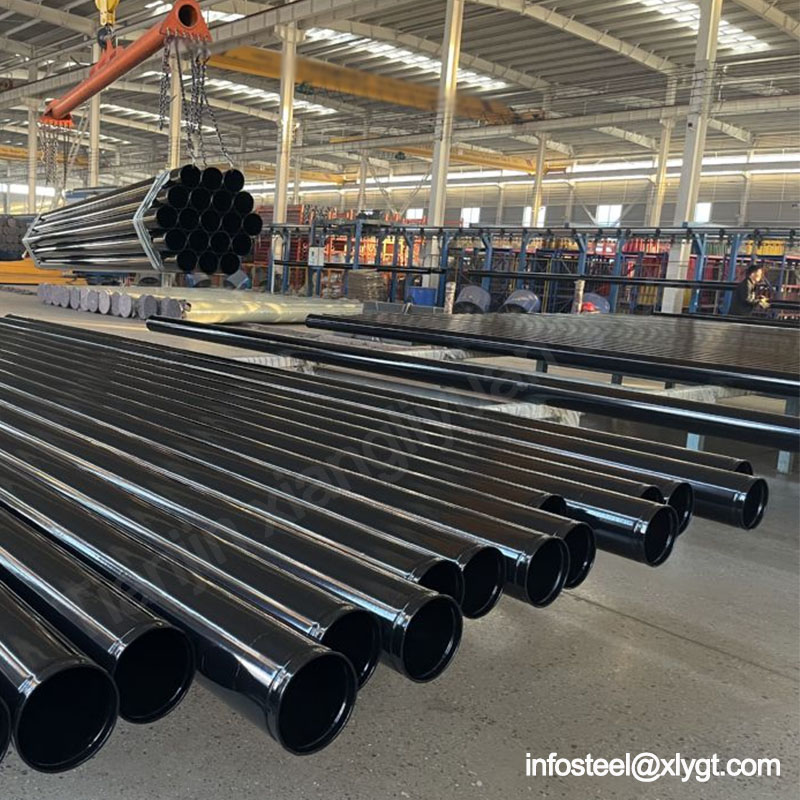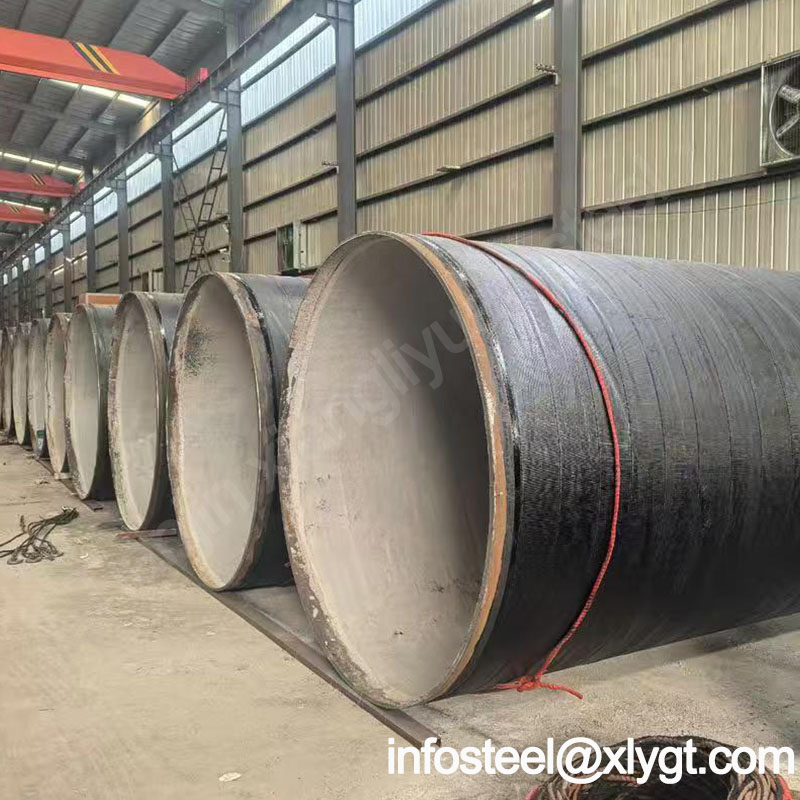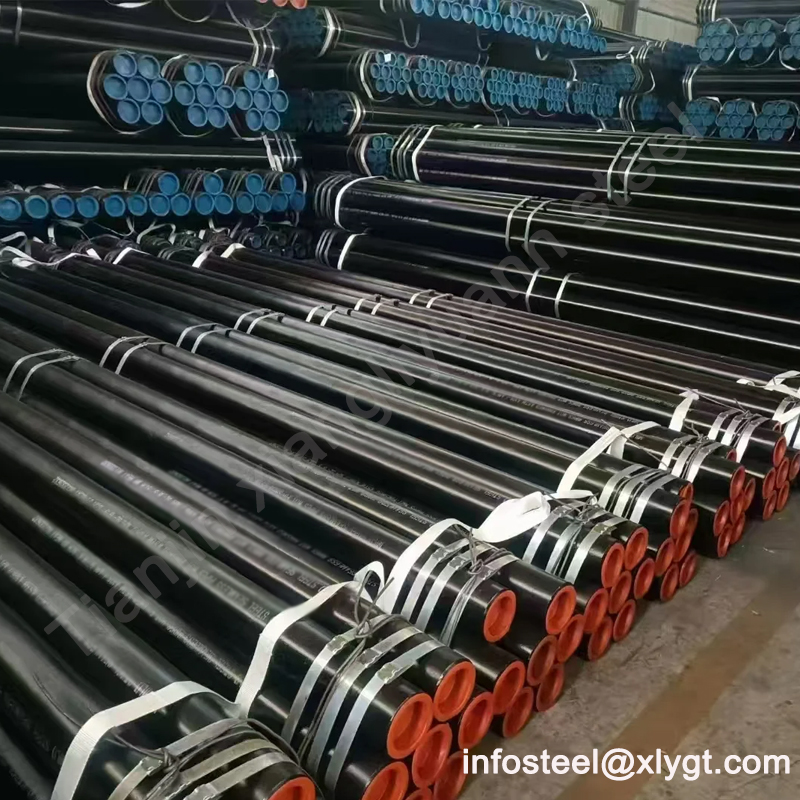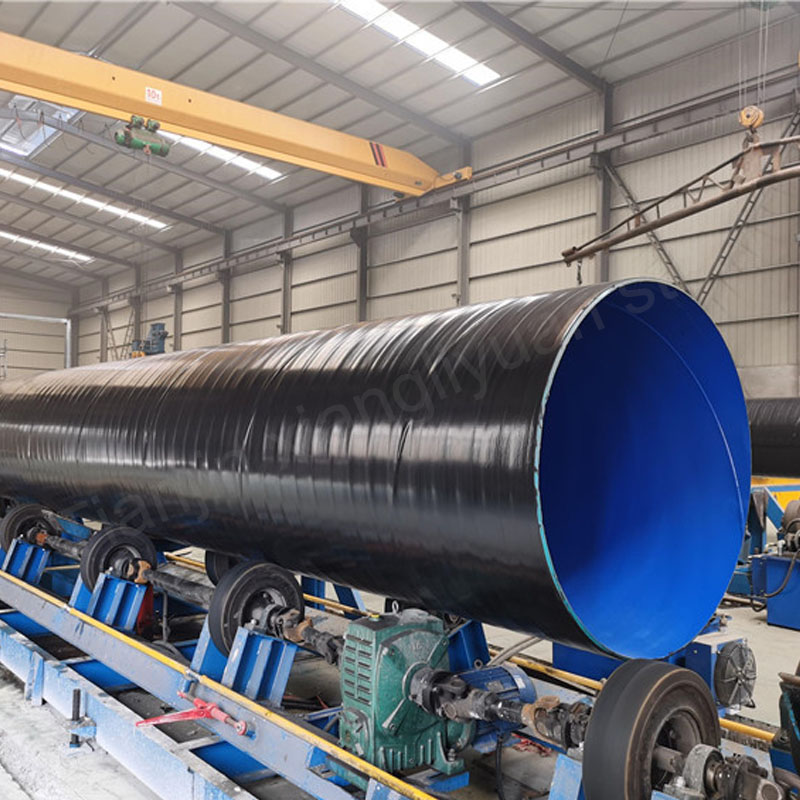
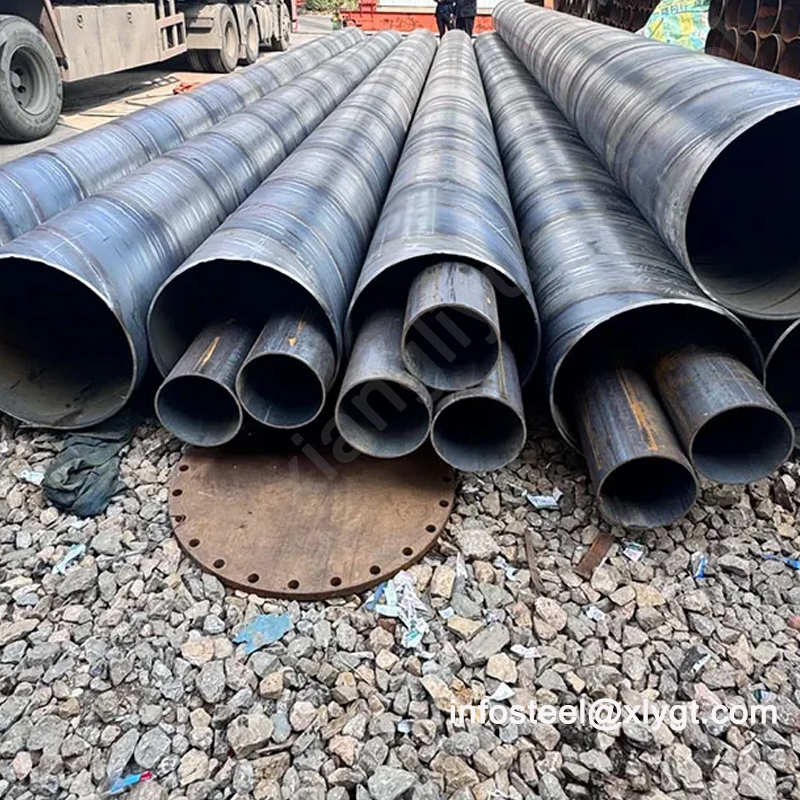
In the realm of high-volume liquid and gas transmission, as well as structural piling, the Spiral Submerged Arc Welded (SSAW) Steel Pipe represents a pinnacle of engineering efficiency. As a leading carbon steel pipe manufacturer based in the Tianjin Binhai New Area, Tianjin xiangliyuan steel leverages the strategic advantages of one of the world’s busiest ports to deliver large diameter SSAW pipes that meet rigorous international standards, including API 5L PSL1/PSL2, ASTM A252, and EN10219.
This technical breakdown provides an in-depth analysis of the three critical pillars of SSAW production: edge preparation, welding parameters, and diameter capabilities, demonstrating why our process yields superior spiral welded tube for oil, gas, and water infrastructure.
1. The Critical Role of Coil Edge Preparation in SSAW Manufacturing
Unlike Longitudinal Submerged Arc Welded (LSAW) pipes, which use individual steel plates, SSAW pipes utilize Hot Rolled (HR) Steel Coil. The continuity of the coil allows for virtually infinite production lengths, but it also introduces specific geometric challenges. At Tianjin xiangliyuan steel, we adhere to a strict protocol for coil handling before the forming stage to prevent defects like misalignment or lack of fusion.
A. Uncoiling and Leveling
The process begins with the uncoiler, which feeds the steel strip into a flattening roller leveler. Raw material traceability is critical here; we verify the heat number and chemical composition (C, Mn, P, S) to ensure compatibility with API 5L Grade B or X70 specifications . The strip must be perfectly flat; any residual curvature from the coil (coil set) will cause helical irregularity in the final pipe.
B. Edge Milling and Beveling (The “J-Bevel” Preparation)
This is the most mission-critical step for SAW weld quality. In the entry line, the edges of the steel coil are simultaneously milled by a pair of precision heads.
-
Single-Level Edge: Standard for smaller diameters, creates a straight butt joint.
-
X and J-Bevels: For heavy wall SSAW pipe (e.g., >12.7mm WT), we utilize an asymmetric bevel (J-bevel) or X-bevel. This geometry allows the submerged arc welding wire to penetrate deeply into the root while preventing slag entrapment .
At Tianjin xiangliyuan steel, we employ milling cutters rather than shearing. Milling provides a cold-worked, smooth finish (Ra < 12.5µm) without micro-cracks, ensuring that the edges align perfectly with a gap tolerance of ±1mm, crucial for high-speed welding.
C. Butt Joining (End Welding)
To maintain continuous production, the tail of one coil is welded to the head of the next. This is done using a narrow gap TIG or MIG process. This joint is subsequently marked; during the cutting phase, this section is removed as scrap to ensure it never enters the final welded steel pipe order .
2. Optimized Welding Parameters for SAW
The “Submerged Arc” process is defined by the arc burning under a blanket of granular flux. This protects the molten weld pool from atmospheric contamination, resulting in a high-density, defect-free seam. The helical geometry of SSAW means the weld is deposited at an angle relative to the pipe axis, a factor we control meticulously.
A. The Three Pillars of SAW Parameters
At Tianjin xiangliyuan steel, our automated Lincoln Electric welders are calibrated based on the pipe diameter, wall thickness, and steel grade. The key parameters include:
-
Welding Current (Amperage): We typically operate between 450 A and 1,500 A. Higher current increases penetration depth. For internal welding (ID), we often use a higher current to ensure root fusion. For external welding (OD), we use a slightly lower current to cap the weld without undercut .
-
Arc Voltage (Voltage): Ranging from 28 V to 40 V. Voltage controls the width of the weld bead. If the voltage is too high, flux melting increases, leading to a “humping” bead shape.
-
Travel Speed (Wire Feed Speed): This is the variable that dictates productivity. Our travel speeds range from 0.8 m/min to 2.0 m/min. Speed must be inversely proportional to heat input to maintain the toughness of the HAZ (Heat Affected Zone).
B. Internal vs. External Welding (ID/OD)
Modern SSAW mills use a tandem process:
-
Internal Welding: A welding head is mounted on a boom inside the pipe. It creates the root pass.
-
External Welding: An identical head follows on the outside.
-
Technical Insight: We strictly control the flux depth (25-50mm). Too little flux exposes the arc; too much flux indents the bead.
-
C. Real-Time Non-Destructive Testing (NDT)
The welding parameters are closed-loop controlled. Immediately after welding, the seam passes through an online ultrasonic testing (UT) array. This system scans for lack of fusion, porosity, or cracks. If a defect is detected, the system automatically sprays a marker, and our operators adjust the welding parameters in real-time .
3. Diameter Range and Dimensional Flexibility
The primary advantage of SSAW pipe over LSAW is the immense flexibility in diameter using the same set of forming rolls.
A. Standard Production Range
At Tianjin xiangliyuan steel, we specialize in large diameter SSAW pipes suitable for water transmission, structural piling, and slurry transport. Our current capabilities are as follows:
-
Minimum Diameter: 219.1 mm (8 inches)
-
Maximum Diameter: 3,600 mm (144 inches)
-
Wall Thickness: 3.2 mm (16 gauge) up to 25.4 mm (1 inch)
-
Length: 6 meters to 22 meters (Custom lengths available upon request)
While many suppliers cap at 20 inches, our facility utilizes advanced three-roll bending forming technology that allows us to produce spiral submerged-arc welded pipe up to 142″ OD without sacrificing roundness .
B. The Helical Angle
The diameter is dictated by the forming angle (helical angle). For small diameters (e.g., 219mm), the strip is fed at a steeper angle. For mass water transmission lines (e.g., 3000mm), the angle flattens. This flexibility allows Tianjin xiangliyuan steel to offer rapid die changes, significantly reducing lead times for non-standard diameters.
4. Supplementary Processes: Ensuring API 5L Compliance
Raw forming and welding are only half the story. To export line pipe that satisfies Saudi Aramco or Shell standards, specific finishing steps are mandatory.
A. Hydraulic Expansion
After welding, the pipe undergoes mechanical expansion. A mandrel is pulled through the pipe, expanding it plastically by 0.5% to 1.5%. This relieves residual stresses from the welding process and ensures perfect roundness, guaranteeing that the steel pipe meets strict OD tolerances (±0.25%).
B. Hydrostatic Testing
Every single pipe leaving Tianjin xiangliyuan steel undergoes hydrostatic testing. We hold the pipe at a calculated test pressure (typically 100% of the minimum yield strength) for a minimum of 10 seconds. Our computerized systems record the pressure curve to detect any micro-leaks .
C. Pipe End Preparation (Beveling)
To facilitate field welding, we provide End Finishing:
-
Plain Ends (PE) for mechanical couplings.
-
Beveled Ends (BE) per API 5L, with an angle of 30° (+5°/-0°) and a landing (root face) of 1.6mm ± 0.8mm.
5. The Tianjin Xiangliyuan Steel Advantage
Choosing a supplier is not just about specification sheets; it is about logistics and consistency. Tianjin xiangliyuan steel offers distinct advantages over inland Chinese mills:
-
Proximity to Port: Our facility is located in Tianjin, just 30 kilometers from the Tianjin Xingang Port. This drastically reduces inland trucking costs and ensures safer, faster loading of break-bulk vessels. For clients in Southeast Asia, the Middle East, and Europe, this means shorter shipping times.
-
Inventory Management: We maintain a massive stock of prime hot rolled coils from leading mills like Baosteel and Shougang. This allows us to respond to emergency orders for standard sizes (e.g., 24″, 36″, 48″) within 48 hours.
-
Certification: Our products are backed by API 5L, ISO 9001, and CE certifications, ensuring full traceability for every ton of spiral welded steel pipe shipped.
The manufacturing of Spiral Submerged Arc Welded (SSAW) Steel Pipe is a synergy of precise edge mechanics and thermodynamic welding control. From the initial milling of the coil edge to the final hydrostatic test, Tianjin xiangliyuan steel applies engineering rigor at every stage. Whether you require standard API 5L line pipe or specialized large diameter piling pipe, our location in Tianjin and our technical expertise ensure you receive world-class quality with competitive logistics.
Contact Us
To discuss your specific project requirements or request a technical datasheet for our SSAW range, please contact our technical sales team.
-
Company: Tianjin xiangliyuan steel
-
Email:
infosteel@xlygt.com -
Website:
https://www.xlysteel.com/