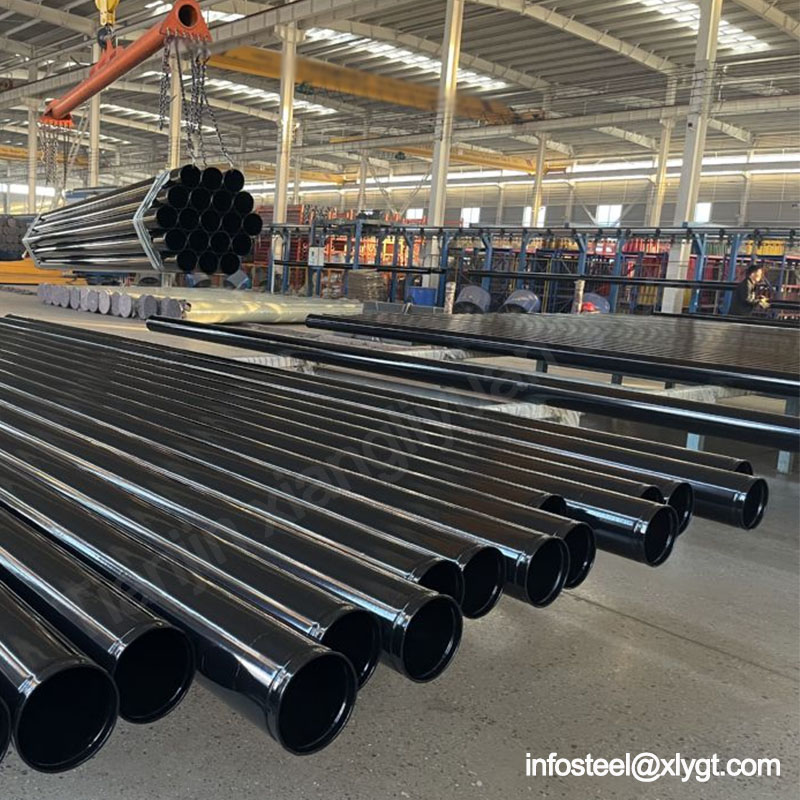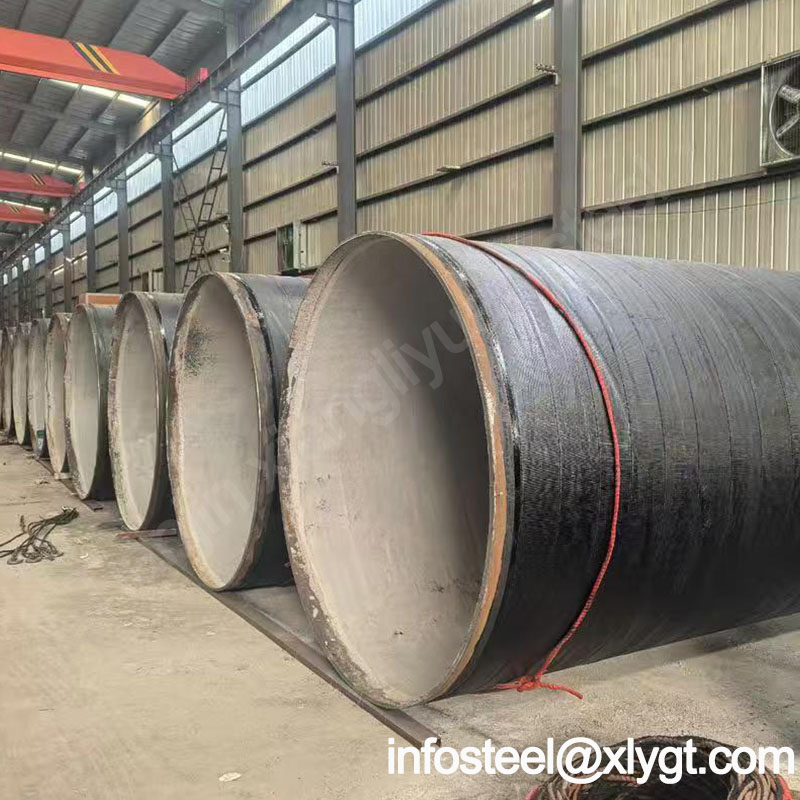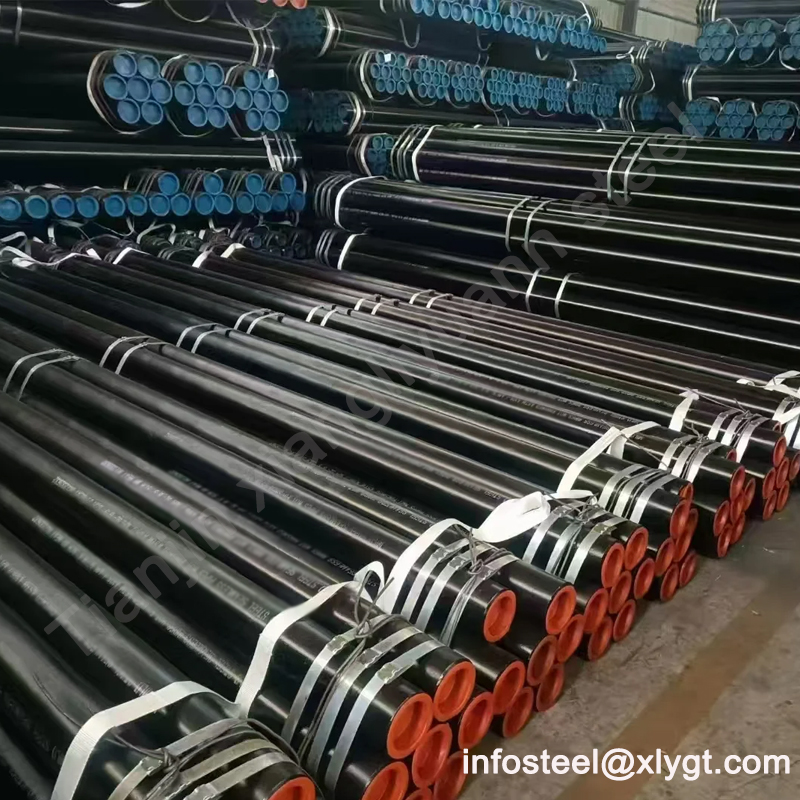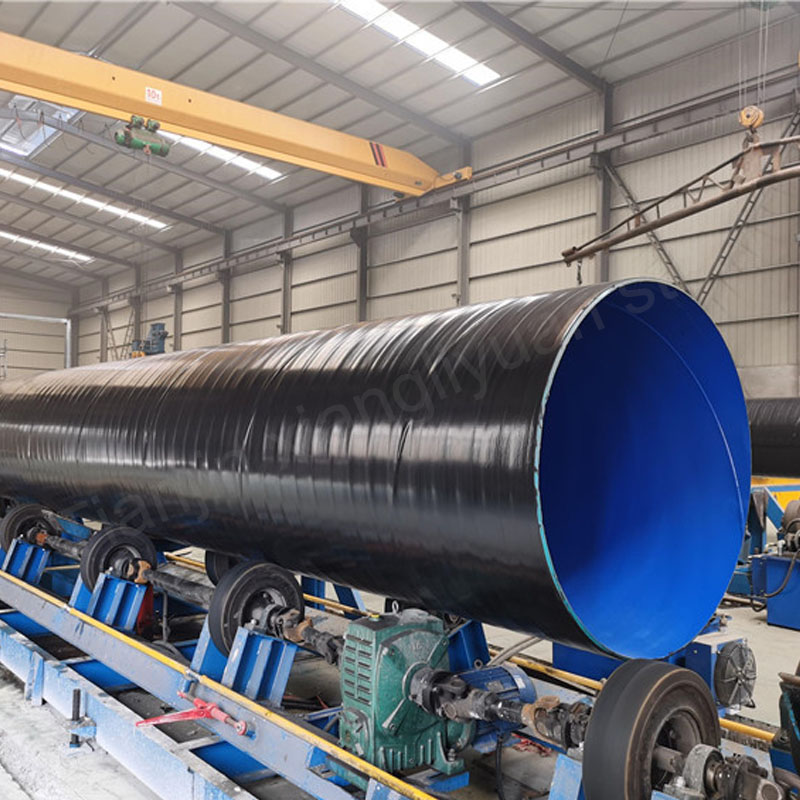
Selecting the correct seamless steel pipe for high-pressure hydraulic applications is a critical engineering decision that directly impacts system safety, operational efficiency, and lifecycle costs. Unlike standard welded pipes, hydraulic seamless tubes must withstand extreme dynamic pressure spikes, vibration, and corrosion without failure.
At Tianjin Xiangliyuan Steel, we specialize in the export of precision seamless pipes for global hydraulic distributors, OEMs, and construction firms. Located in the port city of Tianjin, we offer rapid logistics and mill-direct pricing. For inquiries, reach us at infosteel@xlygt.com or visit https://www.xlysteel.com/.
This guide provides a technical framework for specifying high-pressure steel tubes according to international standards (ASTM A519, DIN 2391, EN 10216, and SAE J524).
1. Understanding the Critical Difference: Seamless vs. Welded for Hydraulics
When specifying tubing for high-pressure hydraulic systems, the primary distinction is between welded (ERW) and cold drawn seamless (CDS) .
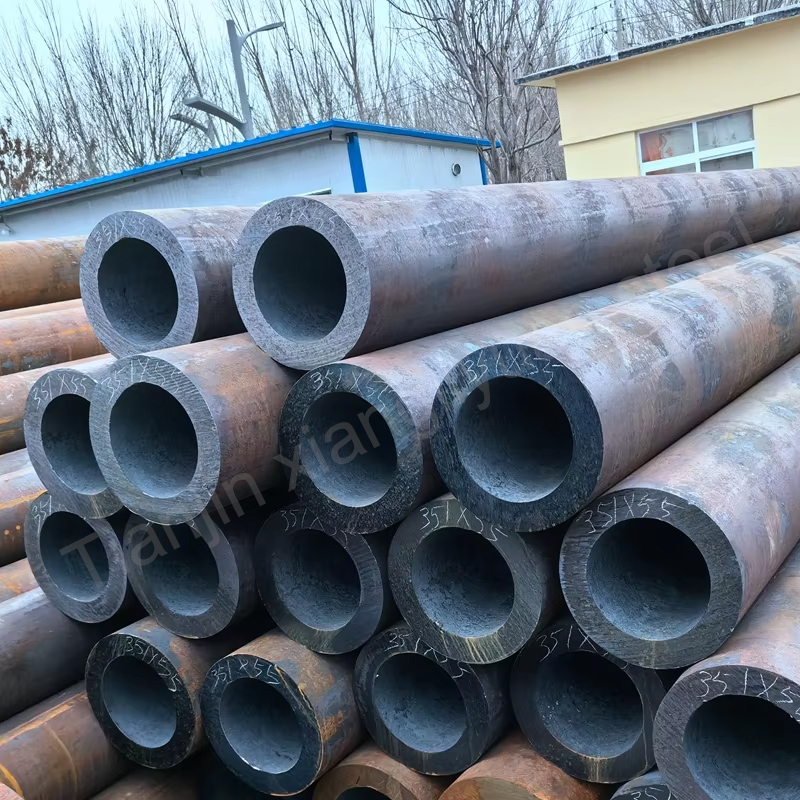
Seamless pipes are manufactured via rotary piercing and rolling, resulting in a homogeneous tube without a longitudinal weld seam. This absence of a weld seam eliminates the risk of seam splitting under cyclic pressure—a common failure mode in hydraulic cylinder tubes.
Why Seamless is mandatory for High-Pressure:
-
Wall Uniformity: Seamless tubes offer superior concentricity (eccentricity tolerance as low as 5%), ensuring uniform wall thickness for bending and flaring.
-
Fatigue Life: The homogeneous grain structure provides higher fatigue resistance under dynamic loads (DIN 2413).
-
Pressure Rating: Based on the SAE J1065 standard, seamless tubes maintain a 4:1 design factor for working pressure calculation, providing a higher margin of safety against burst pressure.
2. Key Parameters for Specification
To properly specify steel hydraulic tubing, engineers must define the following five parameters precisely:
A. Material Grade (Chemistry & Mechanicals)
The material must match the system’s operating pressure and environment.
-
Carbon Steels (Standard): SAE J524 specifies ASTM A519 1026 (similar to DIN 2391 St 37.4 or GB/T 3639 20#). This is the industry standard for general hydraulic lines.
-
Alloy Steels (High-Pressure): For pressures exceeding 5,000 psi or shock loading, SAE 4130 / 4140 (Chrome Molybdenum) is required. These grades offer tensile strengths exceeding 725 MPa and yield strengths > 600 MPa.
B. Dimension & Tolerance (Precision)
High-pressure systems require strict adherence to outside diameter (OD) and wall thickness (WT) tolerances.
-
Standard Ranges: Common hydraulic sizes range from 6mm OD to 168mm OD.
-
Tolerances: Precision hydraulic tubes should meet EN 10216-2 tolerances, where OD tolerance is typically +/- 1% (or 0.5mm whichever is greater) and WT tolerance is +/- 10% to 12.5%.
-
Honing: For hydraulic cylinder barrels, internal surfaces require honing to achieve surface finishes of ≤ 0.4 µm Ra, reducing seal wear.
C. Working Pressure Calculation (SAE J1065 & DIN 2413)
The nominal working pressure cannot be guessed. It is a function of the tube’s geometry and tensile strength.
Use the Barlow formula for thin-walled tubes (simplified):
P=2×S×tOD
*Where S is allowable stress (Yield Strength / 4 for 4:1 safety factor), t is wall thickness, and OD is outside diameter.*
For dynamic loads (shock, vibration), DIN 2413 provides specific calculation rules for pipes and elbows to account for stress concentration factors, which we strictly follow at Tianjin Xiangliyuan Steel when recommending stock.
D. End Conditions & Connections
Specify if the tube ends require preparation for flaring (37° or 45° JIC), ORFS (O-ring Face Seal), or welding. Cold drawn seamless tubes provide superior ductility for flaring without cracking.
3. Compliance with International Standards (ASTM, DIN, EN, ISO)
Global buyers search for pipes that meet their local regulations. A reputable supplier must provide materials traceable to these standards:
| Standard | Title / Application | Key Requirement |
|---|---|---|
| SAE J524 | Seamless Low Carbon Steel Tube for Hydraulic Bending & Flaring | Specific hardness & grain size for bending |
| ASTM A519 | Seamless Carbon & Alloy Steel Mechanical Tubing | Specifies 1026, 4130, 4140 grades for cylinders |
| DIN 2391 / EN 10216 | Seamless precision steel tubes (St 37.4, St 52.4) | High precision OD/ID tolerances |
| ISO 8575 | Aerospace hydraulic system tubing | High-strength requirements for 21,000 kPa systems |
Pro Tip: Always request an EN 10204 3.1 Mill Certificate. This guarantees that the seamless steel pipe you receive has traceable chemical composition (C, Mn, S, P, Cr, Mo) and mechanical properties (Yield, Tensile, Elongation). Tianjin Xiangliyuan Steel provides 3.1 certification with every shipment of hydraulic steel tubes.
4. Specifics for High-Pressure Applications
Different hydraulic systems require different pipe characteristics:
Construction Machinery (Excavators & Loaders)
-
Need: High impact resistance and fatigue strength.
-
Specification: ASTM A519 1026 or 20# (GB/T 8163).
-
Risk: Failure here often results in “oil whip”—a catastrophic burst that can sever limbs. Use only seamless for steering and brake lines.
Automotive & Off-Highway (Shock Absorbers & Fuel Injection)
-
Need: Smooth internal surface finish (ID) for continuous flow.
-
Specification: Cold Drawn Seamless (CDS) with bright annealing.
-
Detail: For fuel injection pipes, SAE 4130 is preferred due to its higher burst threshold (up to 110 MPa).
Marine & Corrosive Environments
-
Need: Resistance to saltwater corrosion.
-
Specification: Stainless steel seamless pipes (304/316) are required, though carbon steel with zinc-plated or anti-rust oil coating (like our standard process) is a cost-effective alternative.
5. The Logistics Advantage: Why Tianjin Port Matters
For international buyers, the contract isn’t just about the metallurgy; it’s about the supply chain. A delay in shipping a high-pressure boiler tube can shut down a production line.
Tianjin Xiangliyuan Steel is strategically headquartered in Tianjin, China—home to one of the largest comprehensive ports in Northern China.
-
Shipping Efficiency: We are located within a 30km radius of Tianjin Port. This allows for immediate loading and reduces inland trucking costs.
-
Inventory Hub: We maintain a massive stock of hot rolled seamless pipes and cold drawn precision tubes in our local warehouse, ready for consolidation.
-
Lead Times: Because we are traders with deep mill connections and port proximity, our FOB Tianjin lead times are often 2-3 weeks faster than inland competitors.
6. Inspection and Non-Destructive Testing (NDT)
For high-reliability systems (Hydraulic presses, aerospace ground equipment), visual inspection is not enough. When specifying, include:
-
Eddy Current Testing (ET): According to ASTM E309, this detects surface and near-surface flaws. Notches as small as 0.30mm deep are detectable.
-
Hydrostatic Testing: Every pipe for pressure lines should be tested to the specified proof pressure.
-
Flattening & Flaring Tests: Verifies the ductility of the seamless steel pipe to ensure it won’t crack when the mechanic flares the end to attach a fitting.
Call to Action
Specifying the correct seamless steel pipe for high-pressure hydraulic systems requires balancing material science (SAE 4130 vs 1026), dimensional precision (DIN/EN tolerances), and safety factors (SAE J1065).
Do not settle for generic ERW pipes in a hydraulic application where safety is at stake.
Tianjin Xiangliyuan Steel provides the full package:
-
Compliance: Full ASTM, DIN, EN, and ISO certifications.
-
Quality: Rigorous NDT and hydraulic testing.
-
Location: Fastest export through Tianjin Port.
Contact us today for your project requirements.
-
Email: infosteel@xlygt.com
Let us supply the precision seamless steel tubes that keep your hydraulic pressure high and your downtime low.