Understanding API 5L Pipeline Steel Grades
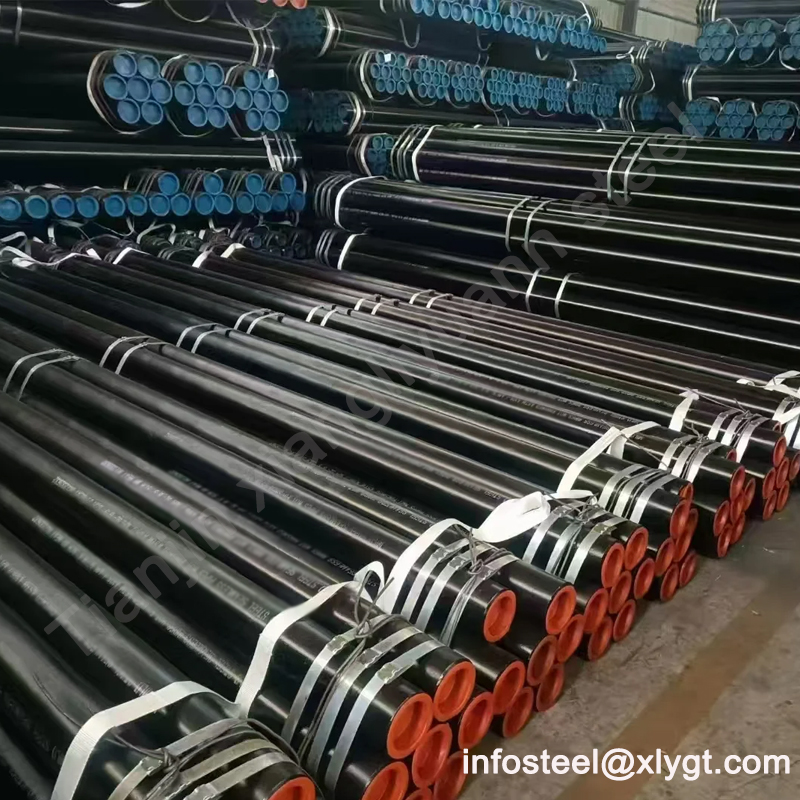
In the global oil and gas industry, API 5L specification steel pipes serve as the backbone of hydrocarbon transportation infrastructure. As a leading API 5L line pipe supplier based in Tianjin, China, Tianjin Xiangliyuan Steel has witnessed firsthand how proper material selection impacts project safety, cost-efficiency, and operational longevity. This comprehensive technical guide examines three critical grades—API 5L X52, X65, and X70—focusing on their yield strength characteristics and weldability performance to assist engineers, procurement specialists, and project managers in making informed decisions.
The API 5L specification, developed by the American Petroleum Institute, establishes manufacturing standards for seamless and welded steel pipes used in pipeline transportation systems. With decades of experience supplying ERW steel pipe, LSAW steel pipe, and SSAW steel pipe to international markets, we understand that selecting between PSL1 and PSL2 product specification levels requires deep technical knowledge of mechanical properties and welding requirements.
Section 1: Yield Strength Fundamentals in API 5L Grades
1.1 Defining Yield Strength in Pipeline Applications
Yield strength represents the stress level at which steel undergoes permanent deformation, making it a critical parameter for pressure-containing applications. In API 5L nomenclature, the number following “X” indicates the minimum yield strength in thousands of pounds per square inch (ksi). For instance, API 5L X52 specifies a minimum yield strength of 52,000 psi (359 MPa), while API 5L X65 requires 65,000 psi (448 MPa), and API 5L X70 demands 70,000 psi (483 MPa) .
This strength hierarchy directly influences pipeline design parameters. Higher yield strength enables thinner wall thicknesses while maintaining pressure ratings, reducing material costs and transportation expenses. However, strength increases must be balanced against weldability constraints and toughness requirements, particularly in sour service environments where HIC resistant steel and SSC resistant steel properties become essential.
1.2 Mechanical Properties Comparison: X52 vs X65 vs X70
The mechanical property requirements for these grades differ significantly between PSL1 and PSL2 specification levels. API 5L PSL2 imposes stricter controls on chemical composition, mechanical properties, and mandatory impact testing compared to PSL1 .
| Grade | Min Yield Strength (PSI) | Min Yield Strength (MPa) | Min Tensile Strength (PSI) | Typical Application Pressure |
|---|---|---|---|---|
| X52 | 52,200 | 359 | 66,700 | 4-10 MPa |
| X65 | 65,300 | 448 | 77,500 | 10-14 MPa |
| X70 | 70,300 | 483 | 82,700 | 14-18 MPa |
Table 1: API 5L PSL2 Mechanical Properties Requirements
For API 5L PSL2 grades, the standard mandates maximum yield strength limits to ensure weldability and prevents excessive strength that could compromise toughness. The yield-to-tensile ratio (Y/T ratio) is also controlled, typically requiring Y/T ≤ 0.93 for diameters exceeding 12.750 inches, ensuring adequate plastic deformation capacity before fracture .
1.3 Chemical Composition Influence on Strength
The strength differential between X52, X65, and X70 stems primarily from chemical composition and thermomechanical processing. API 5L X52 typically utilizes low-carbon manganese steel with carbon content ≤0.28% and manganese ≤1.60%, often without microalloying additions .
In contrast, API 5L X65 and API 5L X70 incorporate microalloying elements such as niobium (Nb), vanadium (V), and titanium (Ti) to achieve higher strength through grain refinement and precipitation hardening. These grades feature reduced carbon contents (≤0.22% for X65, ≤0.20% for X70) to maintain weldability despite elevated strength levels .
At Tianjin Xiangliyuan Steel, our API 5L X65 PSL2 and API 5L X70 PSL2 products undergo controlled rolling and accelerated cooling processes to optimize the microstructure, achieving the fine-grained ferrite-bainite structures necessary for superior toughness at low temperatures. This metallurgical expertise ensures our pipeline steel meets the most demanding Charpy impact test requirements, including specifications down to -20°C or lower for arctic applications.
Section 2: Weldability Analysis and Technical Considerations
2.1 Carbon Equivalent (CE) and Welding Performance
Weldability—the capacity to produce sound welded joints without defects—is inversely related to strength level. The primary metric for assessing weldability is the Carbon Equivalent (CE) value, calculated using the IIW formula: CE = C + Mn/6 + (Cr+Mo+V)/5 + (Ni+Cu)/15.
Higher strength grades require lower carbon equivalents to prevent hydrogen-induced cracking (HIC) in the heat-affected zone (HAZ). API 5L X52 generally offers excellent weldability with minimal preheating requirements, making it suitable for field welding without extensive preparation .
API 5L X65 demands more controlled welding procedures, typically requiring:
Preheating to 80-150°C depending on thickness and ambient conditions
Low-hydrogen electrodes or wire (H4 or H5 designation)
Controlled interpass temperatures
Post-weld heat treatment for thick-wall sections
API 5L X70 presents the most stringent welding challenges due to its higher strength and stricter toughness requirements. Successful welding of X70 requires:
Strict preheating protocols (100-200°C)
Precise heat input control (typically 0.8-2.0 kJ/mm)
Advanced welding processes (SAW, GMAW with pulsed current)
Comprehensive post-weld non-destructive testing (NDT)
2.2 Welding Process Selection for High-Strength Pipeline Steel
The selection of welding processes significantly impacts joint quality in high-grade pipeline steels. For longitudinal submerged arc welded pipe (LSAW) and spiral submerged arc welded pipe (SSAW), multi-wire submerged arc welding (SAW) remains the industry standard, offering deep penetration and high deposition rates suitable for thick-wall large diameter steel pipe .
For electric resistance welded (ERW) pipes, high-frequency induction (HFI) welding provides excellent control of wall thickness and heat-affected zone properties. Modern ERW mills can produce API 5L X70 line pipe meeting stringent toughness requirements through optimized heat treatment processes including quenching and tempering (QT) or thermomechanical controlled processing (TMCP) .
At Tianjin Xiangliyuan Steel, located strategically in Tianjin with proximity to Tianjin Port—one of China’s largest maritime logistics hubs—we maintain advanced welding facilities capable of producing API 5L X65 PSL2 and API 5L X70 PSL2 pipes with full NDT inspection including ultrasonic testing (UT), radiographic testing (RT), and magnetic particle inspection (MPI). Our seamless steel pipe (SMLS) production lines complement welded pipe offerings, providing complete solutions for critical applications.
2.3 Heat-Affected Zone (HAZ) Toughness Management
The heat-affected zone represents the most vulnerable region in welded high-strength pipeline steel. In API 5L X70, excessive heat input during welding can coarsen grains in the HAZ, reducing toughness and increasing susceptibility to brittle fracture. Conversely, insufficient heat input may result in hard, untempered martensite formations, elevating hardness above 250 HV10 and increasing sulfide stress cracking (SSC) susceptibility in sour service .
Optimal welding procedures for API 5L X65 and X70 employ:
Tandem or multi-wire SAW to optimize heat input distribution
Low-temperature transformation welding consumables that promote acicular ferrite formation
Controlled cooling rates to achieve bainitic microstructures rather than martensite
Post-weld heat treatment (PWHT) when wall thickness exceeds 25mm or code requirements dictate
Our technical team at Tianjin Xiangliyuan Steel provides comprehensive Welding Procedure Specifications (WPS) and Procedure Qualification Records (PQR) for all high-grade materials, ensuring compliance with ASME Section IX, API 1104, and client-specific standards.
Section 3: Sour Service Considerations and Corrosion Resistance
3.1 HIC and SSC Resistance Requirements
Pipeline steels operating in environments containing hydrogen sulfide (H₂S) must resist hydrogen-induced cracking (HIC) and sulfide stress cracking (SSC). These failure modes pose significant risks in sour gas transmission and oilfield gathering systems .
HIC occurs when atomic hydrogen diffuses into steel and recombines at internal defects (particularly manganese sulfide inclusions), creating internal pressure that generates stepwise cracks. SSC requires both H₂S presence and tensile stress, potentially causing sudden brittle failures in high-hardness zones .
API 5L X52 generally offers better inherent HIC resistance due to lower strength and hardness. However, API 5L X65 and X70 can achieve sour service capability through:
Ultra-low sulfur content (<0.002%) and calcium treatment for inclusion shape control
Strict hardness control (≤22 HRC or 237 HB) in base metal, welds, and HAZ
Normalized or quenched-and-tempered microstructures rather than as-rolled conditions
Compliance with NACE MR0175/ISO 15156 and NACE TM0284 testing protocols
3.2 Testing Protocols for Sour Service Qualification
Qualification testing for sour service applications involves:
NACE TM0284 (HIC Test): 96-hour exposure to H₂S-saturated solution (Solution A or B)
NACE TM0177 (SSC Test): 720-hour tensile testing at 75% of specified minimum yield strength
Acceptance criteria typically require Crack Length Ratio (CLR) <15%, Crack Thickness Ratio (CTR) <5%, and Crack Sensitivity Ratio (CSR) <1.5%
Tianjin Xiangliyuan Steel supplies API 5L X52QS, X65QS, and X70QS grades (QS = Quenched and Self-tempered or Sour Service) with full HIC/SSC test reports from accredited third-party laboratories including SGS, TÜV, and Bureau Veritas. Our sour service line pipe has been successfully deployed in Middle Eastern gas fields, Canadian oil sands, and Central Asian pipeline projects.
Section 4: Application-Specific Selection Guidelines
4.1 Grade Selection Based on Design Pressure
Selecting the appropriate API 5L grade requires systematic analysis of design pressure, diameter, wall thickness, and operating environment. The Barlow formula governs pressure capacity calculations:
P = (2 × S × t × F × E) / (D – 2 × t × F)
Where:
P = Design pressure
S = Specified minimum yield strength
t = Nominal wall thickness
D = Outside diameter
F = Design factor (typically 0.72 for liquid pipelines, 0.60-0.80 for gas)
E = Longitudinal joint factor (1.0 for SMLS, 0.85-1.0 for welded)
API 5L X52 provides optimal cost-effectiveness for:
Urban natural gas distribution networks (medium-low pressure)
Water transmission pipelines
Crude oil gathering lines with moderate pressure requirements
Non-sour service applications where extreme toughness isn’t critical
API 5L X65 represents the industry standard for:
Cross-country natural gas transmission pipelines
High-pressure oil trunk lines
Offshore platform risers and flowlines
Arctic applications requiring low-temperature toughness
API 5L X70 is specified for:
Ultra-high-pressure trunk pipelines (transcontinental projects)
Deepwater subsea pipelines where wall thickness reduction is critical
High-stress environments including mountainous terrain
Projects prioritizing material optimization and weight reduction
4.2 PSL1 vs PSL2: Critical Decision Factors
The choice between API 5L PSL1 and PSL2 significantly impacts project safety and compliance:
| Feature | PSL1 | PSL2 |
|---|---|---|
| Chemical Composition | Basic control | Strict limits, tighter P/S |
| Impact Testing | Not required | Mandatory (longitudinal & transverse) |
| NDT Requirements | Optional | Mandatory (UT/RT for welds) |
| Carbon Equivalent | Not specified | Maximum limits enforced |
| Hydrostatic Testing | Per batch | 100% of pipes |
| Traceability | Heat number only | Full traceability per pipe |
Table 2: PSL1 vs PSL2 Requirements Comparison
For critical applications—including high-pressure gas transmission, sour service, offshore installation, and low-temperature operation—API 5L PSL2 is mandatory. The additional testing and quality controls provide essential safety margins that justify the modest cost premium.
Section 5: Quality Assurance and Supply Chain Excellence
5.1 Manufacturing Excellence at Tianjin Xiangliyuan Steel
As a specialized API 5L pipe manufacturer serving international markets, Tianjin Xiangliyuan Steel maintains comprehensive quality management systems certified to ISO 9001, ISO 14001, and API Q1. Our production capabilities include:
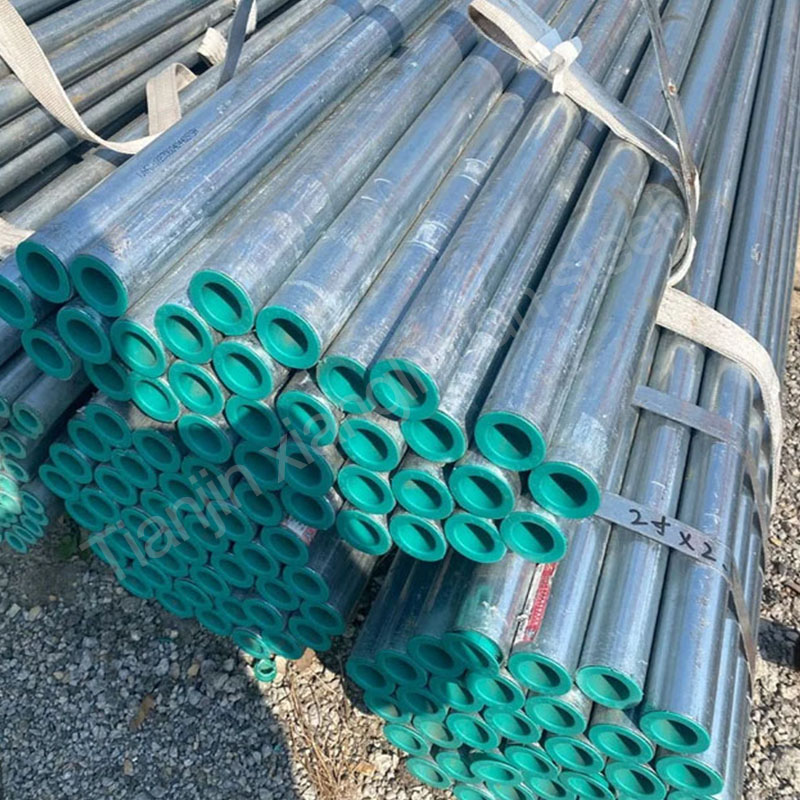
Seamless steel pipe: Hot-rolled and cold-drawn, 1/8″ to 24″ diameter
ERW steel pipe: High-frequency welded, 1/2″ to 24″ diameter, up to X70 grade
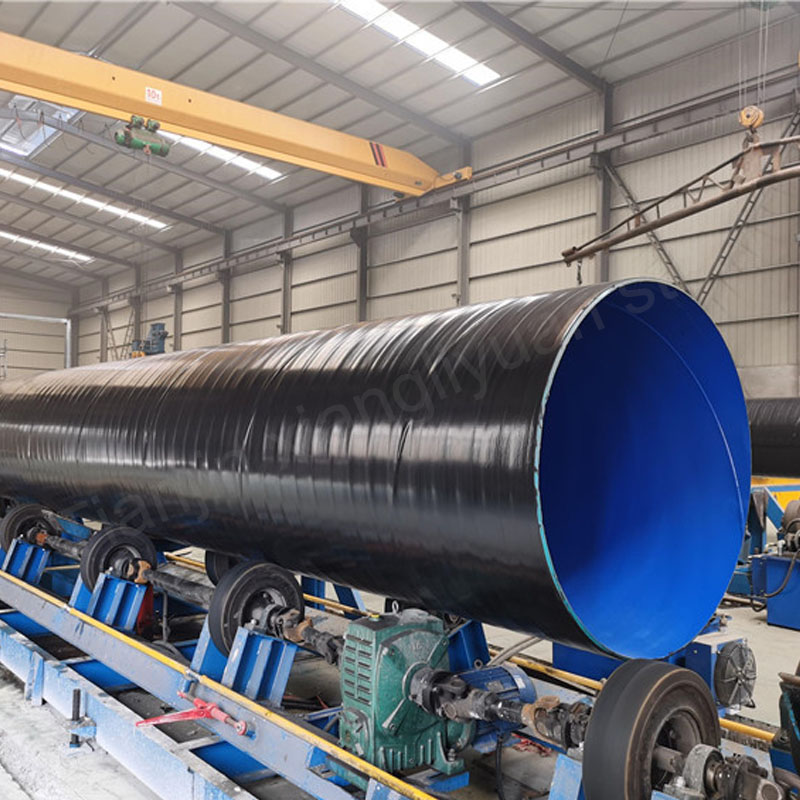
LSAW steel pipe: Double-submerged arc welded, 16″ to 64″ diameter
SSAW steel pipe: Spiral welded, 8″ to 100″ diameter for structural and piling applications
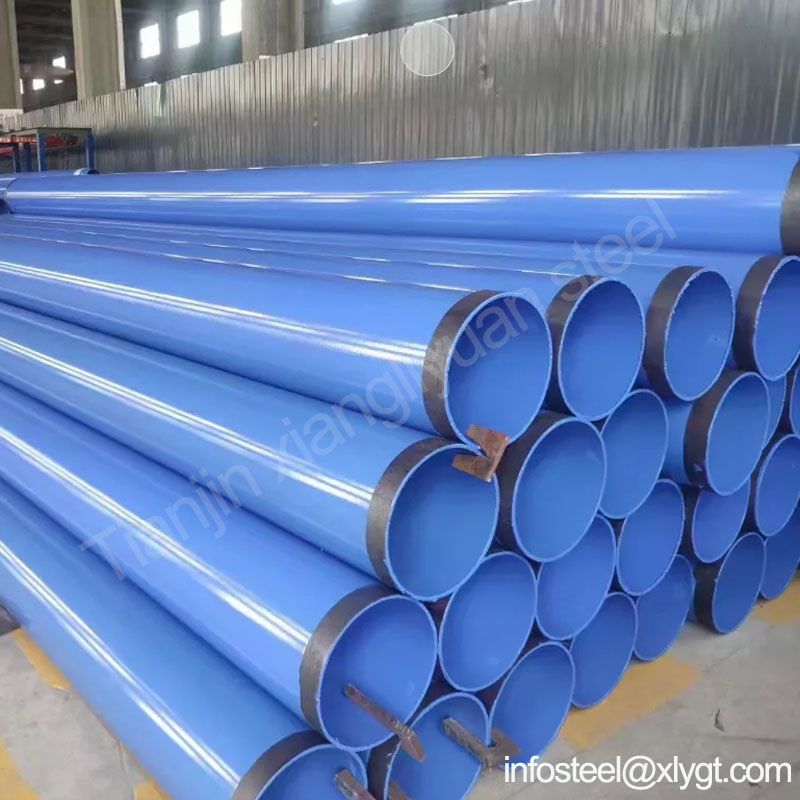
All products undergo hydrostatic testing at 95% of specified minimum yield strength, ensuring pressure integrity. Our coating facilities provide 3LPE (three-layer polyethylene), 3LPP (three-layer polypropylene), FBE (fusion-bonded epoxy), and concrete weight coating for corrosion protection and submarine stability.
5.2 Logistics Advantages: Tianjin Port Proximity
Our strategic location in Tianjin—approximately 120 kilometers from Beijing and adjacent to the Port of Tianjin (the world’s fourth-largest port by cargo throughput)—provides unmatched logistics advantages for international shipments. This proximity enables:
Reduced inland transportation costs and transit times
Direct vessel loading for bulk steel pipe shipments
Efficient containerization for smaller orders
Flexible shipping schedules to global destinations including Middle East, Southeast Asia, Africa, South America, and Europe
Whether your project requires ASTM A53 grade B, ASTM A106 grade B, API 5L X52 PSL2, API 5L X65 PSL2, or API 5L X70 PSL2, our logistics team coordinates multimodal transportation ensuring timely delivery to your designated port or project site.
Partnering for Pipeline Success
Understanding the nuanced relationship between yield strength and weldability in API 5L X52, X65, and X70 pipeline steels is essential for safe, cost-effective project execution. While higher grades offer material savings through thinner walls, they demand sophisticated welding procedures and rigorous quality control to maintain integrity across the joint.
Tianjin Xiangliyuan Steel combines metallurgical expertise, advanced manufacturing capabilities, and strategic logistics positioning to deliver API 5L line pipe solutions that meet the most demanding international standards. From HIC resistant steel pipe for sour service to low-temperature impact tested materials for arctic environments, our technical team provides comprehensive support from material selection through welding procedure qualification.
For detailed technical specifications, material test reports, or project-specific quotations, contact our engineering sales team:
Tianjin Xiangliyuan Steel Co., Ltd.
Email: infosteel@xlygt.com
Website: https://www.xlysteel.com/
Address: Tianjin, China (Strategically located near Tianjin Port for global shipping)
Our commitment to Experience, Expertise, Authoritativeness, and Trustworthiness (E-E-A-T) ensures that every API 5L steel pipe we supply contributes to the safety, reliability, and longevity of your pipeline infrastructure.