1. The Critical Role of Forming Technology in LSAW Pipes
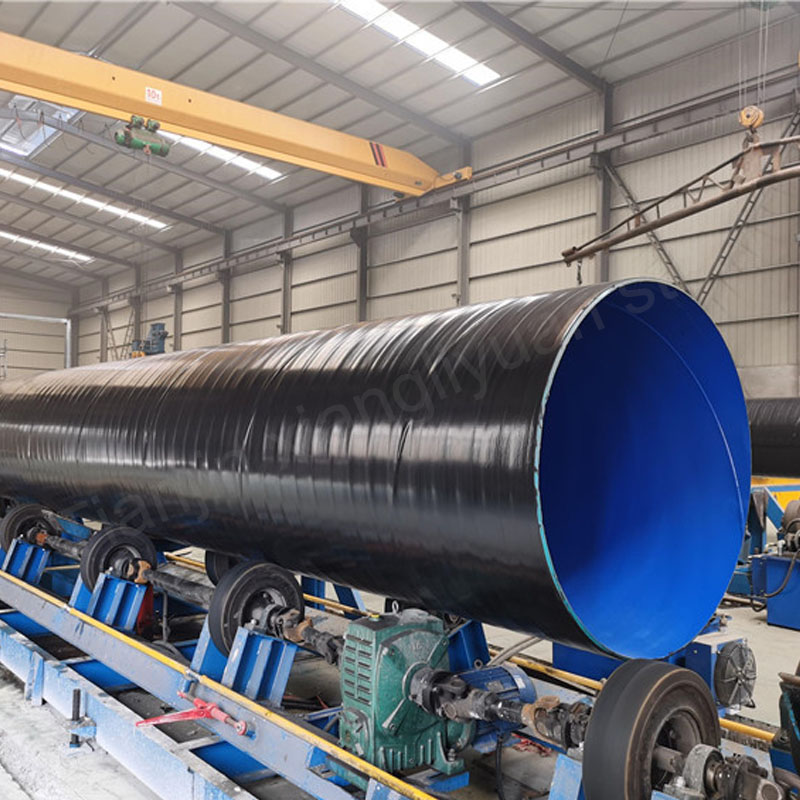
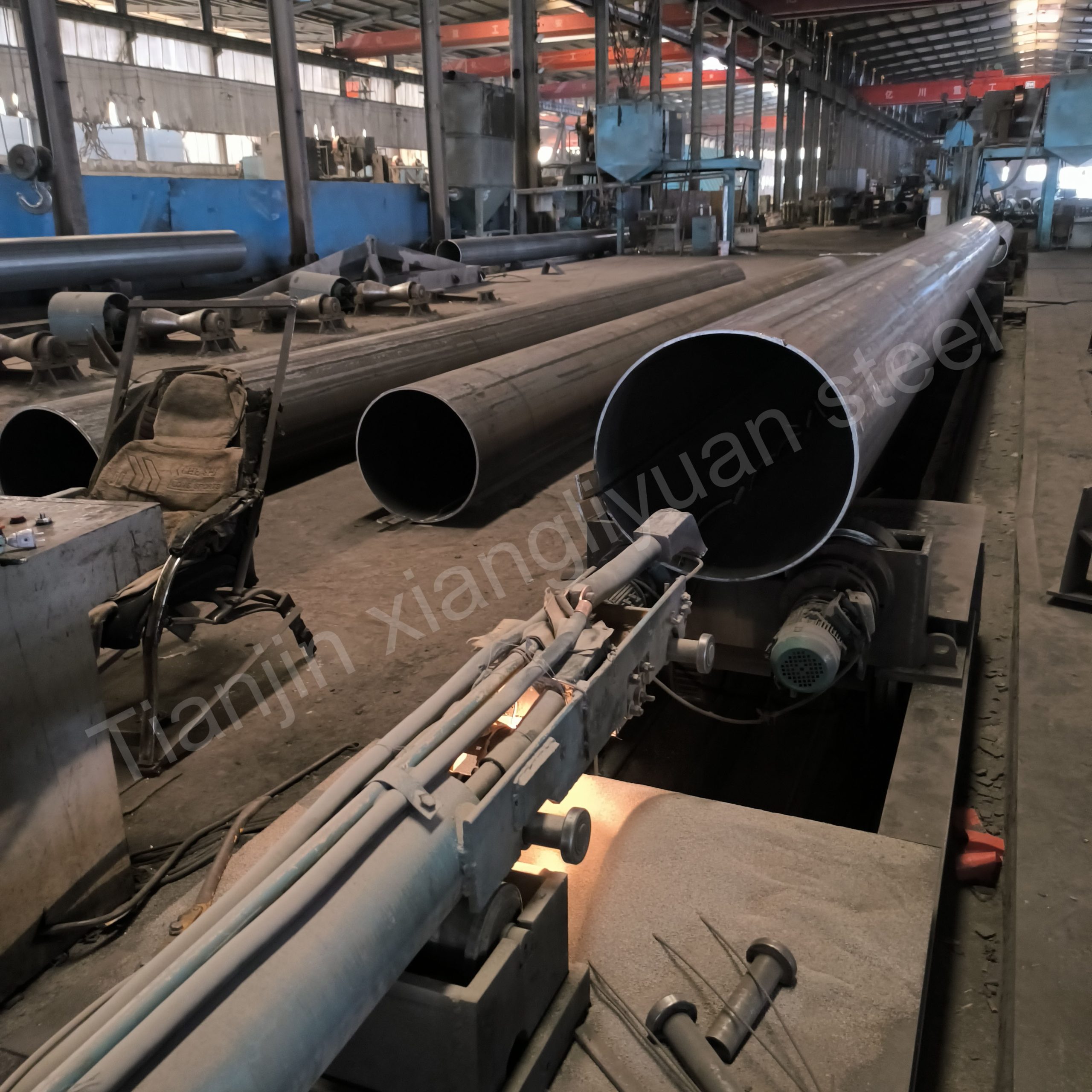
In the modern industrial landscape, the demand for Large Diameter Thick-Walled Steel Pipes is rising exponentially, driven by deep-water oil & gas extraction, offshore wind substructures, and high-pressure hydro-transport systems. Unlike ERW pipes, Longitudinal Submerged Arc Welded (LSAW) pipes are preferred for these critical applications due to their superior toughness and ability to withstand high internal and external pressures.
The “JCOE” and “Three-Roll Bending” (RBE) processes represent the two primary methodologies for shaping steel plates into cylindrical forms. While both utilize the double submerged arc welding (DSAW) process for the final seam, the mechanical behavior of the steel during formation—specifically regarding springback, residual stress, and strain hardening—differs significantly.
At Tianjin Xiangliyuan Steel, we leverage the logistical advantages of Tianjin Port to export SAWL pipes globally. We combine advanced JCOE technology with rigorous NDT (Non-Destructive Testing) to ensure API 5L compliance. This article provides a technical comparison to help engineers select the right specification for sour service, arctic conditions, or ultra-deepwater applications.
2. Technical Deep Dive: The JCOE Forming Process
The JCOE process is a progressive, step-by-step forming method. It is named after the sequential shapes the steel plate takes: J shape, C shape, O shape, and finally Expanding.
2.1 The Mechanics of Progressive Forming
Unlike simultaneous forming, JCOE uses a hydraulic press with a specific die. The steel plate—after edge milling and crimping—is fed incrementally.
-
J-ing Stage: The manipulator pushes the plate in steps. The punch presses the edge to form the “J” radius.
-
C-ing Stage: The plate is flipped, and the opposite side is formed into a second “J,” creating a “C” shape.
-
O-ing Stage: The open “C” is pressed from the top into an “O” shape, leaving a small open gap for welding.
-
Expansion: Mechanical arms expand the pipe to ensure perfect roundness and relieve bending stress.
2.2 Advantages for Thick Walls
When producing heavy wall thickness pipes (typically up to 50mm+), JCOE is superior because it distributes the strain evenly across the plate. The bending radius is controlled precisely per step, preventing the lamination tearing often seen in continuous processes.
2.3 Residual Stress Management
Finite Element Analysis (FEA) shows that JCOE forming results in lower residual stress (200–250 MPa) compared to other methods. The stress is typically compressive at the weld seam, which significantly improves fatigue life and resistance to Sulfide Stress Corrosion Cracking (SSCC).
3. Technical Deep Dive: Three-Roll Bending (RBE)
The Three-Roll Bending process (often referred to as RBE or pyramidal rolling) is a continuous deformation method. The steel plate passes back and forth between three rotating rollers (two pinching rollers and one top bending roller) until it achieves the desired curvature.
3.1 Mechanics of Continuous Bending
The plate is fed horizontally. As the top roller presses down, the plate is bent plastically. The process relies on the Bauschinger effect to shape the steel.
-
Pros: High production speed for continuous runs. Excellent for very large diameters with relatively thinner walls.
-
Cons: The leading and trailing edges of the plate remain flat (“unbent edges”) and must be pre-bent separately or crimped.
3.2 Limitations in Wall Thickness
For large diameter thick-walled steel pipes, the three-roll method faces challenges. The immense force required to bend thick, high-grade steel (e.g., API 5L X70) can lead to ovality (egg-shaping) and inconsistent wall thinning. Furthermore, three-roll bending induces higher residual stress levels (often exceeding 400 MPa) due to the non-uniform distribution of pressure across the contact points.
4. Comparative Analysis: JCOE vs. Three-Roll Bending
To provide clarity for procurement managers, the following data compares the two methods under identical conditions (API 5L X70, 24″ OD, 30mm WT).
| Parameter | JCOE Process (Tianjin Xiangliyuan) | Three-Roll Bending (RBE) | Impact on Project |
|---|---|---|---|
| Wall Thickness Range | Up to 50mm+ (Excellent) | Limited (Higher risk of delamination) | JCOE is mandatory for deep-water risers. |
| Diameter Tolerance (Ovality) | ≤ 0.6% (Post-expansion) | ≤ 1.5% (Requires expensive re-calibration) | Tighter tolerances reduce field welding costs. |
| Residual Stress | Low (200–250 MPa) | High (350–450 MPa) | High stress leads to Bauschinger effect failure. |
| Edge Geometry | Precision pre-crimped edges | Flat edges requiring extra welding filler | JCOE ensures 100% weld penetration. |
| Yield Strength Retention | 485–520 MPa | 460–490 MPa | Higher retention allows for lighter designs. |
4.1 Energy & Cost Efficiency
While three-roll bending has lower tooling investment, the JCOE process offers better flexibility for Small Quantity/Complex orders. Furthermore, the expansion stage in JCOE guarantees that the OD (Outer Diameter) tolerance meets stringent standards like DNV-OS-F101 for offshore pipelines.
5. Quality Assurance and Industry Standards
At Tianjin xiangliyuan steel, we recognize that forming is only half the battle. The welded seam integrity defines the pipe.
Regardless of being formed by JCOE or Rolling, our LSAW Steel Pipes undergo:
-
NDT: 100% Ultrasonic testing (UT) and radiographic inspection (RT) for spiral and longitudinal welds.
-
Mechanical Testing: Tensile strength, Flattening test, and Guided bend test.
-
Hydrostatic Testing: Ensuring pressure rating compliance per API 5L PSL1/PSL2.
We utilize JCOE technology specifically to ensure that the Heat Affected Zone (HAZ) micro-structure remains uniform—a critical factor for projects requiring HIC (Hydrogen Induced Cracking) resistance.
6. Logistics Advantage: Why Tianjin?
While technical capability is key, supply chain reliability defines project success. Tianjin is the largest steel trading hub and port in Northern China.
Tianjin xiangliyuan steel is strategically located near the Tianjin Xingang Port. This proximity allows us to:
-
Reduce Lead Times: Direct trucking from factory to dock eliminates warehousing delays.
-
Optimize Sea Freight: Quick access to main shipping lanes for Southeast Asia, Middle East (UAE), Africa, and Europe.
-
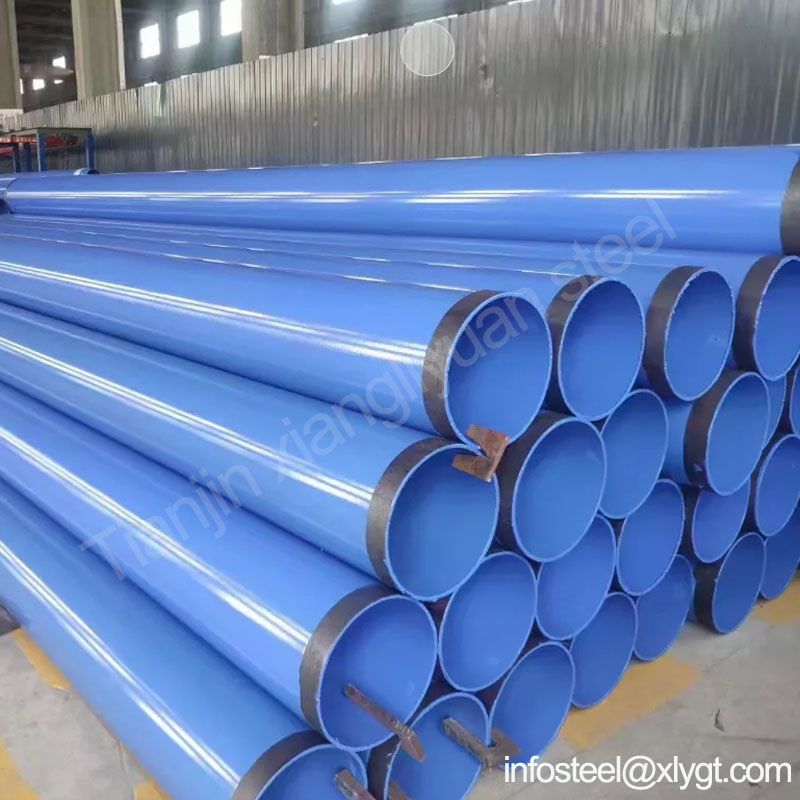
Complex Processing: We offer Beveled Ends (plain or compound), Painting (FBE, 3LPE), and Threading on-site before loading.
Selecting the Right Technology
For standard structural piling or water transmission with moderate thickness, Three-Roll Bending is an economical choice. However, for critical service conditions involving high pressure, low temperature (arctic circles), or sour media , the JCOE forming process is the industry standard.
The superior residual stress distribution and dimensional accuracy of JCOE make it the only viable option for Thick-walled LSAW pipes ( > 25mm).
Why Choose Tianjin Xiangliyuan Steel?
We specialize in the JCOE process to ensure your pipelines meet the highest grades of API 5L Gr. B, X42, X52, X60, X65, X70, and X80.
Our engineering team provides:
-
Customizable Lengths (up to 18 meters).
-
Tight Tolerances Guaranteed by our expanding machine.
-
3rd Party Inspection (BV, SGS, Lloyds) available upon request.
Contact us today to optimize your supply chain.
Company: Tianjin xiangliyuan steel
Website: https://www.xlysteel.com/
Email:infosteel@xlygt.comExplore our inventory of large diameter pipes ready for export via Tianjin Port.
-