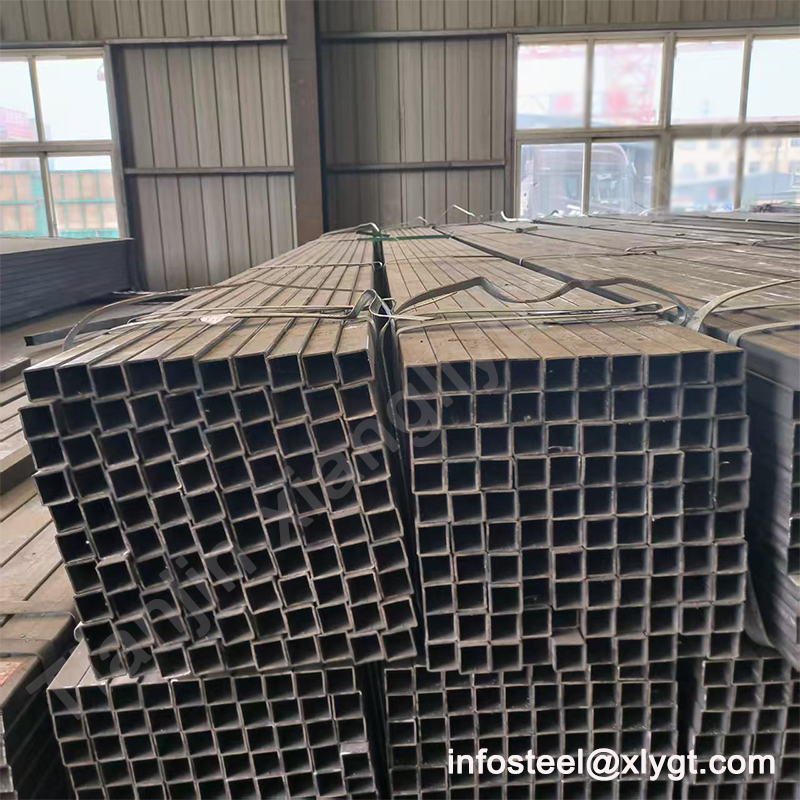
In the realm of mechanical applications, selecting the appropriate steel tubing is critical for ensuring structural integrity, machinability, and long-term reliability. ASTM A513 stands as the premier standard for electric-resistance welded (ERW) carbon and alloy steel mechanical tubing. However, within this specification lies a crucial engineering decision: choosing between standard ERW tubing (Types 1 & 2) and Drawn Over Mandrel (DOM) tubing (Type 5).
While both originate from the same raw materials—typically SAE 1008, 1010, 1020, or 1026 steel grades—their manufacturing paths diverge significantly, resulting in vastly different mechanical properties, dimensional precision, and surface characteristics. For global buyers sourcing precision steel tubes for hydraulic systems, automotive components, or heavy machinery, understanding the metallurgical and geometric distinctions between ERW and DOM is essential.
At Tianjin Xiangliyuan Steel, we specialize in supplying both ERW and DOM ASTM A513 steel tubing tailored to rigorous mechanical requirements. Strategically located in Tianjin—one of China’s largest port cities—we provide fast, reliable export logistics to North America, Europe, and Southeast Asia. For inquiries or technical consultations, reach us at infosteel@xlygt.com or visit https://www.xlysteel.com .
This article provides a data-driven comparison of precision parameters, manufacturing processes, and application suitability to help engineers and procurement specialists make informed decisions.
1. The Manufacturing Genesis: ERW vs. DOM
1.1 Standard ERW Tubing (ASTM A513 Types 1 & 2)
Electric Resistance Welded (ERW) tubing starts as a flat strip of hot-rolled or cold-rolled steel. The strip is roll-formed into a tubular shape, and longitudinal edges are joined using high-frequency electrical current without filler metal. The weld seam is then scarfed (scraped) to remove external flash. Types include:
-
Type 1: As-welded, with minimal post-treatment.
-
Type 2: Electric-resistance welded and fully annealed (stress-relieved) to restore ductility.
Key Limitation: The weld zone remains a distinct microstructural region, often exhibiting different hardness and grain orientation than the base metal. Dimensional tolerances are standard, but “roundness” and concentricity are inferior to DOM.
1.2 DOM Tubing (ASTM A513 Type 5)
Drawn Over Mandrel (DOM) tubing begins its life as ERW “mother tube” . However, it undergoes a transformative secondary process:
-
Cold Drawing: The ERW tube is pulled through a die (reducing OD) and simultaneously over a mandrel (sizing ID).
-
Weld Refinement: The cold working process breaks down the coarse weld structure, blending it into the parent metal. Post-drawing, the weld seam becomes nearly undetectable via standard NDT.
-
Stress Equalization: The process imparts a uniform grain flow pattern around the tube circumference.
The Result: A tube that mimics the homogeneity of seamless steel but with the cost efficiency of welded starting stock.
2. Precision Metrics: The Data-Driven Advantage
When engineers search for “tight tolerance steel tubing” or “high precision DOM cylinders,” they are looking for quantifiable data. Here is how the two products compare under ASTM A513 specifications.
2.1 Dimensional Tolerances (OD, ID, and Wall Thickness)
ERW (Standard):
-
OD Tolerance: Typically ±0.005” to ±0.010” for standard sizes.
-
Wall Tolerance: ±10% of nominal thickness.
-
Issue: There is often a slight “flare” or “hourglass” effect near the weld.
DOM:
-
OD/ID Concentricity: DOM excels here. The mandrel forces the ID to be perfectly concentric with the OD.
-
Wall Eccentricity: Typically ≤ 10% of wall thickness, often achieving ±5% on precision orders.
-
The “DOM Difference”: Because the tube is drawn over a mandrel, the ID surface is as precise as the OD. This is critical for hydraulic cylinder tubes where piston clearance is measured in microns.
2.2 Surface Finish (Ra Values)
-
ERW: Leaves a visible raised weld seam (ID) and potential scale. Roughness averages 3.2 µm Ra.
-
DOM: The cold drawing process burnishes the surface. Standard DOM delivers 1.6 µm Ra, while “DOM Special Smooth ID” (Type 6) can achieve 0.4 µm Ra or better, eliminating the need for costly honing in many applications.
3. Mechanical Properties: Strength and Yield
For ASTM A513 Type 5 DOM vs. Standard ERW (Type 1), the cold work of DOM significantly increases strength.
| Property | Standard ERW (1020 Grade) | DOM (ASTM A513 Type 5 – 1026 Grade) | Advantage |
|---|---|---|---|
| Tensile Strength | ~400 MPa (58 ksi) | ~550–700 MPa (80–100 ksi) | DOM +40% |
| Yield Strength | ~250 MPa (36 ksi) | ~480 MPa (70 ksi) min | DOM +92% |
| Hardness (HRB) | ~70 | ~80-90 | DOM (More wear resistant) |
| Elongation % | 25% | 15-20% | ERW (More ductile) |
Analysis: DOM is significantly stronger and harder due to strain hardening. However, ERW is more ductile. For applications requiring bending or flaring post-purchase, standard ERW (Type 2 annealed) is preferable. For shock absorbers, telescopic booms, or steering components requiring high fatigue resistance, DOM is superior.
4. Application Mapping: Matching the Tube to the Task
Understanding “what is DOM tubing used for” versus ERW helps buyers select the correct SKU.
4.1 Ideal Applications for ERW (ASTM A513 Types 1 & 2)
-
Furniture Frames: Lower stress, aesthetic requirements.
-
Exhaust Systems: High heat, low precision needed.
-
Structural Supports: Where roundness is secondary to cost.
-
Conduit: Low-pressure fluid or wire protection.
4.2 Ideal Applications for DOM (ASTM A513 Type 5)
-
Hydraulic Cylinders: Requires smooth ID, tight concentricity to prevent seal leaks. DOM tubing for hydraulic cylinders is a top search query globally.
-
Precision Shafting: DOM’s straightness (often 0.5mm/m) makes it ideal for rotating shafts.
-
Automotive Roll Cages: DOM’s homogeneous weld strength ensures no weak point in safety structures.
-
Bearings & Bushings: DOM is often machined into hollow piston rods and bushings because the hard, smooth surface reduces friction.
5. Why Source from Tianjin Xiangliyuan Steel?
Choosing the right specification is only half the battle; sourcing from a reliable partner is the other. When you search for “ASTM A513 steel tubing supplier” or “China DOM tubing exporter,” Tianjin Xiangliyuan Steel offers distinct advantages:
5.1 Logistics & Port Proximity
We are headquartered in Tianjin, China. Our warehouse is located within a 30-kilometer radius of Tianjin Port (Xingang) , one of the largest and most efficient ports in Northern China. This proximity translates to:
-
Lower inland trucking costs (saving you 1-2% in FOB charges compared to inland suppliers).
-
Faster lead times: Loading onto vessels within 7 days of order confirmation.
-
Reduced risk of weather delays during inland transit.
5.2 Quality Assurance
We strictly adhere to ASTM A513/A513M standards. Every batch of DOM tubing undergoes:
-
Eddy Current Testing (ECT) or Hydrostatic testing for weld integrity.
-
Chemical verification (C, Mn, P, S limits per grade).
-
Hardness testing (HRB/HRC) to confirm cold work levels.
5.3 Supply Chain Transparency
Unlike traders, we work directly with ISO-certified mills and manage our own finishing inventory. Whether you need SAE 1020 DOM for general machining or SAE 1026 for high-tensile hydraulic applications, we provide EN 10204 3.1 MTCs (Mill Test Certificates) with every shipment.
Contact Tianjin Xiangliyuan Steel today:
-
Email: infosteel@xlygt.com
-
Request a quote: Send us your OD, ID, Wall thickness, Grade, and Length.
6. Cost-Benefit Analysis: Why Pay More for DOM?
A frequent question in the steel trade is: “Is DOM worth the premium over ERW?”
-
Machining Costs: If you are machining the ID of standard ERW to remove the weld seam and achieve tolerance, you are paying for lathe time. DOM arrives “near-net shape,” reducing machining time by up to 50%.
-
Rejection Rates: In hydraulic cylinder manufacturing, ERW failures due to weld line splitting under pressure run at ~2-3%. DOM, with its refined grain structure, reduces this to <0.5%.
-
Weight Management: DOM’s consistent wall thickness allows engineers to design with minimum safety factors, reducing overall equipment weight.
For high-cycle applications, DOM pays for itself. For static, low-stress structures, standard ERW is more economical.
Precision is a Process, Not a Product
The comparison between ASTM A513 ERW and DOM tubing is ultimately a comparison of value-add. Standard ERW is an excellent general structural product. However, for precision steel tubing for machine use, Drawn Over Mandrel (DOM) is the definitive gold standard.
DOM offers superior concentricity, a homogenous weld zone, enhanced surface finish, and significantly higher yield strength. For engineers designing automotive telescopic shocks, heavy hydraulic cylinders, or precision drive shafts, specifying ASTM A513 Type 5 DOM is non-negotiable.
Tianjin Xiangliyuan Steel bridges the gap between high-quality Chinese metallurgy and global demand. With our strategic location in Tianjin—just kilometers from the port—we ensure that your precision steel tubes arrive on time and on budget.
Ready to upgrade your supply chain?
Visit our website: https://www.xlysteel.com
Email our technical sales team: infosteel@xlygt.com
Let us provide you with the precision you need to build better machines.