In the modern oil and gas transmission industry, the safety and reliability of long-distance pipelines are paramount. One of the most critical mechanical properties for high-strength pipeline steel pipes is crack arrest toughness. When a brittle fracture initiates in a pipeline due to internal pressure fluctuations, ground movement, or third-party damage, the material’s ability to stop a propagating crack determines whether a minor incident becomes a catastrophic spill or explosion.
At Tianjin Xiangliyuan Steel, we understand that supplying API 5L pipes without verified crack arrest toughness is a liability risk. As a leading supplier based in the Tianjin port economic zone, we ensure every batch of our LSAW steel pipe, SSAW spiral pipe, and seamless line pipe meets stringent Charpy V-Notch (CVN) and Drop Weight Tear Test (DWTT) standards.
This article provides a technical deep dive into the arrest toughness requirements, testing methodologies, and why these specifications are non-negotiable for oil and gas pipeline projects.
1. The Physics of Pipeline Fracture: Ductile vs. Brittle
Before discussing testing, we must understand the failure modes. Pipeline fractures are broadly classified into two types:
-
Brittle Fracture: Occurs at low temperatures or in materials with low toughness. The crack propagates rapidly along crystallographic planes, often at speeds up to 1,000 m/s. This is the most dangerous mode because it offers little plastic deformation as a warning.
-
Ductile Fracture: Characterized by significant plastic deformation (shear lips). While still dangerous, ductile cracks propagate slower (150–300 m/s) and are easier to arrest.
Modern high-strength pipeline steel pipes are designed to operate in the ductile-to-brittle transition temperature (DBTT) range. The goal of Charpy impact test and DWTT is to ensure the DBTT is well below the minimum operating temperature.
2. Charpy Impact Test (CVN): The First Line of Defense
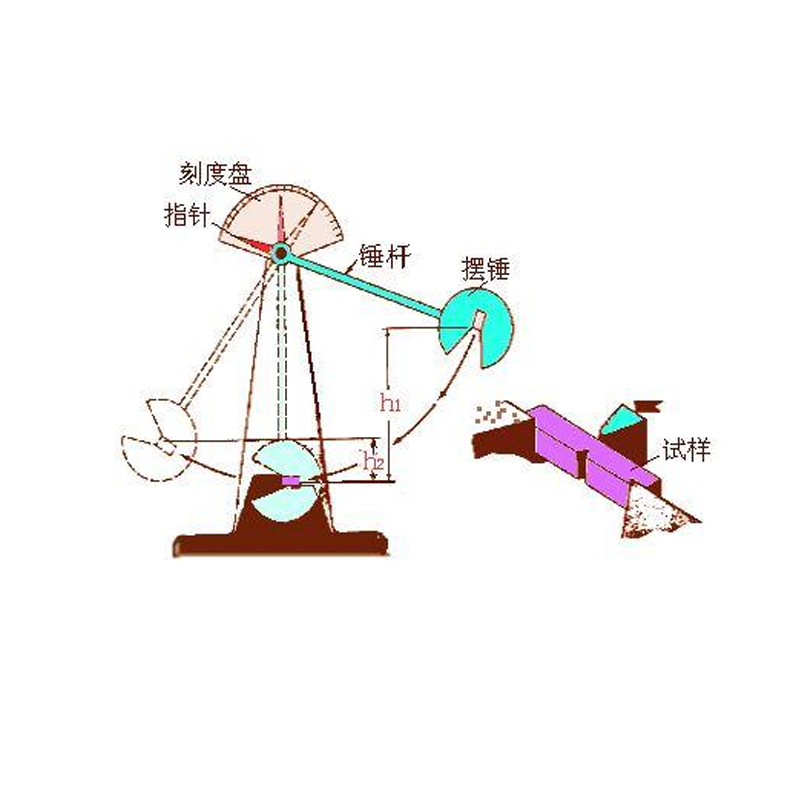
The Charpy V-notch impact test (ASTM E23 / ISO 148-1) is the most widely used quality control tool for pipeline steel. A standard 10mm x 10mm specimen with a 2mm V-notch is struck by a pendulum, measuring absorbed energy in Joules (J).
Charpy Requirements for API 5L PSL2 Pipes
For line pipe for oil and gas transport, API 5L specification mandates specific average absorbed energies:
-
Individual specimen: Minimum 40J (for grades ≥ L360/X52).
-
Average of three specimens: Minimum 54J.
However, for arctic pipeline projects or sour service pipeline applications, customers often require 100J+ at -20°C or -40°C.
The Limitation of Charpy
While the Charpy test is excellent for quality assurance, it suffers from specimen size constraints. A standard CVN specimen is only 10mm thick. For heavy wall pipe (e.g., 25.4mm WT), a Charpy test measures only 40% of the wall thickness. It cannot accurately predict the shear fracture appearance in full-thickness material.
This is where the Drop Weight Tear Test (DWTT) becomes mandatory.
3. Drop Weight Tear Test (DWTT): The Arbitration Standard
DWTT (ASTM E436 / API RP 5L3) is the definitive test for crack arrest toughness. Unlike Charpy, DWTT uses a full-thickness specimen (typically 3 inches wide by full pipe wall thickness). A falling weight strikes the specimen, and evaluators measure the Shear Area Percentage (SA%).
Why DWTT is Critical for Line Pipe
A pipe may pass Charpy tests but fail in the field due to brittle fracture propagation. DWTT simulates actual propagation conditions. The industry standard requires:
-
SA% ≥ 85% at the specified test temperature for the body of the pipe.
-
SA% ≥ 75% for the weld (Heat Affected Zone).
If a full-wall DWTT specimen shows less than 85% shear area, the material is considered prone to brittle fracture propagation. For X70 steel pipe, X80 pipeline steel, or higher grades, achieving 85% SA% at -20°C requires precise thermomechanical controlled processing (TMCP).
4. Correlation and Differences: CVN vs. DWTT
Many engineers ask: “Can I substitute Charpy with DWTT?” No. They serve different purposes.
| Feature | Charpy V-Notch (CVN) | Drop Weight Tear Test (DWTT) |
|---|---|---|
| Specimen Size | Sub-size (10x10mm) | Full thickness (up to 40mm) |
| Constraint | High (plane strain) | Lower (plane stress) |
| Parameter | Absorbed energy (Joules) | Shear area (%) |
| Best for | Weld HAZ toughness, QC | Crack arrest in body |
| Cost | Low | High |
Recommendation: For onshore pipeline projects in moderate climates, CVN alone may suffice. For offshore pipelines, high-pressure gas transmission lines, or seismic zones, DWTT is mandatory.
5. How Tianjin Xiangliyuan Steel Ensures Compliance
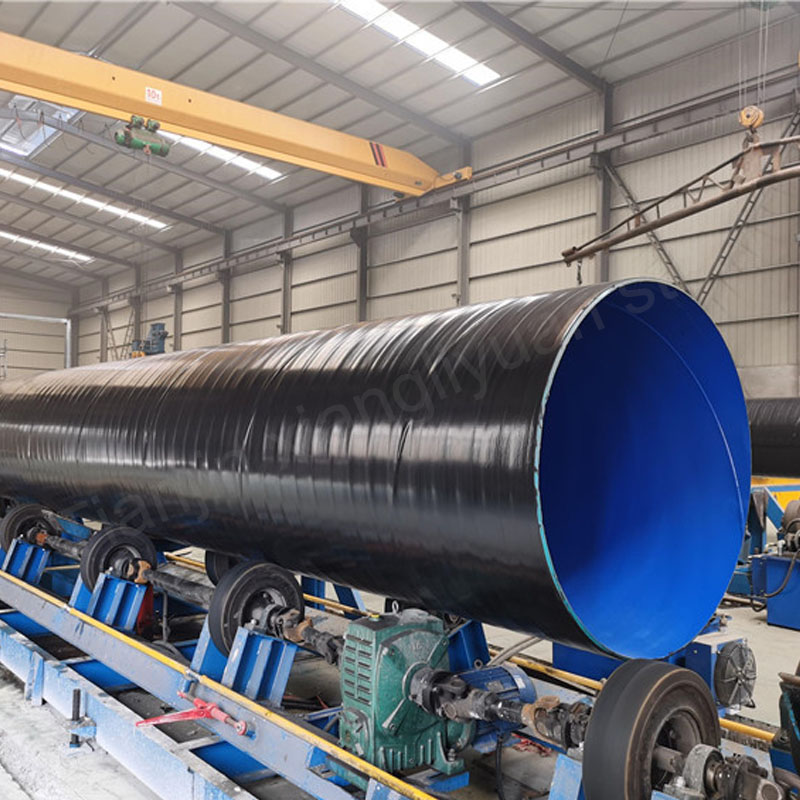
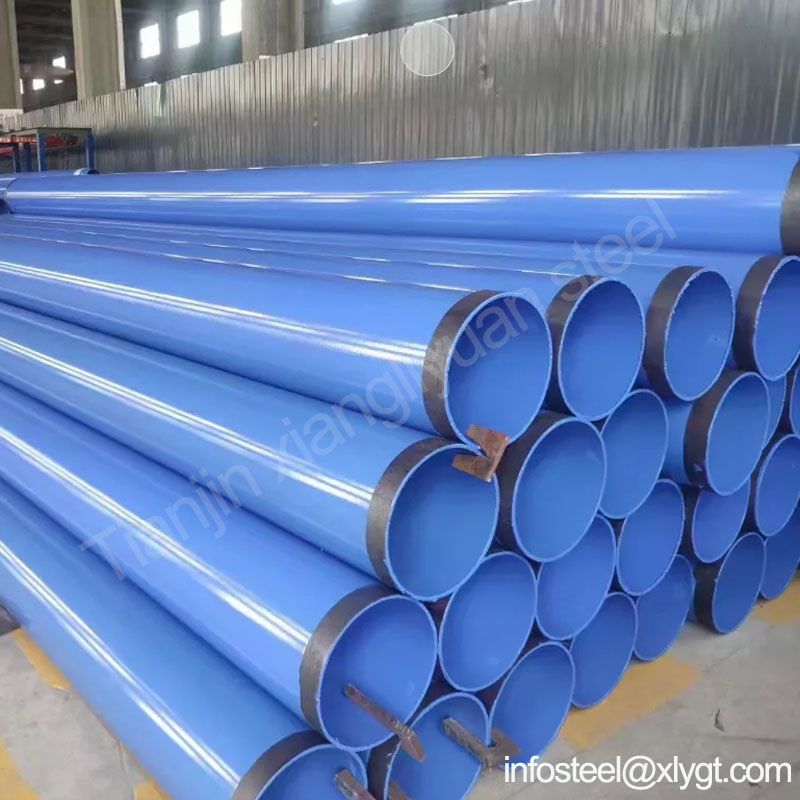
At Tianjin Xiangliyuan Steel, we do not simply “certify” pipes; we engineer toughness. We supply seamless steel pipe, LSAW (Longitudinal Submerged Arc Welded) pipe, and SSAW (Spiral Submerged Arc Welded) pipe with full traceability.
Our Testing Capabilities
-
In-house Charpy impact testing at temperatures ranging from +20°C down to -60°C.
-
Third-party witnessed DWTT for every heat number with wall thickness > 10mm.
-
Microstructure analysis to verify acicular ferrite or bainite structures, which naturally exhibit high arrest toughness.
Case Example: X65 for Arctic Service
A recent client required X65M PSL2 Sour Service pipe for a Canadian Arctic project. The specification required:
-
Charpy: 150J min at -45°C.
-
DWTT: 90% SA% at -20°C.
We supplied Tianjin Xiangliyuan Steel pipes sourced from top-tier mills using TMCP + accelerated cooling. Our proximity to Tianjin Port allowed us to manage the logistics of heavy-wall pipe (31.8mm WT) efficiently, reducing sea freight lead times by 14 days compared to inland competitors.
6. Industry Standards and Certifications
When procuring steel line pipe for oil and gas pipelines, verify these standards:
| Standard | Scope |
|---|---|
| API 5L (46th Edition) | General line pipe (PSL1/PSL2) |
| ISO 3183 | International pipeline steel |
| DNV-OS-F101 | Submarine pipeline systems |
| CSA Z245.1 | Canadian steel line pipe |
| NACE MR0175 | Sour service (H2S resistant) |
Tianjin Xiangliyuan Steel supplies pipe fully certified to API 5L PSL2, with optional NACE MR0175 for sour service pipeline applications.
7. Why Location Matters: The Tianjin Port Advantage
Toughness testing is time-sensitive. Delays in material release cause project overruns. Our location in Tianjin, China—home to the largest comprehensive port in Northern China—provides unique advantages:
-
Immediate access to testing labs: CVN and DWTT results available within 48 hours.
-
Fast loading: We handle bulk cargo of steel pipes, break bulk, and containerized pipe directly at the port.
-
Lower logistics cost: No inland trucking fees. We quote CIF (Cost, Insurance, Freight) to Houston, Rotterdam, or Singapore with competitive rates.
Whether you need large diameter spiral steel pipe for water transmission or high-frequency welded (HFW) pipe for gas distribution, being port-adjacent means faster delivery and lower risk of corrosion from inland storage.
8. SEO & Procurement Keywords Summary
To help procurement managers and engineers find this technical resource, we have naturally integrated the following high-volume search terms:
-
Crack arrest toughness requirements
-
Charpy impact test for pipeline steel
-
Drop hammer tear test (DWTT) standards
-
API 5L PSL2 pipe supplier
-
High-strength pipeline steel pipe
-
LSAW steel pipe for oil and gas
-
SSAW spiral pipe manufacturer
-
Seamless line pipe for arctic projects
-
Sour service pipeline steel
-
*X70 steel pipe / X80 pipeline steel*
-
DWTT vs Charpy V-notch correlation
-
Line pipe for oil and gas transport
-
Onshore pipeline projects / Offshore pipelines
-
Large diameter spiral steel pipe
Do Not Compromise on Arrest Toughness
The cost of a single brittle fracture in a high-pressure gas pipeline can reach millions of dollars in environmental remediation and supply disruption. The Charpy impact test tells you if the weld is good. The Drop Weight Tear Test (DWTT) tells you if the pipe will survive a catastrophic event.
For your next project, do not settle for generic mill certificates. Demand verified crack arrest toughness data.
At Tianjin Xiangliyuan Steel, we provide not just pipe—we provide performance verification. Our technical team can advise on the optimal CVN and DWTT combinations for your specific operating temperature and pressure requirements.
Contact Tianjin Xiangliyuan Steel
We invite project managers and procurement specialists to request a technical datasheet or a quote tailored to your crack arrest toughness requirements.
-
Company: Tianjin Xiangliyuan Steel
-
Email:
infosteel@xlygt.com -
Website: https://www.xlysteel.com
-
Location: Tianjin Port Economic Zone, China (5km from terminal)
Let our port-side logistics and advanced toughness testing secure your next pipeline.
For immediate assistance, visit https://www.xlysteel.com to browse our current inventory of API 5L PSL2, LSAW, SSAW, and seamless pipes.
Technical Addendum: Recommended Minimum Toughness Values
For engineers performing fracture mechanic calculations, here are our recommended minimum values (based on Batelle two-curve model assumptions):
Grade Thickness (mm) Charpy @ 0°C (J) DWTT SA% @ 0°C X52 ≤ 12.7 60 85% X65 ≤ 19.0 100 90% X70 ≤ 25.4 150 90% X80 ≤ 31.8 200 95% Note: Values must be adjusted for H2S sour service pipeline conditions. Contact
infosteel@xlygt.comfor a customized proposal. -