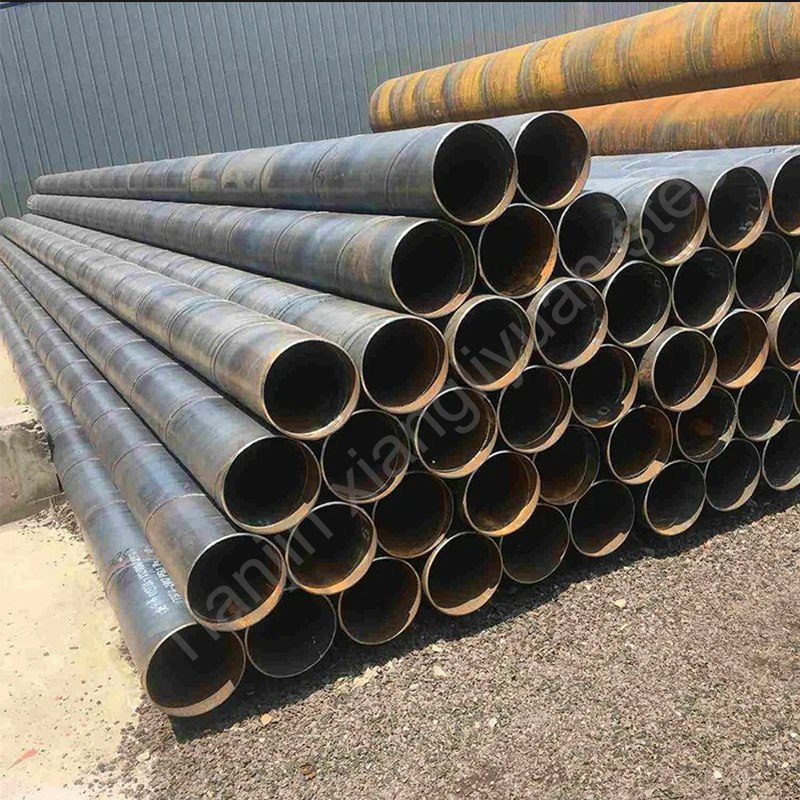
In modern pipeline engineering, the selection of the correct large diameter steel pipe is critical for structural integrity, flow efficiency, and long-term operational safety. Two dominant technologies—Spiral Submerged Arc Welded (SSAW) pipe and Longitudinally Submerged Arc Welded (LSAW) pipe—are widely specified for medium-to-high-pressure transmission of oil, natural gas, water, and slurry.
For procurement managers and civil engineers, understanding the technical distinctions between SSAW steel pipe and LSAW steel pipe is not merely an academic exercise; it directly impacts project capital expenditure (CAPEX), operational expenditure (OPEX), and risk management.
At Tianjin Xiangliyuan Steel (visit our technical center at https://www.xlysteel.com/), we have supplied over 500,000 tons of submerged arc welded pipe to global energy projects. This article provides an evidence-based comparison to guide your specification decisions.
1. Manufacturing Processes: Forming the Foundation
The divergence in performance begins at the forming stage.
1.1 SSAW Pipe (Helical / Spiral Welded Pipe)
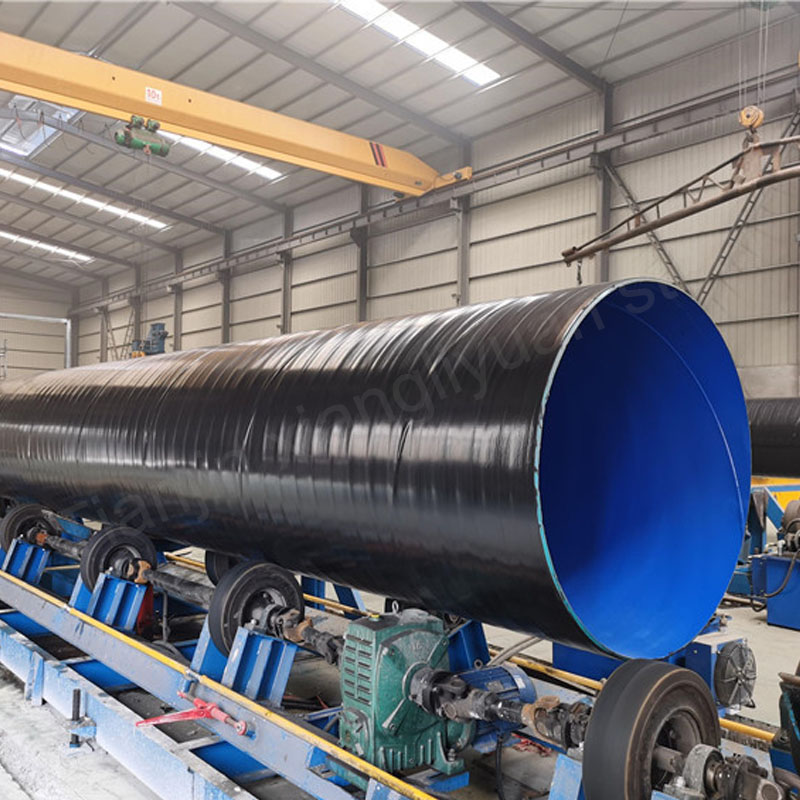
The SSAW pipe production process starts with a wide steel coil. This coil is continuously unwound and fed into a forming machine at a specific helix angle. The edges are brought together along a spiral seam, where submerged arc welding (SAW) is applied both internally and externally.
-
Key Feature: The weld seam runs diagonally across the pipe body.
-
Dimensional Range: Typically produced from DN200 to DN3600 (8″ to 142″).
-
Base Material: Hot-rolled steel coil (API 5L Grade B, X42, X52, X60, X65, X70).
1.2 LSAW Pipe (Straight Seam Welded Pipe – JCOE / UOE)
The LSAW steel pipe process begins with a discrete steel plate (not coil). The plate is edge-prepared, then formed through a series of presses (J-forming, C-forming, O-forming) into a cylindrical shape. A single longitudinal seam is welded inside and out.
-
Key Feature: The weld seam runs parallel to the pipe axis.
-
Dimensional Range: Typically produced from DN300 to DN1500 (12″ to 60″), though JCOE can reach DN4000+.
-
Base Material: Thick steel plate (API 5L, up to X80 or higher).
SEO Keywords integrated: SSAW pipe manufacturing process, LSAW pipe production line, spiral welded pipe vs longitudinal welded pipe, submerged arc welding technology.
2. Mechanical Properties and Structural Performance
For pipeline engineering, the critical parameters are pressure resistance, toughness, and fatigue life.
2.1 Pressure and Strength
-
LSAW Pipe: Because the weld seam is straight and parallel to the principal stress direction (hoop stress), LSAW exhibits superior resistance to internal pressure. There is no “unwelded” spiral path for stress concentration. For high-pressure gas transmission lines (e.g., Class 600 or 900), LSAW steel pipe is the gold standard.
-
SSAW Pipe: The helical weld is at an angle (typically 30°-60°). While modern SSAW pipes offer excellent performance, the oblique weld orientation can exhibit slightly lower resistance to internal pressure compared to LSAW at extreme pressures. However, for standard operating pressures (≤10 MPa), modern SSAW API 5L pipe performs reliably.
2.2 Stiffness and Beam Loading
-
LSAW Pipe: Provides higher longitudinal stiffness (beam strength). This makes it ideal for overhead crossings, pipelines crossing uneven terrain, or as casing pipe where bending loads are significant.
-
SSAW Pipe: Has relatively lower beam strength due to the helical seam acting as a weak plane under pure bending. Consequently, SSAW is often restricted to buried applications with uniform support.
2.3 Dimensional Accuracy
-
LSAW Pipe: Offers superior roundness and straightness. The JCOE or UOE forming process ensures strict tolerance on outer diameter (OD).
-
SSAW Pipe: May exhibit slight dimensional variations (“camber” or “ovality”), requiring careful alignment during field welding.
*Pro Tip from Tianjin Xiangliyuan Steel: For projects requiring high-pressure gas transmission >10 MPa and OD < 60″, LSAW is preferred. For large diameter water or low-pressure oil lines, SSAW offers the best value.
3. Cost-Effectiveness and Supply Chain Economics
Global pipe buyers consistently ask: “Which type lowers my landed cost?”
3.1 Raw Material Utilization
-
SSAW Pipe: Starts from steel coil, which is cheaper per ton than plate. The spiral forming allows a single coil width to produce a wide range of diameters. Scrap rate is typically <5%.
-
LSAW Pipe: Starts from discrete steel plates (more expensive). Plate edges must be trimmed, leading to higher scrap (8-12%). However, for very thick walls (>25mm), only plate-based LSAW is possible (coil is not thick enough).
3.2 Production Efficiency
-
SSAW Pipe: Continuous process yields higher linear meters per hour. This reduces manufacturing lead time.
-
LSAW Pipe: Batch process (JCOE) is slower, increasing labor and machine cost per ton.
3.3 Logistics Advantage: Tianjin Port Proximity
As a manufacturer based in Tianjin, China, Tianjin Xiangliyuan Steel leverages the proximity to Tianjin Port—the largest comprehensive port in Northern China. For both SSAW and LSAW pipes:
-
Ocean freight costs: Reduced inland trucking fees (port is <80km from our factory).
-
Loading efficiency: Direct container stuffing or break-bulk vessel loading without multiple transshipments.
-
Lead times: Export orders to Southeast Asia, Middle East, Africa, and South America benefit from daily sailing schedules.
When you request a quotation from infosteel@xlygt.com, we include a CIF price backed by real-time shipping quotes from Tianjin.
SEO Keywords: steel pipe cost comparison, Tianjin port steel pipe export, SSAW pipe price vs LSAW, low MOQ steel pipe China.
4. Application Matrix: Where to Use SSAW vs. LSAW
Based on international standards (API 5L, ASTM A252, EN 10219), here is the practical decision guide:
| Application | Recommended Pipe Type | Rationale |
|---|---|---|
| Long-distance Gas Transmission (High Pressure) | LSAW | Superior hoop stress resistance, higher safety margin for HIC (Hydrogen Induced Cracking) zones. |
| Crude Oil / Product Pipelines | SSAW or LSAW | SSAW for DN800+; LSAW for high-pressure or arctic conditions (higher CTOD fracture toughness). |
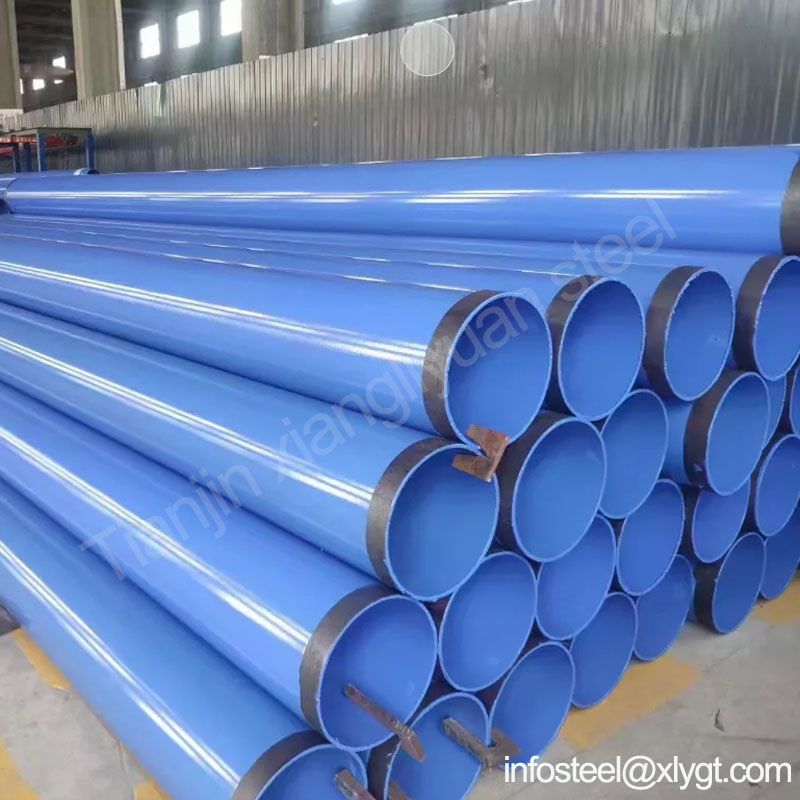
| Water Conveyance / Irrigation | SSAW | Cost-effective for large diameters; internal coatings (FBE/3LPE) apply easily to spiral surfaces. |
| Structural Piling (ASTM A252) | SSAW | High axial load capacity not critical; spiral weld provides flexibility during pile driving. |
| Offshore Riser / Jacket | LSAW | Requires 100% X-ray/UT of longitudinal seam; fatigue performance under wave loading. |
| Slurry / Dredging Lines | SSAW | Lower cost allows replacement cycles; spiral orientation reduces scouring at weld toes. |
SEO Keywords: oil and gas pipeline pipe, water transmission steel pipe, API 5L LSAW pipe, ASTM A252 SSAW pipe, structural piling pipe.
5. Quality Assurance and Non-Destructive Testing (NDT)
Any reputable submerged arc welded pipe supplier must adhere to rigorous testing.
For Both SSAW and LSAW:
-
NDT: 100% Ultrasonic Testing (UT) of weld seams, plus X-ray or Radiographic Testing (RT) for critical grades.
-
Hydrostatic Testing: Each pipe length is filled with water and pressurized to ≥ 100% of specified minimum yield strength.
-
Dimensional checks: OD, wall thickness (by ultrasonic), out-of-roundness, and straightness.
Specific to SSAW:
-
The spiral weld requires continuous seam tracking. At Tianjin Xiangliyuan Steel, we employ automatic seam-following UT probes to eliminate blind zones.
-
End expansion: All SSAW pipes above 16″ are hydraulically expanded to relieve residual stresses and improve roundness.
Specific to LSAW:
-
Full-length weld radiography: Often mandatory per API 5L PSL2.
-
Impact testing (Charpy V-notch) at specified temperatures (e.g., -20°C, -40°C) for cold-region projects.
Our QC reports are traceable to the heat number of the original steel coil or plate. Request a sample Mill Test Certificate (MTC) via infosteel@xlygt.com.
6. Why Tianjin Xiangliyuan Steel is Your Trusted Partner
After comparing the technical specifications, you need a supplier with proven execution capability.
Tianjin Xiangliyuan Steel (Website: https://www.xlysteel.com/) has been serving the global pipeline industry for over a decade. Here is what sets us apart:
-
Dual-Technology Expertise: We operate dedicated production lines for SSAW steel pipe (3 lines, up to DN3500) and LSAW steel pipe (JCOE line, up to DN1500, wall thickness 6-60mm). We are not a trader; we are a factory that controls every variable.
-
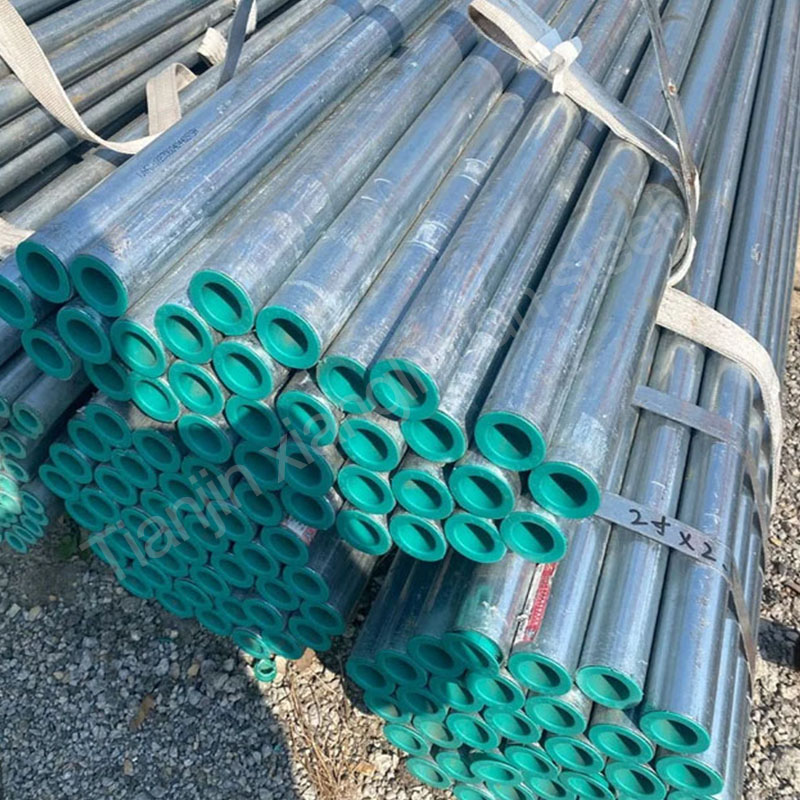
Material Certification Capabilities: We supply API 5L PSL1 & PSL2 (Grades B, X42, X52, X60, X65, X70), ASTM A252 (Grades 1, 2, 3), ASTM A53, and EN 10219 (S355J2H).
-
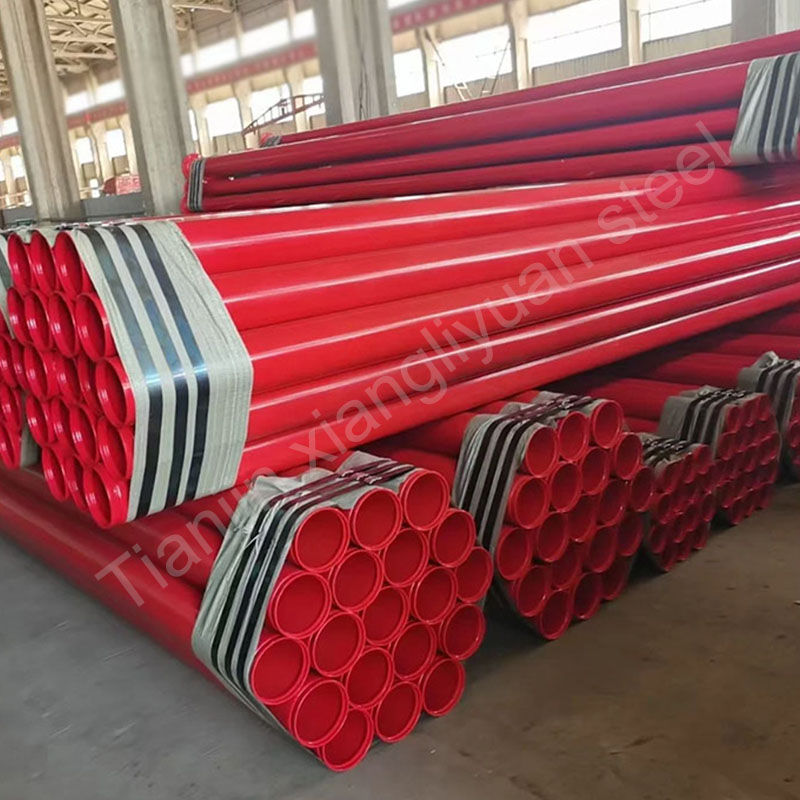
Coating Integration: We offer in-house 3LPE coating, FBE coating, bitumen coating, and concrete weight coating. This eliminates logistics delays between pipe mill and coating plant.
-
Tianjin Port Logistics: Our factory is minutes from Tianjin Xingang Port. For full container loads (FCL) or break-bulk shipments, we load directly at the terminal. Average loading time: 12 hours from truck arrival to vessel departure.
-
Short Lead Times: Standard SSAW pipe: 25 days after deposit. Standard LSAW pipe: 35 days.
Contact our engineering sales team:
-
Email: infosteel@xlygt.com
-
Web: https://www.xlysteel.com/ (Live chat and instant RFQ forms available)
Making the Right Call for Your Project
There is no universally “superior” pipe; there is only the appropriate specification for your operating envelope.
-
Choose SSAW steel pipe when: You need large diameters (>DN800), moderate pressures (≤10 MPa), water or low-corrosive media, and tight budget constraints. The spiral welded pipe offers unbeatable value for money in bulk water and piling projects.
-
Choose LSAW steel pipe when: You are building high-pressure gas transmission cross-country lines, require extreme low-temperature toughness, or the pipe will experience significant bending loads. The longitudinally submerged arc welded pipe is the premium choice for mission-critical energy infrastructure.
At Tianjin Xiangliyuan Steel, we do not push one product over the other. We provide transparent engineering data to help you specify correctly. We invite pipeline contractors and EPC firms to send their technical data sheets (TDS) to infosteel@xlygt.com for a free comparison matrix report.
Optimize your pipeline lifecycle cost. Partner with Tianjin’s most reliable steel pipe manufacturer.
Visit us now: https://www.xlysteel.com/ – View our virtual factory tour and current stock list.
-