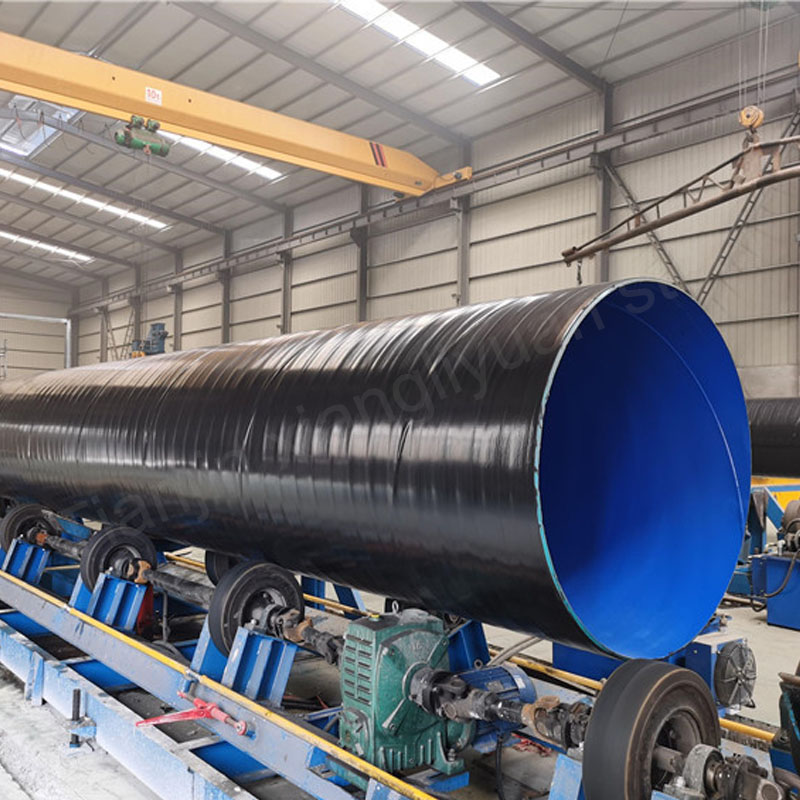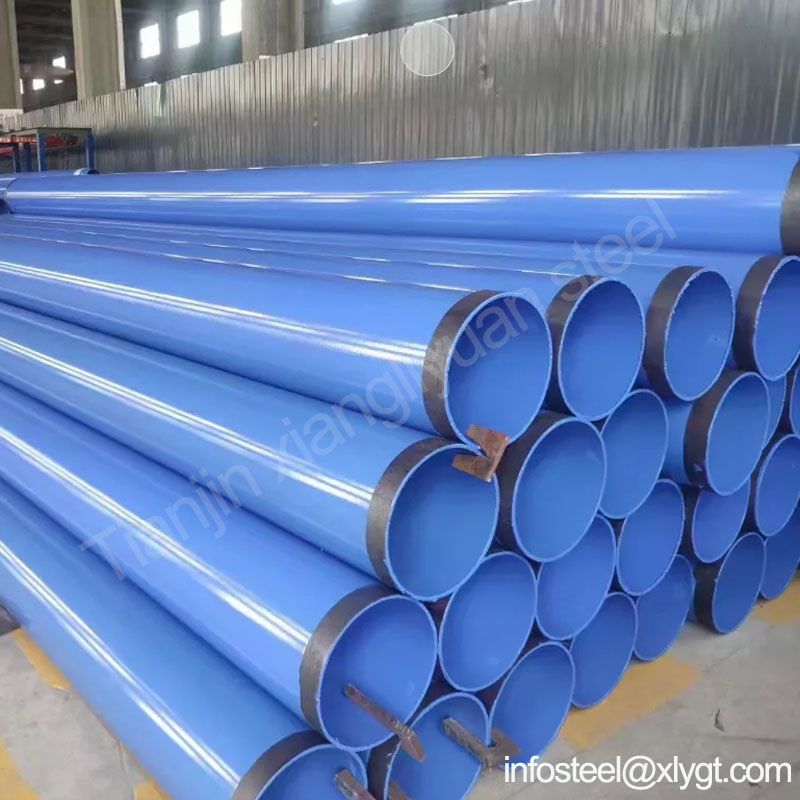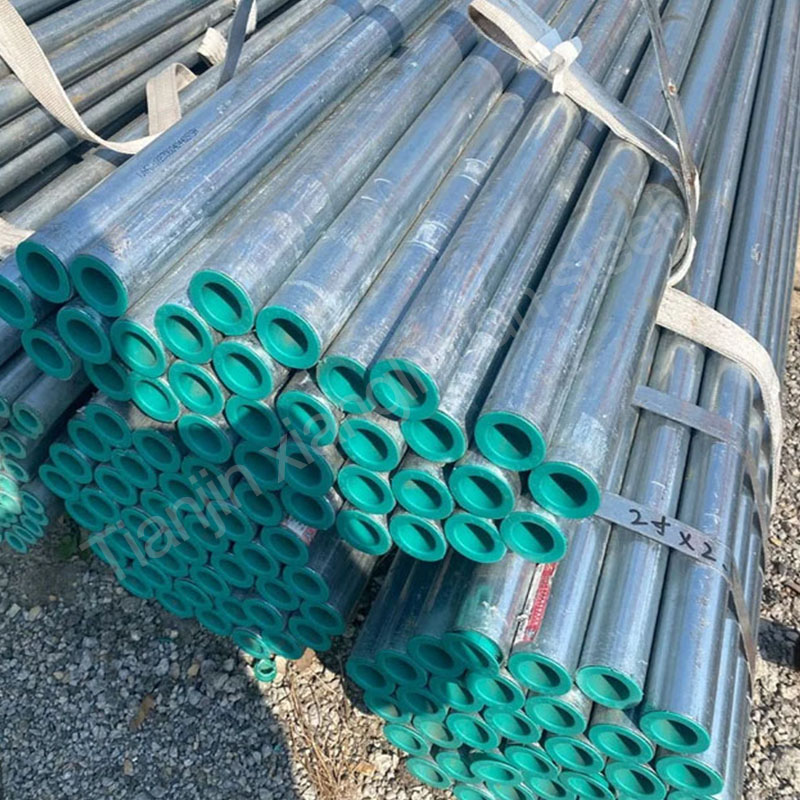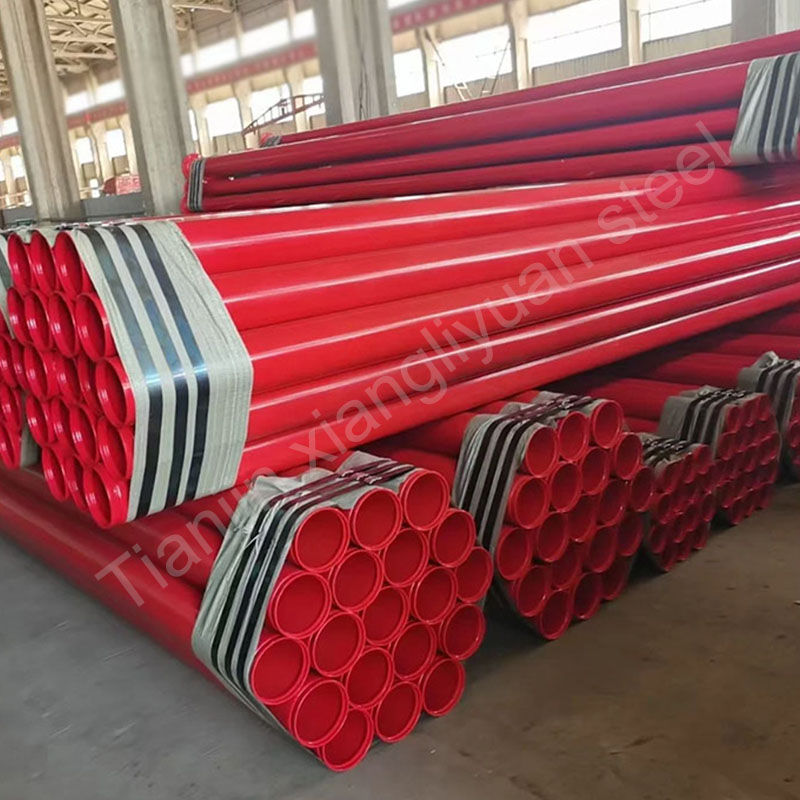
In the global industrial landscape, understanding steel pipe pressure ratings is fundamental to ensuring operational safety, regulatory compliance, and cost-effective procurement. Whether you’re managing an oil refinery in Houston, a chemical plant in Rotterdam, or a power station in Singapore, selecting the correct carbon steel pipe for your pressure requirements can mean the difference between seamless operations and catastrophic failure. At Tianjin Xiangliyuan Steel, we specialize in manufacturing high-performance steel pipes that meet the most demanding international standards, delivering reliability from our facility near Tianjin Port to your project site worldwide.
Understanding Pressure Ratings: The Engineering Foundation
The pressure rating of a steel pipe defines the maximum internal pressure it can safely withstand at a specific temperature. This critical parameter is determined by four primary factors: material strength, wall thickness, operating temperature, and manufacturing method . For procurement managers and engineers, understanding these variables is essential when specifying seamless steel pipe or ERW steel pipe for high-pressure applications.
The relationship between yield strength and pressure capacity follows established engineering principles. Yield strength represents the stress level at which material begins permanent deformation, while pressure rating incorporates safety factors to ensure long-term integrity. For ASTM A53 Grade B carbon steel pipe—a staple in industrial applications—the yield strength typically reaches 240 MPa (35,000 PSI), providing robust performance for medium-pressure systems .
The Barlow Formula: Calculating Maximum Working Pressure
The most widely accepted method for calculating pipe pressure ratings is the Barlow Formula, adopted by ASME B31.3 Process Piping Code and ASME B31.4/B31.8 pipeline standards . This fundamental equation allows engineers to verify pressure-bearing capacity based on known pipe dimensions:
P = (2 × S × t) / D
Where:
P = Design pressure (MPa or PSI)
S = Allowable stress (typically 60% of yield strength at design temperature)
t = Wall thickness (mm or inches)
D = Outside diameter (mm or inches)
For example, calculating the working pressure for a 2-inch NPS Schedule 40 ASTM A106 Grade B seamless pipe (OD: 60.3 mm, wall thickness: 3.91 mm) at ambient temperature yields approximately 6.5 MPa (940 PSI) . This makes Schedule 40 steel pipe suitable for water distribution systems, low-pressure steam lines, and general industrial piping.
However, for high-pressure applications such as hydraulic systems, high-pressure gas transmission, or refinery process lines, thicker wall schedules are required. Schedule 80 steel pipe offers approximately 60% higher pressure capacity than Schedule 40, while Schedule 160 and XXS (Double Extra Strong) configurations handle extreme pressures up to 28-30 MPa in critical environments like offshore platforms and petrochemical reactors .
Global Standards: Navigating ASTM, ASME, API, and EN
The international steel pipe industry operates under several dominant standard systems. Understanding these specifications ensures compliance and interchangeability across global supply chains.
ASTM Standards: Material Specifications
ASTM International defines the chemical composition and mechanical properties of steel pipe materials. Key specifications include:
ASTM A53: Standard for welded and seamless carbon steel pipe (Grade A and B), commonly used for mechanical and pressure applications
ASTM A106: Specification for seamless carbon steel pipe for high-temperature service, available in Grade A, B, and C, with Grade B being the most widely specified for boiler and pressure vessel applications
ASTM A333: Covers seamless and welded steel pipe for low-temperature service, essential for cryogenic applications and LNG infrastructure
ASTM A335: Specifies seamless ferritic alloy steel pipe for high-temperature service, including P11, P22, and P91 grades for power generation and refinery applications
ASME Codes: Design and Safety Standards
While ASTM defines materials, ASME (American Society of Mechanical Engineers) establishes how to use them safely. ASME B31.3 serves as the global benchmark for process piping design, specifying wall thickness requirements, allowable stress values, and pressure-temperature ratings . For power generation applications, ASME B31.1 governs power piping systems, while ASME B36.10M and ASME B36.19M provide dimensional standards for welded and seamless wrought steel pipe .
When an ASTM material receives ASME approval for pressure vessel use, it receives an “S” prefix—transforming ASTM A106 into ASME SA106, indicating full compliance with boiler and pressure vessel codes .
API Standards: Oil and Gas Industry Requirements
For oil and gas pipeline systems, API 5L represents the definitive specification. Covering Grade B through X80 high-strength steels, API 5L addresses both seamless and welded line pipe for hydrocarbon transportation. The standard incorporates stringent requirements for toughness, weldability, and corrosion resistance—critical factors for long-distance transmission pipelines and offshore risers .
European Standards: EN and DIN Systems
European projects typically reference EN 10216 (seamless steel tubes for pressure purposes) and EN 10217 (welded steel tubes). These standards have largely superseded historic DIN 17175 and DIN 1629 specifications, though legacy equipment may still reference these designations . The PN (Pressure Nominal) system—PN10, PN16, PN25, PN40—provides pressure rating classifications using 200°C as the reference temperature, differing from the ASME Class system (Class 150, 300, 600, 900) which references 425.5°C .
Temperature Effects: Critical Considerations
Temperature significantly impacts pressure ratings through its effect on material strength. As operating temperature increases, the yield strength and tensile strength of carbon steel decrease, necessitating derating factors. According to ASME B31.3, allowable stress values drop progressively above 100°C (212°F), with typical reductions of approximately 15% for every 50°C increase above ambient temperature .
For high-temperature applications—such as steam pipelines, boiler feedwater systems, and process heaters—selecting appropriate materials is crucial. ASTM A106 Grade B maintains integrity up to 400°C (750°F), while chrome-molybdenum alloys (ASTM A335 P11, P22) handle temperatures exceeding 540°C (1000°F) in supercritical power plants .
Schedule Numbers: Decoding Wall Thickness
The Schedule (SCH) system provides a standardized method for specifying wall thickness. Schedule numbers relate to pressure capacity through the formula:
Sch = (Design Pressure × 1000) / Material Allowable Stress
Common schedules include:
Schedule 10/20: Thin-wall pipe for low-pressure applications and structural use
Schedule 40 (STD): Standard weight for general industrial service, handling approximately 1,500-5,000 PSI depending on diameter
Schedule 80 (XS): Extra strong for high-pressure systems, rated for 2,500-6,300 PSI
Schedule 160 (XXS): Double extra strong for extreme pressure applications, capable of 4,700-8,500 PSI in smaller diameters
Notably, pressure ratings vary inversely with pipe diameter—smaller NPS (Nominal Pipe Size) dimensions withstand higher pressures than larger diameters with identical wall thickness schedules
Manufacturing Methods: Seamless vs. Welded
The production method significantly influences pressure capacity. Seamless steel pipe, manufactured by piercing solid billets, offers uniform circumferential strength ideal for high-pressure applications. ERW (Electric Resistance Welded) and LSAW (Longitudinal Submerged Arc Welded) pipes provide cost-effective alternatives for medium-pressure systems, with modern welding techniques ensuring integrity comparable to seamless products in many applications .
For critical high-pressure service, SMLS (seamless) construction remains the preferred choice, particularly in hydrogen service, sour gas environments (requiring NACE MR0175/ISO 15156 compliance), and cyclic loading conditions .
Tianjin Xiangliyuan Steel: Your Pressure Pipe Specialist
Located in Tianjin, China—strategically positioned near Xingang Port, one of Asia’s largest maritime logistics hubs—Tianjin Xiangliyuan Steel delivers premium pressure-rated steel pipes to global markets. Our comprehensive inventory includes:
Seamless carbon steel pipe: ASTM A106 Grade B, ASTM A53 Grade B, API 5L Grade B/X52/X65
High-pressure alloy pipe: ASTM A335 P11, P22, P91 for elevated temperature service
Low-temperature pipe: ASTM A333 Grade 6 for cryogenic applications
Heavy wall configurations: Schedule 80, Schedule 160, and custom thicknesses up to 80mm wall
Our quality assurance program encompasses hydrostatic testing to 1.5× design pressure, ultrasonic testing (UT), radiographic inspection (RT), and third-party certification by SGS, BV, and TÜV. With mill test certificates (MTC) complying with EN 10204 3.1/3.2, we ensure complete material traceability for every heat number.
Leveraging our proximity to Tianjin Port, we offer competitive shipping rates and rapid delivery to Middle East, Southeast Asian, European, and American markets. Whether you require containerized shipments or breakbulk cargo handling, our logistics team ensures on-time delivery with complete documentation including certificate of origin, material test reports, and customs clearance support.
For technical consultation, material selection guidance, or competitive quotations on high-pressure steel pipe, contact our engineering team at infosteel@xlygt.com or visit our comprehensive product catalog at https://www.xlysteel.com/. Our metallurgists and pressure vessel specialists stand ready to support your next project, from initial specification through final installation.
Understanding steel pipe pressure ratings requires expertise in materials engineering, international standards, and application requirements. By partnering with Tianjin Xiangliyuan Steel, you gain access to technical knowledge, manufacturing excellence, and logistical advantages that ensure your piping systems operate safely and efficiently under any pressure condition.
Contact Information:
Company: Tianjin Xiangliyuan Steel
Email: infosteel@xlygt.com
Website: https://www.xlysteel.com/
Location: Tianjin, China