Walk through any steel pipe mill, and you’ll hear the term “heat treatment” spoken with a certain reverence. It’s not just another manufacturing step—it’s where metallurgy transforms ordinary steel into something engineered for specific demands. Heat treatment can make a pipe soft and formable or hard and wear-resistant. It can relieve stresses that would otherwise lead to failure or create microstructures that resist creep at red-hot temperatures.
For engineers and procurement professionals specifying pipes for critical applications, understanding heat treatment isn’t optional. The letters after a grade—”QT” for quenched and tempered, “N” for normalized—signal how the pipe was processed and what performance to expect. Misinterpret those letters, and you might receive pipe that cannot handle its intended service.
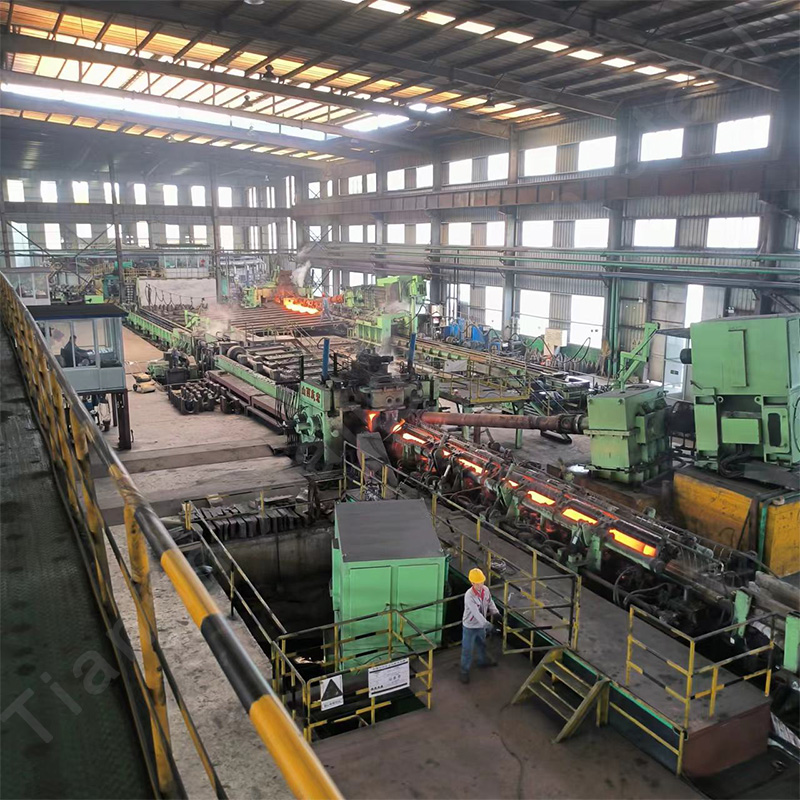
At Tianjin Xiangliyuan Steel, heat treatment stands at the core of our manufacturing philosophy. Every seamless pipe destined for high-temperature service, every alloy steel pipe bound for a refinery, every high-strength line pipe heading offshore passes through our heat treatment facilities under precisely controlled conditions. Our metallurgists understand that the furnace is where good steel becomes exceptional.
This article explores the three most common heat treatment processes in steel pipe manufacturing—normalizing, quenching, and tempering—explaining what happens inside the steel, why it matters, and how to specify the right condition for your application.
For detailed heat treatment specifications or to discuss your project requirements, visit https://www.xlysteel.com/ or contact our technical team at infosteel@xlygt.com.
Why Heat Treat Steel Pipes?
Before diving into specific processes, it’s worth asking a fundamental question: why heat treat at all?
Steel leaves the rolling mill in what metallurgists call the “as-rolled” condition. It has a certain microstructure, certain mechanical properties, certain residual stresses. Sometimes that’s enough. Many carbon steel pipes serve perfectly well in the as-rolled condition.
But as-rolled steel has limitations:
Inconsistent grain structure. Rolling can produce elongated grains with varying sizes, leading to anisotropic properties—different strength in different directions.
Residual stresses. Forming and cooling create internal stresses that can cause distortion during subsequent machining or welding.
Non-optimal microstructures. For many applications, the as-rolled microstructure doesn’t deliver the combination of strength, toughness, and ductility required.
Uncontrolled properties. As-rolled steel’s final properties depend heavily on rolling temperatures and cooling rates, which can vary.
Heat treatment addresses these limitations by applying controlled heating and cooling cycles to achieve specific microstructures and properties.
The Language of Heat Treatment
Metallurgists speak a precise language when describing heat treatment. Understanding a few key terms helps:
Austenite. A high-temperature phase of steel with a face-centered cubic crystal structure. When steel heats above its critical temperature (typically 723°C to 910°C, depending on composition), it transforms to austenite. This transformation resets the microstructural clock.
Ferrite. The soft, ductile phase present in most steels at room temperature. Pure iron at room temperature is ferrite.
Pearlite. A layered mixture of ferrite and cementite (iron carbide) that forms when austenite cools slowly. Pearlite provides moderate strength and good ductility.
Martensite. A very hard, brittle phase formed when austenite cools extremely rapidly. Martensite’s structure—body-centered tetragonal—traps carbon in supersaturated solution, creating tremendous hardness but little toughness.
Bainite. An intermediate structure between pearlite and martensite, formed at moderate cooling rates. Bainite offers good strength with better toughness than martensite.
Critical temperature. The temperature at which ferrite transforms to austenite on heating (Ac1, Ac3) or austenite transforms to ferrite on cooling (Ar1, Ar3). These temperatures depend on steel chemistry.
Now let’s explore each heat treatment process.
Normalizing: Refining the Structure
What happens during normalizing?
Normalizing involves heating steel to approximately 40°C above its upper critical temperature (Ac3) and holding until complete austenitization occurs. Then the steel cools in still air.
The process sounds simple, but significant changes occur inside the steel:
Austenitization. The original microstructure—whatever it was—transforms completely to austenite. Grain boundaries dissolve. Carbides dissolve or spheroidize. The steel becomes chemically homogeneous.
Grain refinement. During the hold at temperature, new austenite grains form. With proper control, these grains are finer than the original structure.
Controlled cooling. Air cooling transforms austenite back to ferrite and pearlite. The cooling rate—faster than furnace cooling but slower than forced air or liquid quenching—produces a refined, uniform microstructure.
What changes in the steel?
Normalizing produces several beneficial changes:
Uniform grain size. The new grains are consistent in size, eliminating the mixed grain structures that can occur in as-rolled material.
Refined microstructure. The ferrite-pearlite structure is finer and more evenly distributed than in as-rolled steel.
Stress relief. The heating and slow cooling relax internal stresses from previous processing.
Improved machinability. The refined structure machines more predictably.
Enhanced toughness. Fine-grained structures generally offer better toughness than coarse-grained equivalents.
What normalizing does NOT do:
Normalizing does not significantly increase strength beyond as-rolled levels. For carbon steels, strength comes primarily from carbon content and grain size, not from normalizing. The real benefit is consistency and predictability.
When is normalizing specified?
Specifications often require normalizing for:
Seamless pipes that will undergo significant fabrication—welding, bending, forming—where consistent properties matter
Pressure vessel quality plates and pipes where uniform properties are essential
Grades requiring fine grain structure for toughness, such as many carbon and alloy steel specifications
After certain forming operations that might have created non-uniform microstructures
Many ASTM specifications list normalized as an accepted condition. For example, ASTM A106 Gr. B seamless pipe may be supplied normalized or as-rolled, but normalized offers greater consistency.
At Tianjin Xiangliyuan Steel, we routinely normalize seamless carbon steel pipes for clients requiring enhanced consistency and reliability. Visit https://www.xlysteel.com/ to learn about our normalizing capabilities.
Quenching and Tempering: Engineering Strength
When applications demand strength beyond what normalizing provides, engineers turn to quenching and tempering. This two-step process transforms steel’s mechanical properties dramatically.
Quenching: Creating Hardness
What happens during quenching?
Quenching begins like normalizing—heating above the upper critical temperature to form austenite. But instead of cooling in air, quenching involves rapid cooling in a liquid medium: water, oil, or polymer solutions.
The rapid cooling rate—hundreds of degrees per minute—suppresses the normal transformation to ferrite and pearlite. Instead, austenite transforms to martensite when the steel cools below a critical temperature (the Ms temperature, typically 200-400°C depending on composition).
What changes in the steel?
Martensite differs fundamentally from the ferrite-pearlite structures we’ve discussed:
Extreme hardness. Martensite can be three to four times harder than normalized steel of the same composition. A carbon steel that might test 150 Brinell in the normalized condition could reach 500 Brinell after quenching.
High strength. Tensile and yield strength increase dramatically—often doubling or tripling.
Brittleness. As-quenched martensite is extremely brittle. A quenched steel pipe would likely crack if you tried to use it in this condition. The hardness comes at the cost of essentially zero ductility.
Distortion and residual stress. Rapid, uneven cooling creates significant internal stresses and can distort the pipe.
Quenching alone produces material too brittle for practical use. That’s where tempering enters.
Tempering: Restoring Toughness
What happens during tempering?
Tempering reheats quenched steel to a temperature below the lower critical temperature (typically 150-700°C, depending on desired properties) and holds for a specified time, then cools—usually in air.
The tempering temperature determines the final properties:
Low-temperature tempering (150-300°C). Relieves some internal stress while maintaining most of the quenched hardness. Used for cutting tools, wear-resistant applications.
Medium-temperature tempering (350-500°C). Significantly increases toughness while retaining substantial strength. Common for many structural and mechanical applications.
High-temperature tempering (550-700°C). Maximizes toughness and ductility while still providing strength significantly above normalized levels. Typical for quenched and tempered pressure vessels, high-strength structural components.
What changes in the steel?
During tempering, martensite decomposes. Extremely fine carbide particles precipitate from the supersaturated martensite. The structure—now called tempered martensite—retains much of the strength from quenching but gains substantial toughness.
The trade-off is predictable: higher tempering temperatures reduce strength but increase toughness and ductility. The art of heat treatment lies in selecting the tempering temperature that achieves the right balance for each application.
What quenched and tempered steel offers:
Yield strengths 50-100% higher than normalized steel of the same composition
Good toughness when properly tempered
Predictable, uniform properties throughout the pipe wall
Ability to achieve high strength without excessive alloy content
When is quenching and tempering specified?
Quenched and tempered (Q&T) pipes appear wherever high strength-to-weight ratios matter:
High-pressure pipelines where thinner walls reduce steel tonnage
Offshore risers and deepwater pipelines where weight affects installation
Structural components in demanding applications
High-strength casing for deep oil and gas wells
Pressure vessels requiring high strength with good toughness
API specifications for high-strength line pipe (X70, X80, and above) often require quenching and tempering or thermomechanical controlled processing (TMCP) to achieve the needed properties. ASTM A333 for low-temperature service includes quenched and tempered options for enhanced toughness.
At Tianjin Xiangliyuan Steel, our quenching and tempering facilities handle pipes up to large diameters, with precise temperature control ensuring uniform properties throughout each pipe. Contact infosteel@xlygt.com to discuss Q&T requirements.
Comparing Heat Treatment Conditions
Let’s line up the three conditions for direct comparison:
| Property | As-Rolled | Normalized | Quenched & Tempered |
|---|---|---|---|
| Microstructure | Mixed, variable | Uniform ferrite-pearlite | Tempered martensite |
| Grain size | Variable | Refined, uniform | Very fine |
| Yield strength | Baseline | Similar to as-rolled | 50-100% higher |
| Tensile strength | Baseline | Similar to as-rolled | 40-80% higher |
| Ductility | Good | Good | Good (tempered) |
| Toughness | Variable | Improved | Excellent (properly tempered) |
| Hardness | Baseline | Similar | Higher |
| Internal stress | Present | Relieved | Relieved by tempering |
| Cost | Lowest | Moderate | Highest |
Heat Treatment and Steel Grades
Different steel grades respond differently to heat treatment. Understanding these responses helps in specification.
Carbon Steels
Plain carbon steels (like ASTM A106 Gr. B, API 5L Gr. B) respond modestly to heat treatment:
Normalizing refines grain structure and improves uniformity but doesn’t dramatically increase strength
Quenching and tempering can increase strength but requires sufficient carbon content (above about 0.25%) to form meaningful martensite
Low-carbon steels (below 0.20% carbon) don’t harden significantly by quenching because they lack the carbon needed for substantial martensite formation.
Alloy Steels
Alloy steels (like ASTM A335 P11, P22, P91) respond strongly to heat treatment:
Alloying elements (chromium, molybdenum, vanadium) slow the transformations, making martensite formation easier even with slower cooling
These same elements precipitate during tempering, providing additional strengthening
High-temperature strength comes from stable microstructures maintained by alloy carbides
P91 (9% chromium, 1% molybdenum, with vanadium and niobium) exemplifies sophisticated heat treatment. It requires:
Normalizing from 1040-1080°C to dissolve carbides and form uniform austenite
Rapid cooling (air or fan cooling) to form martensite
Tempering at 730-780°C to precipitate fine carbides and achieve the right balance of strength and toughness
Deviations from this precise cycle produce inferior properties.
Stainless Steels
Stainless steels divide into families with different heat treatment responses:
Austenitic stainless (304, 316) cannot be hardened by heat treatment. They’re strengthened by cold work, not phase transformations.
Martensitic stainless (410, 420) harden similarly to alloy steels, with quenching and tempering producing high strength.
Duplex stainless (2205, 2507) receive their properties from controlled cooling after hot working, not traditional quench-and-temper.
Heat Treatment Equipment: The Tools of Transformation
Modern heat treatment relies on sophisticated equipment to achieve consistent results.
Continuous roller hearth furnaces carry pipes through heating, holding, and cooling zones on powered rollers. These furnaces offer high throughput and excellent temperature uniformity. At Tianjin Xiangliyuan Steel, our roller hearth furnaces maintain temperature within ±5°C across the entire heating zone.
Batch furnaces process pipes in stationary loads, suitable for smaller quantities or specialized treatments. They offer flexibility for varied product sizes and heat treatment cycles.
Induction heating uses electromagnetic fields to heat pipes rapidly, often for localized treatment or as part of continuous processing lines.
Quenching systems must remove heat rapidly and uniformly. Options include:
Water spray quench – Arrays of nozzles spray water onto rotating pipes
Water bath quench – Pipes immerse in agitated water tanks
Polymer quench – Water-polymer solutions provide cooling rates between water and oil
Oil quench – Slower cooling for alloys sensitive to water quenching
Tempering furnaces operate at lower temperatures than austenitizing furnaces but require excellent uniformity to achieve consistent properties.
Quality Control in Heat Treatment
Heat treatment’s effectiveness depends on precise control. At Tianjin Xiangliyuan Steel, our quality systems include:
Temperature profiling. Thermocouples attached to pipes throughout the furnace verify that every pipe reaches the specified temperature for the required time.
Hardness testing. After heat treatment, we test hardness at multiple locations to verify uniformity. For quenched and tempered pipes, hardness correlates with strength and must fall within specified ranges.
Mechanical testing. Tensile tests confirm that yield strength, tensile strength, and elongation meet requirements. For critical applications, we test both longitudinal and transverse specimens.
Microstructural examination. Metallographic samples reveal grain size, microstructure, and any unwanted phases. This verification ensures the heat treatment achieved its metallurgical objectives.
Impact testing. For specifications requiring toughness (many PSL-2 line pipe grades, low-temperature services), Charpy V-Notch tests verify that the heat treatment produced adequate toughness.
All results document in comprehensive Mill Test Certificates (MTCs) providing complete traceability.
Common Heat Treatment-Related Questions
Q: Does normalizing always improve properties?
Normalizing improves consistency and refines grain structure, but for some applications and steel compositions, as-rolled properties may be adequate. The choice depends on requirements.
Q: Can welded pipes be heat treated?
Yes, but the approach differs. ERW pipes may receive post-weld heat treatment to normalize the weld zone. LSAW pipes may undergo full-body heat treatment after welding. The pipe’s final specification dictates requirements.
Q: How do I specify heat treatment on my purchase order?
Be explicit. State the required condition (normalized, quenched and tempered, etc.) and reference the applicable specification’s requirements. For example: “ASTM A335 P22 seamless pipe, normalized and tempered per specification requirements.”
Q: Does heat treatment affect pipe dimensions?
Thermal cycles can cause some dimensional changes—slight growth or shrinkage, potential straightness variations. Good practice includes allowing for straightening after heat treatment.
Q: How do I verify that heat treatment was performed correctly?
Review the Mill Test Certificates. They should indicate the heat treatment performed and include test results confirming mechanical properties. For critical applications, consider third-party inspection to witness heat treatment.
Selecting the Right Heat Treatment
How do you choose among as-rolled, normalized, and quenched and tempered?
Consider these factors:
Strength requirements. If you need the highest strength-to-weight ratio, quenched and tempered is likely your choice. For moderate strength, normalized or even as-rolled may suffice.
Toughness needs. Low-temperature service, pressure cycling, or other demanding conditions may require the enhanced toughness of normalized or quenched and tempered material.
Fabrication plans. Extensive welding, bending, or forming favors normalized material with its uniform, stress-relieved structure.
Code requirements. Some specifications mandate particular heat treatment conditions for certain services. ASME B31.3, for example, has specific requirements for impact-tested materials.
Cost considerations. As-rolled costs least, normalized adds moderate cost, quenched and tempered costs most. Balance performance needs against budget.
When Heat Treatment Goes Wrong
Even with modern equipment, heat treatment problems occur. Understanding potential issues helps in specifying and verifying:
Incomplete austenitization. If the steel doesn’t reach proper temperature or hold long enough, some original structure remains, creating mixed microstructures with unpredictable properties.
Overheating. Excessively high temperatures cause grain growth, reducing toughness. Severely overheated steel may “burn,” creating intergranular oxidation that cannot be repaired.
Inadequate cooling. Quenching too slowly produces bainite or pearlite instead of martensite, failing to achieve required strength.
Improper tempering. Too low a temperature leaves the steel brittle. Too high a temperature over-softens it.
Non-uniform heating or cooling. Temperature variations along or through the pipe create property variations.
Reputable manufacturers maintain rigorous controls to prevent these issues. At Tianjin Xiangliyuan Steel, our qualified metallurgists oversee every heat treatment cycle, and our quality systems catch any deviations before pipes ship.
Heat Treatment at Tianjin Xiangliyuan Steel
Heat treatment stands as one of our core competencies. Our facilities include:
Continuous roller hearth furnaces for efficient, uniform normalizing and austenitizing of pipes up to large diameters.
Computerized temperature control with multiple zones ensuring precise, repeatable cycles.
Multiple quenching systems—water spray, water bath, and polymer—providing cooling rate options for different grades and wall thicknesses.
Tempering furnaces with excellent uniformity for achieving consistent final properties.
Comprehensive testing—hardness, tensile, impact, metallographic—verifying that every heat treatment cycle achieved its objectives.
Our metallurgists understand the relationship between chemistry, processing, and properties. When you specify heat-treated pipes from Tianjin Xiangliyuan Steel, you receive material engineered for its intended service.
Summary: Heat Treatment Transforms Possibilities
Heat treatment transforms steel from a simple iron-carbon alloy into an engineered material with precisely controlled properties. Normalizing refines grain structure and ensures consistency. Quenching and tempering unlocks strength levels impossible to achieve otherwise.
For engineers specifying pipes for demanding applications, understanding these processes matters. The choice between as-rolled, normalized, and quenched and tempered material affects every aspect of performance—strength, toughness, fabricability, and service life.
At Tianjin Xiangliyuan Steel, we’ve made heat treatment a core competency. Whether you need normalized carbon steel for consistent welding, quenched and tempered alloy steel for high-temperature strength, or something between, we have the equipment, expertise, and quality systems to deliver.
Ready to Specify Heat-Treated Pipes?
Contact our technical team to discuss your heat treatment requirements. We’ll help you select the right condition, provide detailed quotations, and deliver pipes with complete documentation and traceability.
Email: infosteel@xlygt.com
Website: https://www.xlysteel.com/
Let’s put heat treatment to work for your project.