In the realm of industrial piping systems—whether for oil and gas, petrochemical, power generation, or high-pressure fluid transmission—the integrity of the entire network often depends on the weakest link. That link is frequently the pipe fittings. Selecting the wrong connection method or mismatching wall thicknesses can lead to catastrophic failure, unplanned downtime, and significant safety hazards.
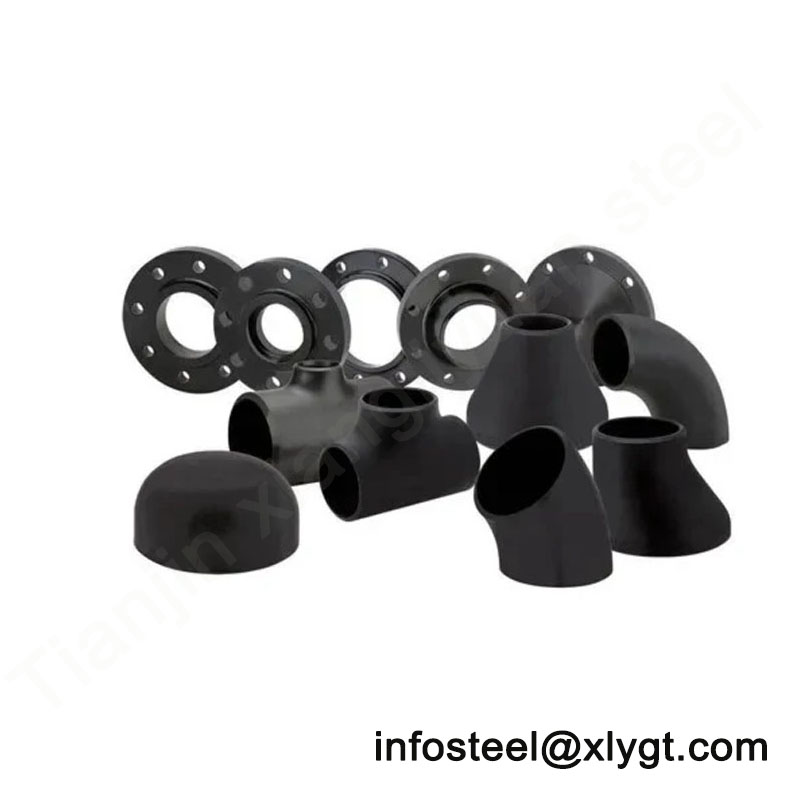
This guide provides a technical deep dive into the two most prevalent connection types in the process piping industry: Butt-Welded (BW) Fittings and Socket-Welded (SW) Fittings. We will examine the critical criteria for wall thickness matching, interpret Stress Intensification Factors (SIFs) , and define the thresholds for application.
At Tianjin Xiangliyuan Steel, we combine deep engineering expertise with the logistical advantages of our strategic location in Tianjin, China—one of the world’s busiest port cities. This proximity ensures that whether you require ASME B16.9 fittings or high-pressure ASME B16.11 components, your supply chain remains fast and cost-effective. Contact our engineering team at infosteel@xlygt.com or visit https://www.xlysteel.com for project-specific consultations.
1. Fundamental Definitions: BW vs. SW Fittings
To make an informed selection, one must first understand the manufacturing and application standards governing each type.
1.1 Butt-Welded (BW) Fittings
Standard Reference: *ASME B16.9 – Factory-Made Wrought Buttwelding Fittings* .
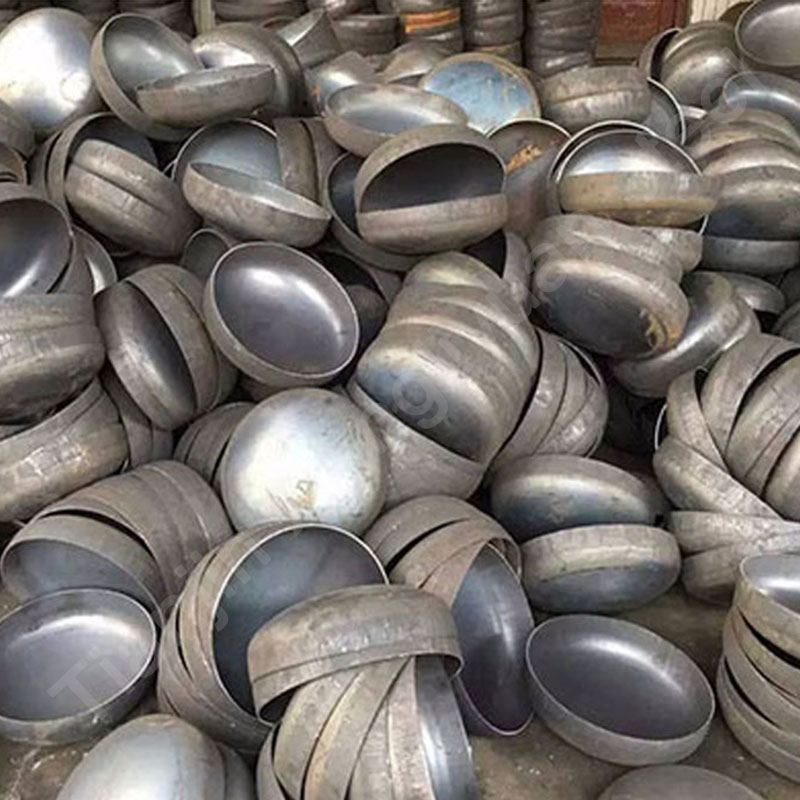
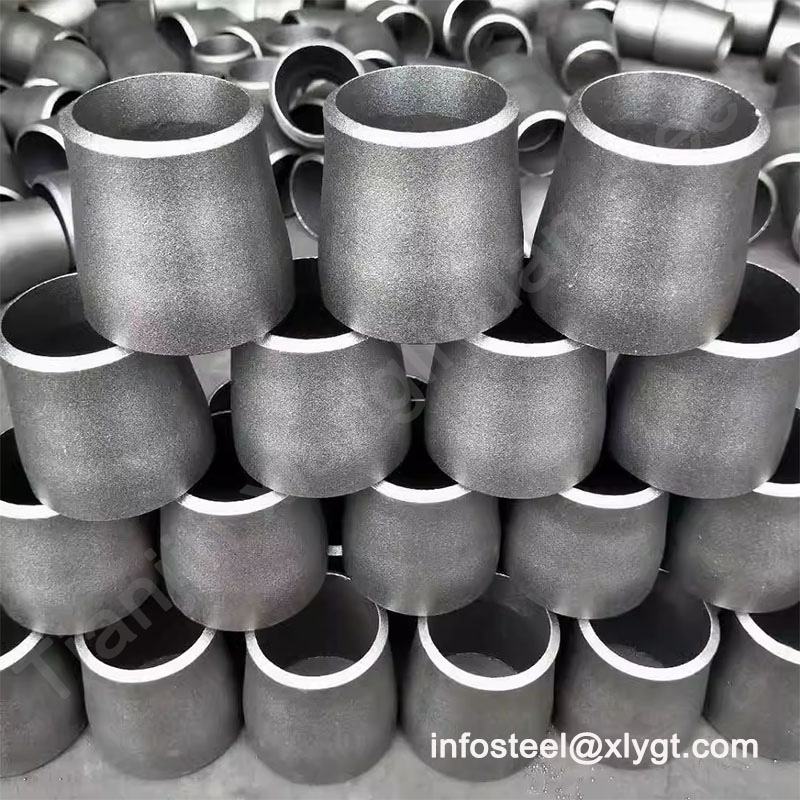
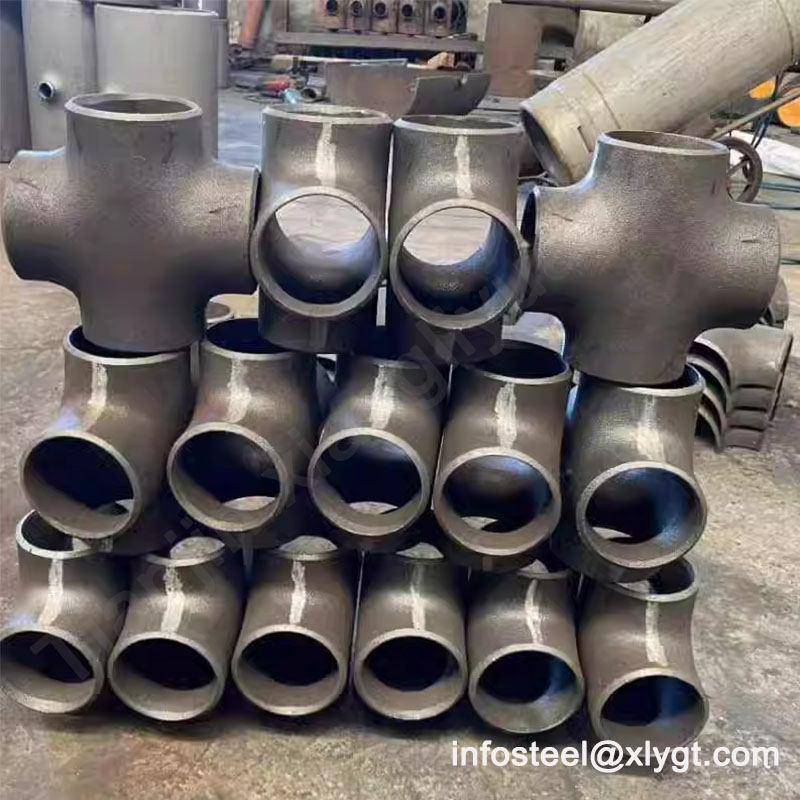
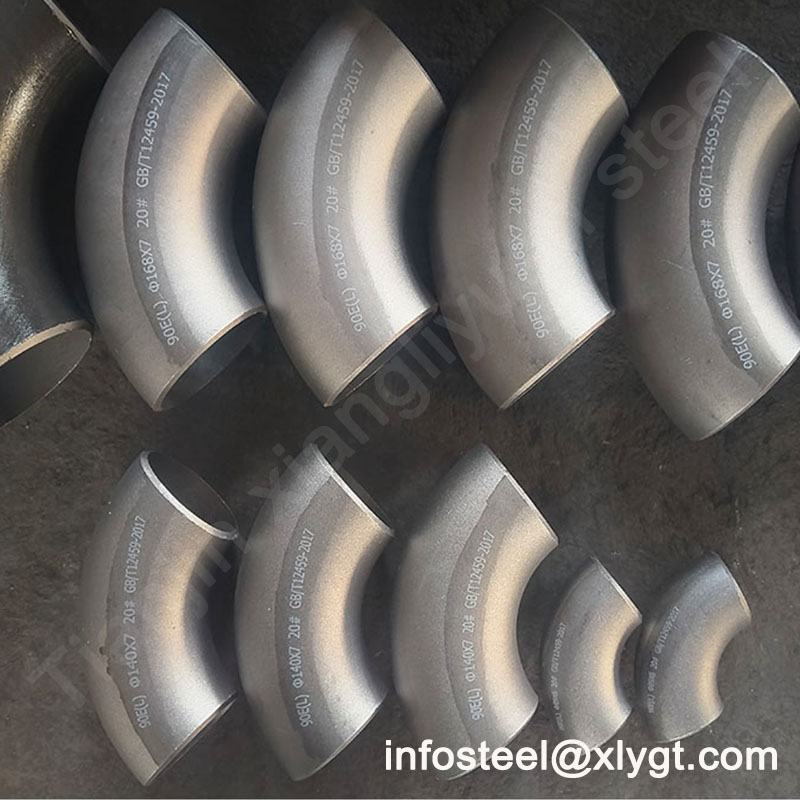
Butt-weld fittings are designed with beveled ends (typically 37.5 degrees per ASME B16.25). They are joined to pipes via full-penetration circumferential butt welds. Because the weld metal fills the bevel completely, the resulting joint possesses the same—or greater—strength as the pipe itself.
-
Size Range: NPS 1/2 to NPS 48+.
-
Typical Applications: Critical services, high-temperature steam lines, subsea pipelines, and situations requiring volumetric NDE (e.g., Radiography or Ultrasound) .
-
Bore Profile: Smooth internal bore, allowing for piggable systems and minimal pressure drop.
1.2 Socket-Welded (SW) Fittings
Standard Reference: *ASME B16.11 – Forged Fittings, Socket-Welding and Threaded*.
Socket weld fittings feature a recessed “socket” into which the pipe is inserted before a single or multi-pass fillet weld is applied to the exterior.
-
Size Range: Strictly NPS 1/8 to NPS 4, though typically limited to NPS 2 or smaller in major specifications .
-
Typical Applications: High-pressure hydraulic systems (3000# to 9000# classes), small bore chemical lines, and firefighting ring mains.
-
Bore Profile: A designed gap at the bottom of the socket (approx. 1.6mm) creates a stress relief point but also introduces a crevice.
2. Critical Selection Criteria: The Technical Threshold
Industry standards and leading EPC (Engineering, Procurement, and Construction) contractors generally follow a strict size-based selection rule.
The NPS 2 Transition Point
Most global piping specifications mandate the transition from Socket Weld to Butt Weld at NPS 2 (Nominal Pipe Size 2) .
-
Below NPS 2 (SW Preferred): In small bores, the pipe wall thickness is often too thin to bevel practically without burning through during an open-root butt weld. SW fillet welds are easier to execute with less skilled labor and are faster to inspect.
-
Above NPS 2 (BW Mandatory): For pipes larger than 2 inches, a butt weld becomes structurally necessary. Fillet welds on large diameters do not develop the full pipe wall thickness strength. Furthermore, the pipe’s internal volume increases the risk of crevice corrosion in the SW gap.
Expert Note from Tianjin Xiangliyuan Steel: We frequently advise clients against using SW fittings in sour service (NACE MR0175) or high-temperature cyclic service, regardless of size. The inherent notch effect and crevice in SW geometry are primary failure points in such environments.
3. Wall Thickness Matching: Schedule Selection
Choosing the correct schedule (wall thickness) is vital for pressure containment and structural rigidity. The fitting must match or exceed the connecting pipe’s wall thickness.
3.1 ASME B16.9 Requirements
Under ASME B16.9, while the fitting geometry varies (elbow radius, tee reinforcement), the minimum wall thickness tolerance is strictly defined. At any point on the fitting, the wall thickness must not be less than 87.5% of the nominal pipe wall thickness. This accounts for thinning that occurs during the extrusion process (e.g., at the extrados of an elbow) .
3.2 Schedule 40 vs. Schedule 80
Selecting between Sch 40 and Sch 80 (or higher) impacts pressure rating, weight, and cost.
| Parameter | Schedule 40 (STD) | Schedule 80 (XS) |
|---|---|---|
| Wall Thickness (4″ NPS) | 6.02 mm | 8.56 mm |
| Pressure Capacity (Ambient) | Baseline (~2850 psi for CS) | +40-50% Higher |
| Internal Bore | Larger Flow Area | Restricted Flow Area |
| Typical Service | General process, utilities, water | High pressure, erosion, corrosion allowance |
Selection Rule: For highly erosive slurries or systems with a high corrosion allowance, Schedule 80 is mandatory. For stainless steel (ASTM A403) or duplex lines where weight savings matter, Schedule 10S (per MSS SP-43) is often used for low-pressure corrosion-resistant applications .
3.3 The Light-Wall Exception: MSS SP-43
For stainless steel and nickel alloys in non-critical, low-pressure services, MSS SP-43 covers fittings for Schedules 5S and 10S. These dimensions match B16.9 for fit-up but have significantly thinner walls, offering substantial cost and weight savings .
4. Stress Analysis and Fatigue Performance
This is the most critical engineering differentiator. Stress Intensification Factors (SIFs) measure how much a fitting multiplies the nominal stress in a straight pipe under bending or thermal loads.
4.1 Understanding SIF (ASME B31.3 Appendix D)
In piping flexibility analysis, a Straight pipe has a baseline SIF of 1.0. The higher the SIF, the more likely the component is to fail under cyclic loading (thermal expansion/contraction).
Comparative SIF Values:
-
Butt Weld (Straight Pipe): 1.0 (Best fatigue life)
-
Long Radius Elbow (BW): 1.5 – 4.0
-
Welding Tee (BW): 1.5 – 3.5
-
Socket Weld Fitting: 2.1 (Constant value)
-
Threaded Joint: 2.3 (Poorest)
4.2 The Fatigue Argument
Why does a Socket Weld have a higher SIF than a Butt Weld? The fillet weld geometry creates a sharp re-entrant corner at the pipe-to-fitting transition. This acts as a notch, concentrating stress. Under vibration or thermal cycling, this notch initiates fatigue cracks much faster than the smooth, reinforced profile of a butt weld.
Application Impact:
-
Low cycles (Water injection, utility air): SW is acceptable.
-
High cycles (Compressor discharge, steam lines, thermal solar): BW is mandatory.
5. Corrosion and Fluid Dynamics
5.1 Crevice Corrosion in SW Fittings
ASME B31.3 requires an “expansion gap” at the bottom of the socket weld. Stagnant fluid sits in this gap. In chloride-rich or acidic environments, this gap becomes a breeding ground for Crevice Corrosion. This is undetectable by visual inspection of the external weld. Conversely, Butt-weld fittings offer a continuous, flush surface with no crevices, making them superior for stainless steel and corrosive services .
5.2 Flow Dynamics
For NPS 1 to NPS 2 lines using Socket Weld fittings, the step change at the socket creates slight turbulence. For NPS 3 and above, butt-welded fittings ensure a smooth pigging operation (cleaning pigs can pass without getting stuck on internal ledges).
6. Why Tianjin Xiangliyuan Steel Is Your Strategic Partner
Navigating these technical requirements requires a supplier who understands engineering, not just logistics.
1. Engineering Compliance & Quality
We manufacture and supply BW Fittings (ASME B16.9) and SW Fittings (ASME B16.11) in Carbon Steel (ASTM A234 WPB/WPC) , Alloy Steel (A234 WP series) , and Stainless Steel (A403) .
Every batch is traceable. We ensure the wall thickness tolerance strictly adheres to the 87.5% minimum rule, providing Material Test Certificates (EN 10204 3.1/3.2) .
2. The Tianjin Port Advantage – “Zero Delay” Logistics
Our headquarters is located in Tianjin, adjacent to the largest port in Northern China.
-
Freight Savings: We reduce your inland logistics costs to zero. Containers are trucked directly from our warehouse to the terminal in under 2 hours.
-
Lead Times: For urgent FOB Tianjin shipments, we can consolidate and load vessels faster than inland suppliers.
3. Technical Sales Support
We do not just take orders. Our technical team reviews your stress analysis reports. If your system has a high SIF sensitivity, we will recommend switching from SW to BW or upgrading from Sch 40 to Sch 80.
Contact our engineering team today to secure your project’s integrity.
-
Email: infosteel@xlygt.com
The selection between Butt-Welded and Socket-Welded fittings is not merely a matter of preference; it is a decision governed by pipe size, stress analysis, and corrosion risk.
-
Use BW (ASME B16.9) for reliability, high cycles, large diameters, and corrosive fluids.
-
Use SW (ASME B16.11) for compact, high-pressure small-bore systems where vibration is minimal.
Ensure your supplier provides verified mill certifications and understands the stress mechanics of your specific application. Tianjin Xiangliyuan Steel bridges the gap between engineering excellence and supply chain efficiency.
Looking for a Quote or Technical Clarification?
Send your project specifications to infosteel@xlygt.com or visit https://www.xlysteel.com to speak with a piping engineer.
Disclaimer: The technical information provided is based on ASME B31.3, B16.9, and B16.11 standards for general informational purposes. Always consult a licensed engineer for final design validation.