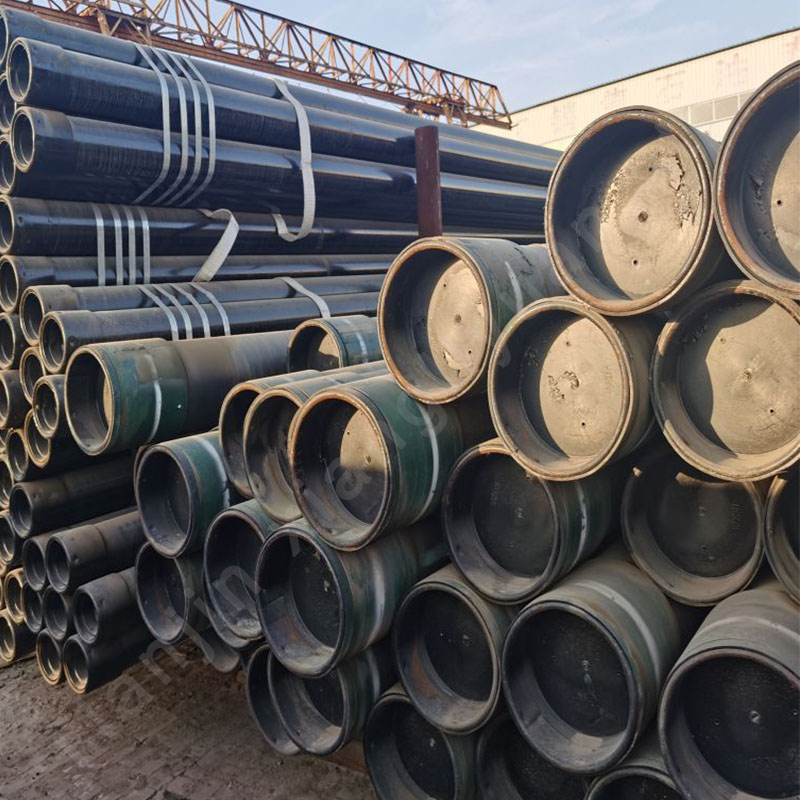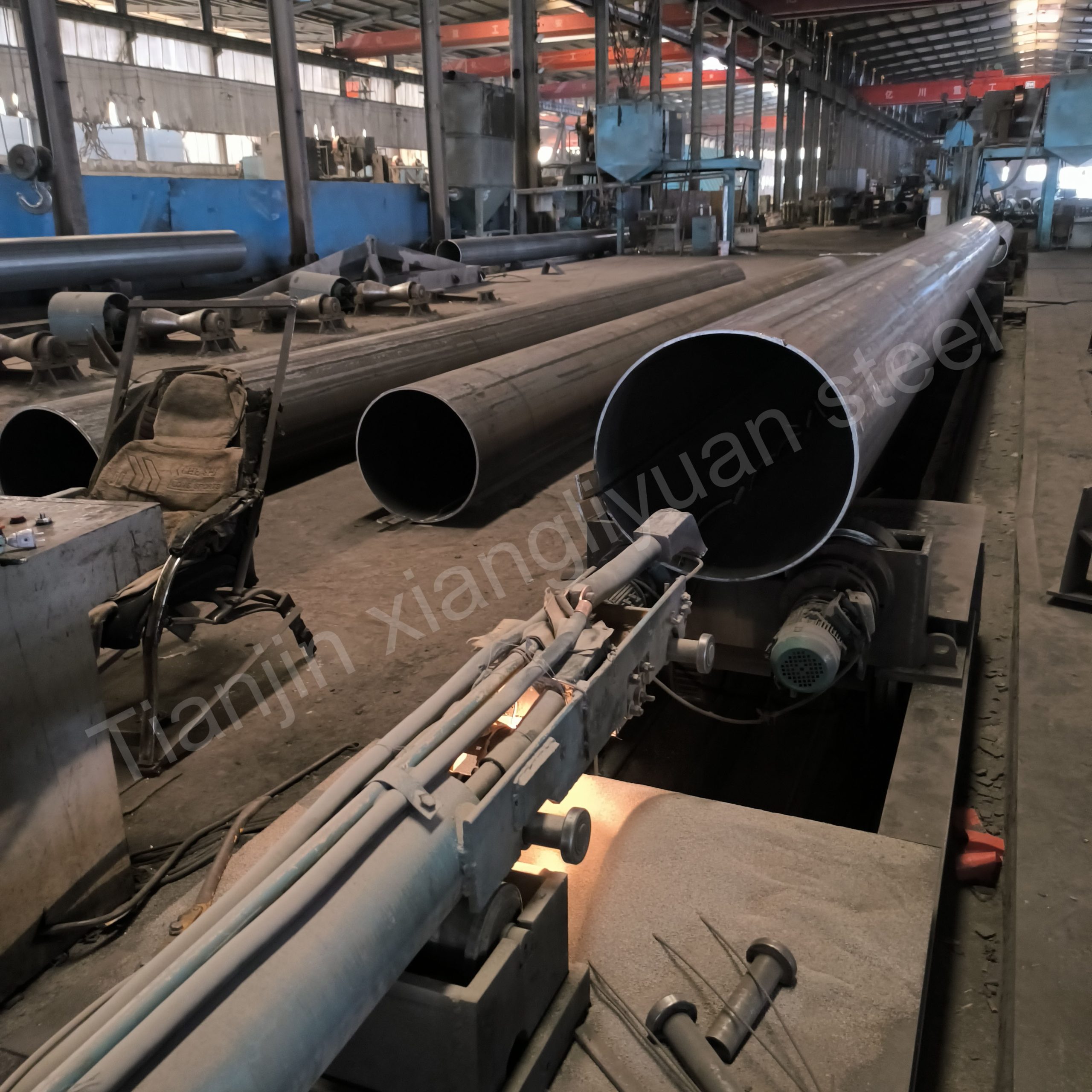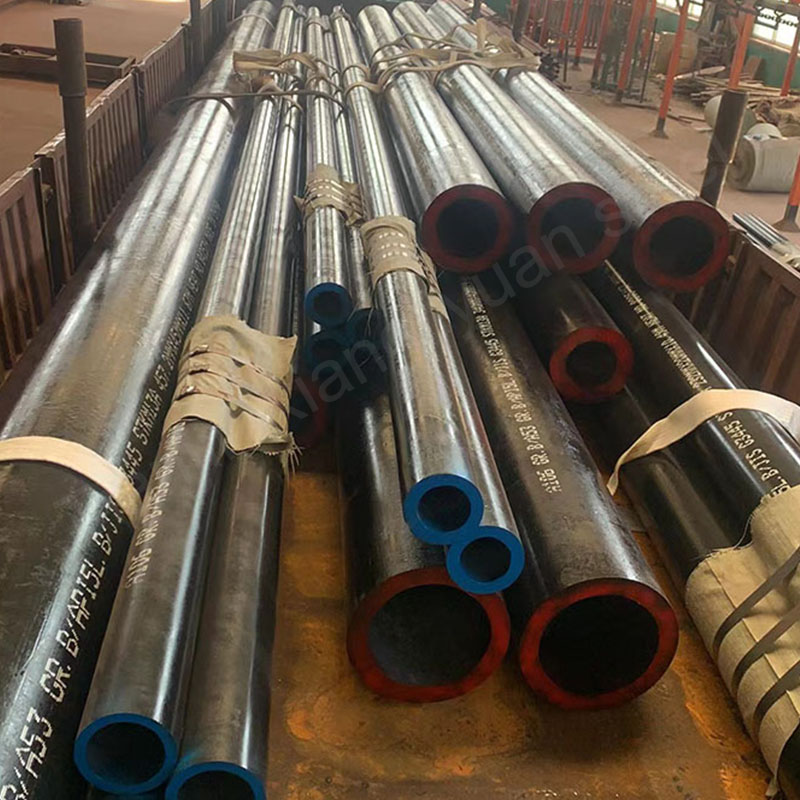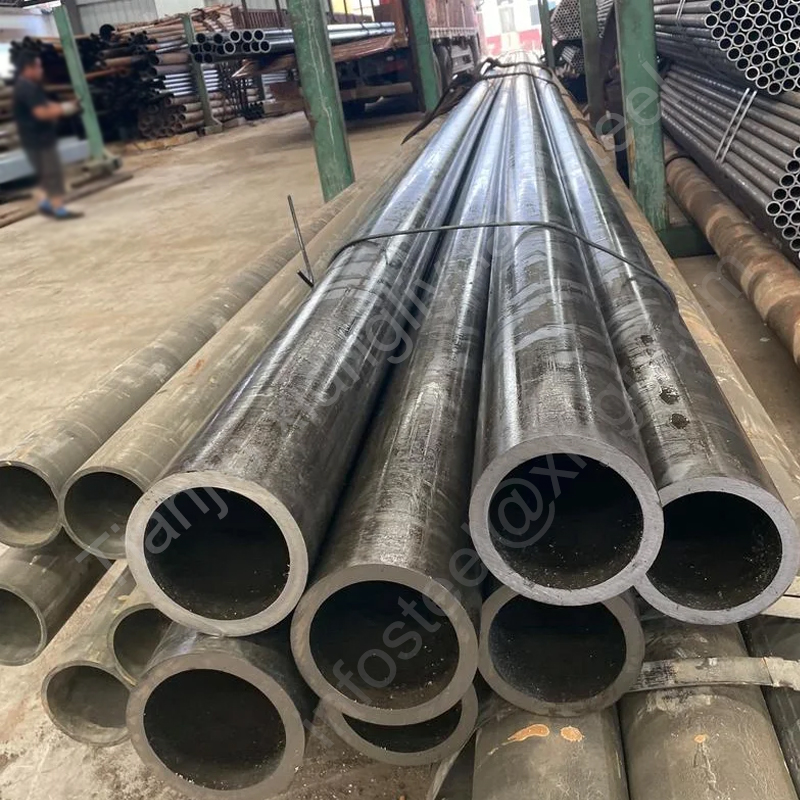
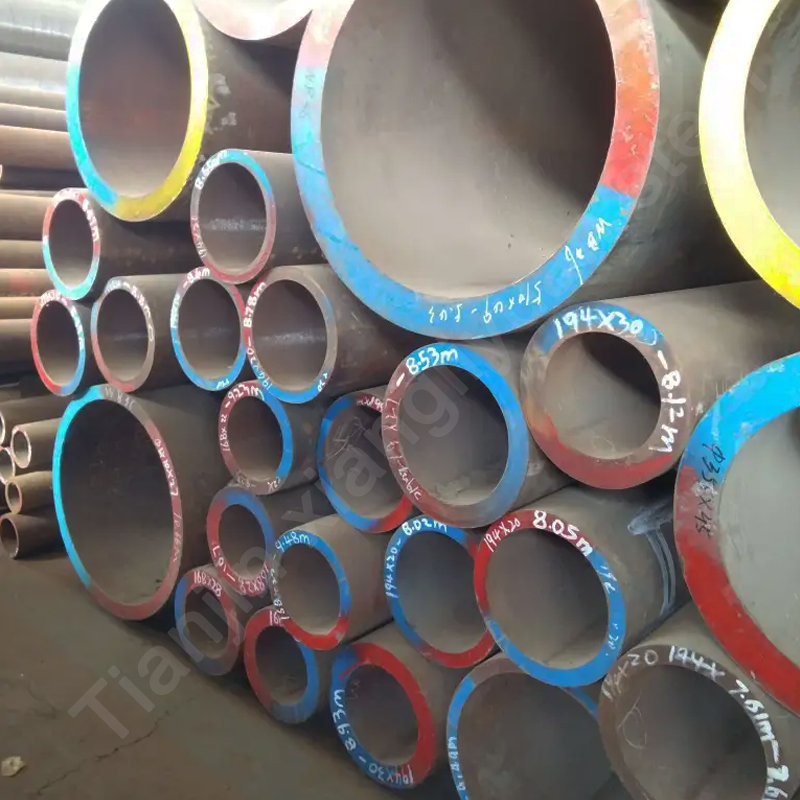
As a leading manufacturer in China’s precision steel pipe industry, we specialize in engineering and supplying high-performance materials for the world’s most demanding environments. Among our flagship products, WB36 alloy steel pipe stands as a premier choice for applications where exceptional strength, superior corrosion resistance, and long-term reliability under high pressure and temperature are non-negotiable. This comprehensive article delves into the specifications, properties, manufacturing excellence, and critical applications of WB36 steel pipe, underscoring why it is a cornerstone material for advanced power generation and industrial systems.
1. Introduction to WB36 / 15NiCuMoNb5-6-4 Steel
WB36 is a low-alloy, fine-grained steel characterized by its unique chemical composition that includes Nickel (Ni), Copper (Cu), Molybdenum (Mo), and Niobium (Nb). This specific alloy design delivers a superior combination of high tensile strength and remarkable toughness.
Primary Designations:
WB36: The common designation in pipeline and pressure vessel standards, particularly within European and German norms (e.g., DIN 17175, now superseded by DIN EN 10216-2).
15NiCuMoNb5-6-4 (1.6368): This is the material number and detailed grade name, explicitly describing its key alloying elements: approximately 1% Ni, 1% Cu, 0.5% Mo, and micro-alloying with Nb.
Governing Standards: WB36 pipes are commonly produced to standards such as DIN EN 10216-2 (P295GH) for seamless tubes, with the WB36 grade specified for elevated properties. It is also recognized in other international specifications for high-duty applications.
2. Chemical Composition: The Foundation of Performance
The enhanced properties of WB36 stem from its precisely balanced chemistry, which promotes solid solution strengthening, grain refinement, and precipitation hardening.
Typical Chemical Composition (% by weight):
Carbon (C): 0.10 – 0.15%
Silicon (Si): 0.25 – 0.50%
Manganese (Mn): 0.80 – 1.20%
Phosphorus (P): ≤ 0.025%
Sulfur (S): ≤ 0.020%
Nickel (Ni): 0.80 – 1.20% (increases toughness and hardenability)
Copper (Cu): 0.50 – 0.80% (enhances corrosion resistance, particularly against flowing water/steam, and contributes to solid solution strengthening)
Molybdenum (Mo): 0.25 – 0.50% (improves high-temperature strength and creep resistance)
Niobium (Nb): 0.015 – 0.045% (forms stable carbides/nitrides for grain refinement and precipitation strengthening)
Aluminum (Al): ≤ 0.040% (for deoxidation)
This synergistic blend ensures optimal performance in challenging wet-steam and condensate environments.
3. Mechanical and Physical Properties
WB36 is renowned for its outstanding mechanical profile, which allows for the design of lighter, thinner-walled components without sacrificing safety or integrity.
Key Mechanical Properties (at room temperature, Normalized & Tempered):
Yield Strength (Rp0.2 Min): ≥ 440 MPa (64,000 psi)
Tensile Strength (Rm): 610 – 770 MPa (88,500 – 111,600 psi)
Elongation (A): ≥ 17% (on a gauge length of 5.65√S₀)
Impact Toughness: Exhibits excellent Charpy V-Notch values, typically well above minimum requirements, even at sub-zero temperatures, ensuring resistance to brittle fracture.
Hardness: Typically in the range of 180 – 220 HB.
Elevated Temperature Performance:
High Creep Strength: Maintains excellent load-bearing capability at temperatures up to approximately 450°C (842°F), making it suitable for high-pressure feedwater systems and boiler components.
Superior Corrosion & Erosion Resistance: The addition of Copper significantly improves resistance to corrosion by oxygenated water and flowing steam condensate, a common challenge in power plant feedwater heaters and piping. This drastically reduces erosion-corrosion (flow-accelerated corrosion) rates compared to standard carbon steels.
4. Our Advanced Manufacturing and Quality Process
Our production of WB36 alloy steel pipes adheres to the strictest metallurgical and quality protocols to guarantee performance that meets global engineering standards.
Precision Steelmaking: The process begins with electric arc furnace melting followed by secondary refining (e.g., Ladle Furnace treatment) to achieve exact chemical composition with low levels of impurities (P, S).
Seamless Pipe Production: WB36 is primarily manufactured as seamless pipe through the rotary piercing (Mannesmann) and hot rolling process. This ensures a homogeneous structure without longitudinal welds, which is critical for high-pressure integrity.
Critical Heat Treatment: The pipe undergoes a mandatory normalizing and tempering (N&T) process.
Normalizing: Heating to 880-940°C (1616-1724°F) to refine the grain structure and achieve a uniform microstructure.
Tempering: Reheating to 580-660°C (1076-1220°F) to relieve internal stresses, enhance toughness, and optimize the final mechanical properties.
Comprehensive Testing Regime:
Non-Destructive Testing (NDT): 100% ultrasonic testing for longitudinal and transverse defects, hydrostatic pressure testing, and eddy current or magnetic particle inspection as required.
Destructive Testing: Tensile tests, impact (Charpy V-notch) tests at specified temperatures, flattening tests, and macro/microscopic examinations are performed on pipe samples.
Certification & Traceability: Each pipe batch is supplied with a full Mill Test Certificate (MTC) per EN 10204 3.1/3.2, providing complete traceability from melt to final product, along with all chemical and mechanical test results.
5. Primary Applications of WB36 Steel Pipes
WB36’s unique properties make it the material of choice for critical components exposed to high-pressure, high-velocity, and corrosive media.
Power Generation (Fossil & Nuclear):
High-Pressure Feedwater Heater Tubes & Piping: Its exceptional resistance to erosion-corrosion in flowing, oxygenated feedwater is its hallmark application.
Boiler Feedwater Lines & Economizer Sections.
Steam Extraction Piping and Bypass Systems.
Petrochemical & Process Industries:
Heat Exchanger and Condenser Tubes in corrosive service.
Piping for high-pressure process fluids where strength and corrosion resistance are paramount.
Industrial High-Pressure Systems: For plants requiring reliable piping for saturated steam and hot water circuits.
6. Key Advantages and Rationale for Selection
Exceptional Erosion-Corrosion Resistance: The copper content provides a level of protection against flow-accelerated corrosion (FAC) that standard carbon steels (e.g., P235GH, P265GH) cannot match, leading to dramatically extended component service life and reduced maintenance.
High Strength-to-Weight Ratio: Its high yield and tensile strength allow for thinner wall designs compared to lower-grade materials, resulting in material savings, reduced weight, and lower welding costs.
Excellent Weldability and Fabricability: Despite its high strength, WB36 exhibits good weldability with appropriate procedures (pre-heating, use of matching electrodes like OK 76.28/OK 76.25, and post-weld heat treatment), facilitating easier construction and repair.
Proven Long-Term Reliability: Decades of service in European and global power plants have proven its durability and safety under cyclic thermal and pressure loads.
7. Fabrication and Welding Guidelines
Successful fabrication requires adherence to specific guidelines:
Preheating: Recommended for welding and hot forming, typically in the range of 150-250°C (302-482°F), depending on wall thickness.
Welding Consumables: Must use under-matched or specially matched low-hydrogen electrodes/filler wires designed for WB36 or similar high-strength steels (e.g., matching Ni-Cu-Mo compositions).
Post-Weld Heat Treatment (PWHT): Generally required to restore toughness in the heat-affected zone (HAZ). Typical PWHT temperatures are 580-620°C (1076-1148°F).
8. Comparison with Other Steel Grades
vs. Standard Carbon Steels (P235GH, P265GH): WB36 offers significantly higher strength and vastly superior erosion-corrosion resistance, justifying its use in more critical, high-velocity feedwater applications.
vs. 13CrMo4-5 (P11/P12 types): While 13CrMo4-5 has better high-temperature creep properties, WB36 excels in wet-steam/water corrosion resistance and offers higher room-temperature strength. The choice depends on the dominant service condition (temperature vs. corrosion).
vs. Austenitic Stainless Steels (e.g., 304): WB36 is more cost-effective, has higher thermal conductivity, and avoids the risk of stress corrosion cracking (SCC) in chloride environments that can affect austenitic steels.
WB36 (15NiCuMoNb5-6-4) alloy steel pipe represents a pinnacle of materials engineering for specific, harsh operating conditions. Its unparalleled combination of strength, toughness, and most importantly, resistance to erosion-corrosion, makes it an indispensable material for ensuring the safety, efficiency, and longevity of critical power plant and industrial systems. As a dedicated Chinese manufacturer with deep expertise in high-performance alloy steels–Tianjin xiangliyuan steel, we are committed to producing WB36 pipes that meet the most stringent international quality standards, providing our global clients with reliable, long-term solutions.
For your next critical high-pressure piping or heat exchanger project, choose a partner with proven expertise. Contact us–Tianjin xiangliyuan steel today for technical data sheets, project-specific quotations, and engineering support for WB36 alloy steel pipes.