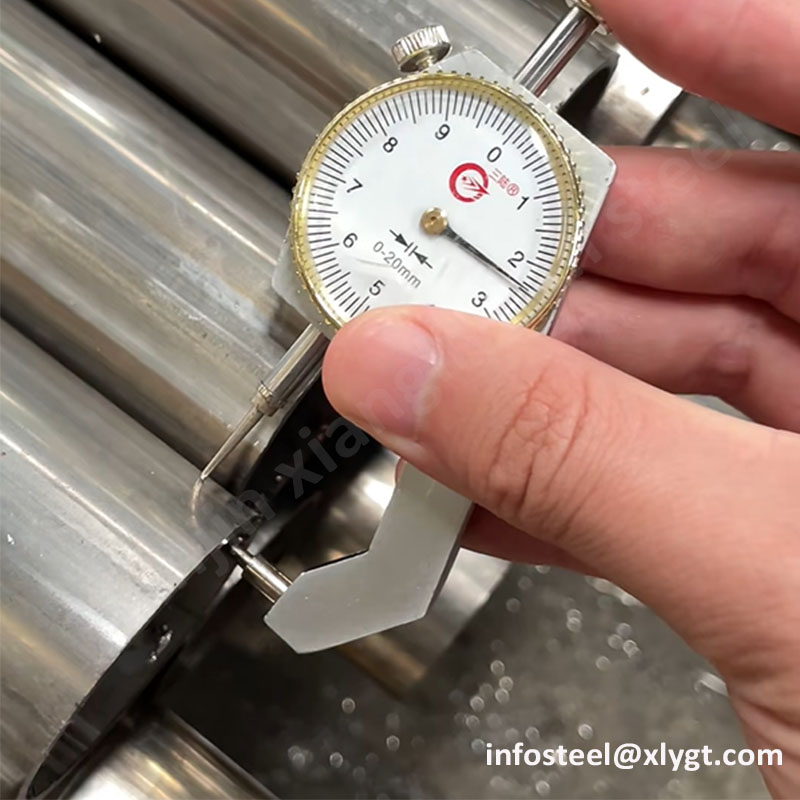
In the world of industrial piping, few specifications cause as much confusion as pipe schedule. Engineers, procurement professionals, and project managers regularly encounter terms like SCH 40, SCH 80, and SCH 160, but understanding what these designations actually mean—and how to select the appropriate wall thickness for a given application—is essential for safe, efficient, and cost-effective project execution.
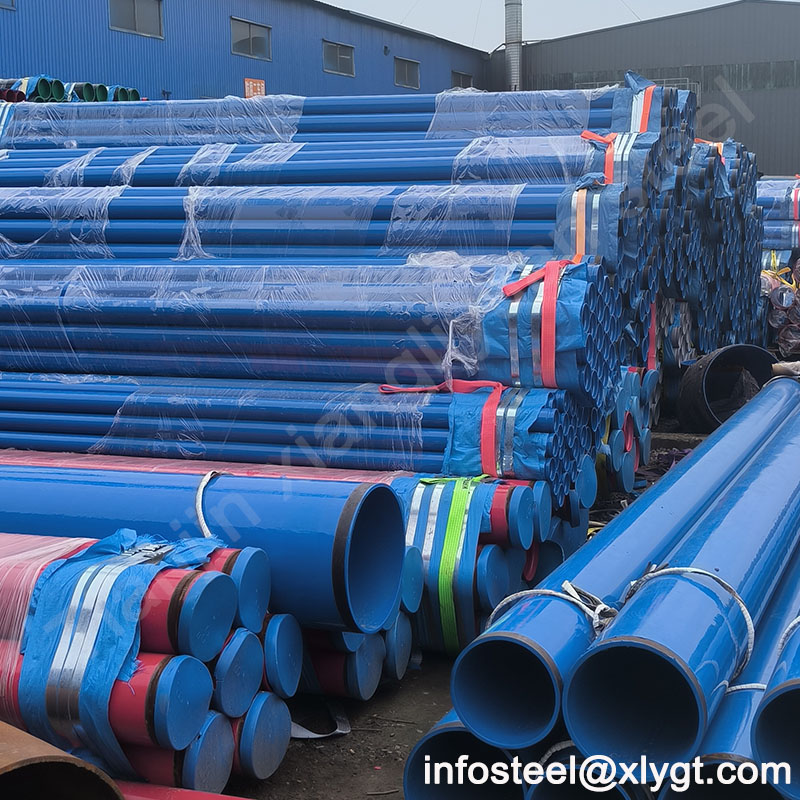
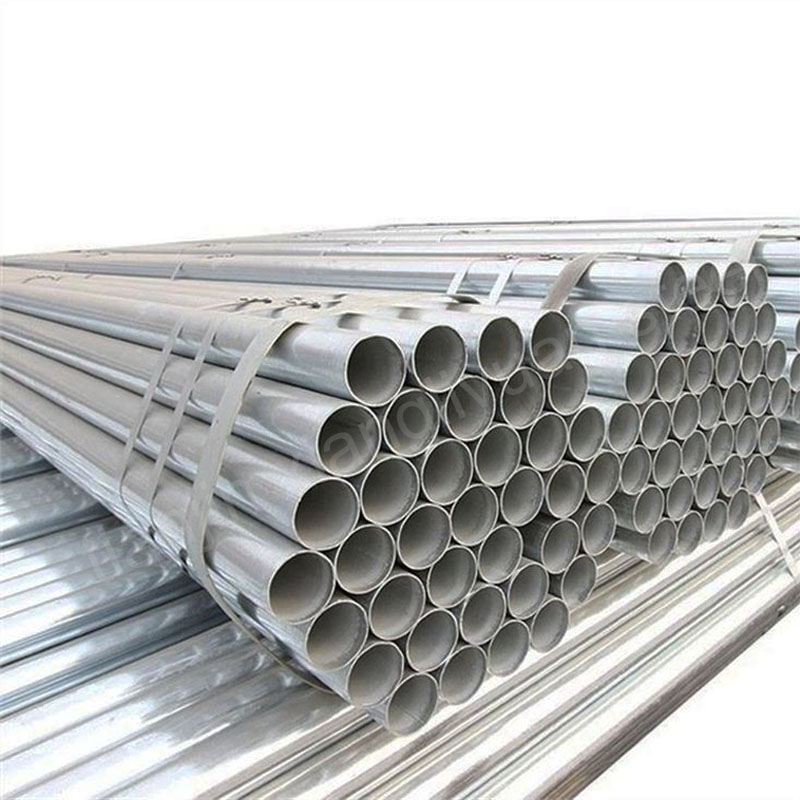
At Tianjin Xiangliyuan Steel, we have manufactured steel pipes for decades, supplying clients across five continents with products meeting the most stringent international standards. Our portfolio includes seamless steel pipes, ERW steel pipes, and LSAW steel pipes in schedules ranging from SCH 10 through SCH 160 and beyond. Through this experience, we have guided countless customers through the process of selecting the right wall thickness for their specific applications.
This comprehensive guide will demystify pipe schedules, explain the relationship between schedule numbers and actual dimensions, and provide practical guidance for engineers making this critical selection.
For more information about our manufacturing capabilities and available schedules, visit our website at https://www.xlysteel.com/ or contact our technical team at infosteel@xlygt.com.
What Is Pipe Schedule?
Pipe schedule (often abbreviated as SCH) is a standardized designation that specifies the wall thickness of a pipe. Developed by the American National Standards Institute (ANSI) and maintained by organizations like ASME and ASTM, the schedule system provides a consistent way to specify pipe wall thickness across different nominal pipe sizes.
The Origin of Pipe Schedules
The schedule system originated in the early 20th century as a way to standardize pipe dimensions for the growing industrial infrastructure. Originally, there were only three schedules: Standard (STD), Extra Strong (XS), and Double Extra Strong (XXS). Over time, additional schedule numbers were introduced to provide more options for engineers designing systems with varying pressure requirements.
Today, common schedule designations include:
SCH 10, SCH 20: Light wall thicknesses for low-pressure applications
SCH 40, SCH STD: Standard wall thickness, most common for general service
SCH 80, SCH XS: Extra-strong wall, for higher pressures
SCH 120, SCH 160: Very heavy wall for extreme pressures
SCH XXS: Double extra-strong, the heaviest standard wall
Schedule Numbers vs. Actual Thickness
Importantly, the schedule number does not directly indicate the wall thickness in millimeters or inches. Instead, it is a dimensionless number derived from an empirical formula. For a given schedule number, the actual wall thickness varies with the nominal pipe size (NPS).
For example:
For NPS 2″ pipe, SCH 40 has a wall thickness of 0.154 inches
For NPS 6″ pipe, SCH 40 has a wall thickness of 0.280 inches
This variation reflects the engineering principle that larger diameter pipes require thicker walls to achieve the same pressure rating, even with the same schedule designation.
Common Schedule Designations and Their Applications
Understanding which schedule to specify requires familiarity with the options available and their typical applications.
SCH 10 and SCH 20: Light Wall Pipes
These thin-wall pipes are used for:
Low-pressure applications: Gravity flow systems, drainage, ventilation
Structural applications: Light-duty railings, guards, ornamental uses
Weight-sensitive installations: Where minimizing dead weight is important
Stainless steel systems: Often used in sanitary and food processing applications
SCH 10 stainless steel pipe is common in dairy and beverage processing due to its light weight and smooth interior.
SCH 40 and STD: Standard Wall Pipes
SCH 40 (and its equivalent STD) is the most widely used schedule, representing the default choice for general applications:
General process piping: Water, air, steam, and non-corrosive fluids at moderate pressures
Structural applications: Handrails, bollards, fence posts, scaffolding
Fire protection systems: Sprinkler systems per NFPA standards
HVAC systems: Chilled water, heating water, condenser water
For carbon steel pipes, SCH 40 represents the best combination of strength, availability, and cost for most applications. At Tianjin Xiangliyuan Steel, SCH 40 is among our most commonly produced schedules across our seamless and ERW pipe lines.
SCH 80 and XS: Extra-Strong Pipes
SCH 80 (and its equivalent XS) provides approximately double the wall thickness of SCH 40 for most sizes, offering:
Higher pressure ratings: Suitable for high-pressure hydraulic systems, boiler feed lines
Greater corrosion allowance: Extra thickness provides a margin for gradual corrosion over the design life
Enhanced mechanical strength: For applications subject to external loads or impact
Threaded connections: Heavier walls provide more thread engagement for reliable joints
SCH 80 is commonly specified for high-pressure process piping, steam service, and applications where additional safety margins are desired.
SCH 120, SCH 160, and XXS: Heavy Wall Pipes
These schedules provide the thickest walls available in standard dimensions:
Extreme high-pressure service: Hydraulic systems, high-pressure gas transmission
Severe service conditions: Where erosion, corrosion, or both are expected
Specialized applications: Certain chemical processes, high-pressure steam
Mechanical applications: Where heavy walls are needed for machining or threading
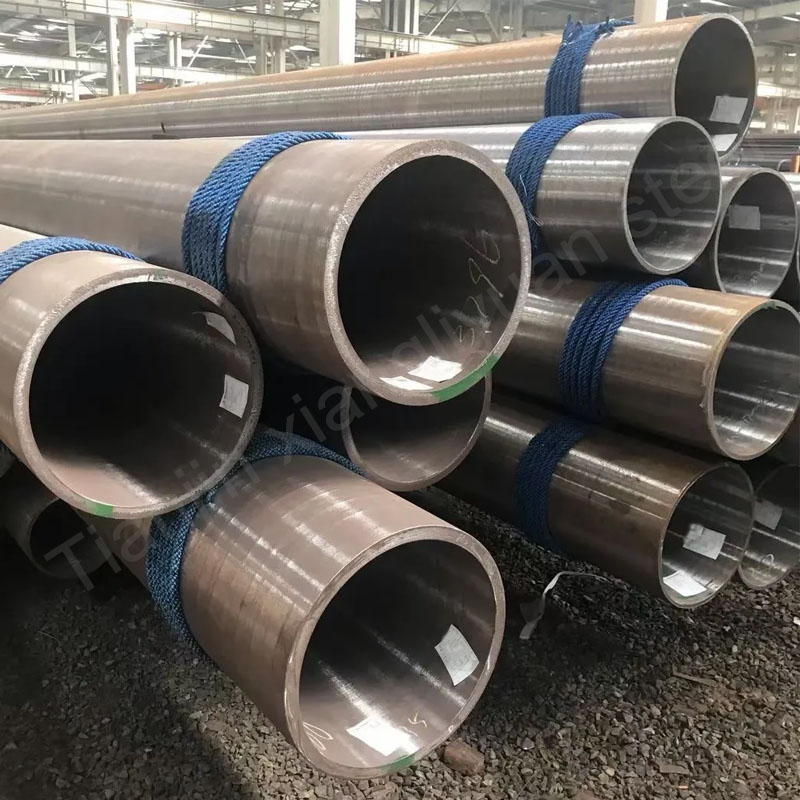
SCH 160 and XXS are often produced as seamless pipes due to the heavy wall thicknesses involved. At Tianjin Xiangliyuan Steel, we have extensive experience manufacturing heavy-wall seamless steel pipes for demanding applications.
Understanding the Relationship Between Schedule, Pressure, and Strength
The primary reason for selecting a particular schedule is to achieve the required pressure rating for the application.
Pressure Rating Fundamentals
The pressure rating of a pipe (its maximum allowable working pressure) depends on:
1. Material Yield Strength: Stronger materials can withstand higher stresses. For example, API 5L X52 has a higher yield strength than ASTM A53 Gr. B, allowing higher pressures with the same wall thickness.
2. Wall Thickness: Thicker walls provide greater resistance to internal pressure. This is the primary reason for selecting heavier schedules.
3. Outer Diameter: For a given wall thickness, larger diameter pipes have lower pressure ratings because the hoop stress is higher.
4. Design Factor (Safety Factor): Codes specify safety factors that reduce allowable stresses below the material’s yield strength.
5. Temperature: At elevated temperatures, material strength decreases, requiring thicker walls or lower operating pressures.
The Barlow Formula
Engineers use the Barlow formula (or its code-specific variations) to calculate pressure ratings:
P = (2 × S × t) / D
Where:
P = Internal pressure
S = Allowable stress (material strength × design factor)
t = Wall thickness
D = Outer diameter
This formula illustrates why, for a given diameter, thicker walls (higher schedule numbers) provide higher pressure ratings.
Schedule Selection Based on Application
Choosing the right schedule involves matching the pipe’s pressure capacity to the system’s requirements while considering other factors.
Step 1: Determine Design Pressure and Temperature
The starting point for any piping design is the maximum operating pressure and temperature the system will experience. These values should include safety margins and consider transient conditions such as surge pressures or startup/shutdown cycles.
Step 2: Select Material Grade
Material selection affects allowable stress. Common grades include:
ASTM A53 Gr. B: General service carbon steel
API 5L Gr. B: Standard line pipe
API 5L X42 through X70: Higher strength for higher pressures
ASTM A106 Gr. B: Seamless carbon steel for high-temperature service
ASTM A335 P11/P22/P91: Alloy steels for elevated temperatures
Step 3: Calculate Required Wall Thickness
Using applicable code formulas (ASME B31.1 for power piping, B31.3 for process piping, B31.4 for liquid pipelines, B31.8 for gas pipelines), engineers calculate the minimum required wall thickness based on pressure, temperature, and material properties.
Step 4: Select Schedule Meeting or Exceeding Requirements
Once the minimum required thickness is known, the designer selects a standard schedule that meets or exceeds this value, considering:
Availability: Standard schedules are more readily available
Cost: Thicker walls cost more in material and may increase welding costs
Future Considerations: Corrosion allowance, potential future pressure increases
Step 5: Verify Compatibility with Fittings and Components
The selected schedule must be compatible with flanges, fittings, valves, and other components that will be installed in the system. Mixing schedules can create fit-up problems at connections.
Schedule Variations Across Standards
While the ANSI/ASME schedule system is widely used in North America and much of the world, other standards use different approaches.
ISO and DIN Standards
European standards (ISO, DIN, EN) typically specify wall thickness directly in millimeters rather than using schedule numbers. Common European wall thickness series include:
EN 10220: Specifies dimensions and masses per unit length
EN 10216: Seamless steel tubes for pressure purposes
EN 10217: Welded steel tubes for pressure purposes
For example, an EN 10216-2 pipe might be specified as 168.3 mm OD × 7.1 mm wall thickness rather than by schedule number.
Japanese JIS Standards
Japanese Industrial Standards (JIS) use their own designation system. Common schedules include:
JIS G3452: Carbon steel pipe for ordinary piping (similar to SCH 40)
JIS G3454: Carbon steel pipe for pressure service
JIS G3455: Carbon steel pipe for high-pressure service
API Specifications
For oil and gas industry applications, API 5L specifies line pipe with wall thicknesses often referenced by schedule but also by specific wall thickness designations for certain projects.
At Tianjin Xiangliyuan Steel, we manufacture pipes to all major international standards, ensuring that whatever specification your project requires, we can deliver. Visit https://www.xlysteel.com/ to explore our standard compliance capabilities.
The Pipe Schedule Chart: Your Essential Reference
The pipe schedule chart is an indispensable tool for engineers and procurement professionals. It provides, for each nominal pipe size and schedule, the:
Outer Diameter (OD): Fixed for each NPS regardless of schedule
Wall Thickness (t): Varies by schedule
Inner Diameter (ID): Calculated as OD minus 2× wall thickness
Weight per Foot/Meter: Important for structural calculations and shipping
Internal Cross-Sectional Area: For flow calculations
Burst Pressure: Theoretical pressure at failure
How to Read a Pipe Schedule Chart
For NPS 4″ pipe (OD = 4.500 inches):
| Schedule | Wall Thickness | ID | Weight (lbs/ft) |
|---|---|---|---|
| SCH 10 | 0.120″ | 4.260″ | 5.61 |
| SCH 40 | 0.237″ | 4.026″ | 10.79 |
| SCH 80 | 0.337″ | 3.826″ | 14.98 |
| SCH 160 | 0.531″ | 3.438″ | 22.51 |
This illustrates how increasing schedule number increases wall thickness, decreases inner diameter, and increases weight—all of which affect the pipe’s suitability for different applications.
Special Considerations for Seamless vs. Welded Pipes
The choice between seamless and welded pipes interacts with schedule selection in several ways.
Availability by Schedule
Light Schedules (SCH 10, 20): More commonly available in ERW pipes due to manufacturing efficiency
Standard Schedules (SCH 40, 80): Widely available in both seamless and ERW
Heavy Schedules (SCH 160, XXS): Often produced as seamless pipes due to manufacturing limitations for ERW in very heavy walls
Manufacturing Considerations
For ERW pipes, very heavy walls (high schedules) can be challenging to form and weld reliably. The forming rolls must exert greater force, and the welding process must fuse thicker edges completely.
For seamless pipes, heavy walls require careful control of piercing and rolling parameters to maintain concentricity and avoid defects. At Tianjin Xiangliyuan Steel, our experienced operators and modern equipment enable us to produce high-quality seamless pipes across the full range of schedules.
Code Requirements
Some codes may require seamless construction for certain services regardless of schedule. For example, API 5CT casing and tubing for oil and gas wells is almost exclusively seamless due to the extreme conditions downhole.
How Schedule Affects Pipe Performance
Beyond pressure rating, schedule selection influences several aspects of pipe performance.
Flow Capacity
Thicker walls (higher schedules) reduce the inner diameter for a given outer diameter, decreasing cross-sectional area and flow capacity. For flow-sensitive applications, this must be considered:
SCH 40 provides maximum flow for a given NPS
SCH 80 reduces flow area by approximately 10-15% compared to SCH 40
SCH 160 can reduce flow area by 30% or more
If flow capacity is critical, engineers may need to increase the NPS to compensate for thicker walls.
Weight and Handling
Heavier schedules add significant weight:
SCH 40 6″ pipe weighs approximately 19 lbs/ft
SCH 80 6″ pipe weighs approximately 28.6 lbs/ft (50% heavier)
SCH 160 6″ pipe weighs approximately 42.5 lbs/ft (124% heavier)
This affects:
Structural loads on supports and foundations
Transportation costs (more weight = higher shipping costs)
Handling requirements (heavier pipes need larger cranes, more workers)
Thermal Expansion
Thicker walls have greater thermal mass and may respond differently to temperature changes, though the coefficient of thermal expansion remains the same regardless of schedule.
Vibration and Acoustics
Heavier walls can dampen vibration and reduce noise transmission, which may be beneficial in certain applications.
Corrosion Allowance and Schedule Selection
One important consideration in schedule selection is providing allowance for corrosion over the design life of the system.
What Is Corrosion Allowance?
Corrosion allowance is additional wall thickness beyond what is required for pressure containment, intended to be consumed by gradual corrosion over the pipe’s service life. By the end of design life, the remaining wall thickness should still be sufficient for pressure integrity.
How Schedule Provides Corrosion Allowance
When engineers calculate required wall thickness for pressure, they then add corrosion allowance to determine the minimum required wall thickness for procurement. The selected schedule must meet or exceed this total.
For example:
Pressure-required thickness: 0.200″
Corrosion allowance (20-year life): 0.050″
Minimum procurement thickness: 0.250″
Selected schedule: SCH 40 (0.237″ wall) would be inadequate
Selected schedule: SCH 80 (0.337″ wall) would provide extra margin
This is why many engineers specify SCH 80 for corrosive services even when pressure requirements alone would be satisfied by SCH 40.
Special Schedules and Non-Standard Walls
While standard schedules cover most applications, some projects require non-standard wall thicknesses.
Intermediate Schedules
Between the standard schedules, intermediate options exist:
SCH 20, SCH 30, SCH 60, SCH 100, SCH 140 are available from some manufacturers for specific applications
API-Specific Walls
For API 5L line pipe, wall thicknesses are often specified directly in millimeters or inches rather than by schedule. Common API walls include:
0.250″, 0.312″, 0.375″, 0.500″ for various sizes and pressure classes
Custom Walls
For specialized applications, pipes can be manufactured to custom wall thicknesses. This is common for:
OCTG casing and tubing where specific weights per foot are required
Mechanical tubing where subsequent machining determines wall requirements
Specialized pressure vessels with unique design conditions
At Tianjin Xiangliyuan Steel, we regularly produce pipes to custom wall specifications. Our flexible manufacturing capabilities allow us to meet precise customer requirements beyond standard schedules. Contact us at infosteel@xlygt.com to discuss your specific needs.
Practical Tips for Specifying Pipe Schedules
Based on decades of experience helping customers select the right pipes, here are practical recommendations:
1. Don’t Overspecify Unnecessarily
While it might seem prudent to specify heavier walls “just to be safe,” overspecification has real costs:
Higher material cost
Increased shipping weight
More difficult welding (thicker walls require more passes)
Reduced flow capacity
Heavier structural loads
Select the schedule that meets your requirements—not the heaviest available.
2. Consider Future Requirements
If there’s any possibility that operating pressures might increase in the future, or that corrosion rates might be higher than anticipated, building in some margin through a slightly heavier schedule can be wise.
3. Verify Compatibility with Components
Before finalizing schedule selection, confirm that flanges, fittings, valves, and other components are available in the same schedule. Some schedules are less common and may have long lead times for matching components.
4. Consider Threading Requirements
If pipes will be threaded (rather than welded), heavier schedules provide more thread engagement and stronger joints. For threaded connections, SCH 80 is often preferred over SCH 40.
5. Consult the Applicable Code
Different industries and jurisdictions have different code requirements. Always verify that your schedule selection complies with the applicable design code (ASME B31, API, etc.).
6. Work with a Knowledgeable Supplier
A experienced supplier like Tianjin Xiangliyuan Steel can provide guidance on schedule selection based on your application, recommend alternatives if your first choice is unavailable, and ensure that the pipes you receive meet all specified requirements.
Common Mistakes in Schedule Selection
Avoid these frequent errors:
Mistake 1: Confusing Schedule with Strength
Schedule indicates wall thickness, not material grade. A SCH 80 pipe in low-grade steel may have lower pressure capacity than a SCH 40 pipe in high-strength steel. Both schedule and grade matter.
Mistake 2: Assuming All Schedules Are Available in All Sizes
Very light schedules (SCH 10) may not be available in very large diameters. Very heavy schedules (SCH 160) may not be available in very small diameters. Check availability before finalizing specifications.
Mistake 3: Mixing Schedules Without Checking ID Compatibility
When connecting pipes of different schedules, the inner diameters may differ significantly, creating flow disturbances and potential turbulence at connections.
Mistake 4: Ignoring the Effect on Flow
A heavier schedule reduces inner diameter and flow area. For long pipelines, this can significantly affect pressure drop and pumping requirements.
Mistake 5: Specifying Seamless When ERW Would Suffice
For many applications, high-quality ERW pipes perform perfectly well at lower cost. Unless seamless is required by code or the severity of service, consider ERW as a cost-effective alternative.
How Tianjin Xiangliyuan Steel Can Help
Selecting the right pipe schedule is a critical engineering decision. At Tianjin Xiangliyuan Steel, we support our clients throughout this process:
Extensive Schedule Availability
We manufacture seamless steel pipes, ERW steel pipes, and LSAW steel pipes in schedules ranging from SCH 10 through SCH 160 and beyond. Our extensive production capabilities ensure we can meet your requirements, whether standard or custom.
Technical Expertise
Our team of metallurgists and engineers understands the relationship between schedule, pressure rating, material grade, and application requirements. We provide technical guidance to help you make informed decisions.
Quality Assurance
Every pipe we produce, regardless of schedule, undergoes rigorous quality control:
Chemical analysis verification
Mechanical property testing
Dimensional inspection
Hydrostatic pressure testing
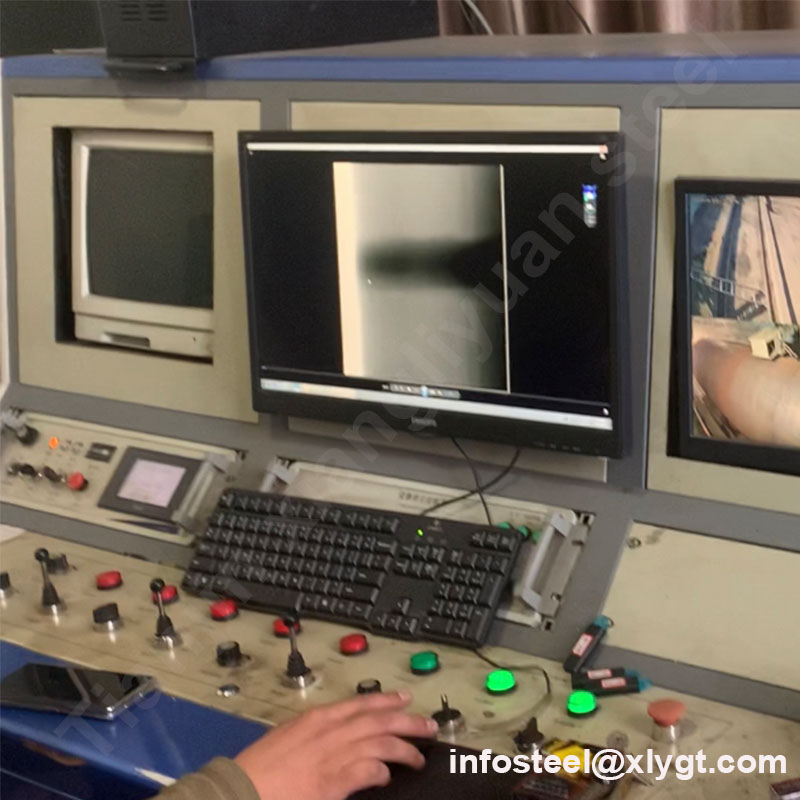
Nondestructive examination as required
All pipes are supplied with complete Mill Test Certificates (MTCs) documenting compliance with specified standards.
Global Logistics
We coordinate shipping to ports worldwide, ensuring your pipes arrive on time and in perfect condition. Our experienced logistics team handles all export documentation, customs clearance, and shipping arrangements.
The Right Schedule Makes All the Difference
Pipe schedule selection is far more than a simple specification—it is an engineering decision that affects pressure capacity, flow performance, structural integrity, corrosion resistance, and project economics. Understanding what schedule numbers mean, how they relate to actual dimensions, and how to select the appropriate wall thickness for your application is essential knowledge for any engineer or procurement professional involved in piping systems.
Whether your project requires standard SCH 40 carbon steel pipes for general service, heavy-wall SCH 160 seamless pipes for extreme pressure, or something in between, Tianjin Xiangliyuan Steel has the manufacturing capability, technical expertise, and quality systems to deliver.
Need Assistance Selecting the Right Schedule?
With decades of experience manufacturing steel pipes for global markets, the team at Tianjin Xiangliyuan Steel is ready to assist you. We provide detailed technical consultations, comprehensive quotations with full specifications, and reliable logistics support for projects of any scale.
Contact us today to discuss your requirements and discover why clients around the world trust us as their preferred steel pipe supplier.
Email: infosteel@xlygt.com
Website: https://www.xlysteel.com/
Let us help you select the perfect pipe for your application—because the right schedule makes all the difference.