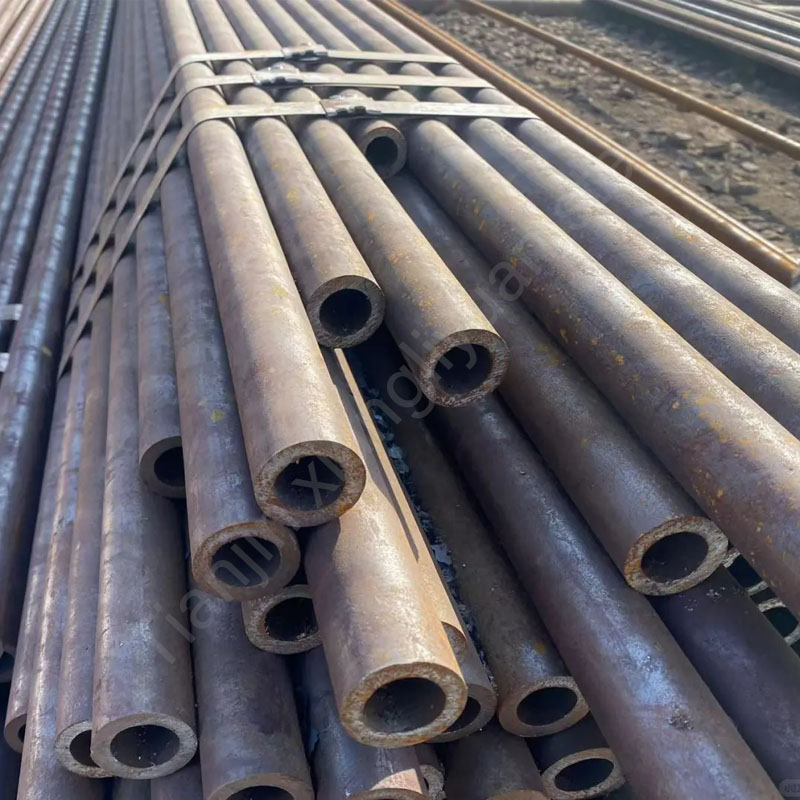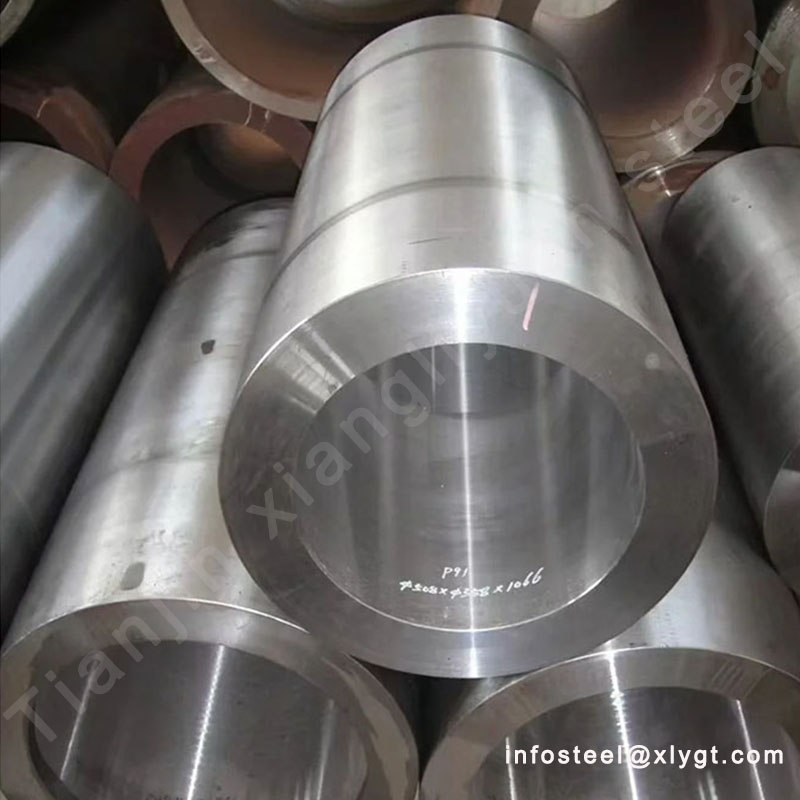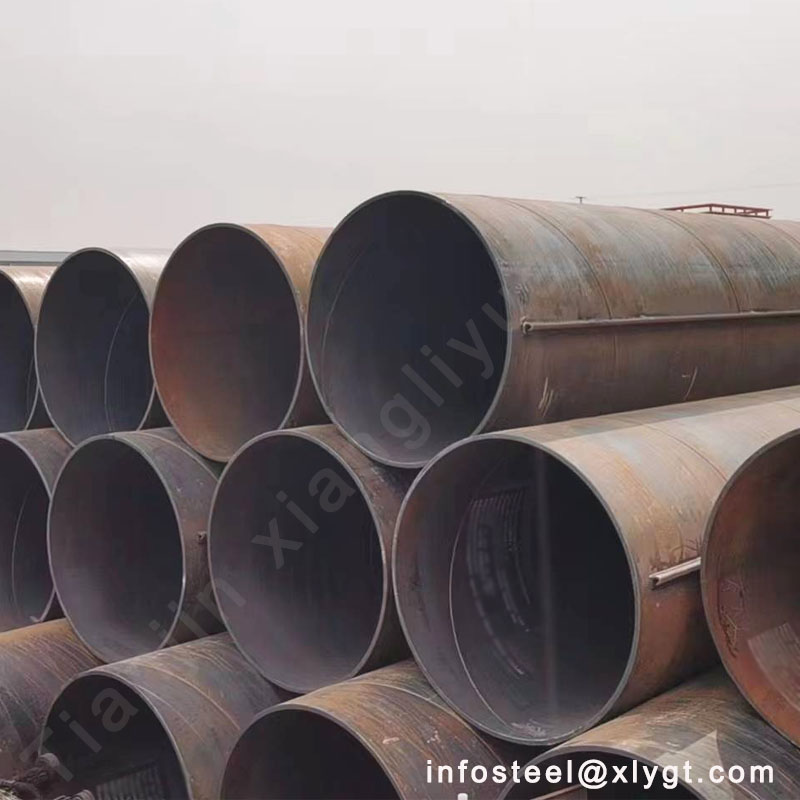
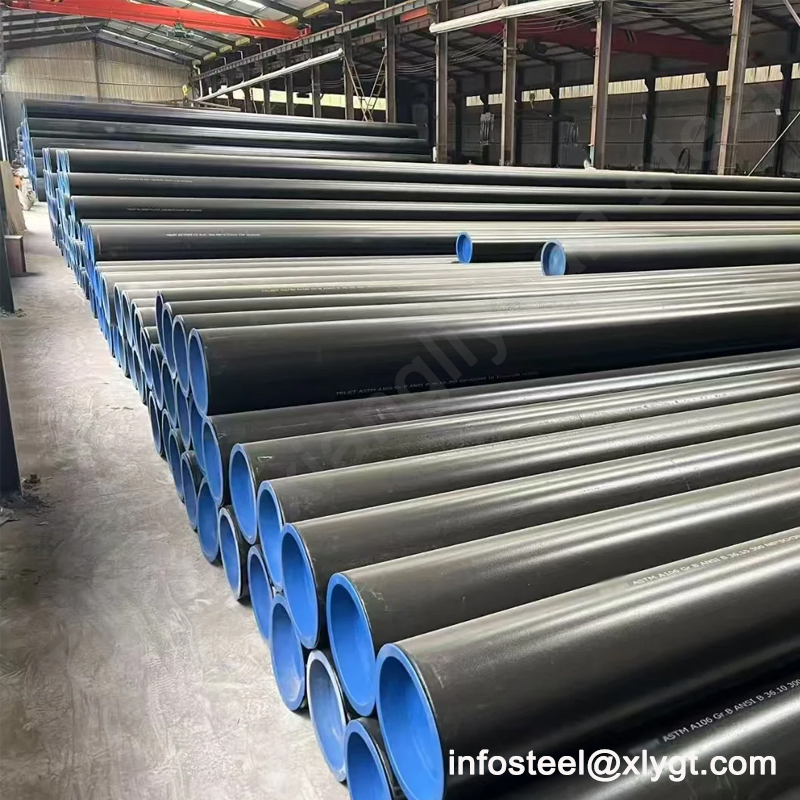
In the global oil and gas infrastructure sector, pipeline integrity represents both an engineering challenge and a critical investment decision. External corrosion protection through advanced coating systems extends pipeline service life from 5–10 years to over 50 years, significantly reducing operational risks and total cost of ownership. As a leading steel pipe manufacturer based in Tianjin, China, Tianjin Xiangliyuan Steel has supplied coated line pipe to major international projects across five continents. Our strategic location near Tianjin Port—one of China’s largest maritime logistics hubs—enables us to deliver coated steel pipes efficiently to global energy markets, reducing lead times and shipping costs for our clients. For technical consultations or procurement inquiries, contact our engineering team at infosteel@xlygt.com or visit our comprehensive product catalog at https://www.xlysteel.com/.
Fusion-Bonded Epoxy (FBE) Coating: The Foundation of Corrosion Protection
Fusion-Bonded Epoxy coating represents the cornerstone of modern pipeline corrosion protection technology. Applied electrostatically to steel pipe surfaces heated to approximately 220°C, the epoxy powder melts and cures into a thermoset polymer layer that forms a molecular bond with the prepared steel substrate .
Technical Specifications and Standards
Standard FBE coating thickness ranges from 300–500 μm, with applications governed by CSA Z245.20, ISO 21809-1, and AWWA C213 . The coating demonstrates exceptional adhesion strength, typically exceeding 10 MPa in pull-off tests, and provides superior resistance to cathodic disbondment—a critical failure mode in cathodic protection systems.
Operating Parameters and Applications
Standard FBE grades operate effectively within temperature ranges of −40°C to +80°C, with high-temperature formulations extending continuous service limits to 110–120°C . The coating’s chemical resistance profile makes it suitable for water injection pipelines, internal lining applications, and above-ground installations where UV exposure is minimal. For onshore gas distribution networks and well casing external protection, single-layer FBE remains the specification of choice due to its cost-effectiveness and proven field performance .
Limitations and Engineering Considerations
While FBE provides excellent corrosion barriers, its mechanical protection capabilities are limited compared to multi-layer systems. The coating exhibits moderate impact resistance and requires careful handling during construction to prevent mechanical damage. For buried pipelines in rocky terrain or areas subject to soil stress, additional mechanical protection measures are recommended .
Three-Layer Polyethylene (3LPE) Coating: Balanced Protection for Demanding Environments
The Three-Layer Polyethylene coating system represents the industry standard for buried and subsea oil and gas transmission pipelines, combining the corrosion resistance of FBE with the mechanical durability of high-density polyethylene.
System Architecture
3LPE comprises three distinct functional layers: a fusion-bonded epoxy primer (100–150 μm) providing corrosion protection and substrate adhesion; a copolymer adhesive layer (170–250 μm) ensuring chemical bonding between the epoxy and outer layer; and an extruded high-density polyethylene topcoat (2.0–3.7 mm) delivering mechanical protection and moisture barrier properties .
Performance Characteristics and Standards
Compliant with ISO 21809-1 and DIN 30670, 3LPE systems demonstrate peel strengths exceeding 35 N/cm at 23°C and indentation resistance capable of withstanding 20 J impacts without holiday formation . The coating system maintains integrity in continuous operating temperatures up to 80°C, with peak excursions tolerable to 85°C .
Global Application Profile
3LPE dominates onshore pipeline specifications across West Africa, the Middle East, and Central Asian markets, where European EPC contractor influence has established DIN 30670 as the default technical reference . The system’s resistance to soil stress and abrasion makes it particularly suitable for desert environments and lateritic soil conditions common in African pipeline corridors.
Procurement Considerations
When specifying 3LPE, engineers must confirm coating class (wall thickness category), cutback length for weld repair zones, and field joint coating compatibility. These parameters significantly impact field construction costs and long-term maintenance requirements .
Three-Layer Polypropylene (3LPP) Coating: High-Temperature and High-Performance Applications
Three-Layer Polypropylene coating addresses the thermal limitations of polyethylene-based systems, extending operational capabilities for high-temperature crude oil service and deepwater offshore installations.
Thermal Performance Advantages
The substitution of polypropylene for polyethylene in the outer layer enables continuous operating temperatures up to 110°C, with short-term peak tolerances reaching 130–140°C . This thermal envelope accommodates hot crude oil pipelines operating at or near 80°C—a critical threshold where 3LPE adhesive performance degrades significantly .
Mechanical and Chemical Properties
3LPP demonstrates superior abrasion resistance during horizontal directional drilling (HDD) pull-through operations and maintains peel strength integrity under high external hydrostatic pressures encountered in deepwater flowlines . The coating’s UV resistance profile also exceeds that of 3LPE, making it suitable for above-ground installations in high-solar-exposure environments .
Cost-Benefit Analysis
While 3LPP carries a 15–30% cost premium over 3LPE in coating application costs, the investment is justified for high-temperature service, deepwater HPHT (High Pressure High Temperature) pipelines, and installations requiring enhanced mechanical protection . Project specifications for North Sea developments, Gulf of Mexico deepwater fields, and Middle East heavy oil production increasingly mandate 3LPP for critical flowline sections.
Concrete Weight Coating (CWC): Submarine Pipeline Stability and Protection
Concrete Weight Coating serves a fundamentally different functional purpose from anti-corrosion coatings, providing negative buoyancy and mechanical protection for submarine pipeline systems.
Engineering Function and Composition
CWC systems add sufficient weight to overcome seawater buoyancy, ensuring pipeline stability on the seabed under hydrodynamic loading conditions. The coating consists of cement, aggregates (iron ore, sand, granite), steel reinforcement mesh, and water, with densities ranging from 1,800–3,450 kg/m³ depending on project specifications .
Technical Standards and Specifications
Manufacturing and quality assurance follow ISO 21809-5 and DNV-OS-F101 standards, with concrete compressive strength requirements typically exceeding 40 MPa and minimum coating thickness of 40 mm . For deepwater applications, high-density formulations (3,040–3,450 kg/m³) minimize coating thickness while achieving required submerged weight targets .
Application Methodology
CWC is applied over existing anti-corrosion coatings (typically 3LPE or FBE) using compression wrap, impingement, or slip-form processes. The concrete layer provides mechanical protection against anchor strikes, fishing gear interaction, and seabed instability while shielding the underlying corrosion barrier from damage during installation and service .
Integration with Corrosion Protection Systems
Submarine pipelines universally employ combined protection strategies: an FBE or 3LPE/3LPP corrosion barrier directly on the steel surface, overlaid with CWC for weight and mechanical protection, supplemented by cathodic protection systems (sacrificial anodes or impressed current) for holiday repair and long-term integrity assurance .
Strategic Coating Selection Framework
Selecting the appropriate coating system requires systematic evaluation of four governing parameters: operating temperature, installation methodology, environmental exposure, and design life requirements.
Temperature-Driven Selection
For continuous operating temperatures below 80°C, 3LPE provides optimal cost-performance balance. Applications exceeding 80°C—common in hot crude transmission, steam-traced lines, or deepwater flowlines—require 3LPP specification to prevent adhesive softening and cathodic disbondment acceleration .
Installation Methodology Considerations
Trenchless installation techniques (HDD, micro-tunneling) demand coatings with superior abrasion resistance, favoring 3LPP or dual-layer FBE systems. S-lay and J-lay submarine installation methods require CWC compatibility with reel-lay mechanical stresses and stinger curvature limits .
Environmental and Soil Conditions
Coastal and marine environments with saline exposure benefit from 3LPP’s enhanced chemical resistance. High-UV exposure applications require UV-stabilized topcoats or polypropylene outer layers. Rocky backfill conditions necessitate enhanced mechanical protection through thicker 3LPE topcoats or reinforced CWC systems .
Tianjin Xiangliyuan Steel: Your Integrated Coating Solutions Partner
Located in Tianjin, China’s premier northern port city, Tianjin Xiangliyuan Steel combines advanced coating line capabilities with strategic logistics advantages for global pipeline project delivery.
Manufacturing Capabilities
Our coating facilities accommodate pipe diameters from 168 mm to 1,422 mm (6–56 inches), applying FBE, 2FBE, 2LPE, 3LPE, 3LPP, and CWC systems in accordance with ISO 21809, DIN 30670/30678, AWWA C213/C210, and client-specific engineering specifications . We maintain comprehensive quality assurance protocols including holiday detection, peel strength testing, and cathodic disbondment evaluation.
Logistics and Export Excellence
Our Tianjin location provides direct access to Xingang Port, China’s largest crude oil import and steel export gateway. This proximity reduces inland transportation costs, enables efficient vessel loading, and supports just-in-time delivery schedules for international EPC contractors. We have successfully executed coating contracts for submarine pipeline projects in Central America, West Africa, and Southeast Asian markets, demonstrating our capability to meet stringent international project requirements .
Technical Support and Consultation
Our engineering team provides pre-bid coating specification review, material selection guidance, and field joint coating recommendations. For project-specific inquiries, technical datasheets, or competitive quotations, please contact infosteel@xlygt.com or explore our complete product range and technical resources at https://www.xlysteel.com/.
The selection between FBE, 3LPE, 3LPP, and Concrete Weight Coating systems represents a critical engineering decision impacting pipeline integrity, operational safety, and lifecycle economics. While FBE provides cost-effective corrosion protection for moderate service conditions, 3LPE and 3LPP multi-layer systems deliver the mechanical durability and thermal performance required for challenging transmission environments. For submarine applications, CWC integration ensures on-bottom stability and mechanical protection essential for deepwater infrastructure.
By understanding the distinct functional contributions of each coating type and their interaction within integrated protection systems, pipeline operators and EPC contractors can optimize material specifications for project-specific performance requirements. With Tianjin Xiangliyuan Steel’s comprehensive coating capabilities, strategic port location, and technical expertise, we stand ready to support your next pipeline infrastructure project with quality-assured, standards-compliant coated steel pipe solutions.
References and Standards
CSA Z245.20: External Fusion-Bonded Epoxy Coating for Steel Pipe
ISO 21809-1: Polyolefin Coatings for Buried or Submerged Pipelines
ISO 21809-5: External Concrete Coatings for Pipeline Systems
DIN 30670: Three-Layer Polyethylene Coating
DIN 30678: Three-Layer Polypropylene Coating
DNV-OS-F101: Submarine Pipeline Systems
AWWA C213: Fusion-Bonded Epoxy Coating for Water Pipelines
This article incorporates current industry standards, technical specifications, and field-proven application data to provide authoritative guidance for pipeline coating selection. For the latest technical updates or project-specific engineering support, contact Tianjin Xiangliyuan Steel at infosteel@xlygt.com or visit https://www.xlysteel.com/.