Introduction to Pipe Fittings in Industrial Systems
When procuring steel pipes for any industrial, commercial, or construction application, selecting the appropriate pipe fittings is equally critical to ensuring system integrity, safety, and performance. Pipe fittings serve as the indispensable connectors, directors, and controllers within piping networks, transforming straight pipe runs into functional systems capable of handling complex routing, pressure variations, and flow requirements.
At Tianjin Xiangliyuan Steel, we understand that a comprehensive piping solution extends beyond quality steel pipes to include precisely engineered fittings that match your specifications. This guide provides detailed insights into the essential pipe fittings that typically accompany steel pipe purchases, demonstrating why sourcing both components from a single, experienced manufacturer ensures optimal compatibility and system reliability.
Fundamental Connection Pipe Fittings
1. Flanges: The Cornerstone of Modular Assembly
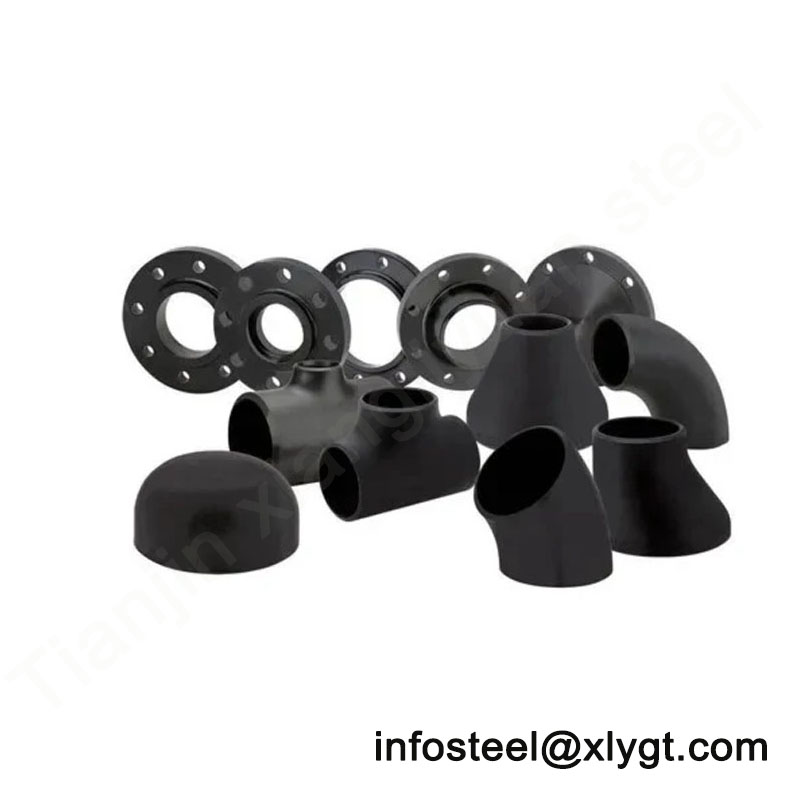
Flanges represent one of the most common connecting elements in piping systems, enabling the assembly of pipe sections, valves, pumps, and other equipment. Available in multiple standards (ANSI, DIN, JIS, GB), flanges come in several designs:
Weld Neck Flanges: Featuring a long tapered hub, these provide excellent strength in high-pressure applications and facilitate smooth flow transition.
Slip-On Flanges: Easier to align and weld, ideal for lower-pressure systems.
Blind Flanges: Used to terminate or seal piping ends for future expansion or testing.
Socket Weld Flanges: Designed for smaller-diameter, high-pressure pipes where leakage prevention is paramount.
Threaded Flanges: Suitable for low-pressure, non-critical applications where welding isn’t feasible.
Proper flange selection considers pressure class (150#, 300#, 600#, etc.), facing type (flat face, raised face, ring-type joint), and material compatibility with both the pipe media and connecting components.
2. Pipe Couplings and Unions
For connecting two pipes of similar diameter without directional change:
Full Couplings: Join small-bore pipes end-to-end with threaded or socket weld connections.
Half Couplings: Allow branch connections from main pipes, typically welded on one end while threading onto the branch.
Pipe Unions: Provide a three-piece, demountable connection ideal for maintenance areas, consisting of two end pieces and a central nut.
3. Elbows: Directional Control Essentials
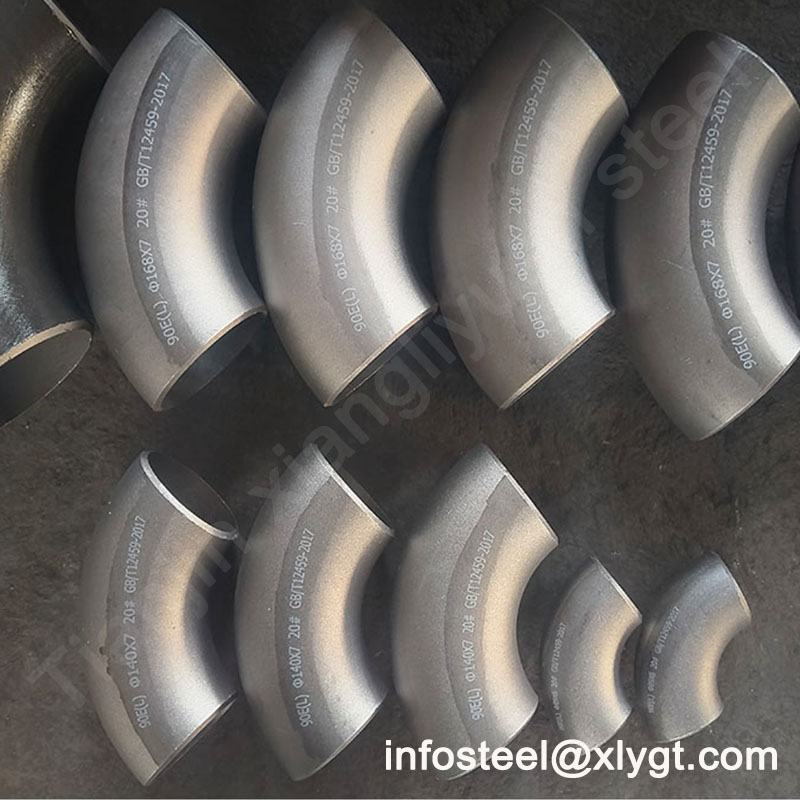
Elbows facilitate directional changes in piping systems, manufactured in standard angles (45°, 90°, and 180° returns) and various radii:
Long Radius Elbows: Have a center-to-face distance of 1.5 times the pipe diameter (1.5D), offering smoother flow with less pressure drop.
Short Radius Elbows: Feature a center-to-face distance equal to the pipe diameter (1D), suitable for space-constrained installations.
Reducing Elbows: Incorporate diameter change along with directional change, saving fitting counts in transitioning systems.
4. Tees and Crosses: Flow Distribution Points
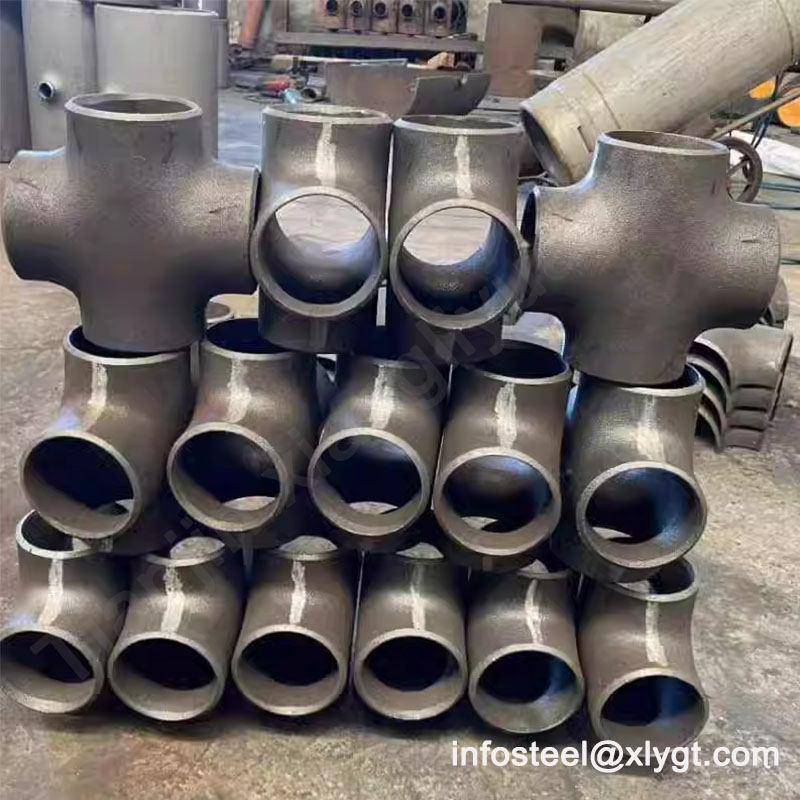
Equal Tees: Feature all three openings of the same diameter for straightforward branch connections.
Reducing Tees: Have branch connections of smaller diameter than the main run, commonly used for service takeoffs.
Barred Tees: Include a bar across the branch outlet to prevent pigging tools from entering during pipeline cleaning operations.
Crosses: Less common due to inherent stress concentration, these four-way fittings are used where flow must be divided in multiple directions simultaneously.
Specialized Function pipe Fittings
5. Reducers and Expanders: Managing Pipe Diameter Transitions
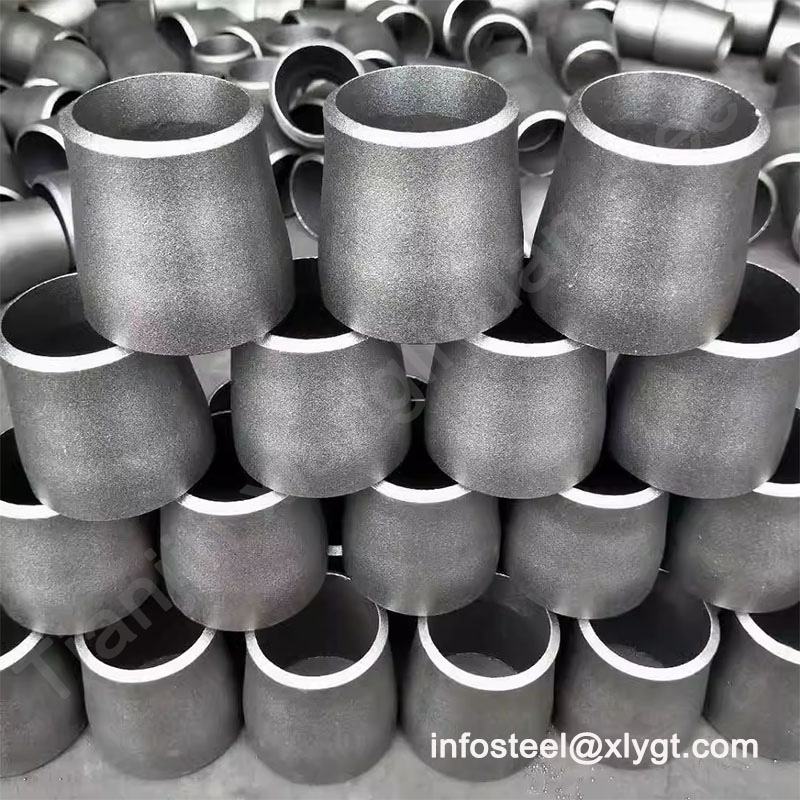
Concentric Reducers: Maintain a common centerline, primarily used in vertical lines to prevent air accumulation.
Eccentric Reducers: Feature offset centerlines, essential in horizontal pipelines to maintain bottom-of-pipe elevation and prevent liquid pooling.
6. Caps and Plugs: System Termination
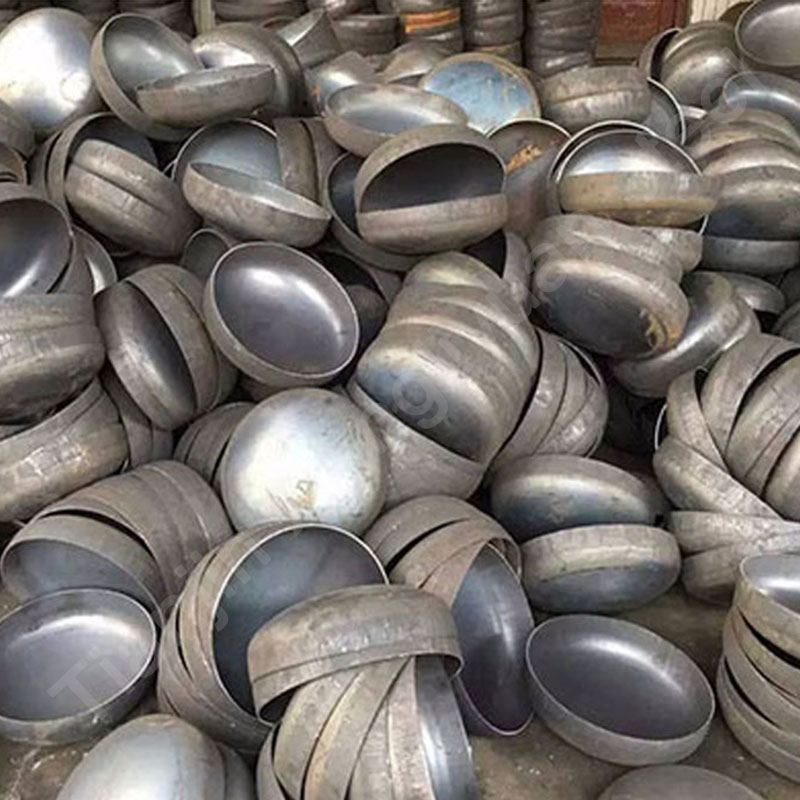
Pipe Caps: Permanently seal the end of pipes, typically welded in place.
Threaded Plugs: Create removable end closures in threaded systems.
7. Olets: Alternative Branch Connection Methods
When standard tees are impractical due to size constraints or reinforcement requirements, olets provide engineered branch solutions:
Weldolet: The most common butt-weld branch connection offering excellent strength.
Sockolet: Socket weld branch connection for smaller pipes.
Threadolet: Threaded branch connection for non-critical services.
Elbolet: Creates a branch connection with built-in elbow orientation.
Latrolet: Provides a 45-degree lateral branch connection.
Material and Manufacturing Considerations
Material Compatibility
Pipe fittings must match or exceed the material specifications of the connected pipes:
Carbon Steel Fittings: Most common for general industrial applications, available in grades like ASTM A234 WPB for standard applications and higher grades (WPC, WP11, WP22, WP91) for elevated temperatures and pressures.
Stainless Steel Fittings: Essential for corrosive environments, with grades 304/L and 316/L being most prevalent in industrial settings.
Alloy Steel Fittings: For specialized high-temperature, high-pressure, or corrosive services.
Low-Temperature Carbon Steel: For cryogenic applications requiring impact resistance.
Manufacturing Processes
Seamless Fittings: Formed from solid billets without welding, offering superior pressure integrity for critical applications.
Welded Fittings: Fabricated from plate or pipe sections, cost-effective for less demanding services.
Forged Fittings: Created through compressive force, providing excellent grain structure for high-strength applications.
Pressure and Temperature Ratings
Understanding fitting pressure ratings is crucial for system safety:
Schedule Matching: Fittings should generally match the pipe schedule (SCH 40, 80, 160, etc.) to maintain consistent wall thickness.
Pressure Class Designations: Standard classifications (Class 150, 300, 600, 900, 1500, 2500) indicate maximum allowable pressure at specific temperatures.
Temperature Derating: All pressure ratings decrease as temperature increases, requiring careful consideration of operating conditions.
Surface Treatments and Coatings
Galvanization: Zinc coating for corrosion protection in exposed environments.
Black Painting: Basic protection for indoor or temporary installations.
Epoxy Coatings: Advanced corrosion protection for aggressive environments.
Passivation: For stainless steel fittings to enhance oxide layer formation.
Selection Criteria for Optimal Performance
When specifying pipe fittings, consider these factors:
Fluid Characteristics: Corrosiveness, viscosity, abrasiveness, and temperature.
Operating Conditions: Pressure, temperature cycles, and potential vibration.
Installation Environment: Indoor/outdoor, buried/exposed, and potential corrosive elements.
Maintenance Requirements: Frequency of inspection, cleaning, or replacement needs.
System Flexibility Requirements: Thermal expansion, seismic movement, or settlement considerations.
Industry Standards: Compliance with relevant codes (ASME, ANSI, API, DIN, etc.).
Why Source Pipes and pipe Fittings from a Single Supplier?
Procuring both steel pipes and pipe fittings from Tianjin Xiangliyuan Steel offers significant advantages:
Material Consistency: Identical metallurgical properties and manufacturing processes ensure optimal compatibility.
Dimensional Integrity: Precise matching of tolerances between pipes and fittings simplifies installation.
Unified Quality Assurance: Single-point responsibility for material traceability and certification.
Technical Coordination: Our engineers can recommend fitting solutions optimized for our pipe products.
Logistical Efficiency: Combined shipments reduce lead times, paperwork, and transportation costs.
Comprehensive Support: Single point of contact for technical queries, order tracking, and after-sales service.
Custom Fabrication Capabilities
Beyond standard fittings, we provide custom fabrication services for:
Non-Standard Angles: Elbows with specific degrees other than standard 45° or 90°.
Special Reductions: Unique diameter transitions not covered by standard reducers.
Proprietary Designs: Fittings tailored to specific equipment connections or space constraints.
Heavy-Wall Components: For extreme pressure or abrasive applications.
Testing Prototypes: Development fittings for new system designs.
Industry-Specific Applications
Oil and Gas Industry
High-pressure forged fittings with enhanced impact properties
Sour service compliant fittings for H₂S environments
Offshore-grade components with corrosion protection
Power Generation
High-temperature fittings for boiler and steam applications
Feedwater system components with erosion resistance
Turbine bypass and auxiliary system fittings
Chemical Processing
Corrosion-resistant alloy fittings for aggressive media
Lined fittings for ultra-pure or highly corrosive streams
Sampling system components
Water Infrastructure
Large-diameter fittings for transmission mains
Potable water compliant materials and coatings
Irrigation system components with abrasion resistance
Construction and HVAC
Architectural exposed fittings with aesthetic finishes
Insulated fitting systems for energy efficiency
Fire protection system components
Quality Assurance and Certification
Our fittings manufacturing process incorporates:
Material Traceability: Complete documentation from raw material to finished product.
Non-Destructive Testing: Radiography, ultrasonic, dye penetrant, and magnetic particle inspection as required.
Dimensional Verification: Precision measurement against international standards.
Pressure Testing: Hydrostatic and pneumatic testing capabilities.
Certification Compliance: CE, PED, ISO, and other industry-specific certifications available.
Installation Considerations
While proper installation is the responsibility of the piping contractor, we provide:
Technical Guidance: Optimal welding procedures, preheat requirements, and heat treatment recommendations.
Handling Instructions: Proper storage, handling, and preparation techniques.
Compatibility Verification: Assistance in confirming fitting-pipe compatibility for specific applications.
Your Comprehensive Piping Solutions Partner
Selecting appropriate pipe fittings is not merely an afterthought to pipe procurement—it is an integral component of designing safe, efficient, and reliable piping systems. The technical considerations outlined in this guide demonstrate the specialized knowledge required to properly specify fittings that complement steel pipe purchases.
Tianjin Xiangliyuan Steel brings this expertise to every project, offering not only high-quality steel pipes but also the complete range of pipe fittings needed for your complete piping systems. Our integrated manufacturing capabilities, technical support, and quality assurance processes ensure that when you source both pipes and pipe fittings from us, you receive components engineered to work together seamlessly.
For detailed specifications, quotations, or technical consultation regarding your pipe and pipe fitting requirements, please contact our engineering team at infosteel@xlygt.com. We welcome the opportunity to discuss how our comprehensive piping solutions can meet your specific application needs, providing single-source convenience without compromising on quality or performance.
Whether you require standard fittings from our extensive inventory or customized solutions for unique applications, Tianjin Xiangliyuan Steel stands ready to be your trusted partner in complete piping system supply.