In the global steel pipe industry, precise terminology is not merely academic—it directly impacts procurement decisions, engineering calculations, and project safety. Whether you are sourcing carbon steel seamless pipes for oil and gas transmission or ERW steel pipes for construction frameworks, understanding the distinction between Nominal Pipe Size (NPS) and Outer Diameter (OD) is fundamental to ensuring specification accuracy and system compatibility.
At Tianjin Xiangliyuan Steel, located strategically near Tianjin Port—one of China’s largest maritime logistics hubs—we manufacture and supply steel pipes that strictly adhere to international standards including ASTM A53, ASTM A106, API 5L, ASME B36.10M, and EN 10204. Our proximity to the port enables us to offer competitive shipping advantages and rapid delivery to clients across North America, Europe, the Middle East, and Southeast Asia. For technical consultations or quotations, contact our team at infosteel@xlygt.com or visit our comprehensive product catalog at https://www.xlysteel.com/.
Understanding Nominal Pipe Size (NPS)
Nominal Pipe Size (NPS) is a standardized designation system established by the American Society of Mechanical Engineers (ASME) and widely adopted across North America . It is critical to recognize that NPS does not represent an actual physical measurement—neither the inner diameter (ID) nor the outer diameter (OD) of the pipe. Instead, NPS serves as a convenient reference identifier that ensures dimensional consistency across fittings, flanges, and piping components.
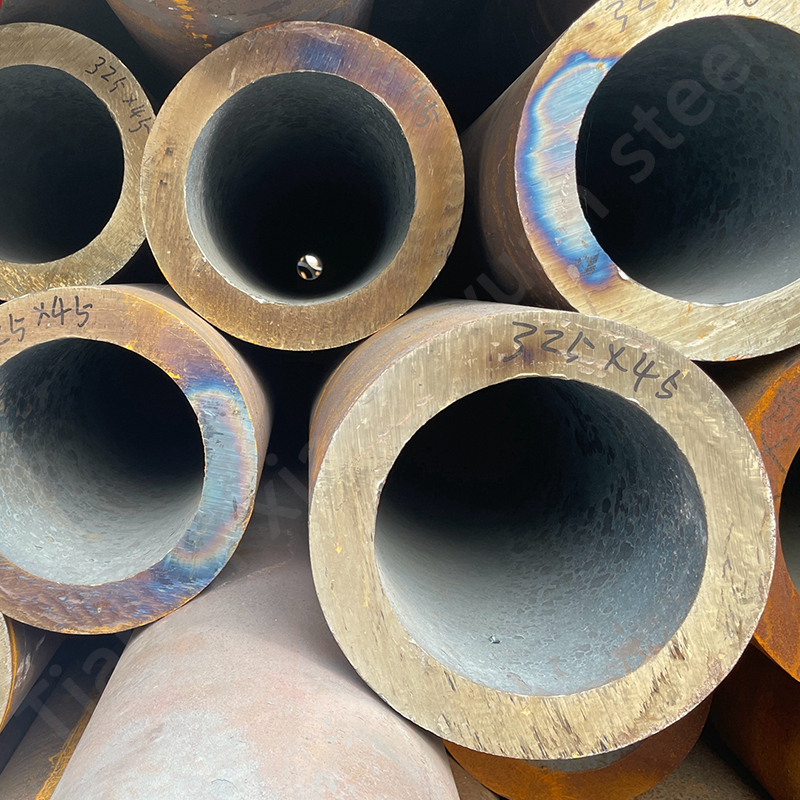
For pipes with NPS ≤ 12 inches, the nominal size approximates the internal diameter of early IPS (Iron Pipe Size) systems. For example, an NPS 1 pipe has an approximate inner diameter close to 1 inch (25.4 mm), though the actual ID varies depending on wall thickness . Conversely, for pipes with NPS > 12 inches, the nominal diameter aligns closely with the actual outer diameter—an NPS 14 pipe features an OD of precisely 355.6 mm (14 inches) .
This design convention ensures that pipes of the same NPS can utilize identical fittings regardless of wall thickness variations. Whether you require Schedule 40 (standard wall) or Schedule 80 (extra-heavy wall) specifications, the outer diameter remains constant, allowing seamless integration with flanges, valves, and threaded connections .
Understanding Outer Diameter (OD)
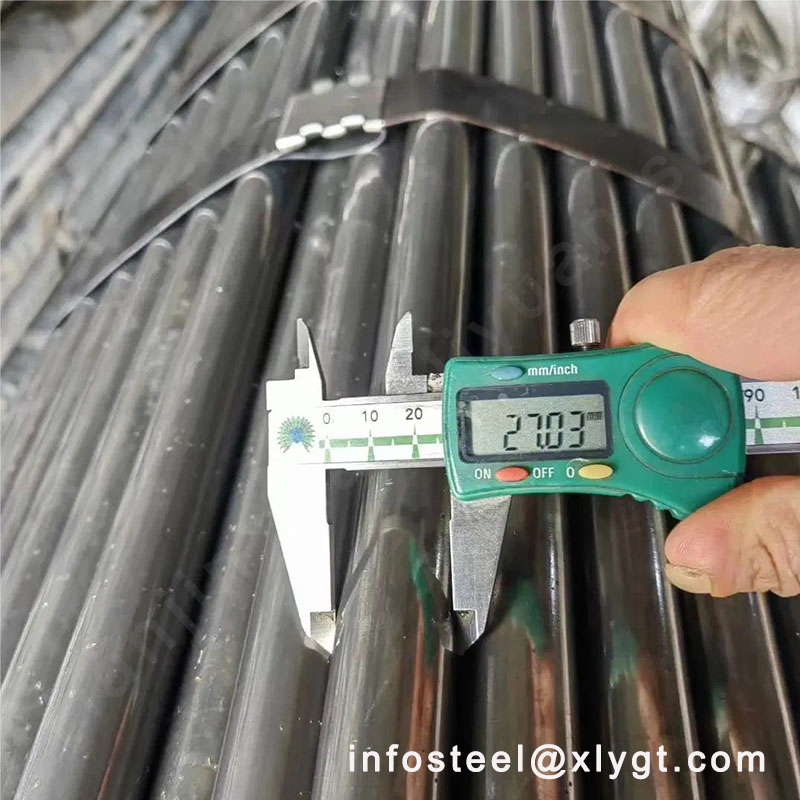
Outer Diameter (OD) represents the actual measurable external dimension of the pipe—a critical parameter for determining fit with clamps, supports, and connection hardware . Unlike NPS, which is a nominal reference, OD is a precise physical measurement typically expressed in millimeters or inches.
For standard carbon steel pipes manufactured to ASME B36.10M, the OD remains constant for a given NPS regardless of schedule (wall thickness). For instance, an NPS 2 pipe consistently maintains an OD of 60.3 mm (2.375 inches), whether specified as SCH 40 with a wall thickness of 3.91 mm or SCH 80 with a wall thickness of 5.54 mm . This standardization is essential for maintaining interchangeability in global supply chains.
At Tianjin Xiangliyuan Steel, our quality control protocols verify OD tolerances according to ASTM A530/A530M standards. For cold-drawn seamless pipes with OD between 30–50 mm, we maintain tolerances of ±0.3%; for hot-rolled pipes ranging 76–168 mm, tolerances are controlled within ±1.0% . These stringent specifications ensure that our ASTM A106 Grade B seamless pipes and ASTM A53 ERW pipes meet the exacting requirements of pressure vessel applications and high-temperature service.
The Relationship Between NPS, OD, and Schedule (SCH)
To fully comprehend pipe specifications, one must understand how Schedule numbers (SCH) interact with NPS and OD. The Schedule designation indicates wall thickness—and consequently, pressure rating—while the OD remains fixed for a given NPS .
Key characteristics of pipe schedules include:
SCH 40 (Standard Weight): Represents the most commonly specified wall thickness for general-purpose applications. For NPS 1/2″ to NPS 10″, SCH 40 is equivalent to the historical “Standard Weight” (STD) classification .
SCH 80 (Extra Strong): Features significantly thicker walls, reduced internal diameter, and substantially higher pressure ratings compared to SCH 40 for the same NPS .
SCH 40S vs. SCH 40: The “S” suffix specifically denotes stainless steel pipe specifications under ASME B36.19M, whereas plain SCH 40 applies to carbon and alloy steel pipes under ASME B36.10M .
Comparative Example (ASTM A106 Gr.B at room temperature):
| NPS | OD (mm) | SCH 40 Wall Thickness (mm) | SCH 80 Wall Thickness (mm) | Pressure Rating Implications |
|---|---|---|---|---|
| 1/2″ | 21.3 | 2.77 | 3.73 | SCH 80 offers ~35% higher pressure capacity |
| 1″ | 33.7 | 3.38 | 4.55 | Critical for high-pressure steam systems |
| 2″ | 60.3 | 3.91 | 5.54 | Common in process piping and mechanical tubing |
| 4″ | 114.3 | 4.57 | 7.11 | Significant weight and cost differential |
| 6″ | 168.3 | 5.54 | 8.74 | Heavy industrial and chemical applications |
Data derived from ASME B36.10M dimensional standards and industry pressure rating calculations
The Schedule number is approximately calculated as: SCH = (Wall Thickness / NPS) × 1000 . This dimensionless number enables engineers to quickly identify pressure-bearing capacity without complex calculations.
Manufacturing Standards and Quality Assurance
The distinction between NPS and OD becomes particularly critical when specifying pipes for high-stakes applications. At Tianjin Xiangliyuan Steel, our manufacturing processes align with the most stringent international standards:
ASTM A53 – General Purpose Piping
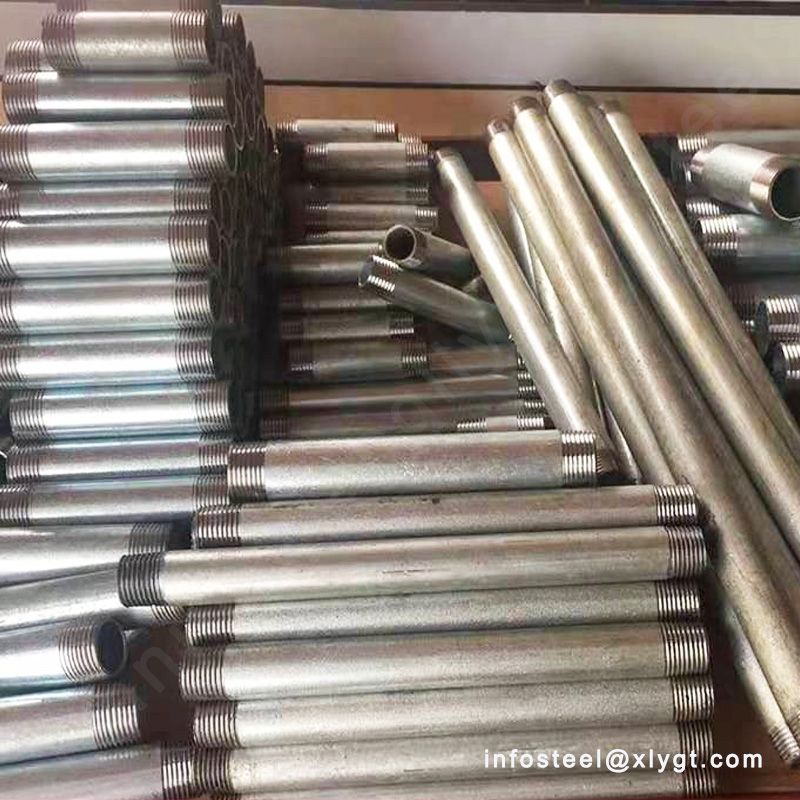
ASTM A53 covers seamless and welded black and hot-dipped galvanized steel pipes suitable for mechanical and pressure applications, as well as steam, water, gas, and air lines . Available in Grade A (lower strength, preferred for cold bending) and Grade B (higher strength, 415 MPa minimum tensile strength), this specification represents the most commonly requested carbon steel pipe standard globally .
ASTM A106 – High-Temperature Service
ASTM A106 seamless carbon steel pipes are specifically engineered for high-temperature, high-pressure environments—particularly in petroleum refineries and power generation facilities. Grade B pipes offer minimum tensile strength of 485 MPa and are dual-certified with API 5L specifications for enhanced versatility .
API 5L – Line Pipe for Oil and Gas Transmission
API 5L standards govern steel pipes for long-distance hydrocarbon transportation, emphasizing pressure resistance, corrosion protection, and weld integrity. Our API 5L Grade B and X52/X65 pipes meet stringent requirements for offshore and onshore pipeline projects .
Manufacturing Process Excellence
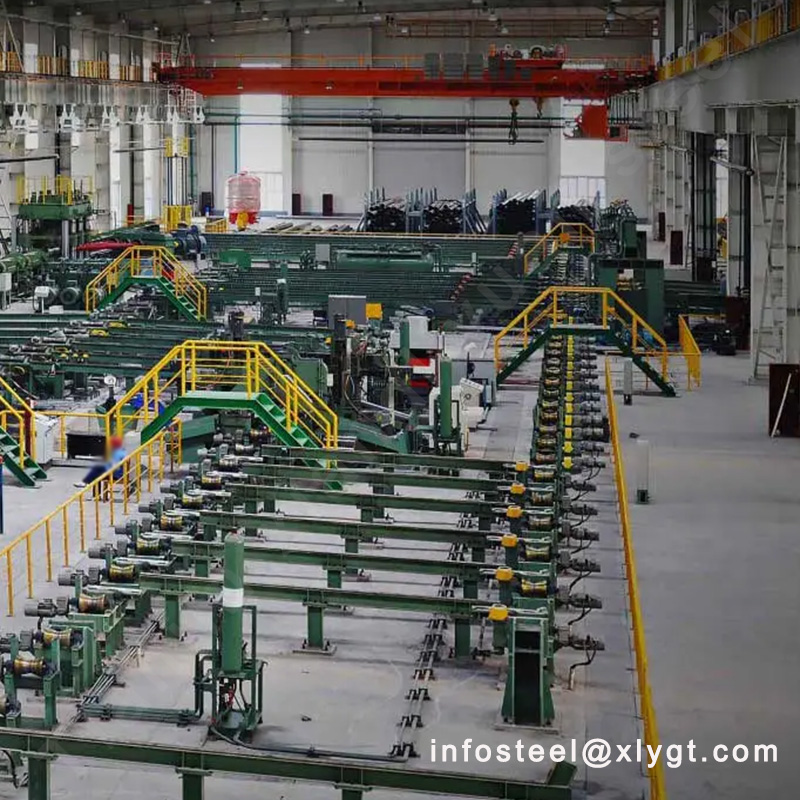
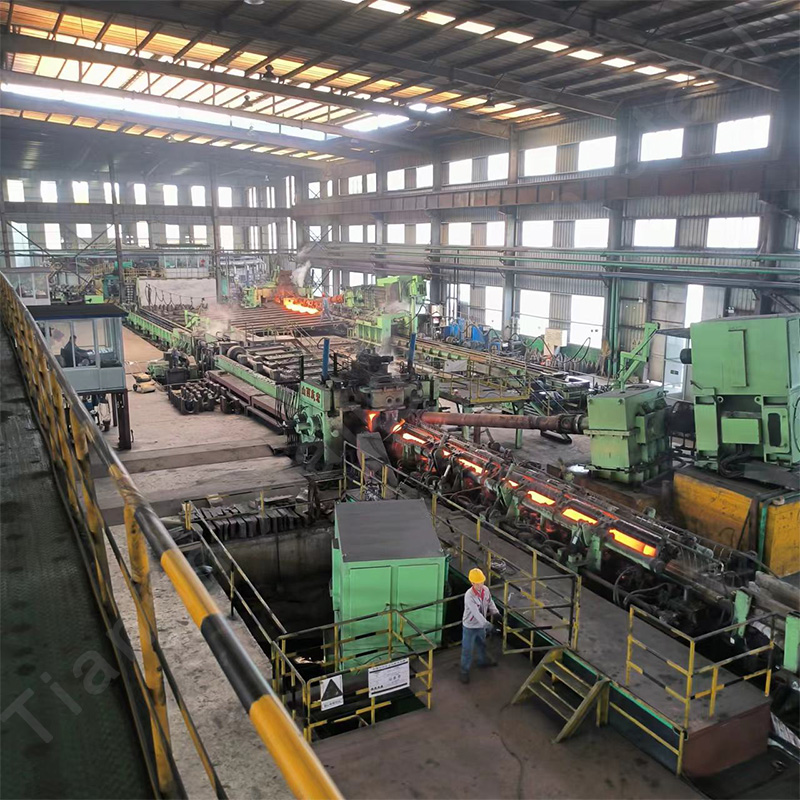
Our seamless steel pipes are produced through advanced hot-rolling and cold-drawing processes. The hot-rolled seamless pipe manufacturing sequence includes: billet preparation and inspection → heating to 1200°C → rotary piercing → three-roll rolling → sizing → heat treatment → straightening → hydrostatic testing → non-destructive inspection (ultrasonic or eddy current testing) → marking and certification .
For ERW (Electric Resistance Welded) steel pipes, we implement rigorous quality control at every stage: raw material chemical analysis, forming monitoring, continuous weld inspection via ultrasonic testing, and hydrostatic pressure verification . This ensures our welded pipes meet the same dimensional tolerances and mechanical properties as seamless alternatives for appropriate pressure ratings.
Practical Implications for Procurement and Engineering
Understanding NPS versus OD delivers tangible benefits across the project lifecycle:
1. Fitting Compatibility: Because OD remains constant for a given NPS, flanges, couplings, and valves can be standardized regardless of wall thickness selection. An NPS 4 flange fits both SCH 40 and SCH 80 pipes because both share the same 114.3 mm OD .
2. Flow Calculations: Engineers must use actual ID (calculated as OD minus 2×wall thickness) for hydraulic and thermal flow calculations—not the NPS designation. SCH 80 pipes have reduced flow capacity compared to SCH 40 pipes of the same NPS due to smaller internal bore .
3. Weight and Cost Estimation: Wall thickness directly impacts material weight and, consequently, transportation costs. Our Tianjin Port location minimizes freight expenses for global shipments, but accurate weight calculations based on OD and wall thickness remain essential for logistics planning .
4. Pressure Rating Determination: ASME B31.3 and similar piping codes utilize OD and wall thickness—not NPS—to calculate maximum allowable working pressure (MAWP). For ASTM A106 Grade B pipes at ambient temperature, SCH 40 and SCH 80 configurations demonstrate markedly different pressure capacities .
Why Choose Tianjin Xiangliyuan Steel?
As a leading steel pipe manufacturer based in Tianjin, China, we offer distinct competitive advantages:
Strategic location: Our company base is one hour away from Tianjin Port, enabling efficient container loading and reducing inland transportation costs for export orders.
Comprehensive Certifications: We provide complete Mill Test Certificates (MTC) conforming to EN 10204 3.1/3.2, third-party inspection reports from SGS, BV, or TÜV, and full traceability documentation including heat numbers and chemical composition analysis .
Product Range: We supply seamless carbon steel pipes (ASTM A106, A53), ERW welded pipes, SSAW spiral welded pipes, galvanized steel pipes (ASTM A53), precision cold-drawn tubes, and alloy steel pipes (ASTM A335) with diameters ranging from 6mm to 2500mm and wall thicknesses from 2.0mm to 140mm .
Quality Assurance: Every pipe undergoes dimensional verification, hydrostatic testing, non-destructive testing (ultrasonic or radiographic), and surface inspection before shipment. Our quality management system is certified to ISO 9001 standards .
The distinction between Nominal Pipe Size (NPS) and Outer Diameter (OD) represents a foundational concept in piping engineering. While NPS provides a standardized reference for component compatibility, OD delivers the precise physical measurement necessary for structural calculations and fitting selection. Understanding how these dimensions interact with Schedule numbers enables engineers and procurement professionals to specify the optimal pipe configuration for pressure, flow, and mechanical requirements.
At Tianjin Xiangliyuan Steel, we combine technical expertise with manufacturing excellence to deliver steel pipes that meet the most demanding international standards. Whether your project requires ASTM A53 Schedule 40 pipes for water transmission or ASTM A106 Grade B seamless pipes for high-temperature refinery service, our team provides the technical support and quality assurance your specifications demand.
For detailed technical datasheets, pricing information, or to discuss your specific pipe requirements, please contact us at infosteel@xlygt.com or visit our website at https://www.xlysteel.com/. Our engineering team is ready to assist with material selection, pressure rating calculations, and logistics coordination for your next project.