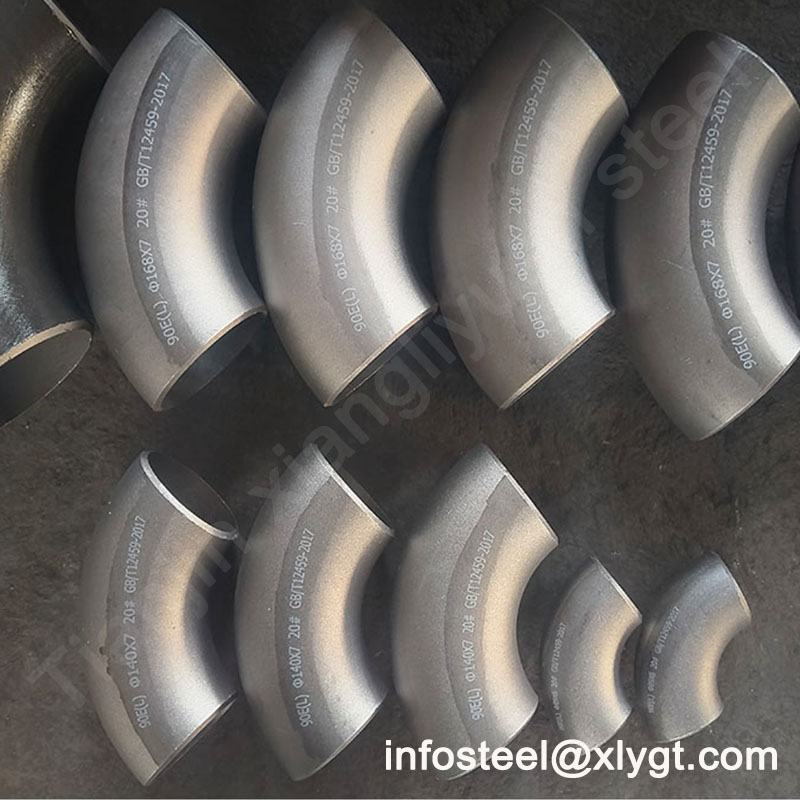
The Critical Role of Elbows in Piping Systems
Pipe fitting elbows represent one of the most fundamental yet vitally important components in any piping network. These precisely engineered fittings facilitate directional changes in pipeline routing, enabling systems to navigate around obstacles, follow structural contours, and optimize space utilization while maintaining flow efficiency. Unlike simple pipe bending, manufactured elbows offer standardized dimensions, controlled wall thickness, and predictable flow characteristics that are essential for reliable system design and operation.
At Tianjin Xiangliyuan Steel, we recognize that selecting the appropriate elbow is not merely about changing direction—it’s about managing fluid dynamics, minimizing pressure loss, controlling erosion, and ensuring long-term system integrity. This detailed technical guide provides comprehensive insights into elbow types, specifications, and selection criteria, demonstrating why our expertise in both steel pipes and precision fittings makes us your ideal single-source supplier.
Primary Elbow Classifications and Technical Specifications
1. Long Radius Elbows (LR Elbows)
Definition and Geometry:
Long radius elbows feature a center-to-face distance measuring 1.5 times the nominal pipe size (1.5D). This gentler curvature creates a more gradual directional change, significantly reducing fluid resistance and turbulence compared to sharper alternatives.
Key Standards and Dimensions:
ASME B16.9: Factory-made wrought steel butt-welding fittings (standard for most industrial applications)
ASME B16.28: Wrought steel butt-welding short radius elbows and returns
ISO 4144: Stainless steel elbows for general purposes
MSS SP-75: Specifications for high-test, wrought butt-welding fittings
EN 10253-2: Butt-welding pipe fittings for general purposes
Standard Size Range:
Diameter: NPS ½” to 48″ (DN 15 to DN 1200)
Wall Thickness: Available in standard schedules (SCH 10, 20, STD, 40, 80, 160, XXS) and customized thicknesses
Angles: 45°, 90°, and 180° returns (standard); custom angles available upon request
Materials and Grades:
Carbon Steel: ASTM A234 WPB (standard), WPC, WP1, WP12, WP11, WP22, WP5, WP9, WP91
Stainless Steel: ASTM A403 WP304/304L, WP316/316L, WP321, WP347, WP309, WP310
Alloy Steel: ASTM A234 WP1, WP5, WP9, WP11, WP22, WP91
Low Temperature Steel: ASTM A420 WPL6, WPL3
Special Alloys: Duplex (UNS S31803), Nickel Alloys (Inconel, Monel, Hastelloy)
Pressure Ratings:
Pressure capacity correlates with material grade and wall thickness. Standard elbows match pipe schedules, ensuring consistent pressure ratings throughout the system.
Key Characteristics:
Reduced Pressure Drop: The gradual bend minimizes turbulence and frictional losses
Lower Erosion Potential: Smooth flow transition reduces wear on the extrados (outer curve)
Enhanced Flow Characteristics: Ideal for systems with suspended solids or viscous fluids
Reduced Vibration: Better flow distribution decreases potential for flow-induced vibration
Primary Applications:
Process piping in chemical and petrochemical plants
Long-distance pipeline transmission systems
High-flow water and wastewater systems
Steam distribution networks in power generation
Pharmaceutical and food processing systems requiring minimal contamination risk
Procurement Considerations:
When specifying LR elbows, ensure the center-to-face dimension matches your piping layout requirements. Verify that the material certification includes impact test results for low-temperature applications. For abrasive services, consider specifying thicker walls or special materials on the extrados.
2. Short Radius Elbows (SR Elbows)
Definition and Geometry:
Short radius elbows feature a center-to-face distance equal to the nominal pipe size (1.0D). This compact design allows for sharper directional changes in space-constrained installations.
Standards and Dimensions:
Governed by ASME B16.28 (primary standard)
Typically available in 90° angle only (180° returns also available)
Size range: NPS ½” to 24″ (DN 15 to DN 600)
Materials and Grades:
Similar material availability as LR elbows, with A234 WPB (carbon steel) and A403 WP316 (stainless steel) being most common.
Key Characteristics:
Space Efficiency: Approximately 33% shorter than equivalent LR elbows
Higher Pressure Drop: Sharper bend increases turbulence and energy loss
Increased Erosion Potential: Greater fluid impingement on the outer radius
Higher Stress Concentration: More susceptible to mechanical stress at the bend
Primary Applications:
Retrofits and modifications in congested plant areas
Instrumentation and sampling lines
Low-pressure utility systems
Drainage and vent piping
Systems where space constraints outweigh efficiency considerations
Procurement Considerations:
SR elbows are generally not recommended for high-pressure, high-velocity, or abrasive services. When unavoidable, consider specifying heavier schedules or erosion-resistant materials. Always verify that the reduced laying length complies with stress analysis requirements, particularly in thermal expansion scenarios.
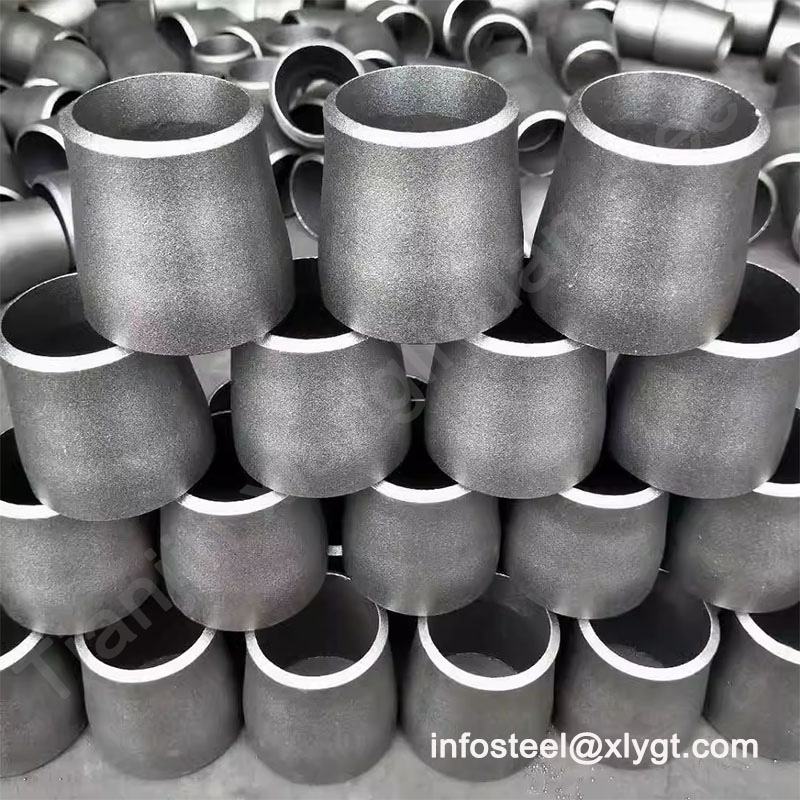
3. Reducing Elbows (Concentric and Eccentric)
Definition and Geometry:
Reducing elbows incorporate both directional change and diameter transition in a single fitting, eliminating the need for separate elbow-reducer combinations.
Types:
Concentric Reducing Elbows: Maintain a common centerline through the fitting
Eccentric Reducing Elbows: Feature offset centerlines, typically with flat bottom (FBO) or flat top (FTO) orientation
Standards and Dimensions:
ASME B16.9 covers standard dimensions
Available in LR configuration only
Size combinations follow standard pipe size progressions
Materials and Grades:
Standard materials matching other elbow types, with A234 WPB and A403 WP304/316 being most prevalent.
Key Characteristics:
Component Consolidation: Reduces weld count and potential leak points
Space Optimization: More compact than separate elbow-reducer installations
Flow Transition: Managed diameter change within the bend section
Cost Efficiency: Single fitting typically costs less than two separate components
Primary Applications:
Pump suction and discharge connections
Branch line connections from main headers
Equipment nozzle connections with different piping sizes
Space-constrained installations requiring both reduction and directional change
Procurement Considerations:
Clearly specify both end diameters (e.g., 6″ x 4″) and orientation for eccentric types. Consider flow direction when ordering eccentric reducing elbows—typically, flat bottom orientation is used for pump suction to prevent air pocket formation.
Specialized Elbow Types
4. Mitered Elbows
Definition and Construction:
Fabricated from multiple straight pipe sections welded at calculated angles to approximate a curved elbow. Typically constructed with 2-5 segments (or “cuts”).
Standards and Application:
Not covered by standard fitting specifications
Fabricated per ASME B31.3 process piping code requirements
Used primarily for large diameter piping (NPS 30″ and above) where standard elbows are impractical
Key Characteristics:
Custom Fabrication: Can be produced for virtually any diameter and angle
Cost-Effective for Large Sizes: Often more economical than forged or extruded large-diameter elbows
Increased Turbulence: Each miter joint creates flow disruption
Higher Stress Concentration: Multiple welded joints increase potential weak points
5. Forged Steel Elbows (Threaded and Socket Weld)
Definition and Construction:
Manufactured through hot forging processes for high-strength applications in smaller pipe sizes.
Standards:
ASME B16.11: Forged steel fittings, socket-welding and threaded
Typically available in 45°, 90°, and 180° angles
Size range: 1/8″ to 4″ NPS
Pressure Classes:
2000, 3000, and 6000 pound classes
Significantly higher pressure ratings than butt-weld fittings of equivalent size
Primary Applications:
High-pressure hydraulic systems
Instrumentation and control piping
Chemical injection lines
Power plant auxiliary systems
Critical Procurement Factors and Technical Considerations
Material Selection Guidance
Carbon Steel Elbows (A234 WPB):
Service Temperature: -20°F to 800°F (-29°C to 427°C)
Common Applications: Water, oil, gas, steam at moderate temperatures
Considerations: Require corrosion protection in aggressive environments
Stainless Steel Elbows (A403 WP316/316L):
Corrosion Resistance: Excellent against chlorides and acidic media
Temperature Limits: Higher temperature capability than carbon steel
Considerations: Avoid in chloride stress corrosion cracking environments
Low-Temperature Carbon Steel (A420 WPL6):
Impact Tested: Guaranteed toughness at temperatures as low as -50°F (-46°C)
Applications: LNG, refrigeration, cryogenic services
Dimensional Tolerances and Quality Assurance
At Tianjin Xiangliyuan Steel, our elbow manufacturing adheres to stringent quality protocols:
Dimensional Verification:
Center-to-face dimensions: ±1/16″ for NPS ≤24″, ±1/8″ for NPS >24″
Wall thickness: Minimum 87.5% of nominal thickness
Out-of-roundness: Maximum 1% of nominal diameter
Material Certification:
Full traceability to original mill certifications
Chemical analysis and mechanical property verification
Heat number tracking throughout manufacturing process
Non-Destructive Examination:
Visual inspection: 100% of fittings
Dye penetrant testing: For critical service elbows
Ultrasonic testing: For thickness verification in high-pressure applications
PMI (Positive Material Identification): Verification of alloy composition
Surface Preparation:
Bevel ends protected during shipping and storage
Internal cleaning to remove scale and debris
External surface free from defects affecting integrity
Flow Dynamics and System Design Considerations
Pressure Loss Calculations:
Equivalent length method for quick estimation:
90° LR elbow: 30 pipe diameters
90° SR elbow: 50 pipe diameters
45° LR elbow: 16 pipe diameters
For precise calculations, use resistance coefficients (K-values) in detailed fluid dynamics analysis.
Erosion Management Strategies:
Velocity Control: Maintain fluid velocity below erosional limits
Material Selection: Hard-facing or ceramic lining for highly abrasive services
Wall Thickness: Schedule 80 or heavier for extended service life in erosive conditions
Flow Modeling: Computational Fluid Dynamics (CFD) analysis for critical applications
Stress Analysis Integration:
Elbows act as natural flexibility points in piping systems:
Consider stress intensification factors in flexibility analysis
LR elbows: i-factor = 0.9/h^(2/3) per ASME B31.3
Proper anchorage and support near elbow transitions
Selection Methodology and Best Practices
Decision Framework for Elbow Selection
Service Conditions Assessment:
Fluid properties (corrosivity, abrasiveness, viscosity)
Operating pressure and temperature ranges
Cyclic service considerations
Cleanliness requirements (sanitary, pharmaceutical)
Space Constraints Evaluation:
Physical layout limitations
Maintenance access requirements
Future expansion considerations
Economic Optimization:
Initial cost versus lifecycle cost analysis
Installation complexity and labor requirements
Maintenance and replacement accessibility
Performance Requirements:
Allowable pressure drop
Minimum service life expectations
Regulatory and code compliance
Common Specification Errors to Avoid
Mismatched Materials: Specifying elbow material incompatible with connecting piping
Incorrect Schedule: Ordering mismatched wall thickness between elbows and pipes
Wrong End Preparation: Confusing bevel angles or land dimensions
Improper Documentation: Incomplete material certification requirements
Inadequate Inspection: Insufficient NDT requirements for service conditions
Value-Added Services from Tianjin Xiangliyuan Steel
Technical Support:
Application engineering assistance
Material selection guidance
Custom design and manufacturing consultation
Logistics Optimization:
Bundled shipments of pipes and elbows
Just-in-time delivery programs
Proper packaging to prevent damage during transit
Documentation Package:
Certified Mill Test Reports
Material Traceability Documentation
Non-Destructive Examination Reports
Certificate of Compliance with specified standards
Optimizing Your Piping Systems with Precision Elbows
The selection of appropriate pipe elbows represents a critical engineering decision that directly impacts system efficiency, maintenance requirements, and operational safety. From the gradual flow transition of long radius elbows to the space-saving advantages of short radius designs, each type offers distinct benefits tailored to specific applications.
At Tianjin Xiangliyuan Steel, our expertise extends beyond manufacturing to encompass comprehensive technical support throughout the specification and procurement process. We understand that elbows are not standalone components but integral elements of cohesive piping systems. Our vertically integrated approach—providing both precision elbows and matching steel pipes—ensures dimensional consistency, material compatibility, and performance optimization.
When you source your piping components from Tianjin Xiangliyuan Steel, you benefit from:
Single-point accountability for system compatibility
Unified quality assurance across all components
Technical guidance based on decades of application experience
Competitive pricing through manufacturing efficiency
Reliable supply chain with consistent lead times
For detailed specifications, material selection advice, or project-specific quotations, our engineering team is ready to assist. Contact us at infosteel@xlygt.com to discuss how our comprehensive elbow solutions can enhance the performance and reliability of your piping systems. Let us demonstrate why leading engineering firms and operators trust Tianjin Xiangliyuan Steel for their most demanding piping requirements.