In the world of industrial piping, few decisions carry as much technical significance as the choice between seamless and welded steel pipes. Engineers, procurement specialists, and project managers regularly face this fundamental question: which type of pipe is right for their specific application? The answer is rarely simple, as each manufacturing method produces pipes with distinct characteristics, advantages, and limitations that must be carefully evaluated against project requirements.
At Tianjin Xiangliyuan Steel, we have manufactured both seamless steel pipes and welded steel pipes for decades, supplying clients across five continents with products meeting the most stringent international standards. This dual manufacturing capability gives us a unique, unbiased perspective on the strengths and appropriate applications of each pipe type. In this comprehensive technical comparison, we will examine the fundamental differences between seamless and welded pipes, analyze their respective performance characteristics, and provide practical guidance for engineers making this critical selection.
For more information about our manufacturing capabilities, visit our website at https://www.xlysteel.com/ or contact our technical team at infosteel@xlygt.com.
Understanding the Manufacturing Processes
Before comparing performance characteristics, it is essential to understand how each pipe type is manufactured, as the production method fundamentally determines the pipe’s properties.
How Seamless Steel Pipes Are Made
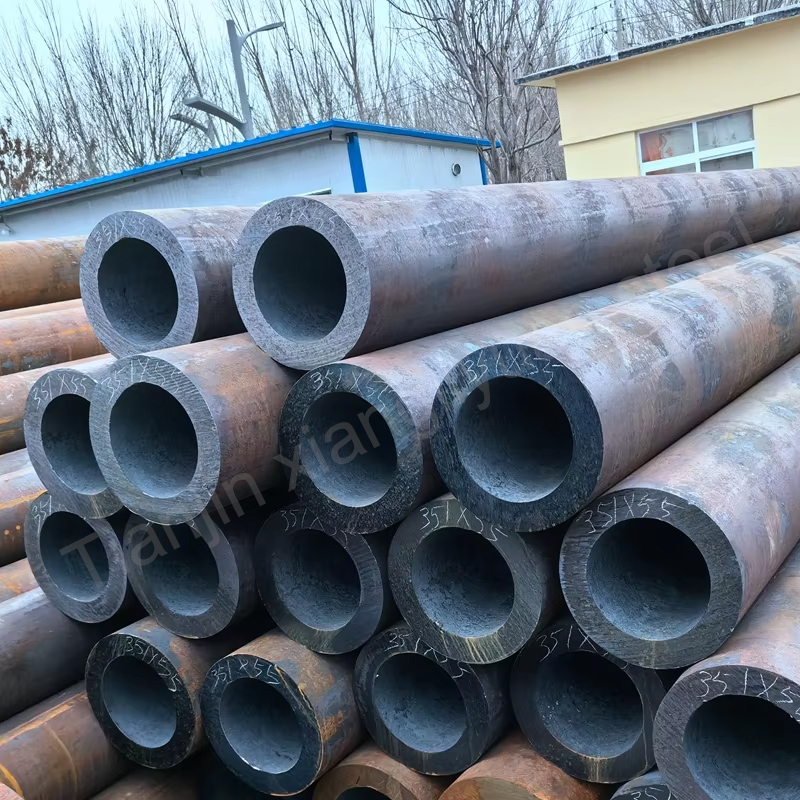
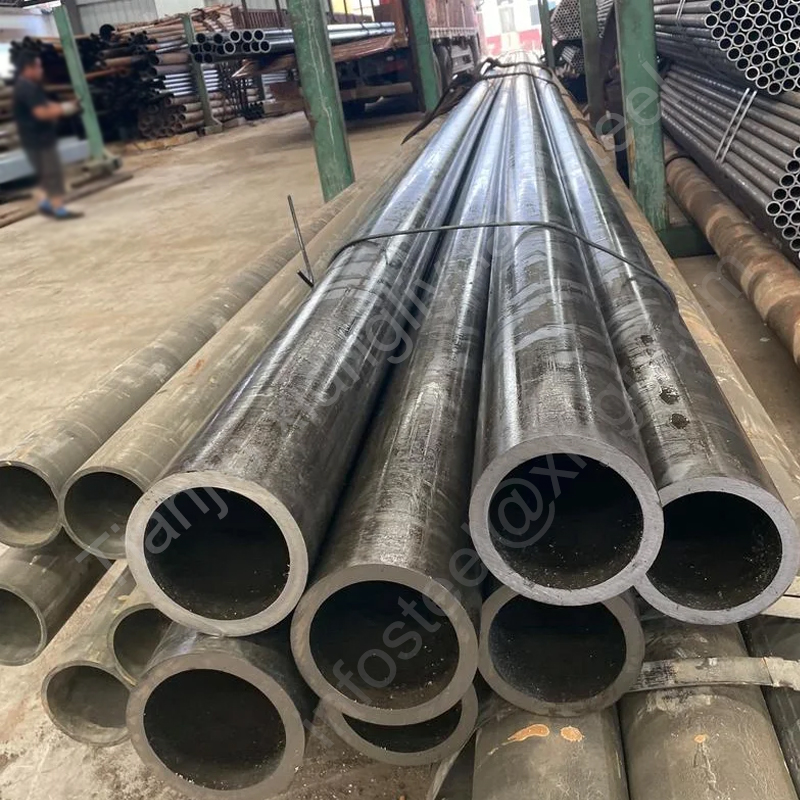
Seamless steel pipes are manufactured without any welded seam, as the name implies. The process begins with a solid cylindrical steel billet, which is heated to approximately 1200°C in a rotary hearth furnace. The heated billet is then pierced through its center by a mandrel to create a hollow shell, known as a “hollow.” This hollow is subsequently elongated, stretched, and rolled through a series of mills—such as a mandrel mill, plug mill, or rotary mill—to achieve the desired outer diameter and wall thickness.
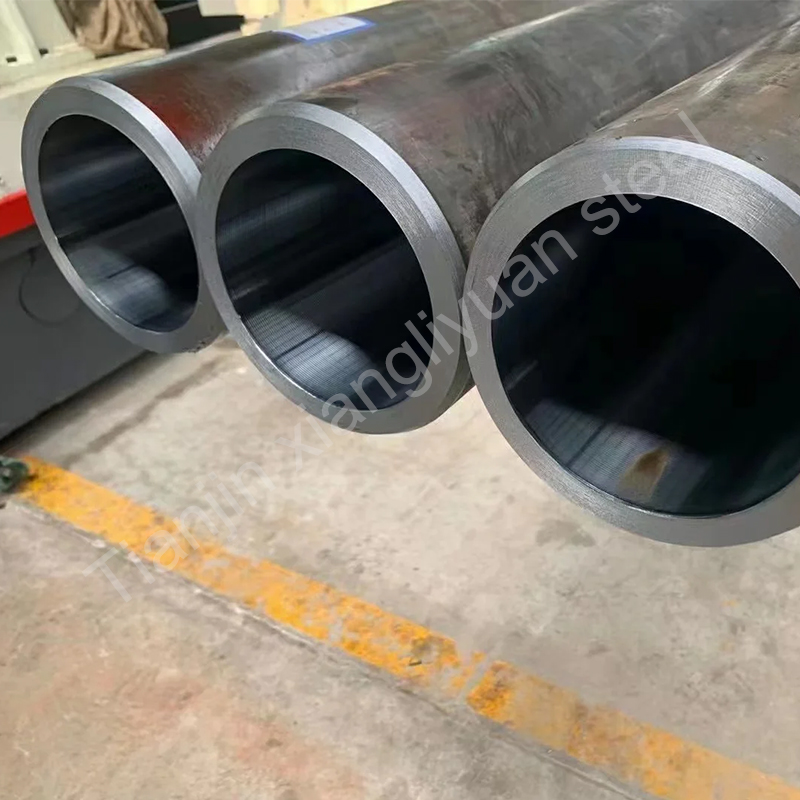
The pipe then undergoes sizing to ensure dimensional accuracy, straightening, and heat treatment if required by the specification. Finally, each pipe is subjected to rigorous testing, including hydrostatic pressure testing and nondestructive examination.
This manufacturing process is inherently more complex, energy-intensive, and slower than welded pipe production. However, it produces a pipe with completely uniform structure and no potential weak points along a weld seam.
How Welded Steel Pipes Are Made
Welded steel pipes encompass several subtypes, primarily distinguished by the welding method:
ERW (Electric Resistance Welded) Pipes:
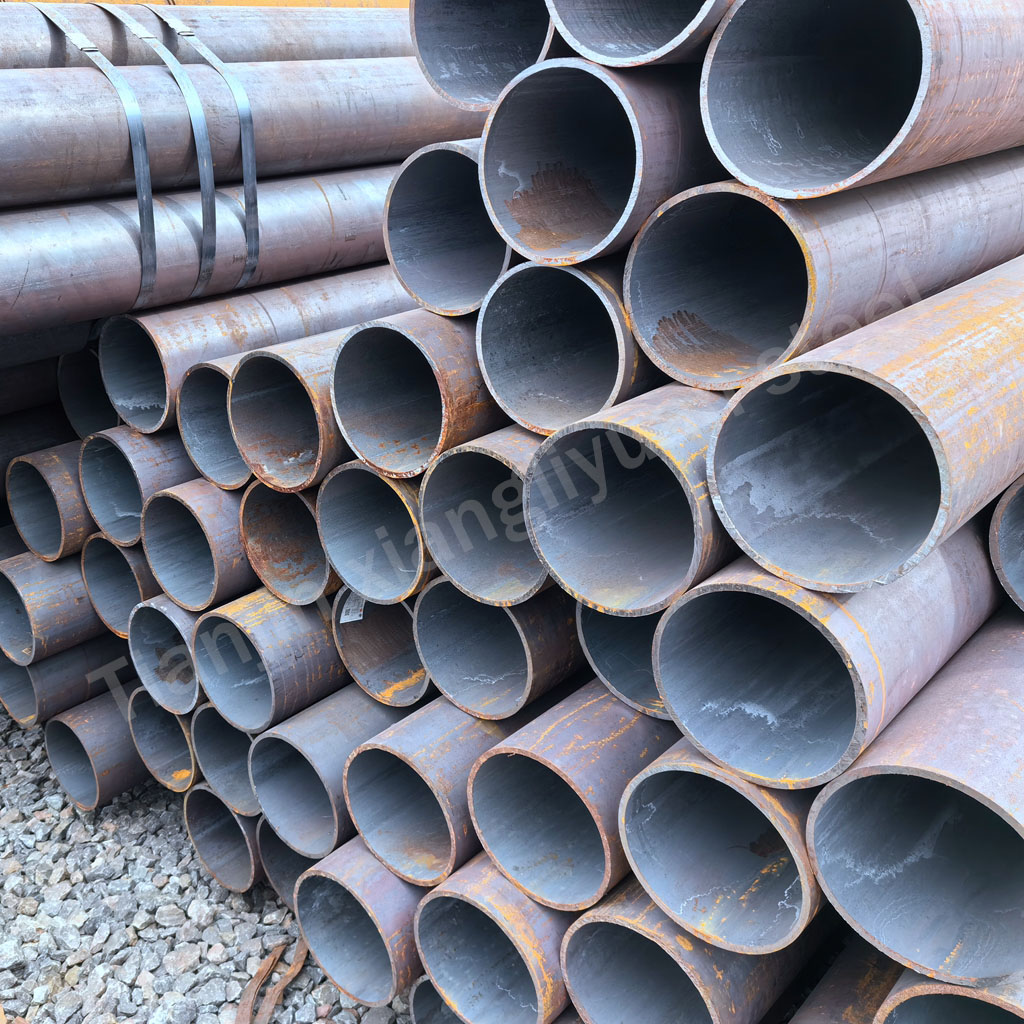
ERW pipes are manufactured from hot-rolled steel coils. The coil is unrolled and passed through a series of forming rolls that gradually shape the flat strip into a cylindrical form. As the edges come together, high-frequency electrical current is applied, heating the edges to forging temperature. Pressure is then applied to forge the edges together, creating a solid-state bond without filler metal. The weld seam is normalized through heat treatment, and the pipe is sized, cut to length, and tested.
LSAW (Longitudinal Submerged Arc Welded) Pipes:
LSAW pipes are manufactured from steel plates that are formed into a cylindrical shape using a press brake or edge press. The formed cylinder is then welded along the longitudinal seam using submerged arc welding, which provides deep penetration and high-quality welds. LSAW is typically used for larger diameters and heavier wall thicknesses.
SSAW (Spiral Submerged Arc Welded) Pipes:
SSAW pipes, also known as spiral welded pipes, are formed by helically winding a steel coil and welding the spiral seam. This method allows for a wide range of diameters from a single coil width.
Structural Integrity and Homogeneity
The most fundamental difference between seamless and welded pipes lies in their structural continuity.
Seamless Pipe Structure
Seamless pipes possess a completely uniform grain structure that follows the circumferential contour of the pipe. The absence of a weld seam means there are no metallurgical discontinuities, no heat-affected zones (HAZ), and no potential weak points where failure might initiate. This homogeneity ensures consistent mechanical properties in all directions—longitudinal, transverse, and circumferential.
For applications involving:
Extreme pressures where hoop stress is the primary design consideration
Cyclic loading where fatigue resistance is critical
Corrosive environments where preferential attack at weld zones is a concern
The uniform structure of seamless pipes provides inherent advantages.
Welded Pipe Structure
Modern welded pipes, particularly high-frequency ERW pipes, achieve weld quality that approaches that of the base metal. The weld zone undergoes normalization during manufacturing, refining the grain structure and relieving residual stresses. However, the heat-affected zone remains metallurgically distinct from the parent material.
For the vast majority of standard applications—water transmission, structural support, general process piping—properly manufactured welded pipes perform excellently and meet all relevant code requirements. However, for the most demanding critical services, engineers often specify seamless.
Pressure and Temperature Ratings
Pressure containment capability is often the deciding factor in pipe selection.
Pressure Rating Considerations
The pressure rating of a pipe depends on:
Material yield strength
Wall thickness
Outer diameter
Design factor (safety factor)
Weld joint factor (for welded pipes)
Weld Joint Factor: Most design codes (such as ASME B31.3 for process piping) apply a weld joint factor to welded pipes, typically 0.85 for ERW pipes without radiographic inspection, and 1.0 for ERW pipes with 100% radiographic inspection or for seamless pipes. This factor effectively reduces the allowable stress for the welded area.
For a given material grade and wall thickness, a seamless pipe may have a higher allowable working pressure than an equivalent ERW pipe due to the weld joint factor.
Temperature Considerations
At elevated temperatures, material behavior becomes more complex. Seamless pipes are generally preferred for high-temperature applications because:
The uniform grain structure provides consistent creep resistance
There is no weld zone that might exhibit different creep behavior
Heat treatment can be optimized for the entire pipe cross-section
For applications above approximately 400°C, such as boiler tubes and superheater tubes, seamless construction is typically specified (ASTM A106, ASTM A335 grades).
Dimensional Accuracy and Consistency
Dimensional control affects fit-up during installation and performance in service.
ERW Pipe Advantages
ERW pipes generally offer superior dimensional accuracy:
Outer Diameter Control: The forming process using precision rolls produces consistent OD with tight tolerances.
Wall Thickness Uniformity: Starting from hot-rolled coil with consistent thickness, ERW pipes maintain uniform wall along their length.
Concentricity: The formed and welded construction typically produces excellent concentricity (uniform wall thickness around the circumference).
Seamless Pipe Considerations
Seamless pipes, due to the piercing and rolling process, typically have:
Wider OD Tolerances: The hot-forming process inherently allows more variation than cold-formed ERW.
Wall Thickness Variation: Some eccentricity (variation in wall thickness around the circumference) is normal and within specification limits.
Surface Condition: The hot-formed surface may have a mill scale that differs from the cleaner surface of ERW pipe.
Modern seamless mills have significantly improved dimensional control, but ERW retains an advantage for applications requiring extremely tight tolerances, such as mechanical tubing for precision machining.
Cost Economics
Cost is inevitably a consideration in any engineering decision.
ERW Pipe Cost Advantages
ERW pipes are generally more economical for several reasons:
Higher Production Efficiency: The continuous forming and welding process operates at speeds far exceeding seamless production.
Lower Material Waste: Forming from coil generates minimal waste compared to piercing billets.
Lower Energy Consumption: Cold forming requires less energy than hot piercing and rolling.
Economies of Scale: For common sizes and grades, high-volume production drives down costs.
For standard carbon steel pipes in sizes from 1/2″ to 24″, ERW is almost always the more economical choice.
Seamless Pipe Cost Factors
Seamless pipes command a price premium due to:
Slower Production: Each pipe undergoes sequential processing steps.
Higher Material Waste: The piercing process generates more scrap.
More Complex Logistics: Billet supply, heating, and rolling require careful coordination.
Limited Size Availability: For larger diameters, seamless becomes increasingly expensive and may have long lead times.
For critical applications where safety and reliability justify the premium, seamless remains the preferred choice despite higher cost.
Size Range and Availability
Different pipe types dominate different size ranges.
Small Diameters (Up to 4″ NPS)
Seamless pipes dominate the small diameter range:
Available in very small sizes (1/8″ NPS and up)
Heavy wall thicknesses achievable
Standard for instrumentation, hydraulic systems, and high-pressure applications
Medium Diameters (4″ to 16″ NPS)
Both types are widely available:
ERW pipes are highly economical and widely stocked
Seamless pipes available but at premium pricing
Selection depends on application requirements and pressure class
Large Diameters (18″ to 60″ NPS)
Welded pipes dominate:
LSAW pipes for diameters typically 16″ to 60″
SSAW pipes for diameters up to 120″ or more
Seamless pipes become impractical and unavailable above approximately 26″ NPS
Application-Specific Recommendations
Based on the technical comparison above, here are engineering guidelines for pipe selection:
Choose Seamless Pipes When:
Extreme High Pressure Service: Applications approaching the pressure limits of the material grade benefit from the uniform structure and absence of weld joint factor.
High Temperature Service: For temperatures above 400°C, where creep resistance and long-term stability are critical (ASTM A335 alloy grades).
Cyclic Loading or Fatigue Concerns: The absence of a weld seam eliminates a potential fatigue initiation site.
Sour Service (H₂S Environments): For resistance to sulfide stress cracking (SSC), seamless construction with controlled hardness is preferred. Standards like NACE MR0175/ISO 15156 address these requirements.
Very Small Diameters or Heavy Walls: When dimensions fall outside the practical range for ERW production.
Critical Safety Applications: Where any potential failure could have catastrophic consequences (nuclear, certain chemical processes, high-pressure steam).
Choose Welded Pipes When:
Standard Pressure and Temperature Service: For the majority of industrial applications with moderate conditions, high-quality ERW pipes (such as ASTM A53 Gr. B or API 5L Gr. B) provide excellent performance.
Large Diameter Requirements: For pipelines above 16″ NPS, LSAW or SSAW pipes are the only practical options.
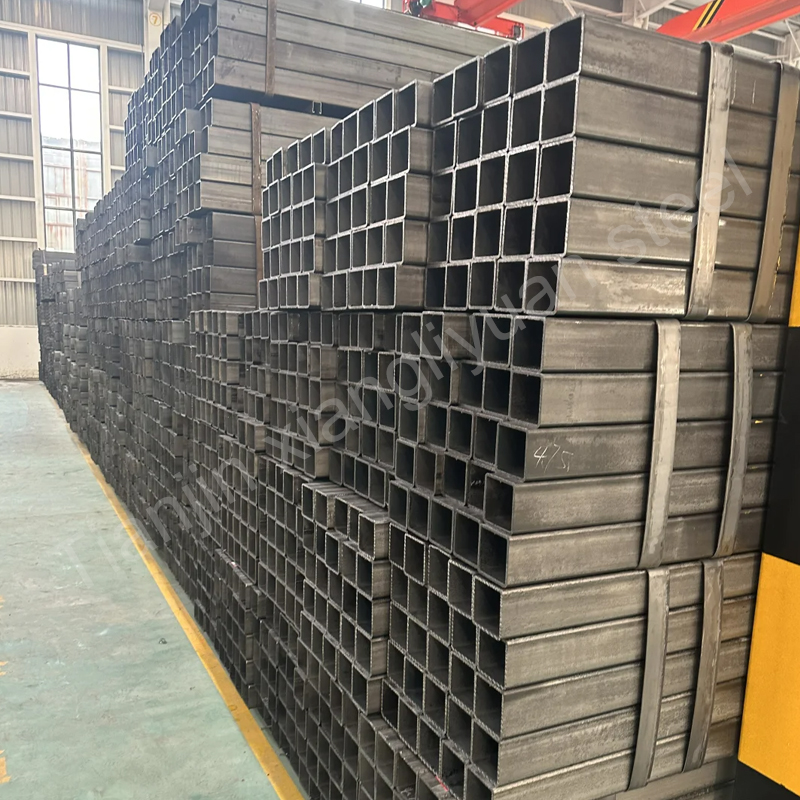
Structural Applications: For structural steel pipe, HSS (Hollow Structural Sections), piling, and mechanical applications where pressure containment is not the primary function.
Cost-Sensitive Projects: When budget constraints are significant and application conditions permit welded construction.
Excellent Dimensional Tolerances Needed: For applications requiring precise OD control or consistent wall thickness.
Water and Wastewater Pipelines: Large-diameter water transmission lines typically use welded pipes with appropriate internal and external coatings.
Quality Assurance for Both Types
Regardless of whether you choose seamless or welded, quality depends entirely on the manufacturer’s capability and commitment.
At Tianjin Xiangliyuan Steel
Our quality systems ensure that every pipe, whether seamless or welded, meets the highest standards:
For ERW Pipes:
High-frequency welding with precise heat control
Online weld seam normalization heat treatment
100% ultrasonic or eddy current inspection of the weld zone
Hydrostatic testing of every pipe
Destructive testing (flattening, flare, bend tests) on samples
For Seamless Pipes:
Precise billet selection with full chemical traceability
Strict control of piercing and rolling temperatures
Full-length ultrasonic inspection
Hydrostatic testing
Mechanical testing for yield, tensile, and impact properties
For LSAW/SSAW Pipes:
Controlled plate forming to achieve precise geometry
Submerged arc welding with qualified procedures
100% ultrasonic inspection of weld seams
Radiographic testing when specified
Hydrostatic testing
All pipes are supplied with complete Mill Test Certificates (MTCs) certifying compliance with specified standards, whether ASTM, API, DIN, EN, or JIS. For clients requiring additional verification, we gladly facilitate third-party inspections by agencies such as SGS, BV, DNV, or Lloyds.
Industry Standards and Specifications
Understanding applicable standards is essential for proper specification:
Common Seamless Pipe Standards
ASTM A106: Seamless carbon steel pipe for high-temperature service
ASTM A53: Type S (seamless) – standard specification for pipe
ASTM A335: Seamless ferritic alloy steel pipe for high-temperature service
API 5L: Line pipe (seamless) for oil and gas transmission
API 5CT: Casing and tubing (seamless) for oil and gas wells
ASTM A192: Seamless carbon steel boiler tubes
ASTM A210: Seamless medium-carbon steel boiler tubes
Common Welded Pipe Standards
ASTM A53: Type F (furnace welded) and Type E (ERW)
API 5L: Line pipe (welded) for oil and gas transmission
ASTM A252: Welded steel pipe piles
ASTM A500: Cold-formed welded carbon steel structural tubing
ASTM A672: Electric-fusion-welded steel pipe for high-pressure service
ASTM A134: Electric-fusion-welded steel pipe (spiral welded)
Making the Final Decision
When faced with the seamless vs. welded decision, engineers should consider:
Service Conditions: Pressure, temperature, fluid corrosivity, cyclic loading
Code Requirements: Applicable design codes may mandate seamless for certain services
Size Requirements: Availability in required diameter and wall thickness
Cost Constraints: Budget considerations balanced against technical requirements
Lead Time: Availability and delivery schedules
Quality Requirements: Need for enhanced NDT, traceability, or third-party inspection
Past Experience: Lessons learned from similar applications
For many applications, both seamless and high-quality welded pipes can perform satisfactorily. The key is matching the pipe type to the specific demands of your application.
Both Have Their Place
The seamless versus welded debate should not be viewed as a competition but rather as a selection process matching the right product to the right application. Seamless steel pipes offer unparalleled uniformity and are indispensable for the most demanding critical services. Welded steel pipes, particularly modern ERW, LSAW, and SSAW products, provide excellent performance for the vast majority of applications with significant cost advantages.
At Tianjin Xiangliyuan Steel, we manufacture both types with equal commitment to quality. Our technical team works closely with clients to analyze application requirements and recommend the optimal solution—whether that solution maximizes economy, prioritizes safety, or achieves the ideal balance for your specific project.
Need Expert Guidance for Your Next Project?
With decades of experience manufacturing both seamless steel pipes and welded steel pipes for global markets, the team at Tianjin Xiangliyuan Steel is ready to assist you. We provide detailed technical consultations, comprehensive quotations with full specifications, and reliable logistics support for projects of any scale.
Contact us today to discuss your requirements and discover why clients around the world trust us as their preferred steel pipe supplier.
Email: infosteel@xlygt.com
Website: https://www.xlysteel.com/
Let us help you select the perfect pipe for your application—because the right choice makes all the difference.