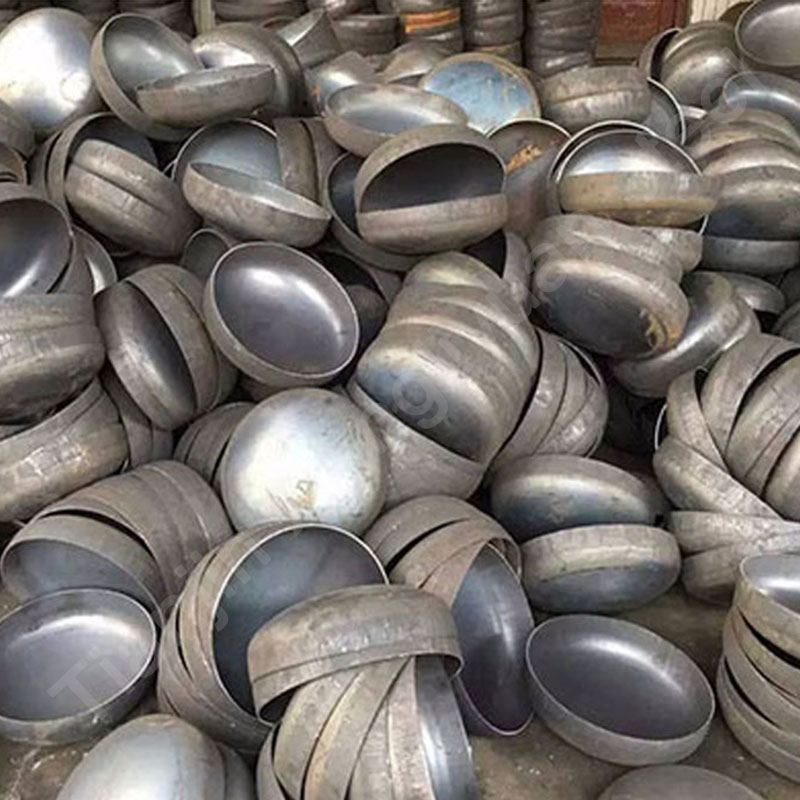
The Critical Role of Pipe Caps in System Integrity
Pipe caps, often perceived as simple terminating components, serve as vital pressure-containing elements in piping systems, providing secure closure for pipe ends while ensuring system safety, maintenance accessibility, and operational flexibility. These engineered fittings function not merely as covers but as critical components that withstand internal pressure, external loads, and environmental factors. Their proper selection and installation directly impact system leak-tightness, personnel safety, and maintenance efficiency.
At Tianjin Xiangliyuan Steel, we approach pipe cap manufacturing with the understanding that these components represent the final barrier in pressure containment systems. This comprehensive technical guide explores the engineering principles, material considerations, and application-specific requirements for pipe caps, demonstrating our integrated expertise in providing both high-quality steel pipes and precision-matched closure components.
Fundamental Classifications and Design Principles
1.1 Standard Pipe Caps (Butt-Weld Caps)
Definition and Construction:
Standard pipe caps are dome-shaped closures designed for butt-welding to pipe ends, providing a permanent, leak-tight seal. Their hemispherical or elliptical dished shape offers optimal pressure distribution characteristics.
Geometric Design Variations:
Hemispherical Caps: True radius equal to pipe diameter; provides uniform stress distribution
Elliptical (Dished) Caps: 2:1 elliptical head ratio (most common); ASME standard design
Torispherical Caps: Compound curvature with knuckle radius; economical alternative
Key Standards and Specifications:
ASME B16.9: Factory-made wrought steel butt-welding fittings (standard for caps)
ASME Section VIII, Division 1: Pressure vessel design rules applicable to caps
MSS SP-75: High-test fittings specification
EN 10253-2: European standard for butt-welding pipe fittings
GB/T 12459: Chinese national standard
Size Range and Pressure Classes:
Diameter Range: NPS ½” to 48″ (DN 15 to DN 1200)
Pressure Classes: 150#, 300#, 600#, 900#, 1500#, 2500#
Wall Thickness: Available in schedules matching pipe schedules (STD, XS, XXS, etc.)
Special Sizes: Custom diameters and thicknesses available for specific applications
Materials and Grades:
Carbon Steel: ASTM A234 WPB (standard), WPC, WP1, WP12
Stainless Steel: ASTM A403 WP304/304L, WP316/316L, WP321
Alloy Steel: ASTM A234 WP5, WP9, WP11, WP22, WP91
Low-Temperature Steel: ASTM A420 WPL6, WPL3
Special Alloys: Duplex (S31803), Nickel Alloys (Inconel, Monel)
Stress Analysis Considerations:
Pressure Stress: Calculated per ASME Section VIII formulas for internal pressure
External Loads: Consideration for dead weight, wind, snow, and seismic loads
Thermal Stress: Differential expansion between cap and pipe
Fatigue Analysis: For cyclic pressure or temperature services
1.2 Threaded Pipe Caps
Definition and Configuration:
Threaded caps feature female NPT (National Pipe Taper) threads for screwing onto male-threaded pipe ends, providing removable closure without welding.
Technical Specifications:
Standards: ASME B16.11 (forged fittings), ASTM A105/A182 materials
Pressure Classes: 2000#, 3000#, 6000# for forged caps
Size Range: Typically NPS ⅛” to 12″ for standard availability
Thread Types: NPT (standard), BSPT, other special threads available
Sealing Mechanisms:
Thread Compound: Pipe dope or thread sealant for pressure tightness
PTFE Tape: Common for non-critical applications
Metal-to-Metal Seal: Precision threads for high-pressure applications
O-Ring Seals: Some designs incorporate elastomeric seals
Applications:
Temporary closures during construction
Maintenance access points
Low-pressure utility systems
Instrument and gauge connections
Test point terminations
1.3 Socket-Weld Caps
Definition and Construction:
Socket-weld caps feature a counterbore into which the pipe is inserted, with fillet welding around the hub exterior.
Technical Specifications:
Standards: ASME B16.11 for forged designs
Materials: Typically ASTM A105, A350 LF2, or A182 stainless
Size Range: NPS ⅛” to 4″ (smaller sizes more common)
Pressure Ratings: Suitable for high-pressure small-bore applications
Design Features:
Smooth internal transition
Good fatigue resistance
Easier alignment than butt-weld caps
Gap requirement to prevent weld cracking
Specialized Cap Designs and Applications
2.1 Test Caps (Hydrotest Caps)
Purpose and Design:
Specially reinforced caps designed to withstand hydrostatic test pressures, typically 1.5 times design pressure.
Enhanced Features:
Extra Thickness: Additional material for test pressure safety margin
Reinforcement Rings: Structural stiffening for large diameter caps
Pressure Gauge Connections: Optional tapped connections for test instrumentation
Vent Connections: For air bleeding during filling
Applications:
Pipeline segment testing
Vessel and heat exchanger testing
Pre-commissioning pressure tests
Periodic requalification testing
2.2 Insulated Caps
Design for Thermal Management:
Caps designed to accommodate insulation systems while maintaining thermal efficiency.
Configuration Options:
Extended Skirt Design: Additional length for insulation overlap
Weather Barrier Integration: Incorporation of jacketing attachment points
Heat Tracing Compatibility: Accommodation for tracing systems
Removable Designs: For maintenance of traced systems
2.3 Sanitary Caps
Hygienic Design Requirements:
Caps designed for pharmaceutical, food, and bioprocessing applications.
Critical Features:
Surface Finish: Electropolished to Ra ≤ 0.8 μm (32 μ-inch)
Radiused Corners: Minimum ¼” internal radius for cleanability
Drainability: Self-draining orientation capability
Material Certification: 3-A, FDA, or EHEDG compliance documentation
2.4 Blind Flanges as Alternative Caps
Comparative Analysis:
While technically flanges, blind flanges often serve as cap alternatives in certain applications.
Advantages:
Removable for future access
Standardized across multiple flange classes
Gasket flexibility for different services
Disadvantages:
Higher profile/length
Additional leak paths (bolt holes)
Typically more expensive than welded caps
Material Selection and Corrosion Considerations
3.1 Material Specifications by Service Condition
Carbon Steel Caps (ASTM A234 WPB):
Temperature Range: -20°F to 800°F (-29°C to 427°C)
Corrosion Allowance: Typically ⅛” (3mm) for general service
Applications: Water, oil, gas, steam systems
Limitations: Not for severe corrosion or low-temperature services without impact testing
Stainless Steel Caps (ASTM A403 WP316L):
Corrosion Resistance: Excellent for chlorides, acids, and alkaline solutions
Temperature Capability: Higher than carbon steel (up to 1500°F/816°C intermittent)
Special Considerations: Avoid in chloride stress corrosion cracking environments
Cost Factors: 3-5 times carbon steel price
Low-Temperature Steel Caps (ASTM A420 WPL6):
Impact Testing: Required for temperatures below -20°F (-29°C)
Applications: LNG, refrigeration, cryogenic processes
Design Temperature: Down to -50°F (-46°C) standard, lower with special treatment
High-Temperature Alloy Caps (ASTM A234 WP11/WP22):
Creep Resistance: Designed for sustained high-temperature operation
Oxidation Resistance: Chrome-molybdenum alloys resist scaling
Applications: Power plant steam systems, refinery furnaces
3.2 Corrosion Protection Methods
Internal Corrosion Protection:
Coatings: Epoxy, phenolic, or plastic linings for aggressive internal environments
Cathodic Protection: For buried or submerged applications
Corrosion Allowance: Additional thickness for expected metal loss
External Protection Systems:
Paint Systems: Multi-coat epoxy/polyurethane for atmospheric exposure
Galvanizing: Hot-dip zinc coating for corrosion resistance
Insulation Systems: With proper weather barriers and vapor retarders
Cladding: Stainless or alloy overlay on carbon steel substrate
Manufacturing Processes and Quality Assurance
4.1 Manufacturing Techniques at Tianjin Xiangliyuan Steel
Cold Forming Process:
Deep Drawing: For smaller diameter caps from plate material
Spin Forming: Rotational forming for precise thickness control
Advantages: Good material properties, smooth surface finish
Hot Forming Process:
Press Forming: Heating and pressing plate into dies
Advantages: Suitable for thicker materials and larger diameters
Heat Treatment: Normalizing or stress relieving as required
Fabrication Method:
Segmental Construction: For very large diameters (>60″)
Welded Assembly: Multiple pieces welded together
Post-Weld Heat Treatment: For stress relief and toughness restoration
4.2 Quality Control and Testing Protocols
Material Verification:
Mill Test Certificate review with full traceability
Positive Material Identification (PMI) using XRF spectroscopy
Chemical analysis verification against specification requirements
Dimensional Inspection:
Outside diameter verification at multiple points
Wall thickness measurement using ultrasonic testing
Curvature verification using templates or laser scanning
Bevel end dimensions per welding procedure requirements
Non-Destructive Examination:
Visual Inspection: 100% examination for surface defects
Liquid Penetrant Testing: For surface-breaking defects
Magnetic Particle Testing: For ferromagnetic materials
Ultrasonic Testing: For thickness verification and internal defects
Radiographic Testing: For fabricated caps as specified
Mechanical Testing:
Hardness testing to verify heat treatment
Impact testing for low-temperature applications
Pressure testing capability up to system requirements
Engineering Calculations and Design Considerations
5.1 Pressure Design Calculations
ASME Section VIII Formulas:
For ellipsoidal caps (most common):
t = (P × D) / (2 × S × E – 0.2 × P)
Where:
t = minimum required thickness
P = design pressure
D = inside diameter
S = allowable stress at design temperature
E = joint efficiency (typically 1.0 for seamless)
Additional Load Considerations:
Vacuum Conditions: External pressure collapse calculations
Weight Loads: Dead weight of contents and insulation
Seismic Loads: Earthquake-induced stresses
Wind Loads: For exposed installations
5.2 Thermal Stress Analysis
Differential Expansion:
Calculation of stresses due to different thermal expansion between cap and pipe.
Heat Transfer Considerations:
Insulation effectiveness at termination points
Heat loss/gain calculations
Condensation prevention in cold services
5.3 Fatigue Analysis
Cyclic Service Conditions:
Pressure cycling frequency and amplitude
Temperature cycling effects
Startup/shutdown transient analysis
ASME Section VIII, Division 2 methods for fatigue evaluation
Application-Specific Guidelines
6.1 Process Industry Applications
Refinery and Petrochemical:
Material Selection: Often alloy steel for high-temperature services
Inspection Requirements: Extensive NDE for critical services
Corrosion Monitoring: Coupon installation points considered
Chemical Processing:
Corrosion Resistance: Primary material selection criteria
Lining Requirements: For highly corrosive media
Cleanliness: Special preparation for reactive processes
6.2 Pipeline Applications
Transmission Pipelines:
Hydrotest Caps: Temporary caps for section testing
Future Connection Points: Caps for planned laterals
Isolation: Section isolation for maintenance
Distribution Systems:
End-of-Line Caps: Permanent termination points
Future Expansion: Caps for system extensions
Abandoned Lines: Permanent capping procedures
6.3 Power Generation Applications
Steam Systems:
High-Temperature Caps: Alloy materials for creep resistance
Pressure Cycling: Fatigue analysis for startup/shutdown
Erosion Protection: For steam blowdown lines
Feedwater and Condensate:
Corrosion Protection: Oxygen scavenging considerations
Inspection Access: Removable caps for internal inspection
Procurement and Specification Guidelines
7.1 Comprehensive Specification Checklist
Essential Information for Quotation:
Type: Butt-weld, threaded, or socket-weld
Size: Nominal pipe size and schedule
Material: ASTM specification and grade
Design Conditions: Pressure, temperature, corrosion allowance
Special Requirements: Testing, documentation, coatings
Standards Compliance: ASME B16.9, etc.
Quantity and Delivery Requirements
Additional Considerations:
Heat treatment requirements
Non-destructive examination specifications
Special marking or identification needs
Packaging and preservation requirements
Shipping restrictions or special handling
Ensuring System Integrity Through Precision Caps
Pipe caps, while often considered simple termination points, represent critical pressure boundary components that require careful engineering consideration, precise manufacturing, and proper installation. Their performance directly impacts system safety, maintenance efficiency, and operational flexibility across diverse industrial applications.
At Tianjin Xiangliyuan Steel, our approach to cap manufacturing integrates material science, forming technology, and quality assurance to deliver components that meet the most demanding service conditions. We understand that caps must not only match the mechanical and chemical properties of the connecting piping but also address specific application challenges from corrosion management to thermal cycling.
When you select Tianjin Xiangliyuan Steel as your pipe cap supplier, you benefit from:
Integrated System Compatibility: Caps engineered to match our pipe products perfectly
Technical Expertise: Application-specific guidance based on decades of industry experience
Manufacturing Precision: Advanced forming techniques ensuring dimensional accuracy
Quality Commitment: Rigorous inspection protocols from material selection to final product
Documentation Integrity: Complete traceability and certification packages
For standard applications or specialized requirements involving extreme temperatures, corrosive environments, cyclic service, or unique design conditions, our engineering team provides comprehensive technical support to ensure optimal cap selection and performance.
We invite you to submit your pipe cap requirements to infosteel@xlygt.com for detailed technical evaluation and competitive quotation. Whether for routine applications or challenging service conditions, our team is prepared to deliver solutions that ensure system integrity and operational reliability.
Trust Tianjin Xiangliyuan Steel to provide the precision-engineered caps that complete your piping systems with the same commitment to quality and performance that characterizes all our steel pipe and fitting products.