In the world of industrial manufacturing, quality is not merely a buzzword—it is the difference between a pipeline that operates safely for decades and one that fails catastrophically within years. For steel pipes, which often transport hazardous materials under extreme pressures or support massive structural loads, quality control is quite literally a matter of life, property, and environmental protection.
At Tianjin Xiangliyuan Steel, we have spent decades perfecting our quality management systems. As a leading steel pipe manufacturer supplying seamless pipes, ERW pipes, and LSAW pipes to clients across five continents, we understand that our reputation—and our clients’ trust—depends on delivering products that meet the most stringent specifications, every single time.
This insider’s view takes you behind the scenes of our manufacturing facilities to reveal how we ensure quality at every stage of production. Whether you are a procurement professional evaluating suppliers, an engineer specifying materials, or simply curious about how quality steel pipes are made, this comprehensive guide will illuminate the rigorous processes that separate world-class manufacturers from the rest.
For more information about our quality systems and capabilities, visit our website at https://www.xlysteel.com/ or contact our quality team at infosteel@xlygt.com.
The Foundation of Quality—A Culture of Excellence
Before examining specific tests and inspections, it is essential to understand that true quality control begins not in the laboratory but in the mindset of every employee. At Tianjin Xiangliyuan Steel, we have cultivated a culture where quality is everyone’s responsibility.
Quality Policy and Commitment
Our quality policy is simple but profound: “Deliver products that consistently meet or exceed customer expectations through continuous improvement and employee empowerment.” This commitment is embedded in our ISO 9001:2015 certified Quality Management System, which provides the framework for all our activities.
Employee Training and Competency
Quality cannot be inspected into a product; it must be built in by skilled operators who understand both the processes they control and the consequences of failure. Every employee at Tianjin Xiangliyuan Steel undergoes comprehensive training:
Technical Training: Operators receive hands-on instruction in their specific processes, from tube rolling to welding to coating application.
Quality Awareness: All employees understand the critical applications their products serve—whether API 5L line pipes for natural gas transmission or ASTM A106 seamless pipes for refinery service.
Continuous Improvement: We encourage every team member to identify opportunities for improvement and empower them to implement changes.
Raw Material Control—Quality Begins Before Production
The finest manufacturing processes cannot compensate for poor raw materials. That is why our quality control regimen begins with rigorous inspection of all incoming materials.
Steel Sourcing and Certification
We source steel from reputable mills with proven track records. Every coil for ERW pipe production and every billet for seamless pipe manufacturing arrives with a Mill Test Certificate (MTC) documenting:
Chemical Composition: Percentages of carbon, manganese, silicon, sulfur, phosphorus, and alloying elements, verified against the specified grade (e.g., ASTM A53 Gr. B, API 5L Gr. B, ASTM A106 Gr. B).
Mechanical Properties: Yield strength, tensile strength, and elongation from the source mill’s tests.
Incoming Inspection
Upon arrival, our quality team performs additional verification:
Visual Inspection: Checking for surface defects, proper labeling, and physical condition.
Dimensional Verification: Confirming coil width and thickness or billet dimensions.
Identity Verification: Ensuring heat numbers and certifications match the physical material.
Only materials that pass these checks proceed to production. This rigorous approach ensures that every carbon steel pipe we produce starts from verified, high-quality raw material.
In-Process Quality Control—Building Quality at Every Step
Quality is not a final checkpoint; it is built into every stage of manufacturing. Our in-process controls vary by product type but share a common philosophy: prevent defects rather than detect them.
For Seamless Pipe Production
The seamless pipe manufacturing process involves transforming a solid billet into a hollow pipe through piercing and rolling. Critical control points include:
Billet Heating:
Temperature Control: Precise heating to approximately 1200°C is essential for proper piercing. We use computer-controlled furnaces with multiple temperature zones and continuous monitoring.
Soaking Time: Adequate time at temperature ensures uniform heating throughout the billet cross-section.
Piercing and Rolling:
Centering: The billet is precisely centered before piercing to ensure concentricity.
Mandrel and Roll Settings: Piercing mill and mandrel mill settings are optimized for each size and grade, with regular verification.
Wall Thickness Monitoring: Operators continuously sample and measure wall thickness, making real-time adjustments.
For ERW Pipe Production
ERW pipe manufacturing involves forming steel coil into a cylindrical shape and welding the seam. Critical controls include:
Forming Section:
Roll Tooling: Precision-machined rolls gradually form the strip, with regular checks for proper alignment.
Edge Preparation: The strip edges must be clean and properly shaped for quality welding.
Welding Section:
Heat Control: High-frequency welding current is precisely controlled to achieve proper fusion without overheating.
Seam Normalization: After welding, the seam area undergoes heat treatment to refine grain structure and relieve stress.
Weld Bead Control: Internal and external weld beads are controlled to specified dimensions.
Immediate NDT: Many ERW mills incorporate online eddy current or ultrasonic testing immediately after welding, providing real-time feedback.
Heat Treatment
Many specifications require heat-treated pipes to achieve desired mechanical properties. Our heat treatment facilities include:
Normalizing: Heating above the transformation temperature followed by air cooling to refine grain structure.
Quenching and Tempering (Q&T): For high-strength grades requiring enhanced mechanical properties.
Stress Relieving: For pipes that will undergo subsequent fabrication.
Computer-controlled furnaces with multiple temperature zones ensure uniform heating and precise adherence to prescribed cycles. Furnace charts and electronic records document every heat treatment run.
Destructive Testing—Verifying Mechanical Properties
While nondestructive testing examines every pipe, destructive testing on representative samples verifies that material properties meet specifications. Our in-house laboratories conduct a comprehensive battery of tests:
Tensile Testing
Tensile tests determine:
Yield Strength: The stress at which permanent deformation begins.
Tensile Strength: The maximum stress the material can withstand.
Elongation: A measure of ductility, indicating how much the material can stretch before breaking.
Samples are machined to precise dimensions and pulled to failure in calibrated tensile testing machines. Results are compared to specification requirements for the grade (e.g., API 5L X52 minimum yield strength of 52,000 psi).
Hardness Testing
Hardness tests (Rockwell, Brinell, or Vickers) provide a quick indication of material strength and are particularly important for:
Verifying uniformity after heat treatment
Ensuring suitability for machining or forming
Checking compliance with sour service requirements (which often limit maximum hardness)
Impact Testing
For applications involving low temperatures or high strain rates, Charpy V-Notch (CVN) impact testing is essential. This test measures the energy absorbed when a notched sample is struck by a pendulum, indicating toughness and resistance to brittle fracture. Critical for:
Arctic service pipelines
Offshore applications
Pressure vessel components
Flattening and Flare Tests
For welded pipes, flattening tests assess weld integrity and ductility. Samples are flattened between parallel plates to specified distances without cracking. Flare tests involve expanding one end of a pipe sample to assess formability.
Bend Tests
For ERW pipes, reverse flattening and guided bend tests specifically evaluate weld quality, bending the weld area to specified radii without opening defects.
Metallographic Examination
For critical applications or when investigating anomalies, metallographic examination under microscopes reveals:
Grain structure and size
Inclusion content and distribution
Weld zone microstructure
Decarburization depth
Nondestructive Testing (NDT)—Examining Every Pipe
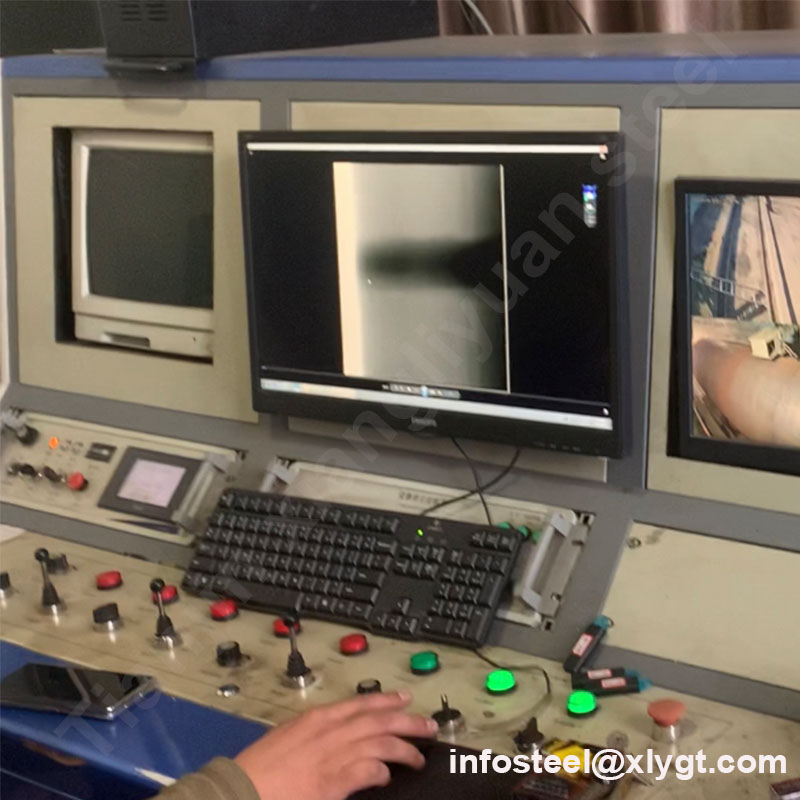
While destructive tests verify properties on samples, nondestructive testing examines every pipe for defects that could affect service performance.
Ultrasonic Testing (UT)
Ultrasonic testing uses high-frequency sound waves to detect internal defects:
Wall Thickness Measurement: Continuous UT monitoring verifies that wall thickness meets specifications and remains consistent.
Lamination Detection: UT detects internal laminations or inclusions that could weaken the pipe.
Weld Seam Inspection: For ERW pipes, dedicated UT systems scan the entire weld length, detecting lack of fusion, cracks, or other weld defects.
Modern UT systems with multiple probes and computerized analysis provide detailed records of every pipe inspected.
Eddy Current Testing
Particularly effective for ERW pipes, eddy current testing uses electromagnetic induction to detect surface and near-surface defects. High-speed inspection at production line speeds allows 100% examination without slowing production.
Magnetic Particle Inspection (MPI)
For ferromagnetic materials, MPI reveals surface and near-surface cracks by applying magnetic fields and fine iron particles. Particularly useful for:
End areas where UT may have limitations
Weld seams in certain applications
Detecting grinding cracks or heat treatment defects
Radiographic Testing (X-Ray or Gamma Ray)
For critical applications, radiographic testing provides permanent images revealing internal defects. While slower than UT, radiography offers visual confirmation of internal condition and is sometimes specified for:
Heavy-wall pipes
Critical service applications
Dispute resolution
Hydrostatic Testing
Every pipe destined for pressure service undergoes hydrostatic testing:
Pipes are filled with water and pressurized to specified levels (typically 60-80% of specified minimum yield strength).
Pressure is held for a minimum duration (usually 5-10 seconds) while inspectors observe for leaks.
Test pressure and duration are recorded for each pipe.
After testing, water is drained and pipes are dried to prevent internal corrosion.
Hydrostatic testing not only verifies pressure integrity but also serves as a final check on the entire manufacturing process.
Dimensional Inspection—Ensuring Fit and Function
Precision dimensions are essential for proper fit-up during installation and consistent performance in service. Our dimensional inspection protocols include:
Outer Diameter (OD) Control
Contact Gauges: Snap gauges and micrometers verify OD at pipe ends.
Laser Micrometers: Online laser systems continuously monitor OD along the entire pipe length.
Pi Tapes: Circumferential measurements verify roundness.
Wall Thickness Verification
Ultrasonic Thickness Gauges: Manual and automated UT systems measure wall thickness at multiple points.
Mechanical Calipers: For end-area verification.
Length Measurement
Automated Length Measurement: Pipes are measured to specified lengths with precision, with tolerances typically ± 3mm for standard orders.
Cut-to-Length Capability: Our saws and cutting systems deliver precise lengths as specified.
Straightness
Visual and Gauge Checks: Pipes are examined for straightness, with deviations measured against specified tolerances.
Straightening Presses: When necessary, hydraulic presses correct minor straightness deviations.
End Condition Inspection
Bevel Angles and Dimensions: For pipes requiring beveled ends, we verify bevel angle, root face, and bevel height.
End Squareness: Pipe ends must be square to the longitudinal axis within specified tolerances.
Surface Finish: End areas are inspected for burrs, gouges, or other damage.
Coating and Surface Finish Quality
For pipes requiring protective coatings, quality control extends to the coating process itself. At Tianjin Xiangliyuan Steel, our coating facilities apply a range of systems including FBE (Fusion-Bonded Epoxy), 3LPE (Three-Layer Polyethylene), and 3LPP (Three-Layer Polypropylene).
Surface Preparation
Coating quality depends absolutely on surface preparation:
Abrasive Blasting: Steel surfaces are blasted to achieve specified cleanliness (typically Sa 2.5 or Sa 3 per ISO 8501-1).
Surface Profile: Anchor pattern depth is measured and verified to ensure proper coating adhesion.
Dust and Contamination Checks: Surfaces are inspected for dust, oil, or other contaminants before coating.
Application Control
Temperature Monitoring: Induction or furnace heating maintains precise substrate temperatures for coating application.
Thickness Control: Online gauges monitor coating thickness, with periodic manual verification.
Holiday Detection: High-voltage testers scan for pinholes or discontinuities in the coating.
Adhesion Testing
Pull-Off Tests: Adhesion testers measure the force required to separate coating from substrate.
Cross-Hatch Testing: For thinner coatings, cross-hatch adhesion tests verify bonding.
Documentation and Traceability—The Paper Trail of Quality
In the world of critical service piping, documentation is as important as the physical product. Our documentation systems ensure complete traceability from raw material to finished pipe.
Mill Test Certificates (MTC)
Every pipe shipment includes comprehensive Mill Test Certificates (also known as Material Test Reports or Certified Mill Test Reports) documenting:
Customer Information: Purchase order, project, and destination
Product Description: Size, wall thickness, length, quantity
Specification and Grade: e.g., API 5L X52 PSL2, ASTM A106 Gr. B
Heat Numbers: Unique identifiers linking each pipe to its original steel heat
Chemical Analysis: Complete elemental composition from the heat
Mechanical Properties: Tensile, yield, elongation, and (if applicable) hardness and impact test results
Heat Treatment Details: Type of heat treatment and temperatures
Test Results: NDT results, hydrostatic test pressures
Certification Statement: Signed statement confirming compliance
Traceability Systems
From the moment raw material enters our facility until finished pipes are loaded for shipment, our traceability systems track every item:
Heat Numbers: Applied to materials and carried through production
Pipe Marking: Each pipe receives identification (stenciled or stamped) linking to its production records
Production Records: Detailed logs document every process applied to each heat or production lot
Inspection Records: All test results are recorded and linked to specific pipes or lots
This traceability provides our clients with complete confidence that the pipes they receive are exactly what they specified.
Third-Party Inspection and Certification
Many of our clients, particularly those in the oil and gas industry, require independent verification of quality. We welcome and facilitate third-party inspection by recognized agencies:
SGS (Société Générale de Surveillance)
BV (Bureau Veritas)
DNV (Det Norske Veritas)
Lloyd’s Register
TÜV (Technischer Überwachungsverein)
ABS (American Bureau of Shipping)
Third-party inspectors may witness:
Raw material inspection
Production processes
Destructive testing
Nondestructive examination
Final dimensional inspection
Hydrostatic testing
Coating application
Their approval provides our clients with additional assurance that their certified steel pipes meet all specified requirements.
Continuous Improvement—The Never-Ending Journey
Quality is not a destination but a continuous journey. At Tianjin Xiangliyuan Steel, we never stop seeking ways to improve.
Quality Audits
Regular internal and external audits examine every aspect of our quality system:
Internal Audits: Our quality team conducts scheduled audits of each department.
Certification Audits: Annual surveillance audits maintain our ISO 9001 certification.
Customer Audits: Many clients conduct their own audits before approving us as a supplier.
Corrective and Preventive Action
When issues arise—whether detected internally or reported by customers—our Corrective and Preventive Action (CAPA) system ensures:
Root Cause Analysis: Thorough investigation to identify underlying causes
Corrective Action: Immediate steps to address the specific issue
Preventive Action: Systemic changes to prevent recurrence
Effectiveness Verification: Follow-up to confirm actions achieved desired results
Investment in Technology
We continuously invest in new technologies that enhance quality:
Advanced NDT equipment with better detection capabilities
Automated inspection systems that reduce human error
Data management systems that improve traceability
Process control systems that reduce variability
Quality as a Partnership
At Tianjin Xiangliyuan Steel, we view quality control not as a series of tests but as a comprehensive system encompassing people, processes, and technology. From the moment raw material enters our facility until finished pipes are loaded for shipment, every step is controlled, monitored, and documented.
But quality is also a partnership. We work closely with our clients to understand their specific requirements, answer their questions, and provide the documentation they need. Whether you need seamless pipes for a refinery expansion, ERW pipes for a water transmission line, or LSAW pipes for an offshore platform, we are committed to delivering products that meet your specifications and exceed your expectations.
Our quality systems have earned us the trust of clients in over 50 countries, from major oil companies to engineering contractors to government infrastructure agencies. We invite you to join that list.
Experience the Tianjin Xiangliyuan Steel Quality Difference
When you choose Tianjin Xiangliyuan Steel as your steel pipe supplier, you gain more than a product—you gain a partner committed to your project’s success. Our comprehensive quality control systems, skilled workforce, and customer-focused approach ensure that every pipe we deliver meets the highest standards of quality and reliability.
Ready to Discuss Your Quality Requirements?
Whether you have specific quality demands, need assistance with specification interpretation, or simply want to learn more about our capabilities, our technical team is ready to help. Contact us today for a detailed consultation and competitive quotation.
Email: infosteel@xlygt.com
Website: https://www.xlysteel.com/
Let us put our quality systems to work for you. Because in critical applications, quality is not optional—it is essential.