Understanding Critical Carbon Steel Pipe Standards
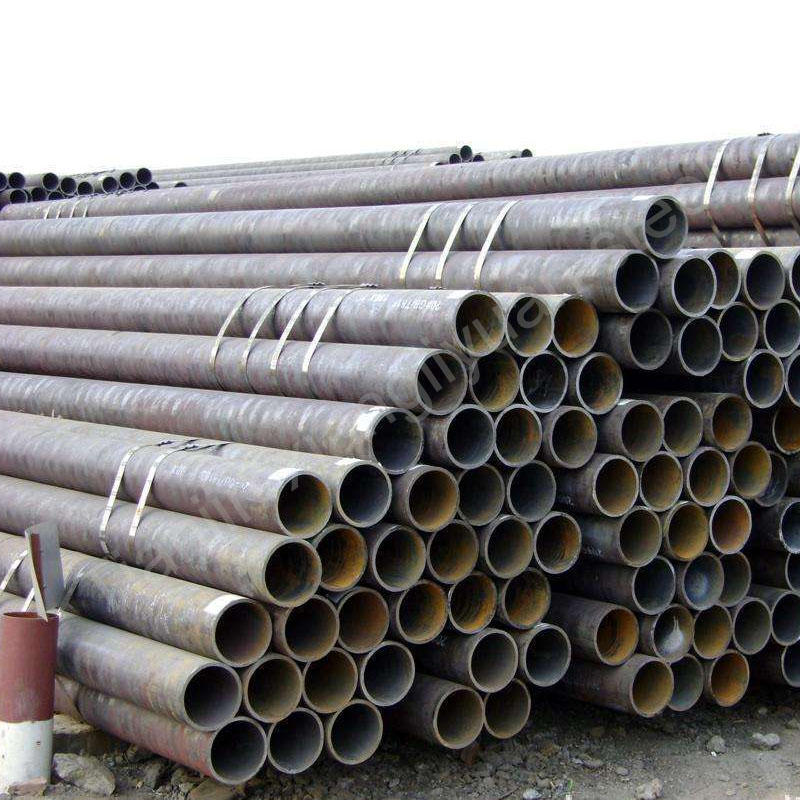
In the global industrial piping market, selecting the appropriate carbon steel pipe specification is fundamental to ensuring operational safety, regulatory compliance, and long-term cost efficiency. Among the most frequently specified standards in oil and gas, power generation, and chemical processing industries are ASTM A106 and ASTM A53—two specifications that, while appearing similar at first glance, serve distinctly different engineering purposes.
At Tianjin Xiangliyuan Steel, we specialize in supplying both ASTM A106 seamless carbon steel pipes and ASTM A53 welded and seamless pipes to clients across North America, Europe, the Middle East, and Southeast Asia. With our strategic location in Tianjin—China’s premier steel production hub and largest port city—we offer unparalleled logistical advantages for international shipments. For technical inquiries and quotations, contact our engineering team at infosteel@xlygt.com or visit our comprehensive product catalog at https://www.xlysteel.com/.
This technical analysis provides an authoritative comparison of these two critical standards, examining their chemical compositions, mechanical properties, manufacturing processes, and appropriate application domains to guide procurement professionals and project engineers in making informed material selections.
Scope and Design Intent: High-Temperature Service vs. General Purpose
The fundamental distinction between ASTM A106 and ASTM A53 lies in their intended service environments. ASTM A106, titled “Standard Specification for Seamless Carbon Steel Pipe for High-Temperature Service,” is specifically engineered for elevated temperature applications in boilers, superheaters, heat exchangers, and process piping systems operating under thermal stress . Conversely, ASTM A53, designated “Standard Specification for Pipe, Steel, Black and Hot-Dipped, Zinc-Coated, Welded and Seamless,” addresses general mechanical and pressure applications, including structural support, low-pressure fluid transport, and non-critical infrastructure .
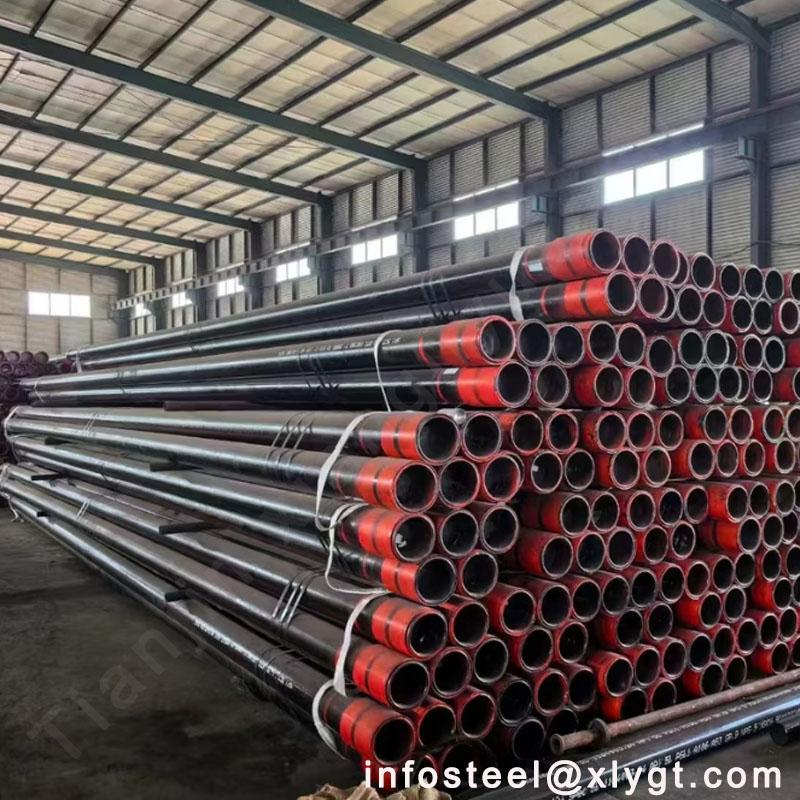
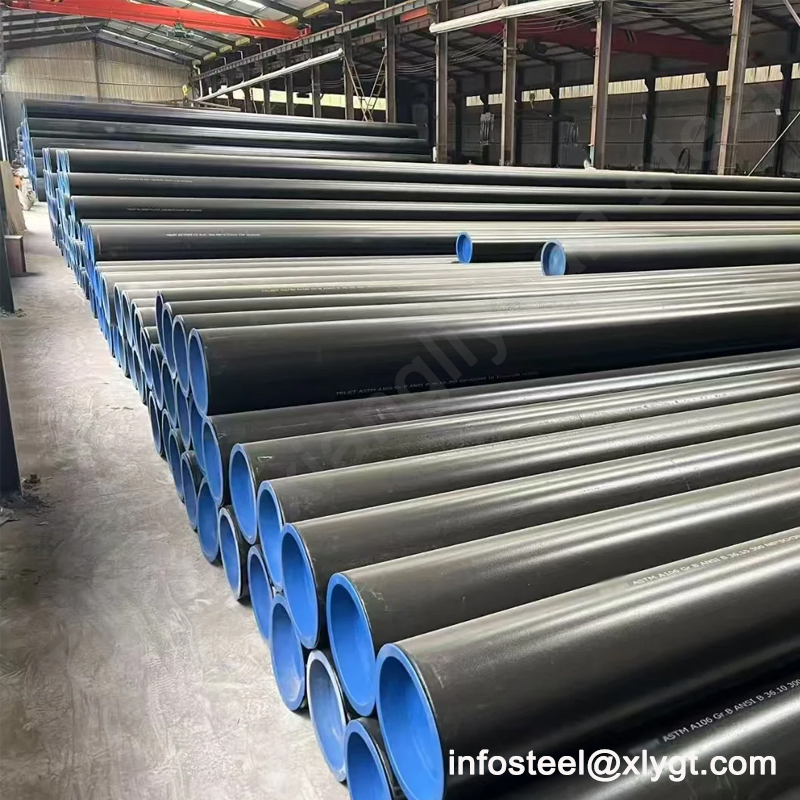
ASTM A106 mandates seamless construction exclusively, as weld seams represent potential failure points under high-temperature and high-pressure conditions. The seamless manufacturing process—achieved through piercing and rolling solid steel billets—ensures uniform microstructural integrity throughout the pipe wall thickness . In contrast, ASTM A53 accommodates three manufacturing types: Type S (seamless), Type E (electric-resistance welded/ERW), and Type F (furnace-welded), providing flexibility for cost-sensitive applications where extreme thermal performance is not required .
Chemical Composition Analysis: Killed Steel vs. General Carbon Steel
ASTM A106 Chemical Requirements
ASTM A106 specifies fully killed steel (deoxidized steel) with mandatory silicon content requirements that distinguish it from general-purpose specifications. The chemical composition limits vary across three grades:
Grade A: Carbon maximum 0.25%, Manganese 0.27–0.93%, Silicon minimum 0.10%
Grade B: Carbon maximum 0.30%, Manganese 0.29–1.06%, Silicon minimum 0.10%
Grade C: Carbon maximum 0.35%, Manganese 0.29–1.06%, Silicon minimum 0.10%
The silicon requirement (minimum 0.10%) is technically critical—silicon acts as a deoxidizing agent during steelmaking, preventing the formation of internal defects and ensuring graphitization resistance at elevated temperatures . This “killed steel” characteristic makes ASTM A106 Grade B the preferred specification for continuous service temperatures up to 750°F (400°C) .
Additional restrictive elements include: Phosphorus maximum 0.035%, Sulfur maximum 0.035%, with total combined content of Chromium, Copper, Molybdenum, Nickel, and Vanadium not exceeding 1.0% . The standard permits a carbon-manganese trade-off: for each 0.01% reduction below the maximum carbon content, manganese may be increased by 0.06%, up to a maximum of 1.35% .
ASTM A53 Chemical Requirements
ASTM A53 demonstrates greater chemical composition flexibility, reflecting its broader application scope:
Type S/Type E – Grade A: Carbon maximum 0.25%, Manganese maximum 0.95%, Phosphorus maximum 0.05%, Sulfur maximum 0.045%
Type S/Type E – Grade B: Carbon maximum 0.30%, Manganese maximum 1.20%, Phosphorus maximum 0.05%, Sulfur maximum 0.045%
Type F – Grade A: Carbon maximum 0.30%, Manganese maximum 1.20%
Notably, ASTM A53 does not mandate minimum silicon content, nor does it require killed steel processing. The higher permissible sulfur and phosphorus levels (0.05% vs. 0.035% in A106) reflect its positioning for general service rather than critical high-temperature applications . Grade B’s higher manganese allowance (up to 1.20% vs. 1.06% in A106 Grade B) contributes to its enhanced strength characteristics.
Mechanical Properties Comparison: Yield Strength, Tensile Strength, and Temperature Performance
Room Temperature Mechanical Properties
At ambient temperatures, ASTM A106 and ASTM A53 Grade B exhibit comparable mechanical performance, which often creates specification confusion:
| Property | ASTM A106 Grade B | ASTM A53 Grade B (Type S/E) |
|---|---|---|
| Minimum Tensile Strength | 415 MPa (60,000 psi) | 415 MPa (60,000 psi) |
| Minimum Yield Strength | 240 MPa (35,000 psi) | 240 MPa (35,000 psi) |
| Elongation | Calculated per ASTM A53/A370 formulas | Calculated per ASTM A53/A370 formulas |
ASTM A106 Grade A and ASTM A53 Grade A show distinct differences: A106 Grade A requires minimum tensile strength of 330 MPa (48,000 psi) and yield strength of 205 MPa (30,000 psi), while A53 Grade A specifies 330 MPa tensile but only 205 MPa yield . ASTM A106 Grade C offers superior strength with 485 MPa (70,000 psi) tensile and 275 MPa (40,000 psi) yield .
High-Temperature Performance: The Critical Differentiator
The most significant mechanical distinction emerges under elevated temperature conditions. ASTM A106 includes a mandatory appendix specifying minimum yield strengths at various temperatures—for Grade B at 400°F (204°C), the minimum yield strength remains 33.1 ksi, demonstrating retained load-bearing capacity under thermal stress . ASTM A53 contains no such high-temperature mechanical data, rendering it unsuitable for ASME B31 code applications involving elevated temperature design .
This performance differential stems from microstructural stability. ASTM A106’s killed steel composition with controlled silicon content resists graphitization—a phenomenon where cementite decomposes into iron and graphite at elevated temperatures, causing catastrophic embrittlement . The seamless construction eliminates weld heat-affected zones, which experience accelerated creep deformation under sustained thermal loading.
Manufacturing Processes and Heat Treatment Requirements
ASTM A106 Manufacturing Protocol
ASTM A106 mandates seamless manufacturing through hot-finishing or cold-drawing processes. All pipes must undergo mandatory heat treatment after final forming—typically normalizing or stress-relief annealing—to ensure microstructural uniformity and dimensional stability . NPS 1-1/2″ and smaller may be hot-finished or cold-drawn; NPS 2″ and larger must be hot-finished unless otherwise specified .
Quality assurance requirements include: hydrostatic testing on every pipe (or non-destructive electric test with customer agreement), flattening tests, and ultrasonic or eddy current examination . The standard mandates tensile testing on every heat of steel, with flattening tests performed on both the body and weld seam (for welded products).
ASTM A53 Manufacturing Flexibility
ASTM A53’s three manufacturing types accommodate diverse production economics:
Type S (Seamless): Similar production to A106 but without mandatory heat treatment unless specified for cold bending operations
Type E (ERW): Formed from hot-rolled coil through electric resistance welding, requiring full-body heat treatment (normalizing) to eliminate residual welding stresses and refine weld zone grain structure
Type F (Furnace-welded): Continuous welding by hot forming, limited to Grade A and declining in modern industrial use due to lower pressure ratings
Testing protocols vary by type: hydrostatic testing is standard, but ASTM A53 permits non-destructive electrical testing (eddy current) as an alternative for welded pipes, whereas ASTM A106 typically requires hydrostatic testing with pressure calculations ensuring higher reliability margins .
Industrial Applications and Specification Selection Guidelines
ASTM A106 Primary Applications
Given its high-temperature integrity, ASTM A106 dominates in critical process environments:
Petrochemical Refineries: Process piping, furnace tubes, and catalytic reforming units operating at 350–450°C
Power Generation: Boiler feedwater lines, steam distribution systems, superheater tubes, and heat recovery steam generators (HRSG)
Oil & Gas Production: High-temperature gathering lines, wellhead piping, and downstream processing equipment
Pressure Vessels: Nozzles, connections, and internal piping requiring ASME Section VIII compliance
ASTM A106 Grade B represents the industry default—when piping specifications reference “carbon steel pipe” without grade designation, A106 Grade B is the implied standard . It maintains full equivalence with ASME SA106 Grade B for code-stamped pressure equipment.
ASTM A53 Appropriate Applications
ASTM A53 serves cost-effective, lower-risk installations:
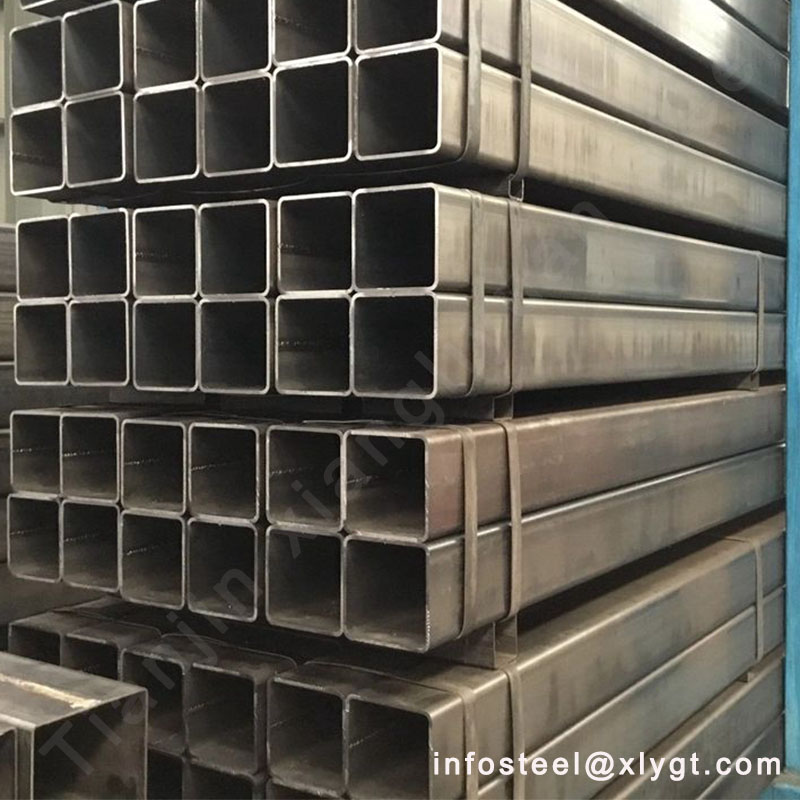
Structural Engineering: Building columns, bridge supports, piling, and architectural framing
Utility Infrastructure: Water distribution, fire protection systems, HVAC condensate lines, and drainage
General Mechanical: Compressed air systems, non-critical hydraulic lines, and equipment frames
Low-Pressure Oil & Gas: Gathering and transmission pipelines where API 5L Grade B interchangeability is acceptable
ASTM A53 Type E (ERW) Grade B offers particular value in municipal and commercial construction, where the combination of adequate strength (240 MPa yield), excellent weldability, and competitive pricing meets project requirements without over-specification.
Interchangeability Considerations and Specification Substitution
While ASTM A106 Grade B and ASTM A53 Type S Grade B share similar chemical and mechanical properties at room temperature, they are not universally interchangeable. Tianjin Xiangliyuan Steel engineers emphasize that A106 can typically substitute for A53 in general service, but A53 cannot always replace A106 in high-temperature applications .
Critical substitution constraints include:
Temperature Limits: A53 lacks certified high-temperature mechanical properties; substitution above 400°F violates ASME B31.3 and B31.1 codes
Seamless Requirement: A53 Type E (welded) cannot substitute for A106 in high-pressure services where seamless construction is mandated
Chemical Verification: Even when mechanical properties align, A53’s lack of killed steel processing and silicon requirements may compromise long-term thermal stability
For projects requiring dual-certification, Tianjin Xiangliyuan Steel provides pipes meeting both ASTM A106 Grade B and API 5L Grade B specifications, streamlining inventory management for clients operating across multiple industry sectors.
Supply Chain Advantages: Tianjin Xiangliyuan Steel’s Strategic Position
Located in Tianjin, China’s largest northern port and a global steel production center, Tianjin Xiangliyuan Steel offers distinct competitive advantages for international procurement:
Geographic Proximity: Our facilities are within 50 kilometers of Tianjin Port, enabling rapid containerized and bulk vessel loading. This proximity reduces inland transportation costs and lead times by 3–5 days compared to inland manufacturers.
Comprehensive Inventory: We maintain substantial stock of ASTM A106 Grade B seamless pipes (SCH 40 through SCH 160, NPS 1/8″ to NPS 24″) and ASTM A53 Grade B ERW pipes (NPS 1/2″ to NPS 26″), including hot-dip galvanized finishes for corrosion-resistant applications.
Quality Assurance: All products undergo third-party inspection (SGS, BV, or TUV) with EN 10204 Type 3.1/3.2 mill test certificates. Our laboratory facilities conduct spectrographic chemical analysis, tensile testing, and dimensional verification to ensure full ASTM compliance.
Technical Support: Our engineering team provides material selection consultation, weld procedure qualification support, and ASME code compliance guidance. Contact infosteel@xlygt.com for project-specific recommendations or visit https://www.xlysteel.com/ to request quotations and technical datasheets.
Making Informed Specification Decisions
The selection between ASTM A106 and ASTM A53 carbon steel pipes requires rigorous analysis of service conditions, regulatory requirements, and lifecycle cost considerations. ASTM A106’s killed steel composition, seamless construction, and certified high-temperature performance justify its specification for critical process piping in refineries, power plants, and chemical facilities. ASTM A53 provides economical solutions for structural, municipal, and low-pressure applications where extreme thermal performance is not required.
Understanding the nuanced differences in chemical composition—particularly silicon content requirements and deoxidation practices—along with mechanical property retention at elevated temperatures enables engineers to specify appropriate materials that ensure safety, compliance, and operational longevity.
For procurement professionals seeking reliable supply partners, Tianjin Xiangliyuan Steel combines technical expertise, comprehensive inventory, and strategic logistics capabilities to support global infrastructure projects. Our commitment to ASTM standard compliance, quality documentation, and responsive customer service positions us as a preferred supplier for carbon steel piping solutions.
Contact Information:
Tianjin Xiangliyuan Steel Co., Ltd.
Email: infosteel@xlygt.com
Website: https://www.xlysteel.com/
Address: Tianjin, China (Strategic Port Location for Global Shipping)
This technical article is intended for engineering reference and procurement guidance. Always consult current ASTM standards and project specifications for definitive requirements. For material certification and test reports, contact our technical sales team.