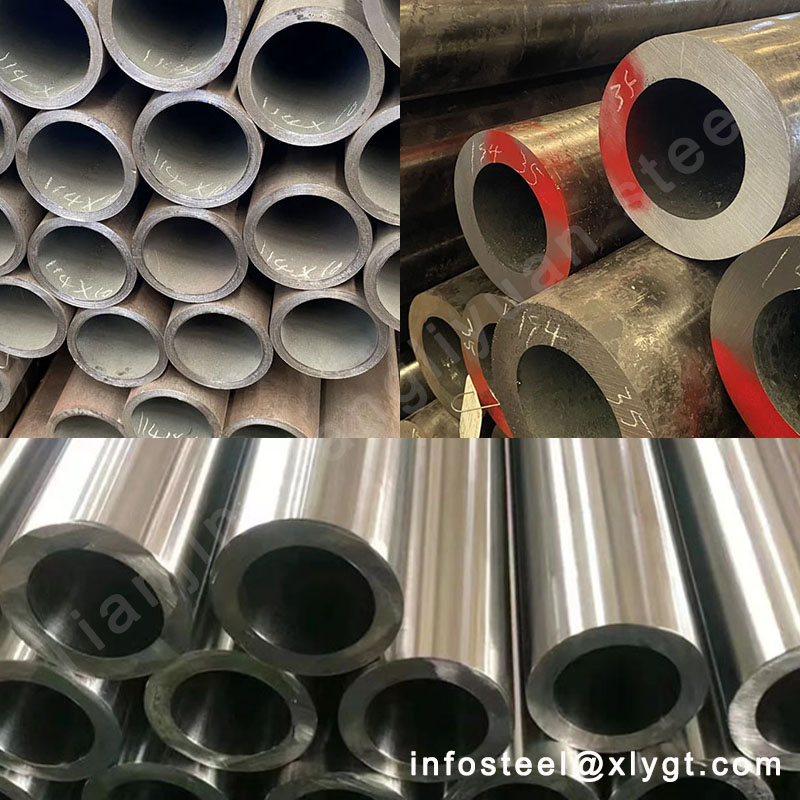
Standing in a pipe yard or scrolling through a supplier’s catalog, the array of material options can feel overwhelming. Carbon steel, alloy steel, stainless steel—each category splits into countless grades, specifications, and variations. Choose wrong, and you might face corrosion failures, brittle fractures, budget overruns, or all three.
The good news? The selection process follows logic. Each material family exists for a reason, engineered to handle specific combinations of pressure, temperature, corrosion, and cost. Understanding the strengths and limitations of each category transforms a confusing choice into a straightforward engineering decision.
At Tianjin Xiangliyuan Steel, we produce pipes across all three material families. Our manufacturing lines run carbon steel, alloy steel, and stainless steel in seamless and welded configurations, serving industries from oil and gas to power generation, from chemical processing to construction. This breadth of experience gives us practical insight into what works where—and what doesn’t.
This guide walks through each material family, examining their compositions, properties, typical applications, and limitations. By the end, you’ll know exactly which category belongs in your next specification.
For detailed material data or to discuss your specific requirements, visit https://www.xlysteel.com/ or contact our technical team at infosteel@xlygt.com.
The Material Triangle: Three Families, Countless Options
Before diving into comparisons, let’s establish what these terms actually mean.
Carbon steel is iron alloyed primarily with carbon. Other elements exist—manganese, silicon, copper—but only in modest amounts added for specific effects or present as residuals.
Alloy steel starts with the same iron-carbon base but adds deliberate quantities of other elements—chromium, molybdenum, nickel, vanadium—to enhance specific properties like strength at high temperatures or resistance to certain forms of corrosion.
Stainless steel takes alloying further, adding at least 10.5% chromium to create a passive oxide layer that provides exceptional corrosion resistance. Nickel, molybdenum, and other elements join the mix for specialized performance.
Each family serves distinct purposes. Let’s explore them in detail.
Carbon Steel Pipes – The Workhorses
Walk through any industrial facility, and carbon steel pipes surround you. They carry water, steam, air, oil, gas, and countless other fluids at moderate pressures and temperatures. They form structural frameworks, support equipment, and serve as conduits for utilities.
What Is Carbon Steel?
Carbon steel pipes contain iron and carbon, with carbon typically ranging from 0.05% to 0.30% for most pipe grades. Manganese appears in amounts up to 1.5% to improve strength and hardenability. Silicon, phosphorus, sulfur, and other elements exist in smaller quantities, controlled to specification limits.
The American Society for Testing and Materials (ASTM) and the American Petroleum Institute (API) publish the most common carbon steel pipe specifications:
ASTM A53 – Standard specification for pipe, steel, black and hot-dipped, zinc-coated, welded and seamless
ASTM A106 – Standard specification for seamless carbon steel pipe for high-temperature service
API 5L – Specification for line pipe (carbon steel grades include Grade B, X42, X52, etc.)
These specifications define chemical requirements, mechanical properties, testing protocols, and marking.
Properties That Define Carbon Steel
Carbon steel offers several characteristics that explain its dominance:
Strength at reasonable cost. Carbon steel provides ample strength for most applications at a lower cost per pound than alloy or stainless alternatives. This economics drives its widespread use.
Good fabricability. Carbon steel cuts, welds, bends, and forms readily with standard shop equipment and procedures. Welders understand it. Procedures exist for every situation.
Wide availability. Carbon steel pipes in standard sizes and schedules stock globally. Need a replacement quickly? Carbon steel is your answer.
But carbon steel has limitations:
Corrosion susceptibility. Exposed to moisture and oxygen, carbon steel rusts. In corrosive environments—salt water, acidic soils, chemical exposure—it requires protection through coatings, linings, or cathodic systems.
Temperature constraints. At high temperatures (above about 425°C), carbon steel loses strength and may scale or oxidize rapidly. At low temperatures, some grades become brittle.
When Carbon Steel Makes Sense
Specify carbon steel when:
Corrosion is manageable. The environment allows carbon steel with reasonable protection—coatings, cathodic protection, or controlled operating conditions.
Temperatures stay moderate. Operating temperatures remain below about 425°C, and low-temperature toughness isn’t critical.
Budget matters. Projects where material cost drives decisions benefit from carbon steel’s economy.
Codes permit it. Most general piping codes (ASME B31.1, B31.3, B31.4, B31.8) fully cover carbon steel for appropriate services.
Common Carbon Steel Applications
Water and wastewater pipelines – Municipal water mains, treatment plant piping
Fire protection systems – Sprinkler mains and branch lines
HVAC systems – Chilled water, heating water, condenser water
Low-pressure steam – Heating systems, process heating
Structural applications – Piling, bollards, handrails, supports
Oil and gas gathering – Low-pressure, non-corrosive services
At Tianjin Xiangliyuan Steel, our carbon steel production spans seamless grades like ASTM A106 Gr. B, ERW grades like ASTM A53 Gr. B, and line pipe grades from API 5L Gr. B through X70. Visit https://www.xlysteel.com/ to explore our carbon steel capabilities.
Alloy Steel Pipes – When Conditions Intensify
Raise the temperature. Increase the pressure. Add hydrogen or other aggressive compounds. Carbon steel reaches its limits, and alloy steel steps in.
What Is Alloy Steel?
Alloy steel pipes contain deliberate additions of elements beyond carbon and manganese to enhance specific properties. Common alloying elements include:
Chromium – Improves oxidation resistance and high-temperature strength; contributes to corrosion resistance
Molybdenum – Increases high-temperature strength and creep resistance; enhances resistance to hydrogen attack
Nickel – Improves toughness, particularly at low temperatures
Vanadium – Refines grain structure and increases strength
Silicon – Improves oxidation resistance at high temperatures
These elements work in combinations tailored to specific challenges.
The most common alloy steel pipe specifications come from ASTM:
ASTM A335 – Standard specification for seamless ferritic alloy-steel pipe for high-temperature service (grades P5, P9, P11, P22, P91, P92)
ASTM A691 – Standard specification for carbon and alloy steel pipe, electric-fusion-welded for high-pressure service at high temperatures
ASTM A213 – Standard specification for seamless ferritic and austenitic alloy-steel boiler, superheater, and heat-exchanger tubes
Properties That Define Alloy Steel
Alloy steel excels where carbon steel cannot go:
High-temperature strength. At temperatures above 400°C, carbon steel creeps—slowly deforms under stress. Alloy steels with chromium and molybdenum resist creep, maintaining strength for years of service.
Hydrogen resistance. In refineries and chemical plants, hydrogen at high temperatures can attack carbon steel, causing decarburization and fissuring (hydrogen attack). Alloy steels with chromium and molybdenum resist this damage.
Oxidation resistance. Chromium in alloy steels forms protective oxides that slow scaling at high temperatures.
Toughness at low temperatures. Some alloy steels, particularly those with nickel, maintain toughness far below carbon steel’s limits.
But these capabilities come with trade-offs:
Higher cost. Alloying elements cost money. Alloy steel pipes cost significantly more than carbon steel equivalents.
More complex welding. Alloy steels often require preheating, controlled interpass temperatures, and post-weld heat treatment to avoid cracking and achieve proper properties.
Limited availability. Not all sizes and walls stock in alloy grades. Lead times may extend beyond carbon steel.
When Alloy Steel Becomes Necessary
Specify alloy steel when:
Temperatures exceed carbon steel limits. Above about 425°C, consider alloy grades. Above 525°C, they become essential.
Hydrogen service demands it. In refineries and petrochemical plants processing hydrogen at high temperatures and pressures, alloy steel resists hydrogen attack that would destroy carbon steel.
Creep resistance matters. Applications like steam lines, boiler tubes, and reformer piping require materials that resist gradual deformation under sustained stress at high temperatures.
Specific corrosion resistance needed. Some alloy steels resist particular corrosive media better than carbon steel.
Common Alloy Steel Applications
Power generation – Main steam lines, reheat lines, boiler tubes, superheater tubes
Refineries – Hydrotreater piping, catalytic reformer piping, high-temperature process lines
Petrochemical plants – Ethylene crackers, methanol reformers, high-temperature transfer lines
High-pressure boilers – Water walls, superheaters, reheaters
The most common alloy grades follow a pattern: P11 (1.25% chromium, 0.5% molybdenum), P22 (2.25% chromium, 1% molybdenum), P91 (9% chromium, 1% molybdenum, with vanadium and niobium). Each serves a temperature range and service condition.
At Tianjin Xiangliyuan Steel, we produce the full range of ASTM A335 alloy grades in seamless construction, with full heat treatment and testing. Contact infosteel@xlygt.com for alloy steel requirements.
Stainless Steel Pipes – Corrosion Resistance Supreme
When corrosion dominates the threat list, when product purity matters, when temperatures swing wildly—stainless steel provides answers carbon and alloy steels cannot.
What Is Stainless Steel?
Stainless steels contain at least 10.5% chromium, which forms a thin, adherent chromium oxide layer on the surface. This passive film reforms instantly if damaged, providing continuous protection in oxidizing environments.
Stainless steels divide into several families based on microstructure:
Austenitic stainless steels (300 series) contain chromium and nickel, with austenite stable at room temperature. They offer excellent corrosion resistance, good formability, and outstanding toughness, even at cryogenic temperatures. Common grades: 304, 316, 321, 347.
Ferritic stainless steels (400 series) contain chromium but little or no nickel. They offer good corrosion resistance at lower cost but less formability and toughness than austenitic grades. Common grades: 409, 430.
Martensitic stainless steels (also 400 series) can be heat-treated for high strength but offer less corrosion resistance than austenitic grades. Common grades: 410, 420.
Duplex stainless steels mix austenitic and ferritic structures, offering higher strength than either alone and excellent resistance to stress corrosion cracking. Common grades: 2205, 2507.
Pipe specifications include:
ASTM A312 – Standard specification for seamless, welded, and heavily cold-worked austenitic stainless steel pipe
ASTM A269 – Standard specification for seamless and welded austenitic stainless steel tubing for general service
ASTM A790 – Standard specification for seamless and welded ferritic/austenitic duplex stainless steel pipe
Properties That Define Stainless Steel
Stainless steel’s defining characteristic is corrosion resistance, but other properties matter:
Outstanding corrosion resistance. In countless environments—atmospheric, fresh water, many chemicals, food products—stainless steel resists attack that would destroy carbon steel rapidly.
Excellent toughness. Austenitic stainless steels maintain toughness down to cryogenic temperatures, unlike carbon or alloy steels that become brittle.
Cleanability. Smooth, corrosion-resistant surfaces clean easily, making stainless steel the standard for food, pharmaceutical, and biotechnology applications.
Aesthetic appeal. When appearance matters, stainless steel’s lustrous finish outperforms painted carbon steel.
But stainless steel brings challenges:
High cost. Stainless steel costs significantly more than carbon steel—typically three to five times as much, depending on grade and market conditions.
Lower strength than alloy steels. At high temperatures, stainless steel may actually have lower strength than properly selected alloy steels, despite its corrosion resistance.
Specialized welding. Stainless steel requires careful welding practices to avoid sensitization (chromium carbide precipitation) that degrades corrosion resistance.
Not immune to all corrosion. Despite its name, stainless steel can corrode in certain environments—chlorides can cause pitting or stress corrosion cracking in austenitic grades.
When Stainless Steel Is the Right Choice
Specify stainless steel when:
Corrosion prevents carbon steel use. Environments where carbon steel would fail rapidly—marine atmospheres, chemical exposure, food contact—justify stainless steel.
Product purity matters. Industries from pharmaceuticals to semiconductor manufacturing cannot tolerate rust or contamination from carbon steel.
Low temperatures challenge other materials. At cryogenic temperatures, austenitic stainless steel maintains toughness that carbon and alloy steels lack.
High temperatures combine with corrosion. Some stainless grades resist oxidation at temperatures that would scale carbon steel rapidly.
Common Stainless Steel Applications
Food and beverage processing – Dairy lines, breweries, food plants
Pharmaceutical and biotechnology – Pure water systems, process piping
Chemical processing – Corrosive chemical handling
Marine environments – Offshore platforms, shipboard piping
Architectural applications – Handrails, building cladding, structures
LNG facilities – Cryogenic piping at -162°C
Grade 316L (low carbon) with molybdenum offers enhanced resistance to chlorides and is the most common choice for corrosive services. Grade 304L serves less demanding conditions at lower cost. Duplex grades like 2205 provide higher strength and better stress corrosion cracking resistance for demanding applications.
At Tianjin Xiangliyuan Steel, we supply austenitic stainless steel pipes in grades 304/304L and 316/316L, with duplex grades available for specialized requirements. Visit https://www.xlysteel.com/ for our stainless steel capabilities.
Comparing the Families: Side by Side
Let’s line them up for direct comparison.
| Property | Carbon Steel | Alloy Steel | Stainless Steel |
|---|---|---|---|
| Cost | Lowest | Moderate | Highest |
| Corrosion resistance | Poor without protection | Moderate in some environments | Excellent |
| High-temperature strength | Limited above 425°C | Excellent up to 650°C+ | Good (but varies by grade) |
| Low-temperature toughness | Poor (depends on grade) | Fair to good | Excellent (austenitic) |
| Weldability | Excellent | Requires procedures | Requires care |
| Common applications | General service | High-temperature, hydrogen | Corrosive, pure, cryogenic |
The Decision Framework: How to Choose
When facing a material selection, work through these questions:
Question 1: What’s the Corrosion Environment?
Start here because corrosion often drives material selection. If the fluid or environment attacks carbon steel unacceptably, you move up the ladder.
Mild corrosion – Coatings may protect carbon steel
Moderate corrosion – Consider stainless steel or corrosion-resistant alloys
Severe corrosion – Stainless or specialty alloys required
High-temperature corrosion – Alloy steel or stainless, depending on specifics
Question 2: What Temperatures Will the Pipe See?
Temperature affects both material strength and corrosion behavior.
Below -50°C – Austenitic stainless steel required for toughness
-50°C to 425°C – Carbon steel works for most applications
425°C to 650°C – Alloy steel (chromium-molybdenum) required
Above 650°C – Stainless steel or high-alloy grades
Question 3: What Pressures Must the Pipe Contain?
Pressure combines with temperature and diameter to determine required wall thickness and material strength.
Higher strength materials (certain alloy steels, duplex stainless) can reduce wall thickness and weight, potentially offsetting higher material costs through reduced tonnage.
Question 4: Are There Special Service Requirements?
Hydrogen service at high temperature – Alloy steel required
Cyclic or fatigue loading – Consider material toughness
Sanitary requirements – Stainless steel essential
Weight restrictions – Higher strength materials allow thinner walls
Question 5: What Does the Budget Allow?
Material cost differences are real. Carbon steel costs least. Stainless costs most. Alloy steel sits between.
But remember total installed cost, not just material cost. A more expensive material might allow thinner walls, reduce weight, eliminate coatings, or avoid future replacement costs.
Common Mistakes in Material Selection
Experience teaches what goes wrong. Avoid these errors:
Specifying stainless steel when alloy steel would work. For high-temperature service without corrosion concerns, alloy steel often outperforms stainless at lower cost. Stainless loses strength at high temperatures; alloy steel maintains it.
Using carbon steel where corrosion requires stainless. The cost difference hurts less than replacing failed piping after a few years.
Forgetting about welding requirements. Alloy and stainless steels need proper procedures, qualified welders, and often post-weld heat treatment. Factor this into cost and schedule.
Ignoring chloride stress corrosion cracking. Austenitic stainless steel in hot chloride environments can crack catastrophically. Consider duplex grades for these conditions.
Overlooking low-temperature toughness. Carbon steel that performs fine at room temperature may shatter in Arctic conditions. Specify impact-tested materials when needed.
How Tianjin Xiangliyuan Steel Supports Your Material Decisions
Selecting materials shouldn’t happen in isolation. The best decisions come from combining your application knowledge with a supplier’s manufacturing expertise.
At Tianjin Xiangliyuan Steel, we bring:
Breadth of capabilities. We produce carbon steel, alloy steel, and stainless steel pipes across a wide range of sizes, schedules, and specifications. No single material bias—we help you find what fits.
Technical depth. Our metallurgists and engineers understand how materials behave in real-world conditions. They’ve seen what works and what fails across decades of serving global industries.
Quality systems. Whatever material you choose, our quality control ensures you receive pipes meeting all specified requirements, with complete documentation and traceability.
Global reach. From our facilities to your project site, we coordinate logistics, documentation, and delivery to keep your project on schedule.
Making Your Choice
Three material families. Countless grades within each. The choice can seem daunting, but it follows logic.
Start with the environment—what temperatures, what pressures, what corrosives. Match material capabilities to those demands. Consider economics—not just purchase price but total installed cost and service life. Verify that your selected material can be fabricated, welded, and installed with available resources.
Then partner with a supplier who understands the options and can deliver quality product, on time, with proper documentation.
At Tianjin Xiangliyuan Steel, we’re ready for that conversation.
Ready to Select Your Material?
Whether you need carbon steel for a water pipeline, alloy steel for a high-temperature refinery unit, or stainless steel for a food processing plant, we have the products, expertise, and quality systems to deliver.
Contact our technical team to discuss your application. We’ll help you work through the selection process, provide material data, and deliver a competitive quotation.
Email: infosteel@xlygt.com
Website: https://www.xlysteel.com/
Let’s find the right material for your project.